
When Odisha Became a Homepage
I remember getting to know Debasmita Misra through ORNET, the mailing list that connected Odias across countries. I think we began talking soon after I joined IIT Bombay in September 1996. I was a Research Associate at Ada Labs under Prof. Deepak Phatak. Internet access was still unusual in India, and being there gave me a chance to explore it.
The Oriya Homepage appears to have begun in 1995. I knew it during my IIT Bombay days. Debasmita and I worked together on its redesign in 1998.
In an email dated 3 February 1998, I told him I had been “a silent observer of the page since sept 96.”
The surviving January 1998 exchange starts with something small. I was in Bangalore and asked Debasmita to update the link to my personal homepage. He looked at my Java applets and asked whether he could use some of them on the Oriya Homepage. He particularly liked the clock showing the time in Odisha.
I offered to help. We began discussing a redesign that would make the page load faster. On 28 January, his subject line was “Welcome Aboard.” He welcomed me as co-host and said it was a relief to have someone help with a site that had grown difficult to manage alone.
On 1 February I sent him a design plan. Before getting into the details, I asked if I could call him “Bhaina,” since he was older than me. Soon the emails were going back and forth as Bapu and Bhaina.
I worked on a copy on my Linux PC and put it online for him to review. We agreed to tell each other what we were changing and leave notes with the files. The plan included simpler navigation, smaller images, fewer broken links and better ways for visitors to send us material.
A surprising amount of our conversation was about how long a page took to appear. In one email I worked out how replacing a 56 KB animation with smaller pictures and an applet could save 35 KB. That was worth writing a long email about.
Debasmita made graphics and commented on the look of the pages. I worked on the applets, navigation and the way the files fitted together. We tested, sent suggestions and sometimes had to undo things. He wanted Jagannath’s eyes to look right. I wanted the images to load quickly. Both concerns kept coming back.
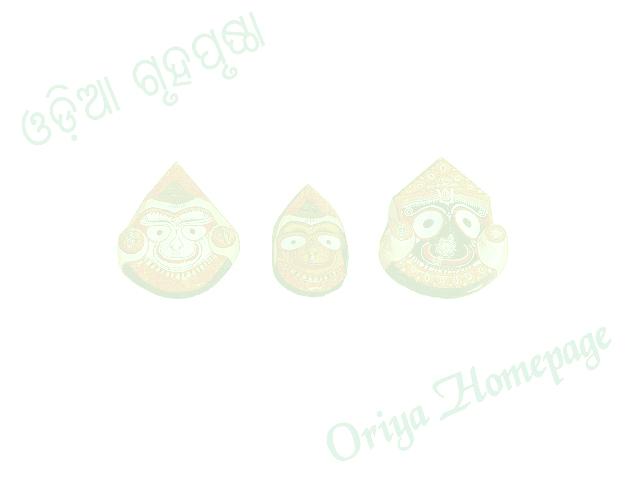
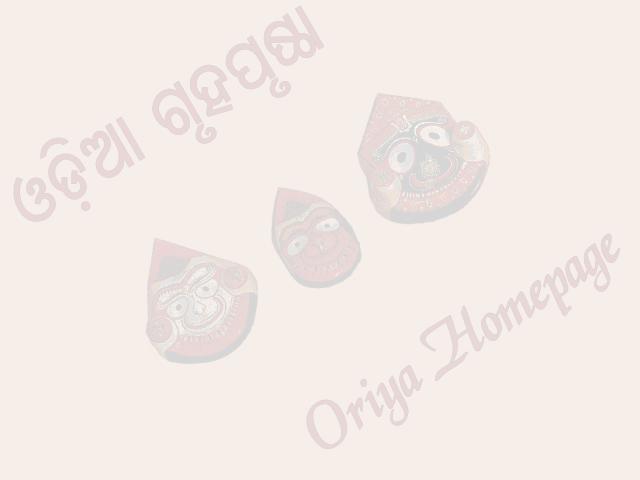
On 6 March I asked him for a new background so the redesign would look different. He sent one on 9 March. After I suggested trying a light background colour, he sent a revised version on 10 March. Both files were still attached to the emails when I opened them again.
There was room for teasing too. When he suggested putting my name before his, I asked whether he was trying to escape. He replied that we would be “partners in the same crime.”
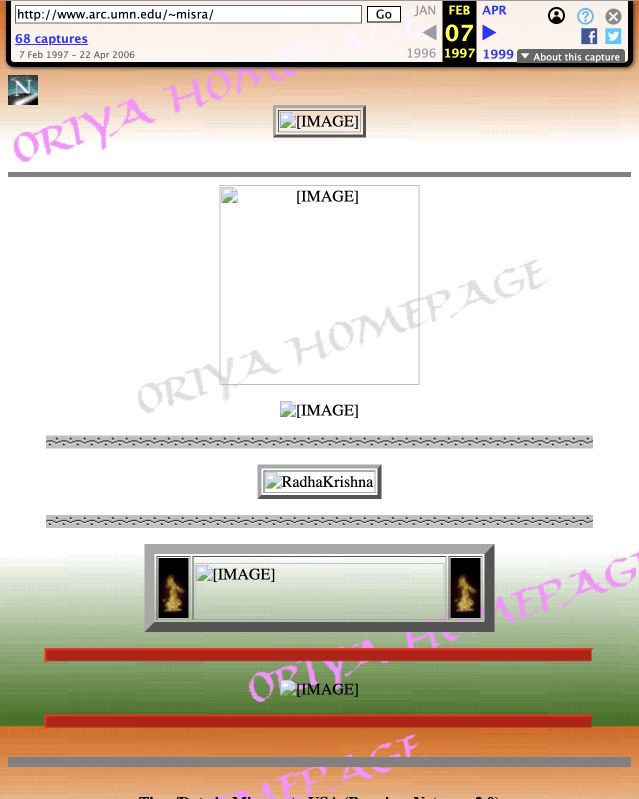
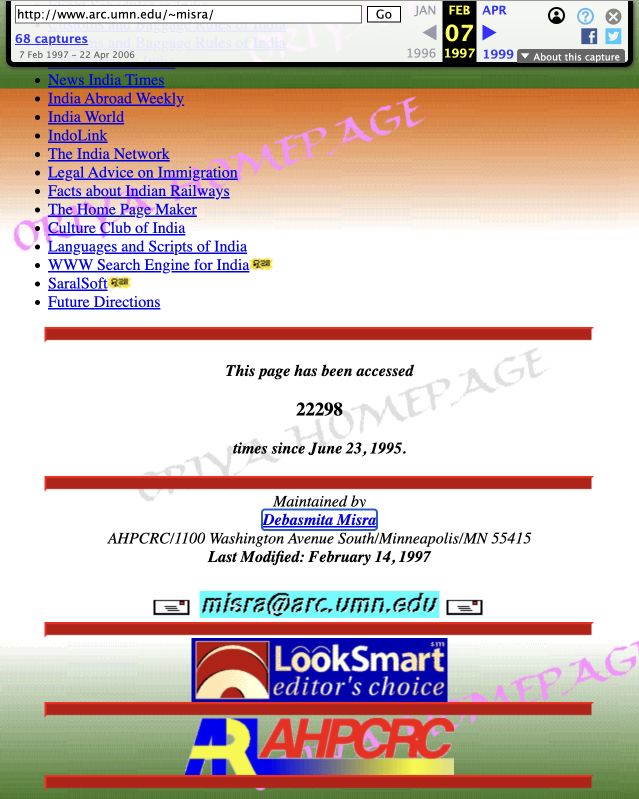
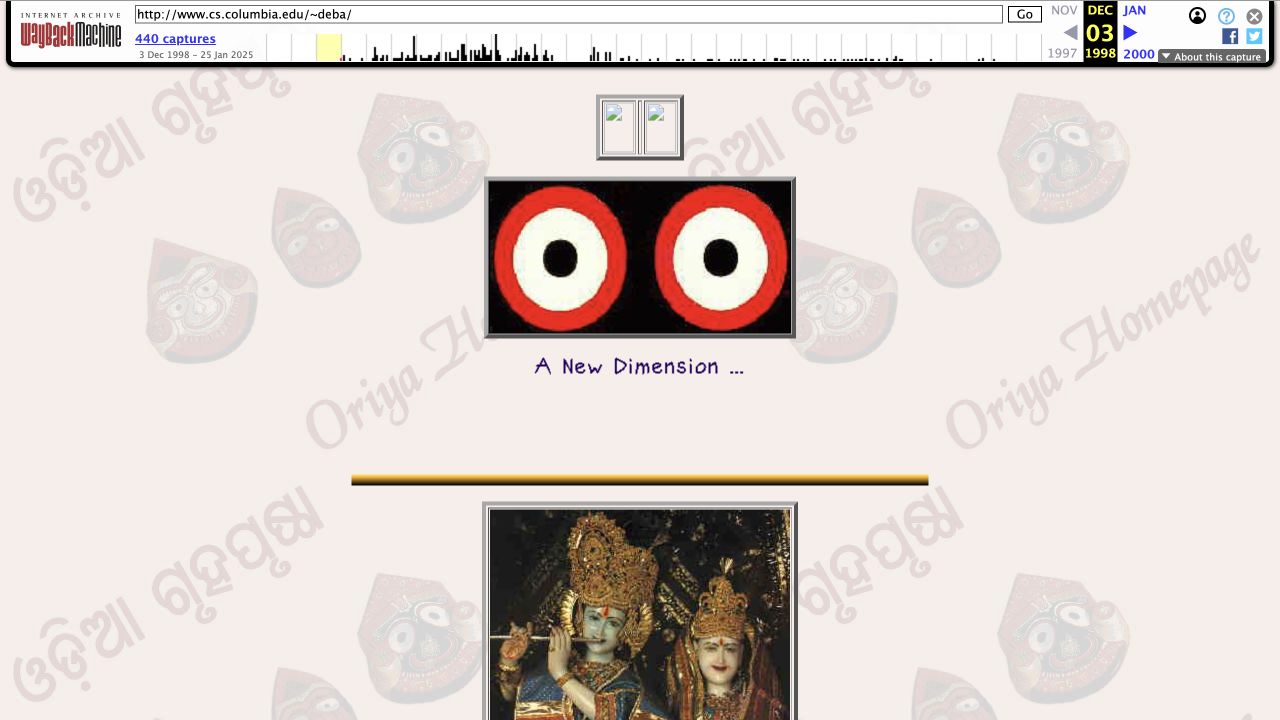
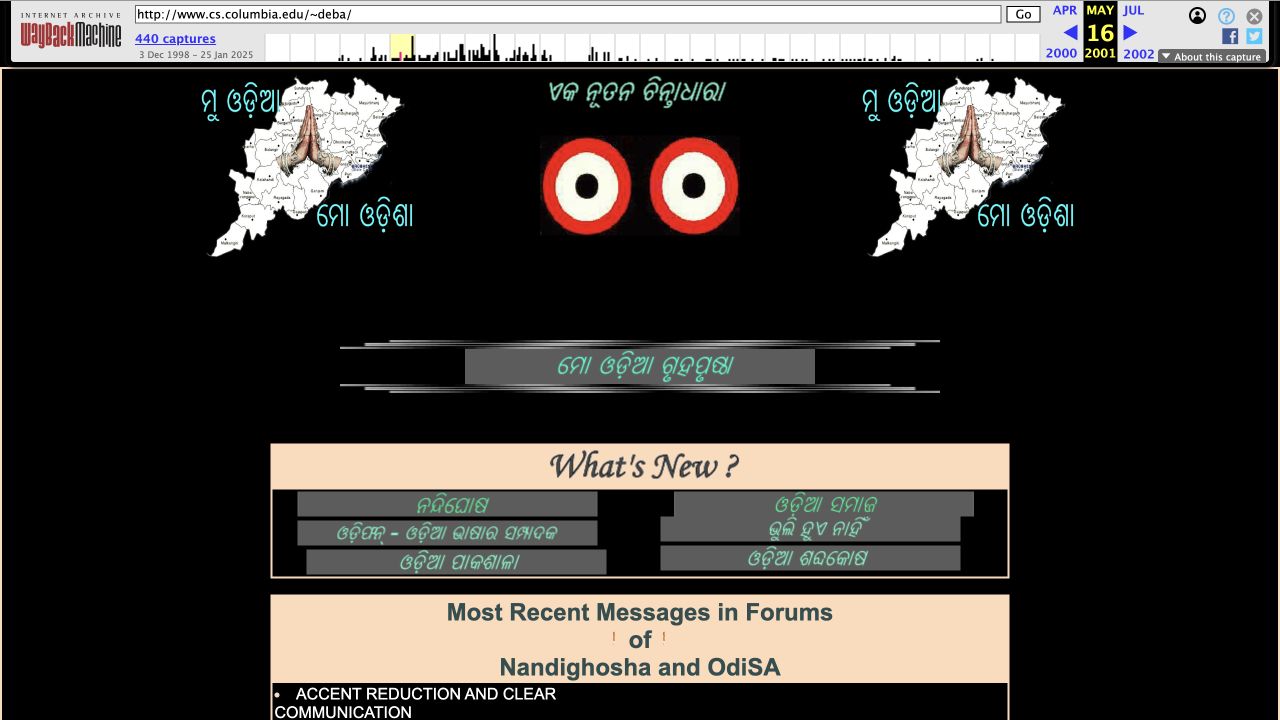
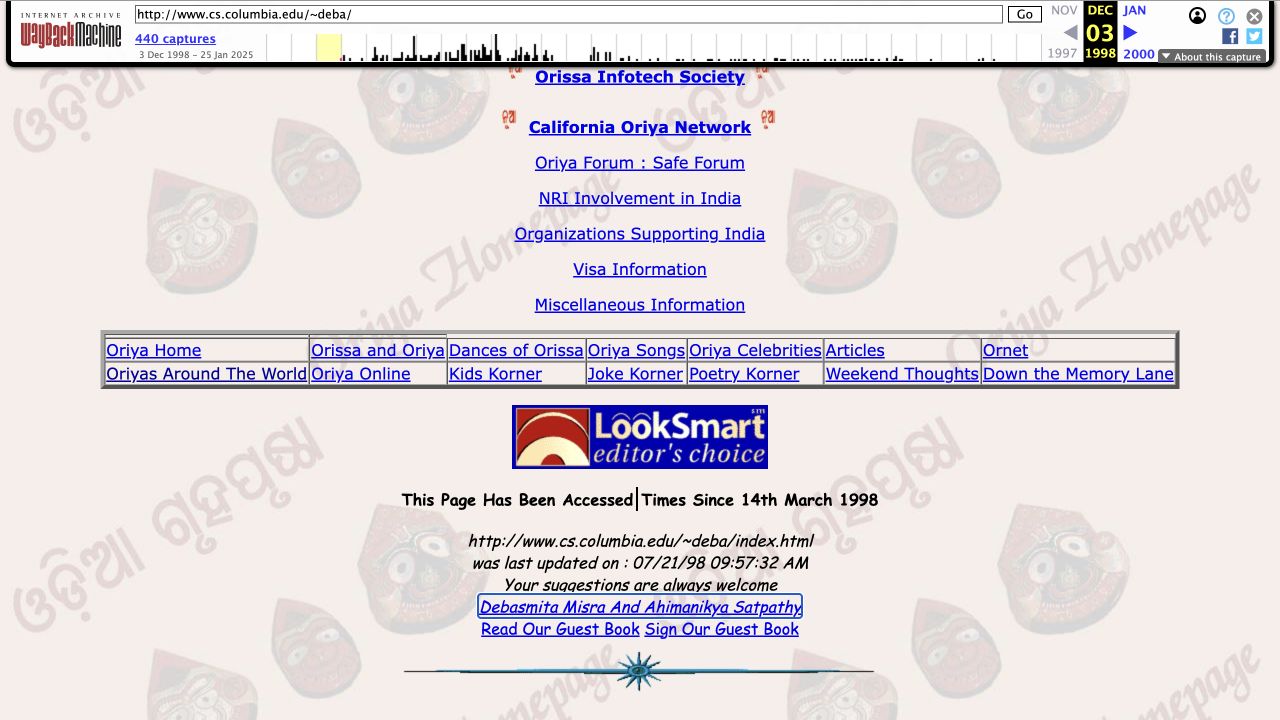
The versions that survive show how much the homepage changed. The pale background from our March emails is visible in the December 1998 capture. By May 2001, the homepage displayed through odiya.org had changed again.
We planned the release for Saturday, 14 March 1998. That day I told a visitor who was testing the forum that I would make the new site public by the evening. In another message dated 14 March, I told Bhaina that the counter, chat, forum and applets were working. There were still broken links in the children’s section to sort out.
On 16 March I sent the announcement to ORNET: “We released a new version of the Oriya Home Page.” I listed thirteen sections, from songs and dance to poetry, children’s pages and people’s memories. We had a chat room and a Java forum. I also suggested using a text browser for anyone who needed information quickly on a slow connection.
It was still a work in progress. People told us what worked and what did not. Some liked the new look; others found it slow or had trouble with the applets. We kept making changes. On 18 March I told him I had changed the front-page layout and added a guestbook.
A few days earlier, when we were talking about criticism, I had written: “What I did is for a mass not for you, not for me.” We were making something for other Odias to use.
On 5 March, I thanked Bhaina for the opportunity to work on the homepage and told him how much it meant to me as an Odia.
The messages from readers help explain it. In April, Joyshree Mansinha wrote from New York that she had little contact with other Odias and enjoyed visiting the homepage. She wanted to contribute memories of growing up in Rambag. There were people on the other side of these pages, carrying their own memories of home.
There were unexpected requests too. In February, John H. Jenkins wrote from Apple, saying he was working on Unicode support for the Macintosh. He had found our site and asked how to write “Think different” in Odia. Around the same time I was asking about fonts and a free Odia editor.
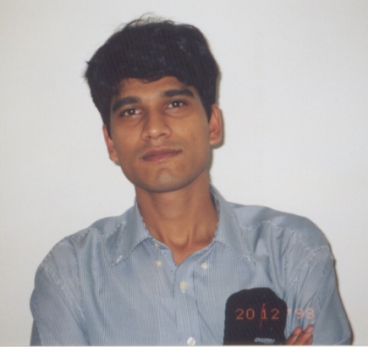
Later in 1998, I moved to the United States. This picture was taken in Fort Lauderdale, after the move. Back in March I had told Bhaina that I did not have a scanned photograph of myself.
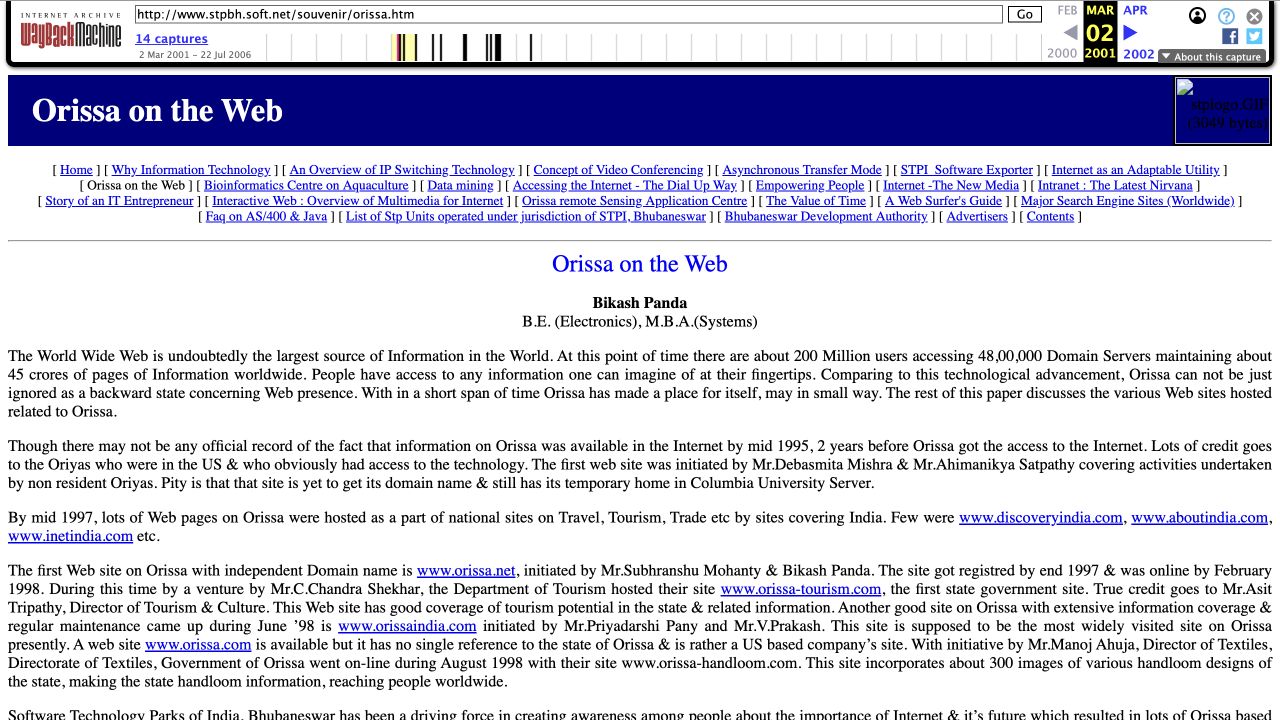
Bikash Panda called it the first website in his article, “Orissa on the Web,” and credited Debasmita and me. Debasmita had built and maintained the earlier site; I joined him as co-host, and we worked together on the 1998 redesign.
There were other people building an Odia presence online too. Priyadarsan Patra, Somdutt Behura and Chitta Baral appear in the early records. Ashutosh Dutta helped with hosting at Columbia. People shared material, offered space and wrote back with suggestions. Our work belonged to that wider effort.
The emails have brought back the ordinary parts of it: waiting for a reply, asking for a different colour, trying to arrange a chat across time zones. In one letter Bhaina sent his best wishes “as a brother and a good friend.”
References and image notes
Website screenshots are modern captures of Wayback Machine replays. Their dates identify archive captures, not design launch dates; replay images may come from other capture dates. The two March 1998 background files are original email attachments. Photograph dates are distinguished from archive dates below.
Bikash Panda, “Orissa on the Web”. Attributes the first website in its account of Odisha’s early web presence to Debasmita and Ahimanikya. The emails distinguish Debasmita’s earlier site from their 1998 redesign. Article captured 2 March 2001; publication date unverified. This is not exhaustive proof of priority.
Oriya Homepage, University of Minnesota, February 1997. Names Debasmita as maintainer and gives 23 June 1995 as the visitor-counter starting date. The counter supports the early timeline but does not independently prove a launch date.
Oriya Home Page, Columbia University, December 1998. Credits Debasmita and Ahimanikya together and includes the California Oriya Network link.
My Odiya Homepage, May 2001. The Columbia-hosted page displayed through the odiya.org address in the supplied archive.
odiya.org, May 2001. The domain’s archived frameset points to the Columbia-hosted homepage.
Debasmita’s author page. The author credit identifies Debasmita; the earlier portrait is retained in the knowledge base.
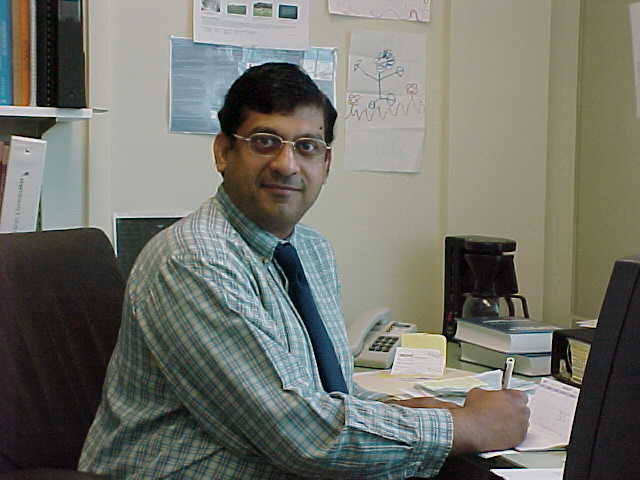
Debasmita at his desk, archived August 2009. The photograph’s date and location are unconfirmed.
Fort Lauderdale portrait, archived October 2000. Location and year—Fort Lauderdale, 1998—confirmed from personal recollection.
Oriya Homepage guestbook, August 2000 capture. Preserves the March 1998 message addressing “Deba and Ahimanikya.”
Priyadarsan Patra’s contributor acknowledgments, December 1996. Documents contributions and related work by Chitta Baral, Somdutt Behura and Debasmita Misra.
Email references and recollections
The following are personal archive emails, preserved in the accompanying knowledge base as selected text passages with mailbox names, message numbers and source line numbers. Dates follow message headers; some old time-zone fields are unreliable. Quoted passages in the article have light punctuation and spacing edits; the KB retains the selected email wording and marks omissions.
Early familiarity and co-hosting. sent-feb-1998, 3 February 1998, message 8: observer since September 1996. dmisra, 26–28 January, messages 1–2 and 5: link update, applets and Welcome Aboard. sent-jan-1998, 28–30 January, messages 55 and 57: working arrangements and Linux preview.
Design and friendship. sent-feb-1998, 1 February, message 1: original design plan and Bhaina. sent-jan-1998, 31 January, message 59: teasing about the credits. dmisra, 2 February, message 9: partners in the same crime. sent-feb-1998, 17 February, message 34: download-size comparison.
Original background images. sent-mar-1998, 6 March, message 13: request; 10 March, message 35: colour suggestion. dmisra, 9 March, message 26: gback.JPG; 10 March, message 27: gback1.JPG. Original bytes and hashes retained in the KB.
Identity and photograph. sent-mar-1998, 5 March, message 11: feeling more Odia and no scanned personal photograph. The reply is interleaved with quoted text; the KB excerpt retains Ahimanikya’s reply text.
Release and announcement. sent-mar-1998, 14 March, messages 48 and 56: release plan and working features. received-mar-1998, 16 March, message 87: ORNET announcement. dmisra, message 46: forwarded 16 March confirmation; the forwarding message is dated 17 March.
Criticism and continued work. sent-mar-1998, 14 March, message 50: community purpose and criticism. dmisra, message 46: brother and friend. sent-mar-1998, 18 March, message 64: layout changes and guestbook.
Readers and Odia computing. received-feb-1998, 20 February, message 73: John H. Jenkins’s Apple inquiry. sent-feb-1998, messages 45–46: Baraha and font permissions. sent-mar-1998, 19 March, message 69: proposed OriLipi project. received-apr-1998, 24 April, message 2: Joyshree Mansinha’s childhood memories.
Personal recollections. Ahimanikya recalls beginning conversations through ORNET shortly after joining IIT Bombay, and identifies the shared redesign as 1998. The emails establish observation from September 1996 but not the first conversation. Ada Labs, Prof. Deepak Phatak, and the Fort Lauderdale photograph’s location and year come from his recollections. The photograph’s exact day remains unconfirmed.
Further reading
Suggest an update. GitHub submissions are public; omit private contact details and consent documents.