
Part 1 · Land, History and Belonging
Chapter 1 of 48
Many Odishas
Landscapes, languages and ways of belonging
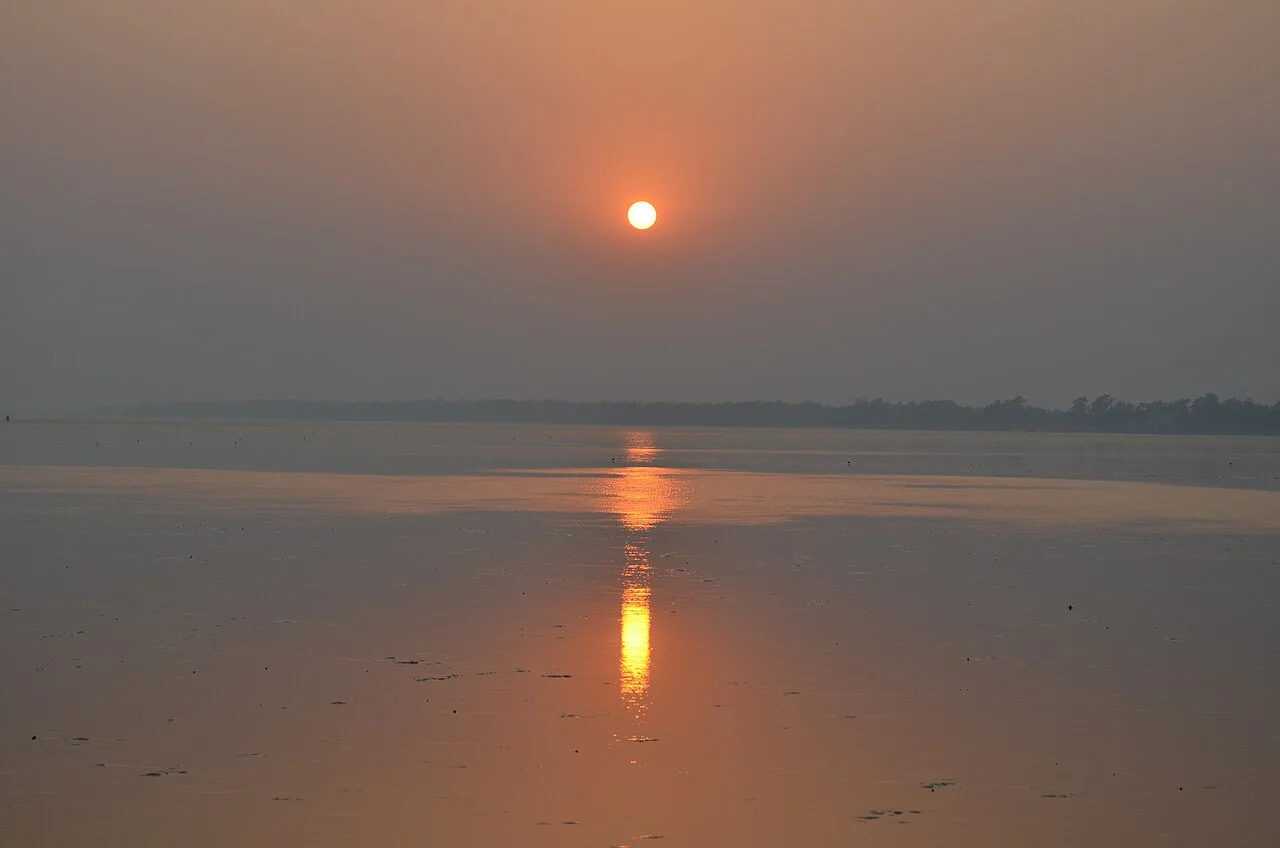
Evening light on Chandipur’s wet sand · photograph from 2012.
Nihar.race. Source · CC BY-SA 4.0. Existing resized photographic derivative reproduced full frame; no crop, recolouring or added elements in this chapter.

A photograph of Chandipur holds the evening light on wet sand. In another image, two Chhau performers occupy a darkened stage. A weaver sits before the patterned cloth emerging from his loom; farther south, fields lie among hills. Each is a recognisable view of Odisha. None can carry the whole place by itself.
To begin with many Odishas is to make room for these different scales of belonging: a home, a neighbourhood, a language, a working landscape, a remembered journey. This book approaches them through particular people, objects and practices. A regional name helps us find our bearings, but it should not decide in advance what everyone within that region must share.
The following pages offer an orientation rather than a set of cultural boundaries. Coast, north, west and south are directions in which to look. The stories we encounter will cross them, just as a language, a textile or a performer’s repertoire can lead beyond a district or state border.
Water and the work around it
Chilika brings freshwater and the sea into a coastal brackish-water lagoon. The Chilika Development Authority describes a place important both for migratory birds and for fishing livelihoods. These are connected ways of understanding the same waters: an ecological habitat and a place in which people make a living. A cultural account needs room for both.1
Elsewhere on the coast, a river mouth offers another perspective. In his 2019 account of Balaramgadi near Chandipur, Jitu Mishra describes the Budhabalanga reaching the Bay of Bengal and records boats, unloading and fish auctions. It is a dated writer’s account, but its attention to work takes us beyond the view of the beach. The water is also a route, a workplace and a place of exchange.2
Such accounts suggest a way to read the coast throughout this book. A boat may enter a chapter as an object of craft, a means of earning, or part of a festival’s remembrance. Those meanings deserve to be followed separately before we connect them. A beautiful shoreline can draw our attention; the people who work beside it give us more to understand.
Northern forests and performing worlds
In Mayurbhanj, Similipal offers a different landscape from the coast. UNESCO’s biosphere-reserve profile places its forests within a wider ecological account. For this opening journey, it is enough to notice the change in setting and to ask what kinds of knowledge a forest landscape invites us to learn. Its appearance alone cannot tell us the histories or daily lives of those associated with it.3
Mayurbhanj is also a name in the history and practice of Chhau. UNESCO describes three regional styles: Seraikella, Purulia and Mayurbhanj. The shared listing matters. Odisha’s contribution can be recognised precisely without claiming the entire tradition as its own.4
The photograph here records two performers whose names are not supplied by its source. It gives a moment of a performance, not the years of training behind it. As we turn to dance later in the book, the movement on stage will be only one part of the enquiry. Teachers, musicians, learning spaces and audiences also belong in its story.
A forest and a performance do not add up to a complete portrait of Mayurbhanj. They are two entrances into it. Keeping that distinction in mind lets us enjoy the clarity of an example without asking it to represent an entire region.
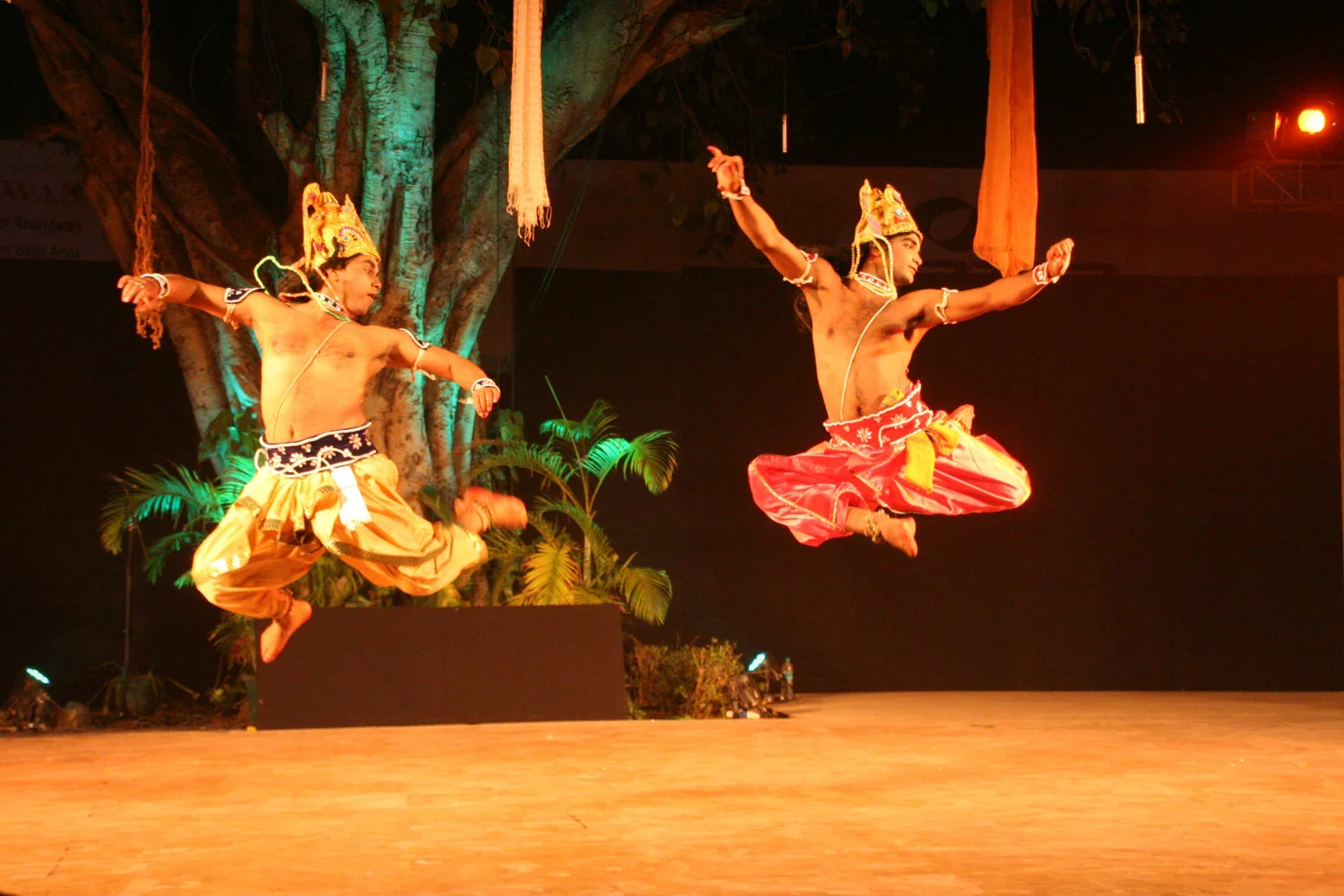
Mayurbhanj Chhau performers · Ramesh Lalwani, 2016. The source does not identify the individual artists.
Ramesh Lalwani. Source · CC BY 2.0. Existing resized photographic derivative reproduced full frame; no crop, recolouring or added elements in this chapter.

Western occasions and skilled work
The Sambalpur district account introduces Nuakhai and the gatherings called Nuakhai-Bhet Ghat alongside Bhaijiuntia and Dalkhai. Together, these references open questions about the agricultural year, family relationships, celebration and performance. Their value lies in the occasions they name; a district summary does not prescribe how every household observes them.5
Kalahandi’s cultural account identifies Ghumura among its art forms. Setting it beside the western traditions described around Sambalpur gives us a more varied picture than a single label such as folk dance. The next questions concern the particular performers, instruments and occasions of each practice. A shared place in a festival programme does not make their histories interchangeable.6
Skilled production offers another route into western Odisha. The handloom department lists Bargarh for cotton tie-dye, silk and furnishing textiles. In the photograph of Sambalpuri weaving, attention rests on a person at work and the fabric stretched before him. The later chapter Threads of Place follows the preparation of yarn and the choices that become visible in cloth.7
These examples bring celebration and livelihood into the same account. One chapter may follow a song; another may follow a thread. Both should leave us asking who carries the knowledge, how it is learned and what makes its continuation possible.
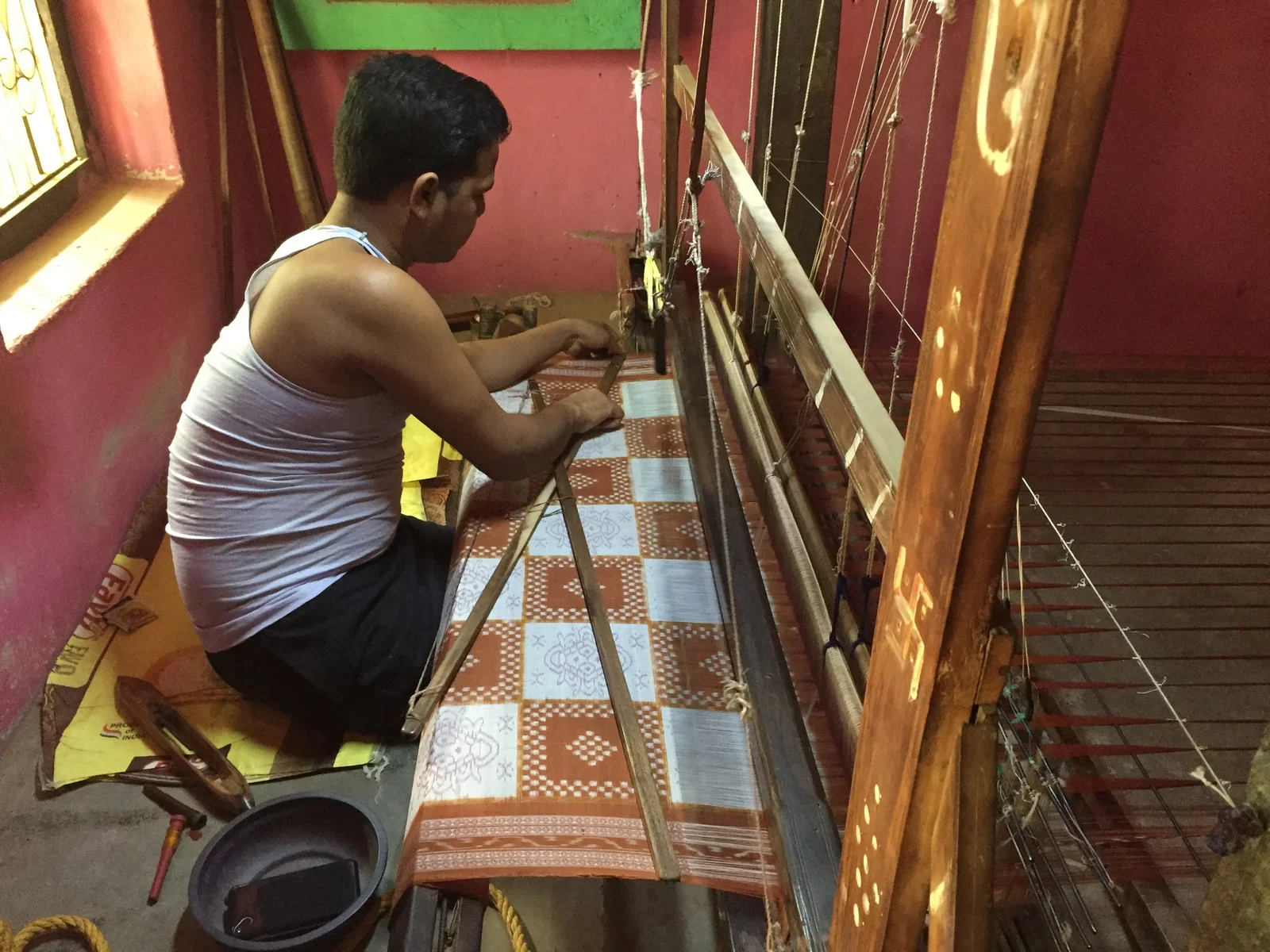
Sambalpuri sari weaving · the image record does not identify the weaver.
Saileshpat. Source · CC BY-SA 4.0. Existing resized photographic derivative reproduced full frame; no crop, recolouring or added elements in this chapter.

Southern landscapes as lived places
The photograph of hills in Koraput was made on a journey towards Rayagada. It shows land seen from a traveller’s position. To understand a lived landscape, we must go beyond the distant view and turn to accounts of particular activities and people. Neither scenery nor the broad word Adivasi can supply that detail.
At Kotpad in Koraput, the Development Commissioner for Handlooms associates weaving with the Mirgan community and describes aul-root dyeing. That is a specific connection among place, skilled work and material knowledge. It does not describe every community in the district.8
A situated study provides another kind of detail. Sujatarani Dandapat’s research centred on Kurli in 2017–18 describes finger millet, pulses, sesame and tubers, alongside crops including pineapple and banana. It also records cooperation between households when work exceeds the labour available within one household. This account of Dongria cultivation brings decisions, relationships and changing demands into view.9
Niyamgiri’s Dongria communities receive a fuller treatment elsewhere in our collection. Here, the study offers a reminder about scale: knowledge gained in a named place should retain that place, its date and its people. A detailed case can deepen our understanding without becoming a substitute for all the communities of southern Odisha.
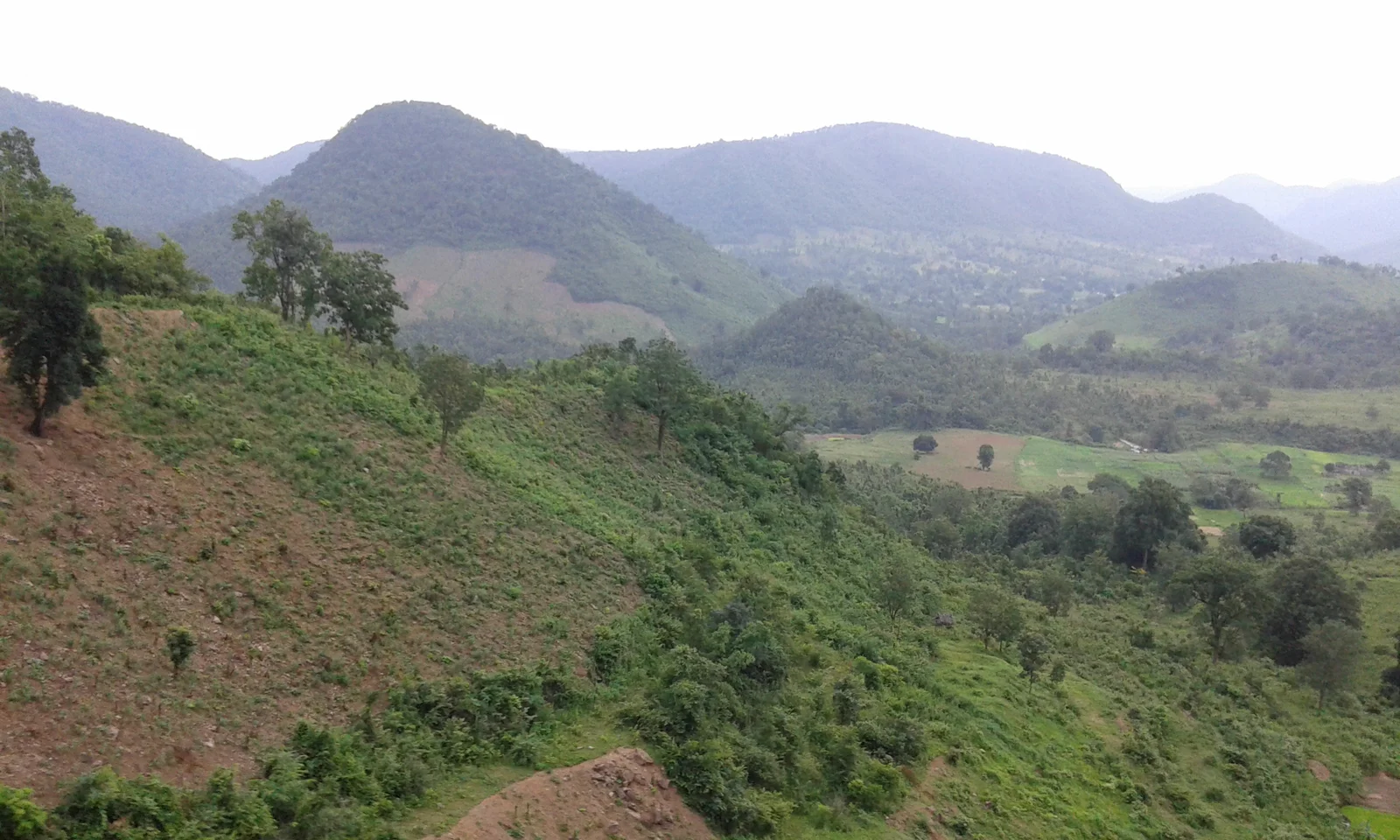
Hilly terrain in Koraput district, photographed on a journey towards Rayagada, 7 August 2015. This is not identified as Niyamgiri.
Kkmishra1960. Source · CC BY-SA 4.0. Original photograph reproduced full frame, scaled for the page; no crop or recolouring.

Languages do not stop at the border
The Central Institute of Indian Languages describes Kuvi as a Dravidian language spoken in Odisha and Andhra Pradesh, and notes its use of Odia script in writing. One language therefore leads us across a state boundary and into questions about the relationship between speech and script. Kuvi and Kui must also be kept distinct rather than treated as interchangeable names.10
SCSTRTI’s catalogue of trilingual booklets offers another practical entrance into multilingual Odisha. Its separately labelled language resources make difference visible within educational publishing. A catalogue cannot tell us how every child learns or how a particular classroom works, but it shows why a single-language account of the state would be inadequate.11
In later chapters, Odia appears alongside other languages and regional ways of speaking. Their names and classifications sometimes require careful attribution. The useful question is not only which language belongs on a list. It is also who speaks, reads, writes, translates and teaches it, and whose account we are hearing.
Cities with more than one history
The cities belong in this cultural landscape as fully as the hills and villages. Cuttack’s district profile connects the surviving remains of Barabati with the city’s silver-filigree tradition. These lead to different kinds of history: one through a gateway, moat and palace mound, another through skilled making. The palace remembered in historical accounts should not be mistaken for an intact building.12
Bhubaneswar similarly asks us to look across periods. The Mukteswar photograph gives one view of its carved architecture. The municipal City Disaster Management Plan identifies Otto Konigsberger as the planner of the modern city. The two references belong to different chapters of urban history, but both belong to Bhubaneswar.13
A cultural edition should be able to move between an older building and a modern institution without treating one as more authentic simply because of its age. It should also ask how people inhabit and interpret those places now. The photograph of a temple can begin that enquiry; it cannot finish it.
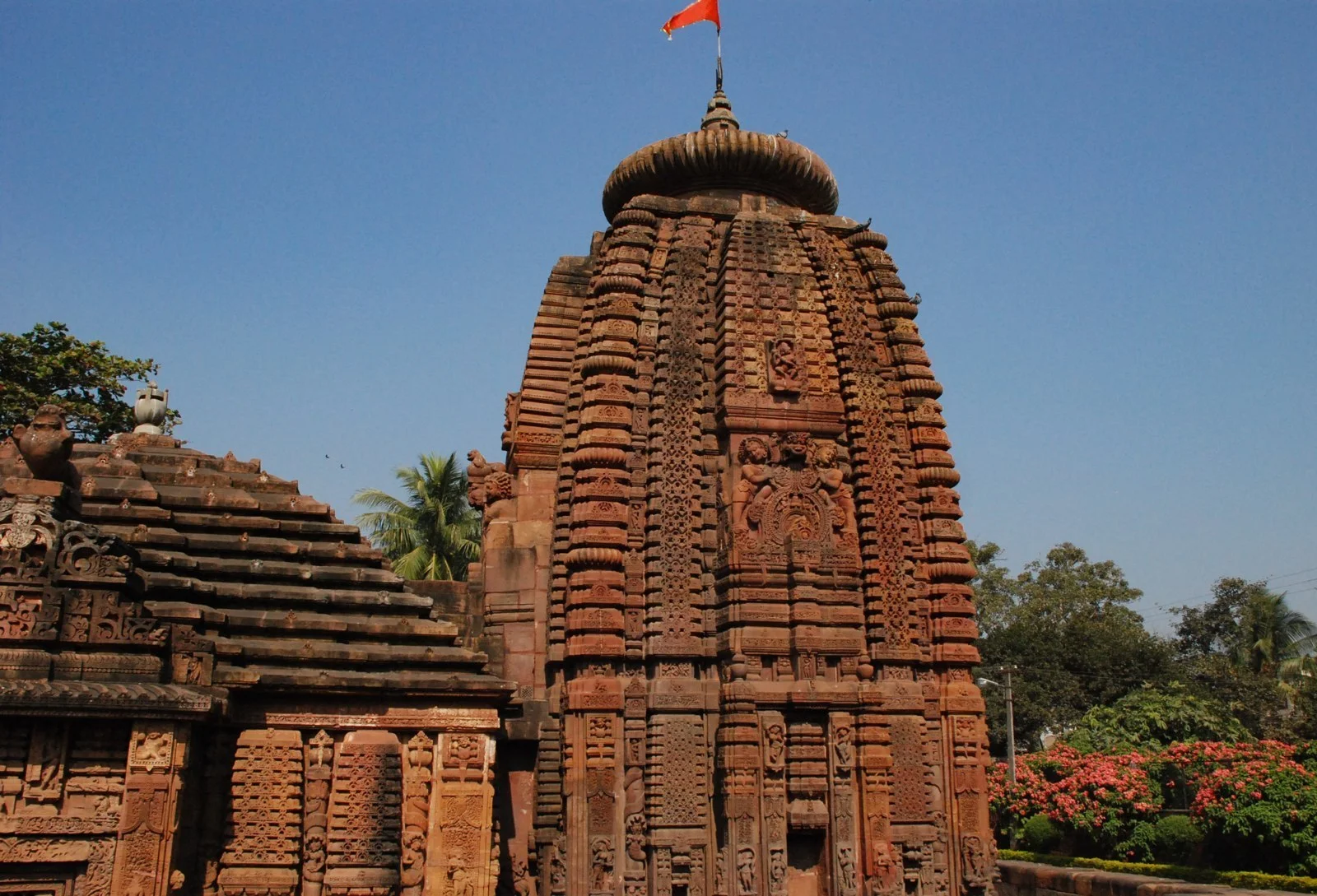
Mukteswar temple, Bhubaneswar · Bikashrd, 2007.
Bikashrd. Source · CC BY-SA 4.0. Existing resized photographic derivative reproduced full frame; no crop, recolouring or added elements in this chapter.

A way into the book
The examples gathered here are deliberately incomplete. They do not rank districts or assign each community a representative craft. They establish a habit of attention: start with something particular, keep its context, and follow the connections that the evidence allows.
That habit also makes space for questions a celebratory survey can leave aside. Who has access to a place of learning or worship? Whose labour is named when an object is admired? How do women describe work that an outside account calls tradition? What do younger people want to retain, revise or leave behind? The chapters that follow must make room for answers that do not always agree.
Odisha can be approached through a famous monument, a familiar song or the food remembered from home. Any of these may be a beginning. This book asks us to keep going: from the image to the practice, from the practice to the people, and from one known place towards others we have yet to understand.
Footnotes & Sources
- Chilika Development Authority, Visit Chilika. Lagoon ecology and fishing livelihoods; no current population totals or tourism services inferred. ↩
- Jitu Mishra, The Tale of Chandipur Beach Beyond the Vanishing Sea, Odisha Tourism, 10 October 2019. The Budhabalanga river mouth and the author’s dated account of fishing at Balaramgadi. ↩
- UNESCO, Similipal Biosphere Reserve. Northern Odisha forest-landscape context. No area ranking or species count used. ↩
- UNESCO, Chhau Dance. Three regional styles, including Mayurbhanj; a shared inscription rather than an Odisha-exclusive tradition. ↩
- Sambalpur District, Culture and Heritage. Nuakhai, Nuakhai-Bhet Ghat, Bhaijiuntia and Dalkhai. The chapter preserves differences between a district account and every household’s practice. ↩
- Kalahandi District, Culture and Heritage. Art Forms table, Ghumura. Unsupported origin chronologies are not adopted. ↩
- Government of Odisha, Important Handloom Centers. Bargarh weaving products; a documented production association rather than a current workshop listing. ↩
- Development Commissioner for Handlooms, Sustainability in the Handloom Traditions of India. Printed p.36 / PDF p.49: Kotpad in Koraput, the Mirgan community and aul-root dyeing. ↩
- Sujatarani Dandapat, Traditional Ecological Knowledge and Continuation of Swidden Cultivation, 2021. Methods pp.160–161; crops and household labour pp.166–168. Situated research centred on Kurli in 2017–18, not a statewide account of Adivasi life. ↩
- Central Institute of Indian Languages, Kuvi Collection. Kuvi as a Dravidian language spoken in Odisha and Andhra Pradesh, with writing in Odia script described. ↩
- SCSTRTI, Trilingual Booklets. Separate language-labelled educational resources. Catalogue evidence, not a complete census of languages or proof of classroom use. ↩
- Cuttack District, District Profile. Barabati remains and the city’s silver-filigree tradition. ↩
- Bhubaneswar Municipal Corporation, City Disaster Management Plan 2024. Printed pp.7 and10: Otto Konigsberger as planner. Used for the modern planning layer, not a complete history of the city. ↩
Photographs retain their individual licences. The Mayurbhanj Chhau photograph by Ramesh Lalwani is CC BY 2.0; the other four photographs are CC BY-SA 4.0. Source and licence links accompany every caption. Existing delivery images were reused full frame and scaled for the page; the Koraput photograph uses the original file. Format conversion for the document adds no visual content. Adapted share-alike images remain under their stated licences.
Suggest an update
Share a correction or source for this chapter. GitHub submissions are public. Please omit private contact details and consent documents.