
Reading the Bhagabata beyond the Tungi
A guide to finding the Odia Bhagabata online and keeping its words connected to their source.
Open the Odia Bhagabata on Wikisource and the contents lead to its skandhas, or major divisions. Choose the first and the text opens into chapters, invocations and numbered verses. A work associated with gathering to listen is available for someone to begin reading wherever they are.1
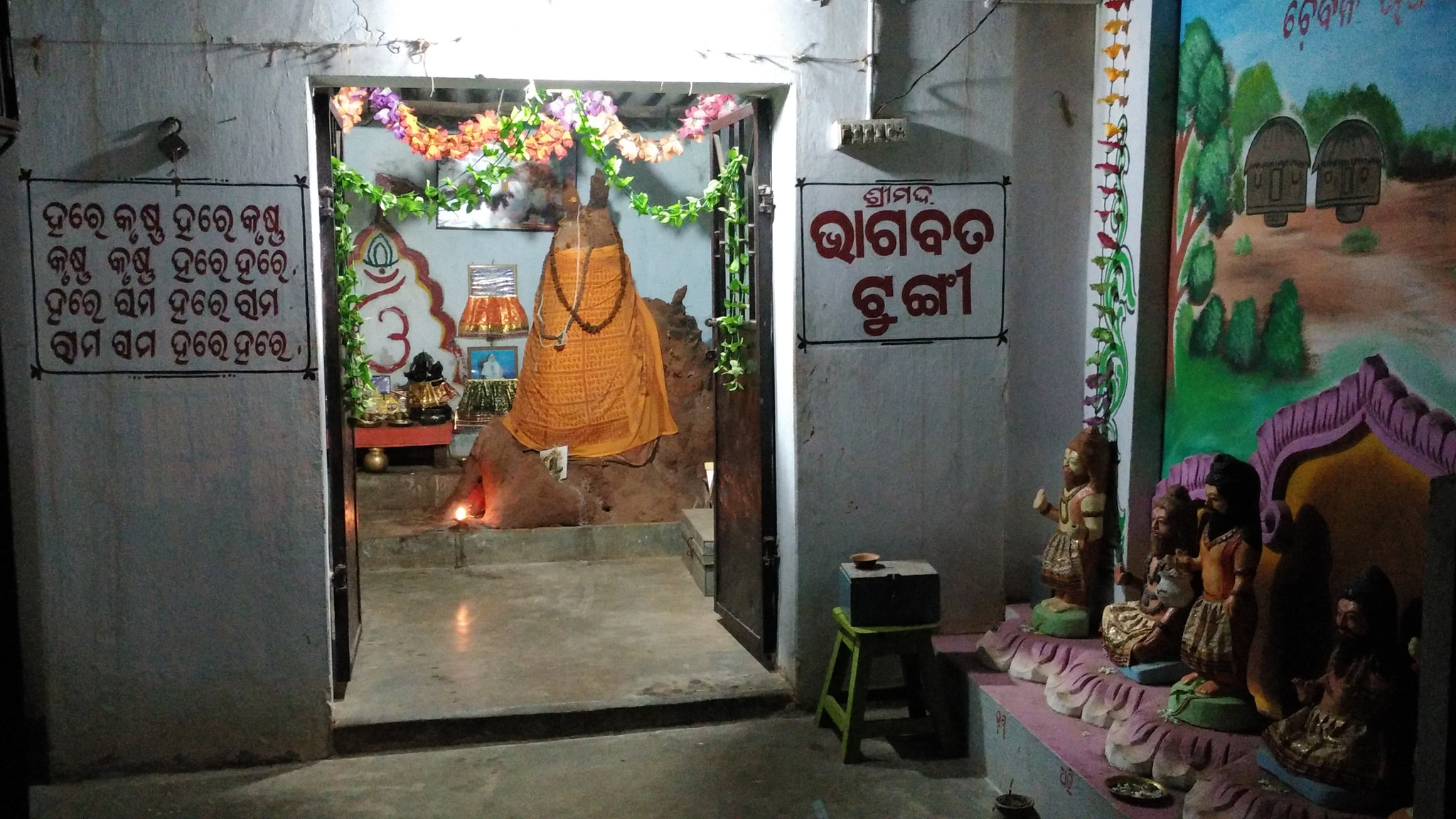
That association has a particular history. Historian Kailash Chandra Dash describes Bhagabata Gharas, also called Tungis, developing around Jagannath Das’s Odia Bhagabata. Religious and moral teaching were central to their purpose; his account also describes libraries, night schools and religious discussion in the colonial period.2 Our companion essay, A Place to Learn Together, considers what this tradition can offer a community learning circle. Here, the starting point is the book itself: how to reach it and how to understand the digital copy in front of us.
The work behind the readable text
The online Bhagabata has a history of its own. In January 2015, Wikimedian Subhashish Panigrahi described volunteers converting a version available through Odia.org from older font encodings into Unicode, the character standard used for the Wikisource text. Contributors then proofread and formatted it. The account identifies several kinds of work behind what a reader encounters as an accessible page.3
This matters because a digital book can take different forms. A scan shows the appearance of a particular page. A transcription presents its words as text that can be searched and copied. Each serves a purpose: the scan helps a reader inspect the source, while searchable text helps locate a passage. Keeping them connected makes checking easier.
The 2015 account documents a conversion and proofreading effort. It should not be read as a guarantee that every line in every later version is error-free. Like a printed book, a digital text deserves attentive reading.
Begin with a chapter
Start at the Odia Bhagabata contents. The link ପ୍ରଥମ ସ୍କନ୍ଧ opens the first skandha; ପ୍ରଥମ ଅଧ୍ୟାୟ marks its first chapter. The numbered Odia verses begin with an invocation to Nrusimha. These landmarks are more useful for returning to a passage than remembering how far down the screen it appeared.1
For a first reading, choose a short passage and keep its skandha, chapter and verse numbers together. If a family member has a printed copy, place the two versions alongside one another. Read the surrounding verses before deciding that a word or line differs. A short note about the passage will be easier to revisit than an isolated quotation forwarded without its location.
The contents and first-skandha pages linked here do not identify a print publisher or edition year. They offer a route into the text, but a comparison with a particular printed edition needs that edition’s own details.1
Keep the source with the quotation
When saving a passage, record the work and author, its skandha and chapter, the verse numbers as displayed, and the page address. For an online version, add the date consulted or a permanent link to that revision. For a printed book, retain its title-page and publication details, together with the page number. These small additions let another reader follow the same trail.
The English Wikisource guide to proofreading explains a workflow in which contributors compare text with scanned pages and record the progress of checking. It also explains how checked page text is assembled into readable chapters.4 This describes a scan-based workflow; it does not establish that the Odia Bhagabata pages linked above have undergone every stage of that process.
If two copies disagree, keep both readings and their sources until the difference can be resolved. A change may come from a transcription mistake, a spelling convention or an editorial choice. The difference itself is a reason to look more closely, rather than silently replace one reading with the other.
A Tungi brings readers and listeners into a devotional gathering. A digital edition offers another way to encounter the words. Someone reading online can begin with one chapter, keep a reliable reference and bring a question to a more experienced reader. The text then becomes something they can return to, discuss and share with care.
Footnotes & Sources
-
Odia Wikisource, ଓଡ଼ିଆ ଭାଗବତ contents and first skandha, consulted 21 November 2026. Contents, chapter headings and first numbered Odia verse; these pages do not supply a named print edition. ↩ ↩2 ↩3
-
Kailash Chandra Dash, “A Discourse on Odia Cultural Space”, 25 February 2020, “Bhagavata Ghara” section. ↩
-
Subhashish Panigrahi, “Odia Wikisource digitizes classic books to create large Unicode text library”, 14 January 2015, “Digitizing the classic Odia book Bhagabata” section. ↩
-
Wikisource, “Help:Proofread”, introduction and sections on page scans, page status and assembling text, consulted 21 November 2026. ↩
Continue reading
Further reading
Suggest an update. GitHub submissions are public; omit private contact details and consent documents.