
Part 8 · Modern Media and Cultural Futures
Chapter 48 of 48
Keeping Culture Alive
Learning work and the next generation
A song continues when someone learns to sing it. A skill continues when there is time to practise, material to work with and a reason to return tomorrow. A language continues in questions, jokes, disagreements and ordinary conversation. Cultural life depends on these repeated acts, often carried out far from a stage or a commemorative occasion.
This book has followed many such worlds across Odisha. Its closing question is practical: what helps people carry knowledge forward? The answer includes teaching and memory, but also livelihoods, access and choice. Keeping culture alive means attending to the conditions in which people can continue to make it their own.
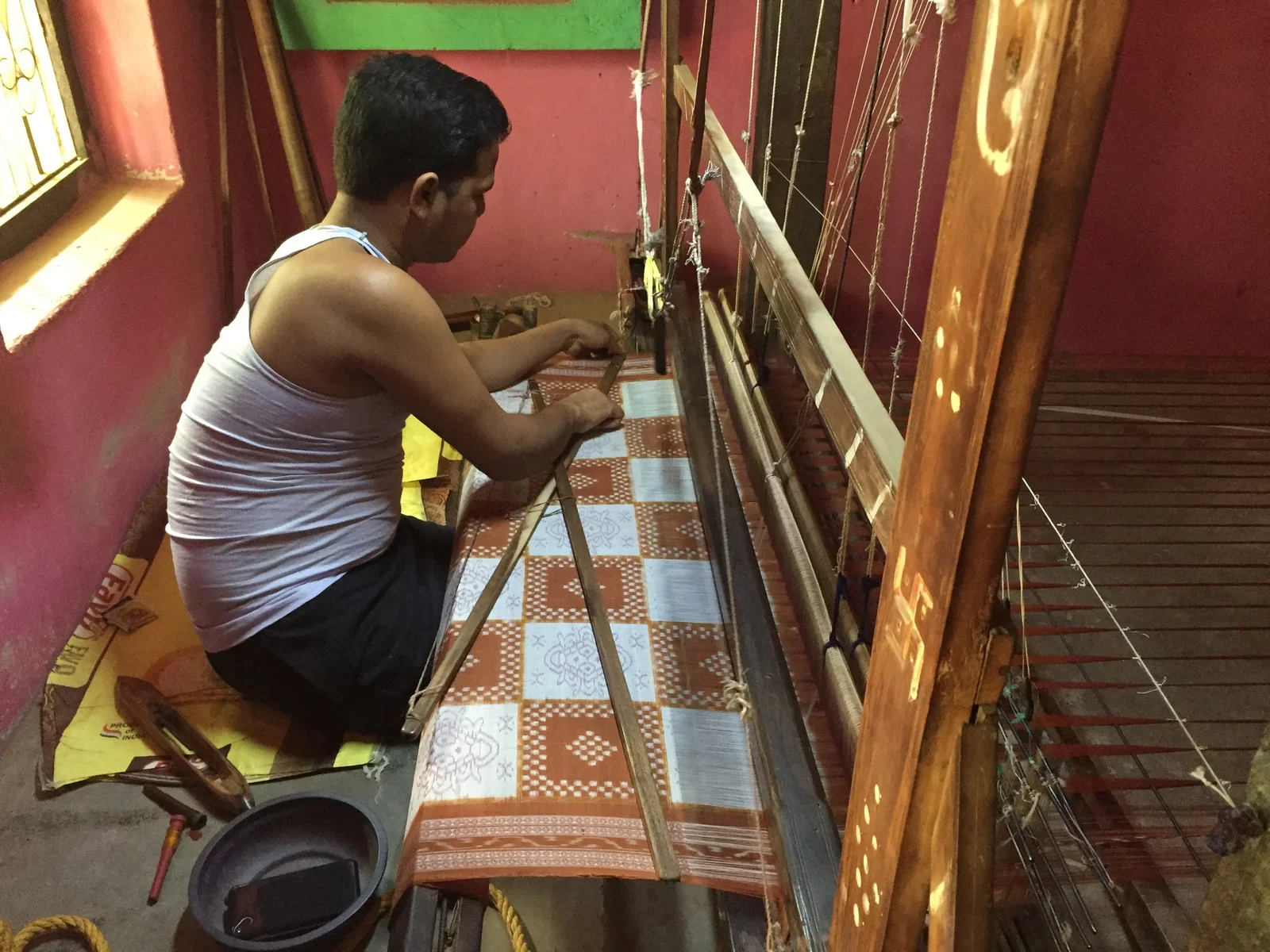
Sambalpuri sari weaving · the image record does not identify the weaver.
Saileshpat. Source · CC BY-SA 4.0. Resized and converted to WebP; full frame retained. Derivative available under CC BY-SA 4.0.

Learning begins with someone being welcome
UNESCO’s account of cultural transmission emphasises continuing practice and learning between generations. It recognises that living heritage changes as people pass it on.1 This helps us understand why a recording, an exhibition or a festival can support a tradition without replacing the relationship between someone who knows and someone who is learning.
That relationship needs a language in which questions are possible. In a February 2026 report, UNICEF describes Savitri Pingwa’s experience at Kumbhitangari in Keonjhar, where Ho-speaking children encountered difficulties with lessons conducted in unfamiliar Odia. The account describes teaching that connects their home language with Odia learning materials.2 It is a particular reported experience, but it gives the wider question of access a human scale.
Learning Odia and respecting Odisha’s other languages can be parts of the same commitment. A child should be able to bring a familiar word into a classroom without being made to feel that home knowledge is an obstacle. An adult beginner, too, needs room to hesitate, mispronounce and try again. Shame rarely makes a dependable teacher.
In a family or neighbourhood, a useful beginning might be one story, a short song or the name of a tool. Ask who uses it and when. Let a willing practitioner demonstrate, then allow time for another person to attempt the task. These are proposed ways to begin, not a programme shared by every community.
The invitation also needs practical support. Timing, seating, cost, transport and care responsibilities influence who can attend. A gathering that welcomes everyone in words can still exclude people through its arrangements. Listening to those who do not return may teach organisers as much as counting those who came.
The livelihood behind the skill
The loom pictured at the opening of this chapter makes a simple point visible: cloth requires work. Behind a finished object lie learned movements, tools, materials and time. Praise for a tradition does not by itself pay for any of them. Asking young people to continue skilled work also means taking their prospects and choices seriously.
Utkalika’s institutional history describes a mandate to support handicraft marketing, alongside activities involving raw materials, training and product development.3 The range is instructive. A maker may need help reaching a buyer, obtaining supplies or developing a product, rather than another invitation to perform authenticity for an audience. An organisation’s stated activities, however, do not establish what an individual worker earns.
For an organiser commissioning a demonstration, the practical response is to discuss preparation, materials, travel and payment beforehand. Teaching is work even when the session is short. Credit should identify the contributor as they wish to be named, and a photograph should not substitute for an agreed fee. These are working principles for a respectful arrangement.
Continuity also needs room for invention. A weaver, performer or illustrator may adapt a form for a new setting while retaining relationships with earlier practice. The interesting questions concern what changes, why it changes and who makes the decision. A new design is not automatically a loss, just as a familiar appearance is not proof that working conditions are sound.
No generation owes another a predetermined occupation. Someone may leave a family craft and remain connected through language, patronage, research or teaching. A meaningful cultural future gives practitioners reasons and opportunities to continue, while allowing people to choose the shape of their own lives.
Memory with a voice and a name
The still below comes from a recording of Musamoni Panigrahi telling a story in Baleswari Odia.7 Naming the speaker, the language variety, the recorder and the date gives the image a recoverable setting. The record preserves a particular telling; it cannot contain every occasion on which the story has been shared.
UNESCO’s ethical principles place communities in the leading role in safeguarding their heritage and emphasise dialogue and continuing informed consent.4 For a local recording project, that means discussing the audience and proposed uses before recording begins, then keeping those understandings open to review. A person may welcome a family copy while declining a public upload. The ability to make that choice is part of cultural care.
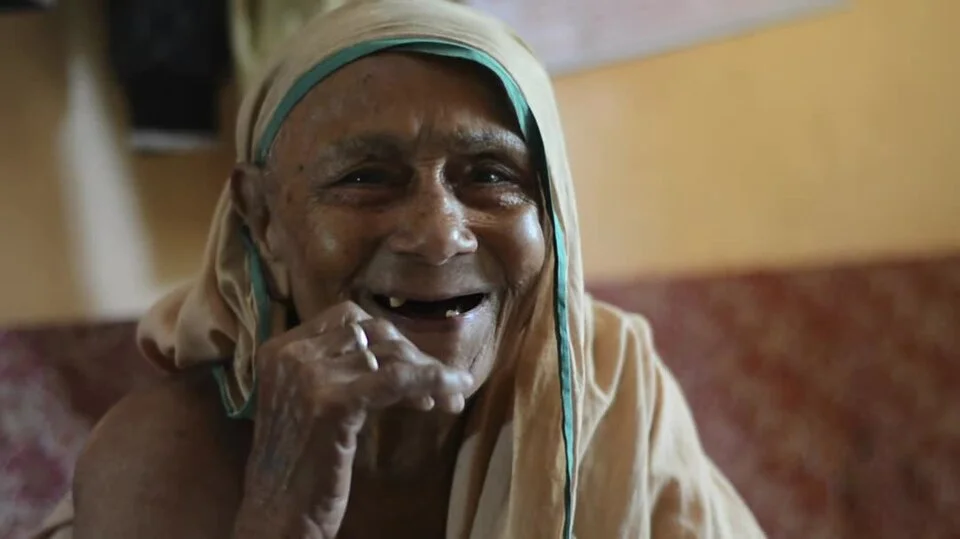
Musamoni Panigrahi telling a story in Baleswari Odia. Preview still from the recording dated 20 January 2014.
Subhashish Panigrahi. Source · CC BY-SA 3.0.
Something worth returning to
A community archive can begin modestly: a named recording, a dated photograph, a notebook of expressions or a scanned publication. Each needs enough description for another person to understand its source. Keep a family recollection identifiable as a recollection; keep unanswered questions beside the answers. Different memories need not be forced into a single authoritative version.
Odia Bibhaba’s account of Srujanika’s digitisation work shows how collecting, copying and organising printed material can create routes back to literature.5 Such projects also remind us that saving a file is only one step. Someone must maintain the collection, help readers find it and carry its explanations forward when responsibility changes.
A place to meet can give that work an everyday audience. Bakul Foundation describes libraries sustained through donated books, contributions and volunteer participation, with storytelling and other activities around reading.6 Its example suggests the value of a dependable invitation. The important question for a new group is what it can sustain after its opening event.
A possible beginning is four small meetings. Read something together, invite a willing contributor, make one carefully described record and review what happened. Ask participants what they learned, what made attendance difficult and whether they want to continue. Share the organising work and agree how contributors will be supported. This is a proposal for a manageable trial, not a measure of an existing programme’s success.
Odisha’s cultural life has never belonged to a single voice or form. Its future will also contain disagreement, movement and new work. We can help by making knowledge easier to approach, recognising the labour that sustains it and giving younger people room to respond. A fitting end to this book is therefore an invitation: learn something carefully, share it with someone willing, and make time to meet again.
Footnotes & Sources
- UNESCO · Transmission. Living heritage, continuing use and learning across generations. Indexed institutional text consulted after the page returned a browser challenge. ↩
- Gowri Sundararajan · Classrooms and language. UNICEF India, 27 February 2026. Reported experience at Kumbhitangari, Keonjhar; no new interview or statewide outcome claim. ↩
- Utkalika · Our Story. Institutional account of marketing, materials, training and product development. No claim about individual earnings. ↩
- UNESCO · Ethical principles for living heritage. Principles 1 and 4: community leadership, dialogue and continuing informed consent. Indexed text consulted; ethical framework, not legal advice. ↩
- Odia Bibhaba · About. Project Rebati, digitisation and access to books and periodicals. No present staffing or collection-total claim. ↩
- Bakul Foundation · Education. Library Movement, donated books, volunteer participation and reading activities. Organisation’s account. ↩
- Musamoni Panigrahi · Storytelling in Baleswari Odia. Recording by Subhashish Panigrahi, dated 20 January 2014. Source identity and still retained from the earlier chapter on growing up. ↩
Weaving photograph: Saileshpat, CC BY-SA 4.0. Storytelling still: from Subhashish Panigrahi’s recording of Musamoni Panigrahi, CC BY-SA 3.0. Source and licence links accompany the images. The retained images are resized without intentional cropping or added elements. The weaver is not named in the source. Image reuse terms do not establish permission for unrelated recordings or knowledge shared in other settings.
Suggest an update
Share a correction or source for this chapter. GitHub submissions are public. Please omit private contact details and consent documents.