
Part 6 · Food, Work and Ecology
Chapter 31 of 48
Rice, Millets and the Agricultural Year
Seed knowledge seasonal work and the journey to a meal
Before grain becomes a meal, it passes through decisions about land, water, seed and work. Odisha’s rice fields and millet plots hold knowledge of all four. This chapter follows that knowledge through the agricultural year, from choosing a crop to keeping seed for another season. The differences between places matter: a waterlogged lowland and a rainfed slope ask different things of a farmer.
Koraput offers a particularly rich window into this relationship. FAO describes an agricultural landscape in which rice, millets and pulses belong to a wider system of fields, forests and household livelihoods. Its heritage lies in the continuing work of farming communities, whose knowledge keeps crop diversity in cultivation.1
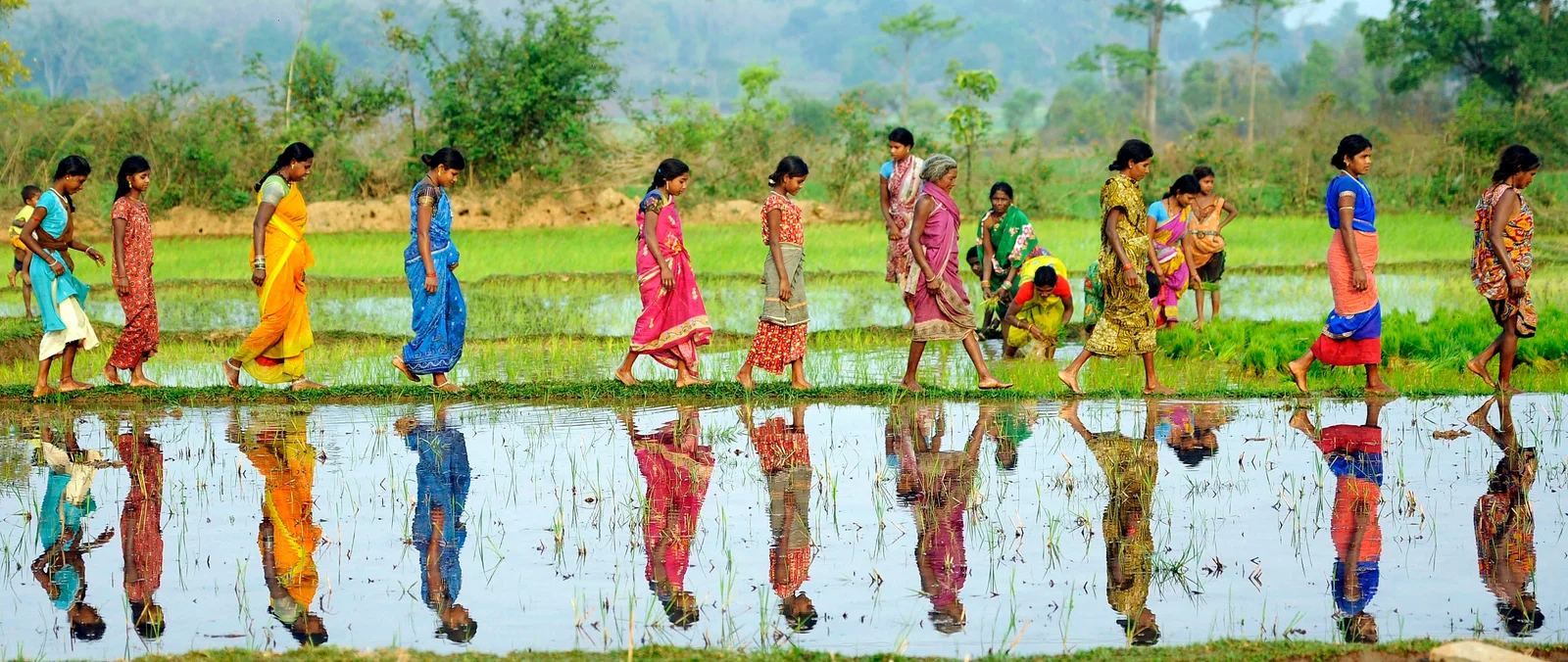
Women in a rice-growing landscape in Odisha. The photograph does not identify a rice variety.

A year shaped by water
A farming calendar is also a map of opportunity. In their account of Koraput, Luna Panda and Sagarika Mishra identify the monsoon kharif season as the principal cropping period. Finger millet grows in rainfed uplands, sometimes alongside other millets, pulses and oilseeds.2 The sequence of sowing, tending and harvesting therefore follows both rainfall and the crops chosen; it cannot be reduced to a single timetable for the whole state.
Water continues to determine possibilities after the main harvest. A study of farming and nutrition in Koraput, conducted within a wider project during 2013–2018, describes land commonly remaining fallow after kharif. Some households with irrigation grew vegetables in the following season and pulses before summer. The project also tested green gram and black gram after rice, and short-duration finger millet where irrigation permitted.3
These were interventions in particular villages, not a description of every farm in Odisha. They nevertheless reveal why an agricultural year has several possible endings. One field rests; another supports a second crop. A household’s options depend on access to water as well as seed, time and labour.
The National Rice Research Institute’s farmer guidance distinguishes drought-prone land, irrigated fields, shallow lowlands, deeper water and coastal salinity when discussing rice varieties.4 These categories make an important cultural point: the familiar image of a green paddy field conceals very different environments and accumulated experience.
Seeds kept for a reason
A rice name can carry a history of use. MSSRF’s Koraput action plan describes Kalajeera as an aromatic lowland landrace associated with festive consumption. Its account follows farmers and researchers selecting material, improving seed supply and confronting the difficulty of marketing a larger harvest. Producing more grain did not automatically provide a dependable buyer.5
A 2026 study involving 150 custodian farmers in ten Odisha villages records choices grounded in cooking, taste, ritual and field performance. Farmers associated Bahal and Bojni with pakhala; Jagbandhu with rice cakes; and Kalajeera with aroma and special dishes. These are reported preferences from the study, rather than universal properties or guarantees attached to a name.6
This distinction matters when heritage rice enters a shop or restaurant. The name on a packet invites further questions: who grew it, where was the seed obtained, and what do growers and cooks value in it? A catalogue can preserve a spelling while losing the relationships that made the grain worth keeping.
MSSRF also documents the practical work of conservation: selecting seed, drying it and storing it in household containers. Women have substantial responsibilities in these processes. Seed exchange during visits and market journeys connects the next harvest to other households’ experience.5 Keeping diversity alive is consequently a repeated activity, requiring people, space and attention every year.
Mandia and the millet field
Mandia, or finger millet, belongs at the centre of this story. Panda and Mishra describe its flour being made into everyday gruel in Koraput, alongside festive preparations. Their account also links declining millet consumption with changing tastes, rice supplied through the Public Distribution System and the time required for household processing.2
A crop may remain useful in the field while becoming difficult to bring to the table. Remembering millet as food therefore means asking how it is cleaned and milled, who does that work, and whether a family has the time and equipment to prepare it.
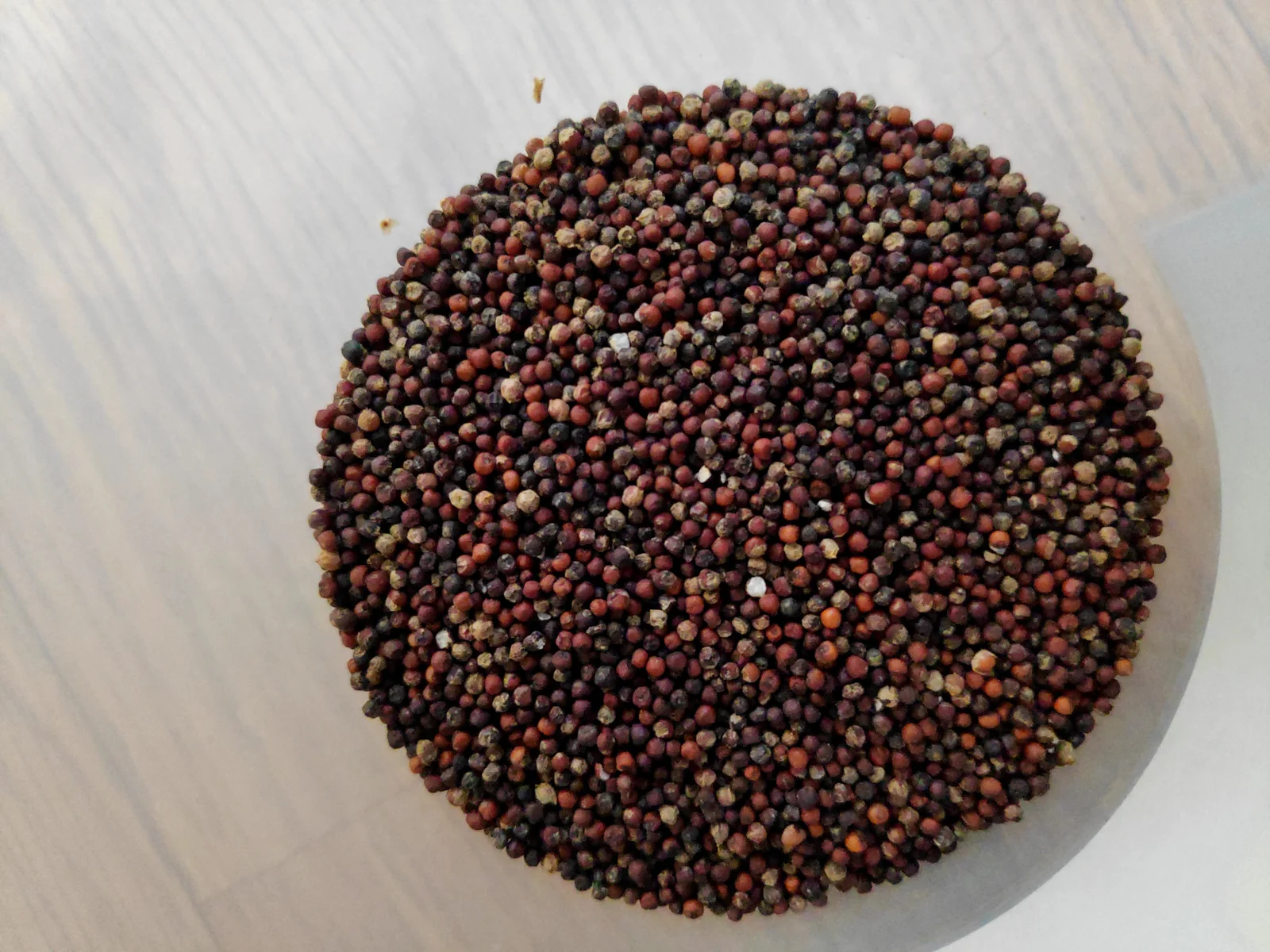
Finger millet, photographed in Nepal in 2019. Included as a crop reference, not as a view of an Odisha farm.

The work between harvest and meal
Pragati’s 2022 account describes women’s work in weeding and post-harvest processing, and the introduction of weeders, threshers and cleaners. Women’s groups received equipment and training; flour mills and food enterprises extended the effort beyond cultivation. The authors report reduced drudgery, while their account remains a programme report from its intervention areas.2
Equipment belongs in a cultural history of farming because it changes the experience of a working day. A useful question is not merely whether a machine exists, but who can reach it, operate it and afford its services. Celebrating inherited knowledge need not mean asking its holders to continue exhausting work unchanged.
The farming-and-nutrition study makes another connection: more kinds of production must become more kinds of food actually eaten. Its interventions combined crops with household gardens, animal foods where feasible, and nutrition awareness. The researchers examined consumption as well as production.3 A harvest total alone cannot tell the whole story of a household’s meals.
Rice and millet need not compete for a single place in Odisha’s identity. FAO’s account of Koraput places them beside pulses and forest foods within the same livelihood system.1 Each grain brings particular possibilities, but the people choosing, growing and preparing it give those possibilities meaning.
The next agricultural year begins before the last grain is eaten. Seed must remain available, fields must remain usable, and farmers must have reasons to continue. An edition devoted to cultural life should keep those conditions in view. The bowl on the table is the visible end of a much longer relationship.
Footnotes & Sources
- FAO · Koraput Traditional Agriculture. GIAHS profile; crop diversity and linked field, forest and household livelihoods. ↩
- Panda and Mishra · From Farm to Market. AESA Good Practices 55, December 2022, pp. 1–2 and 4–6. Koraput finger millet, food and processing; programme authors’ account. ↩
- Pradhan et al. · Farming System for Nutrition. PLOS ONE 16(3), 2021, e0248698. Koraput interventions and Table 1; study period 2013–2018. ↩
- ICAR National Rice Research Institute · Farmer FAQ. Question 2 groups rice recommendations by ecosystem. Used for environmental distinctions, not current cultivation advice. ↩
- MSSRF · Koraput Agricultural Heritage Action Plan. Report hosted by FAO; printed pp. 12–13 on seed selection and storage, 16–17 on Kalajeera. Historical project evidence. ↩
- Preserving agrobiodiversity in Odisha. Frontiers in Sustainable Food Systems, 2026. Methods and Tables 6–7; culinary descriptions are farmers’ reported perceptions. ↩
Both photographs are reproduced under the Creative Commons licences linked in their captions. Images are resized for the page without cropping or content alteration. The millet photograph is a botanical reference from Nepal. Sources checked 13 November 2026.
Suggest an update
Share a correction or source for this chapter. GitHub submissions are public. Please omit private contact details and consent documents.