
Part 6 · Food, Work and Ecology
Chapter 32 of 48
The Everyday Odia Table
Rice bowls vegetables and the choices that make a meal
An everyday meal is made through combinations: rice with something liquid, something green, something crisp or sharp. Odisha’s food traditions offer many ways to make those combinations. Pakhala, dalma, greens and fish are familiar points of entry, but no single arrangement represents every family or region.1
This chapter moves from the rice bowl to its accompaniments, paying attention to the choices that make a meal recognisable to the people eating it. A dish name helps us begin; the cook’s version tells us more.
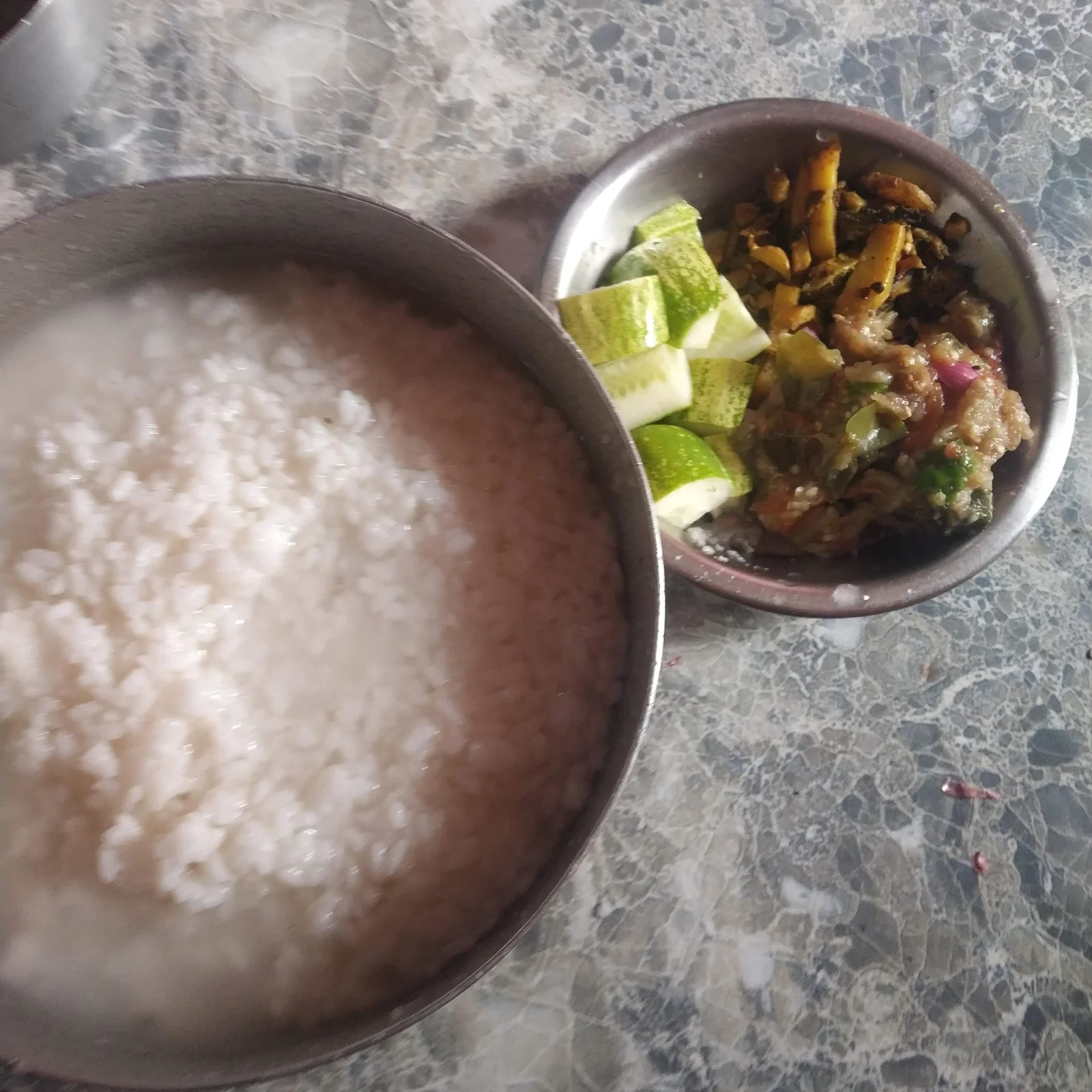
Pakhala with vegetable accompaniments, photographed in 2021.
Sangram Keshari Senapati. Source · CC BY-SA 4.0.

Pakhala and the things beside it
Pakhala brings cooked rice and water together. Odisha Tourism’s general account emphasises rice fermented overnight and its association with summer. Pritisha Das’s personal account begins with cooled cooked rice placed in water and then turns to the accompaniments.23 Together, these descriptions show why the word alone does not specify every detail of preparation. The treatment of the rice and the additions deserve to be named.
The liquid has its own place in the meal. Torani is the rice water; in Das’s account it includes a little curd and ginger. Her preferred plate brings together leafy greens, crushed badi, mashed potato, charred brinjal and tomato, with optional pickle. Onion, chilli and lemon supply further contrasts.3 These are one writer’s choices, not a checklist every household must complete.
Badi also connects a stored ingredient to the meal being assembled. Chef Nisar Ahmed describes badi chura as crushed black-gram badi combined with green chilli, garlic and onion. In another accompaniment, saga badi nadia, greens are cooked with badi and grated coconut.4 The same ingredient can therefore contribute to a dry side dish or become part of a vegetable preparation.
Think of the meal as a set of relationships. A soft mouthful of rice can be followed by a crisp bite; a mild vegetable can sit beside something sour or pungent. This way of reading the plate leaves room for a modest meal with two accompaniments as well as a larger spread. Its character need not depend on how many bowls are filled.
Dalma and the vegetable kitchen
Dalma brings lentils and vegetables into one preparation.1 The photograph below records a particular version: its maker describes boiling the ingredients and then seasoning them with additions including cumin, curry leaves, onion and garlic-ginger paste.5 That account belongs to this dish; it should not be turned into a rule for all dalma.
Greens deserve attention in their own right. Das describes saga bhaja as lightly spiced leafy greens, while Ahmed’s greens with badi and coconut offer another treatment.34 To ask which greens were used, and how they were cooked, is already to move beyond the broad label “vegetable side”.
The photograph catches dalma in its cooking vessel, with a serving spoon resting across it. It is an apt view of everyday food: a preparation ready to be shared, rather than an arrangement designed to stand for an entire cuisine.
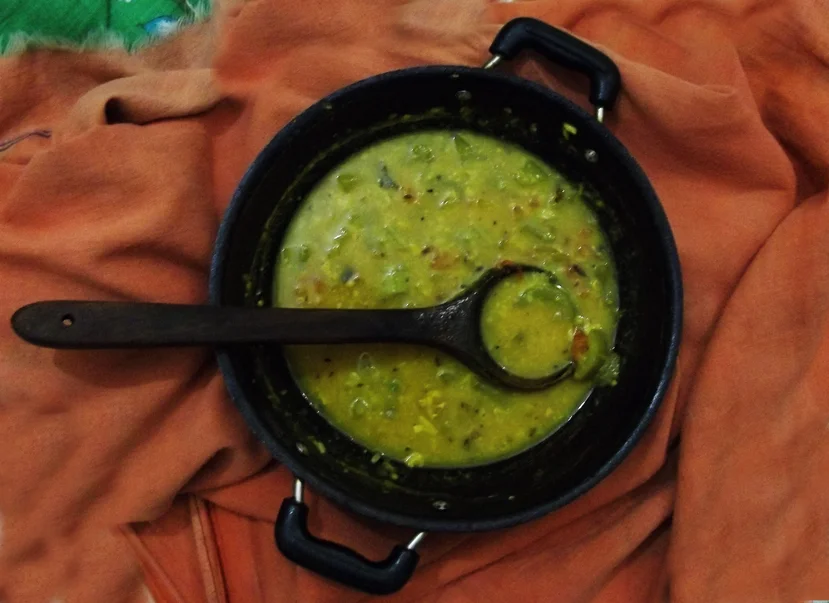
Dalma in a cooking vessel, 2011. This is one documented preparation.
Subhashish Panigrahi. Source · CC BY-SA 3.0.

Fish and the taste of mustard
Fish introduces another range of preparations. In his 2021 account, Ahmed describes chuna macha besara as small freshwater fish cooked relatively dry with mustard paste. He places it beside pan-fried prawns and rohu cooked on a tawa among possible pakhala accompaniments.4 These are documented restaurant preparations, useful examples without being a household survey.
The photograph below shows a different machha besara: fish and sliced potatoes in a gravy described by its photographer as containing mustard and dried mango.6 The contrast matters. “Mustard fish” can name quite different textures, cuts and accompaniments. Recording those particulars preserves more of a cook’s practice than insisting on one definitive version.
Fish belongs within this range of choices, not as a requirement for an Odia meal. The vegetable preparations on the preceding pages already show several other ways to build flavour and contrast.
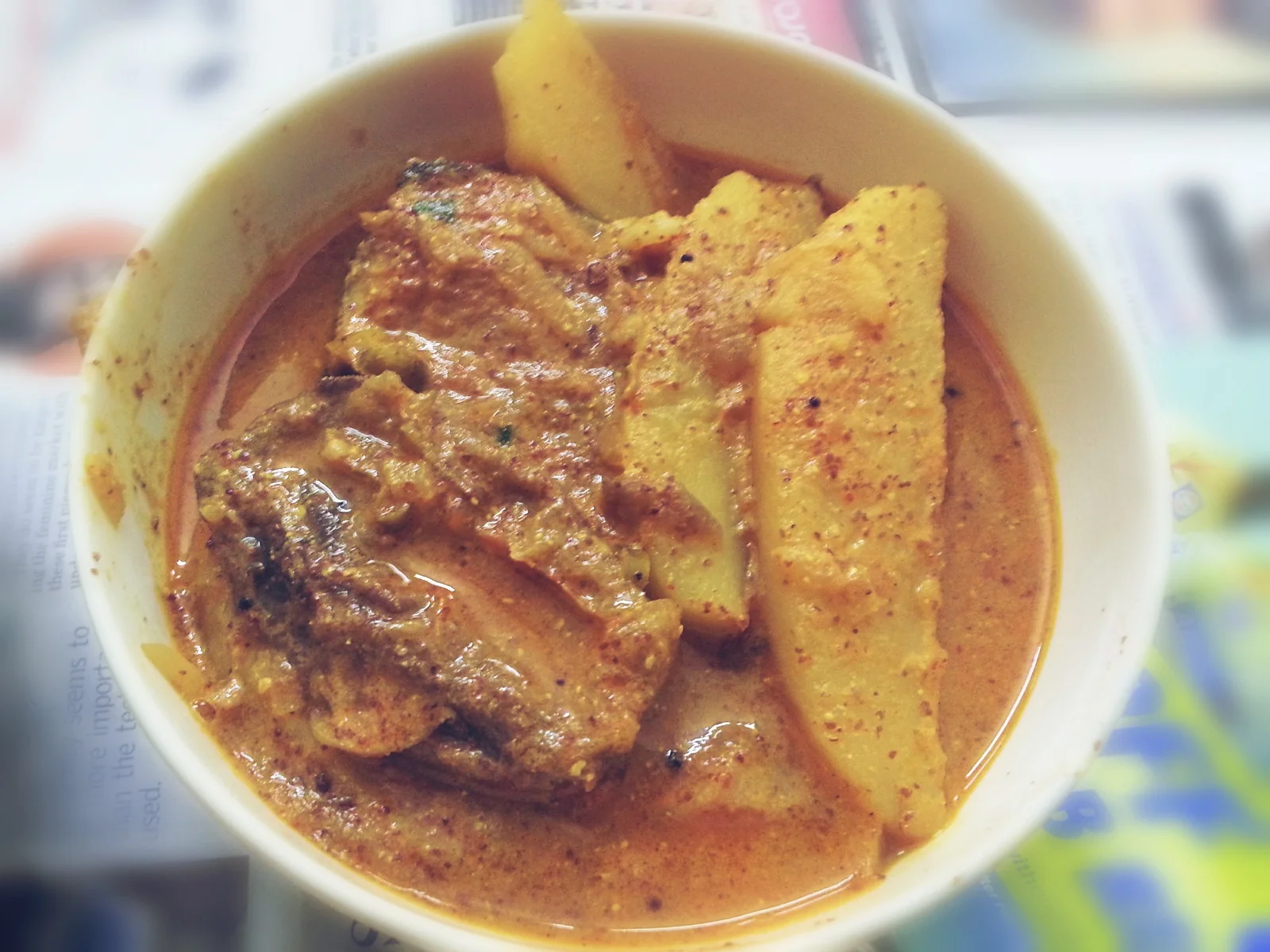
Machha besara with potatoes, 2015. The photographer identifies mustard and dried mango in this gravy.
Kumarnihar. Source · CC BY-SA 4.0.

The meal changes with the day
Everyday eating also happens outside the home. In Cuttack, dahibara aloodum brings lentil fritters soaked in curd together with potato curry; Incredible India describes its presence at street stalls and small eateries.7 It offers another combination of softness, sourness and spice. A cuisine’s daily life includes such purchased meals as well as what emerges from a family kitchen.
Regional variation is equally important. Odisha Tourism associates mudhi mansa, puffed rice with mutton, with Mayurbhanj.1 Neither that association nor Cuttack’s familiar street dish turns a region into a fixed menu. They are useful invitations to notice place, and to ask what changes between homes, working days and occasions.
In a 2019 interview, chef Thomas Zacharias emphasised the regional differences he encountered in Odisha and the distinct flavours of individual preparations.8 His observations suggest a helpful way to taste: attend to what a dish is doing, rather than judging the whole meal by the richness of its gravy or the number of spices it contains.
Access matters as much as reputation. A study of farming and nutrition in Koraput and Wardha found cereal-dominated diets at baseline and tested ways to improve dietary diversity through crops, gardens and other food resources.9 Its findings concern particular study communities, but they caution against assuming that a celebrated food tradition guarantees varied meals for everyone.
The everyday table is consequently both a repertoire and a daily task. Someone chooses ingredients, prepares them and brings the meal together. Preserving this knowledge means recording the unassuming details: the greens available that morning, the preferred sourness of torani, the way badi is crushed, and the combinations people return to. Those details allow a cuisine to remain recognisable while its kitchens continue to change.
Footnotes & Sources
- Odisha Tourism · Cuisine and Culinary Trails. Overview of dalma, regional foods and mudhi mansa. Descriptive evidence, not a household survey. ↩
- Odisha Tourism · The Taste of Odisha. Pakhala section; fermentation and summer association. Unverified medical claims are not used. ↩
- Pritisha Das · The Soul Food of Odisha. 19 March 2024. Personal account of pakhala, torani and accompaniments. ↩
- Nisar Ahmed · Pakhala and its accompaniments. 2 June 2021, Odisha Tourism. Named chef’s restaurant preparations; historical account, not a current menu. ↩
- Subhashish Panigrahi · Dalama Odia Cuisine. 3 May 2011. Photograph and maker’s description of the preparation shown. ↩
- Kumarnihar · Machha Besara. 31 May 2015. Photograph description identifies fish, potato, mustard and dried mango. ↩
- Incredible India · Cuttack cuisine. Dahibara Aloodum section; used for dish composition and eating context. ↩
- Thomas Zacharias · Interview on Odia cuisine. 27 November 2019, Odisha Tourism. A visiting chef’s observations about regional variation and flavour. ↩
- Pradhan et al. · Farming System for Nutrition. PLOS ONE 16(3), 2021, e0248698. Study in Koraput and Wardha, 2013–2018; baseline diet and intervention scope. ↩
Three documentary photographs, reproduced full-frame and resized without content alteration. Each retains the Creative Commons Attribution-ShareAlike licence linked in its caption. Photograph descriptions apply to the versions shown. Sources checked 13 November 2026.
Suggest an update
Share a correction or source for this chapter. GitHub submissions are public. Please omit private contact details and consent documents.