
Part 5 · Making, Wearing and Building
Chapter 29 of 48
Silver, Metal, Clay, Stone and Appliqué
Materials, tools and the people who give them form
The open spaces in Cuttack filigree are part of its design. Silver wire encloses small curls and loops, allowing light to pass through an object that is still strong enough to hold its form. Looking closely changes the question from what the object represents to how its parts were made and joined.
This chapter follows that question through silver, cast and hammered metal, clay, stone and the stitched surfaces of Pipili. Each material asks something different of the maker: control of a fine wire, a mould prepared for molten metal, a hollow body shaped in clay, a measured cut or a carefully placed seam. Their finished forms belong to homes, personal adornment, worship and public display.
In the NID documentation of tarakasi, thicker wire provides a frame and finer wire fills it. Tweezers help roll, fold and twist the infill; soldering joins the parts, followed by filing and polishing. The account names Ramesh Behera as a senior Cuttack craftsman. Jewellery, ritual objects and decorative pieces share this patient construction from small components.1
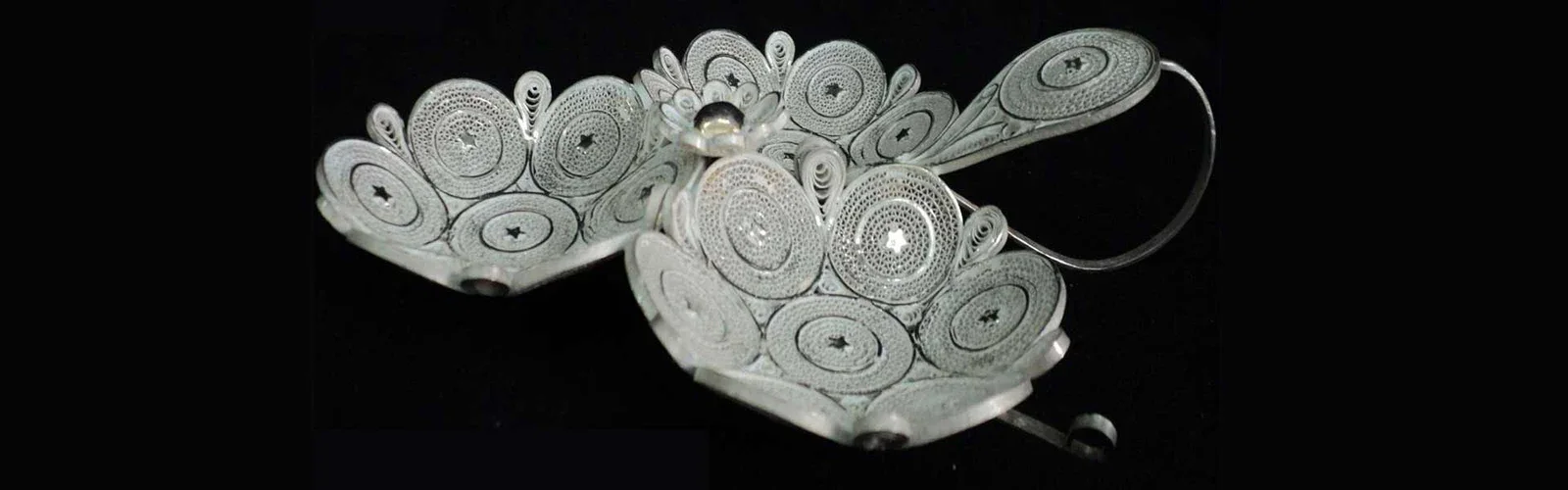
Cuttack silver filigree, as catalogued by the source. The individual maker is not identified.
Metal takes more than one path
Dhokra casting begins before there is a metal object to see. The Dhenkanal process recorded by NID starts with a clay core. Wax threads cover it to establish the design, and further clay layers enclose the wax. Openings provide a route for the metal and a way for air to escape. Heating removes the wax; molten metal occupies the space it has left. Once the casting has cooled, the mould is removed and the surface cleaned and finished.2
A raised line on the finished object therefore preserves a decision first made in a softer material. The pattern has passed through wax and clay before becoming metal. The documentation identifies Sansari Gadatia as its senior craftsman contact in Dhenkanal, giving this description of technique a named practitioner.3
Brass and bell-metal vessels involve another organisation of work. Impart’s account of Kansari ware describes a collaborative sequence: several artisans hammer an ingot while another turns it, with repeated heating keeping the metal workable. The coordinated blows spread the material and help maintain an even thickness. A vessel takes shape through timing and shared attention as well as individual skill.4
These processes deserve separate names. A cast figure, a hammered vessel and a filigree ornament may all appear in a display of metal craft, but their surfaces record different operations. Following those operations restores some of the workshop to the finished object. The preparation of a mould, the drawing of wire and the turning of heated metal are all labour, even when a polished surface makes that labour difficult to see.
Clay learns a shape
A small fish toy offers a precise lesson in clay work. NID’s documentation describes a hollow body formed on the potter’s wheel and cut free with wire. After partial drying, fins, tail, eyes and mouth are added. A wooden modelling tool helps with details; a pen cap makes impressions for the gills. Familiar tools become instruments for giving the animal character.5
The same documentation introduces Jayadev Rana of Barpali, Bargarh, as a maker of terracotta jewellery and crafts. Its title uses Sambalpur; the biography gives the more specific locality. Naming both preserves the record without losing the maker’s place.6
The museum photograph below shows another expressive use of clay: a figure with an open mouth, prominent eyes and repeated raised details. Its maker is not identified in the image record. It is reproduced as a separate example, not attributed to Rana or presented as the fish toy described above.
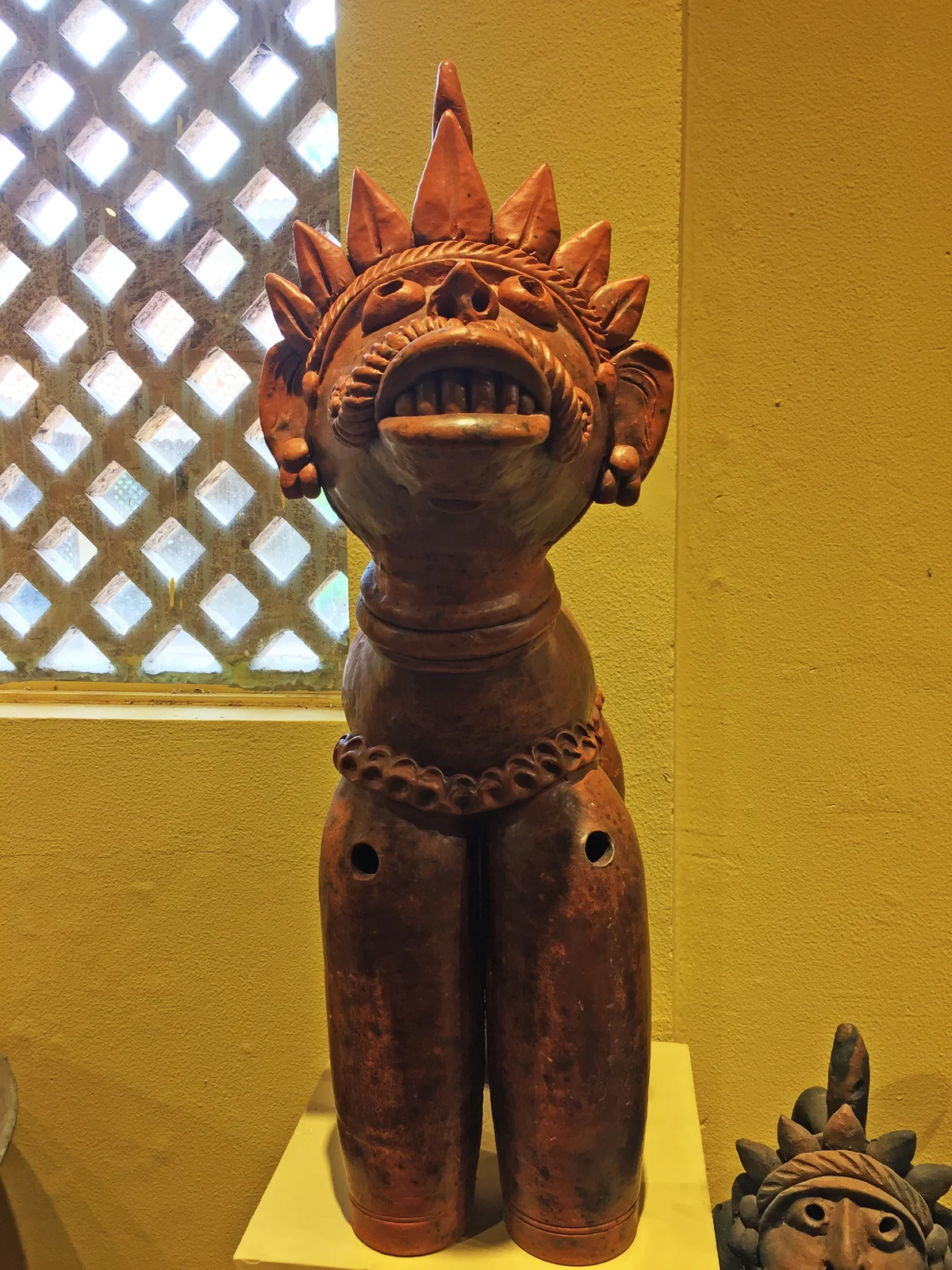
Terracotta figure at Kala Bhoomi, Bhubaneswar, photographed in 2018. Maker not identified in the image record.
Subhashish Panigrahi. Source · CC BY-SA 4.0.
Working into stone
Carving requires a different kind of foresight. The NID account of stone work in Bhubaneswar begins with selecting and checking the material, including looking for cracks. Cutting establishes the broad form; hammer and chisel remove smaller pieces. Finer tools develop the details, and polishing finishes the surface. The character of the stone affects the treatment it can bear.7
The order matters. A face, hand or ornament must be anticipated while it is still surrounded by stone. As material comes away, the maker moves from mass towards detail. A small projection needs enough substance to survive the next cut. The finished figure can conceal the sequence of decisions that made it possible.
Sudarshan Sahoo’s work also draws attention to the institutions through which craft is shared. The Ministry of Tourism’s account credits him with establishing the Sudarshan Craft Museum in Puri in 1977. Its collection brings stone sculpture into company with other media, including wood carving, painting and filigree.8 A named artist and a museum offer a different point of entry from an anonymous category such as “stone craft”.
The tools in these accounts also complicate a simple division between hand and machine. NID records a cutting machine alongside chiselling in stone work, just as its filigree account records wire-drawing equipment. Skill includes choosing how a tool will be used and judging what remains to be done. The presence of a machine does not tell us who conceived the form or controlled its finer details.17
Pipili joins colour to ceremony
In appliqué, a cut piece of cloth becomes part of a larger surface. NID’s Pipili account describes preparing a background, cutting motifs and joining them through stitching. For lampshades, templates help produce repeated shapes; cut pieces can be bundled for later use. The account includes machine stitching and wooden or iron rings that give the shade its form. Pattern depends on preparation as much as the visible seam.9
The Puri district administration connects Pipili’s cloth work with the decoration of Ratha Yatra chariots. It also lists umbrellas, bags, purses and wall hangings among the town’s products. Ceremonial use and domestic use sit within the same craft landscape, though each object has its own scale and purpose.10
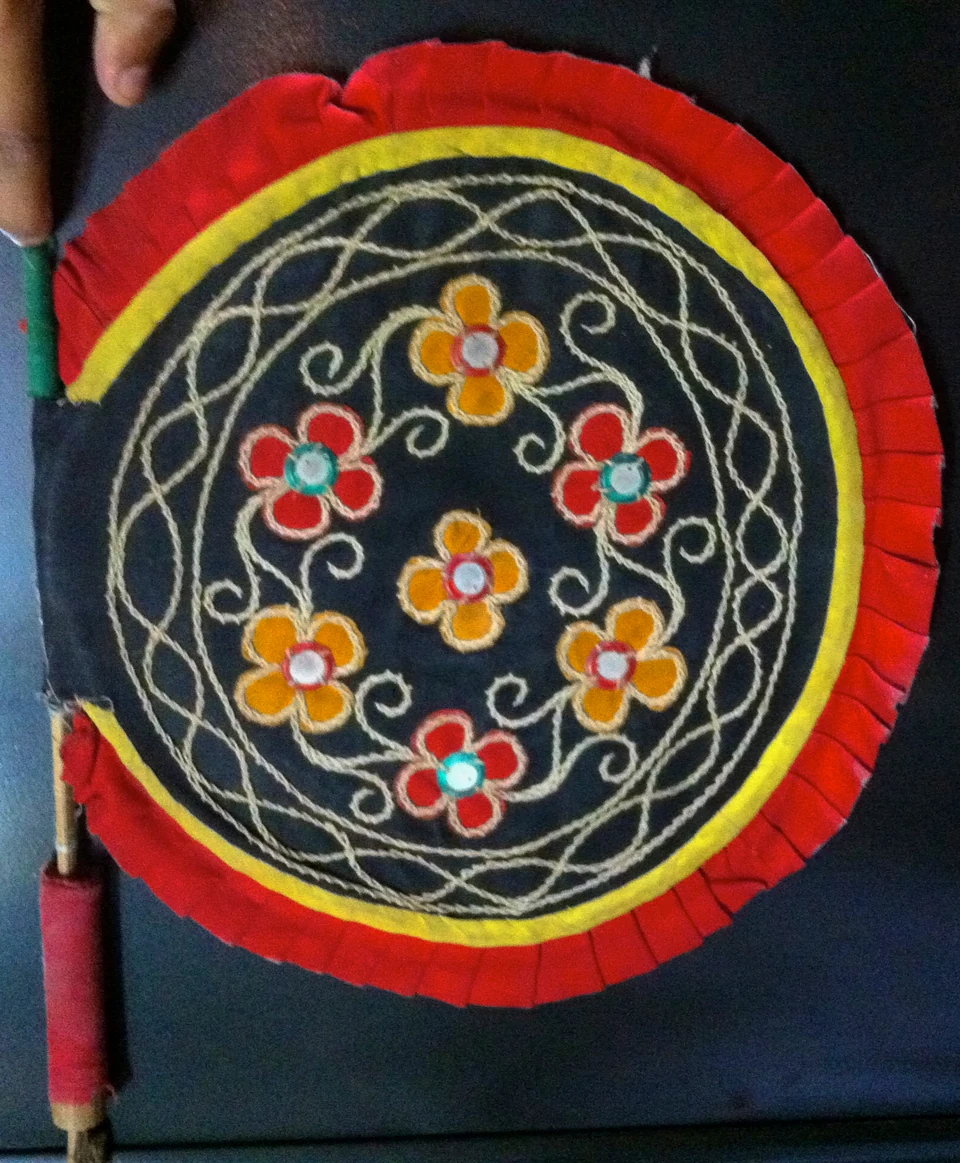
The display photographed here makes repetition visible: circular centres, surrounding motifs and gathered borders return in different arrangements. A finished object rewards attention to these choices. Across the materials in this chapter, close looking leads back to makers, tools and sequences of work. Keeping those details in the record allows the skill to remain visible after the object has left the workshop.
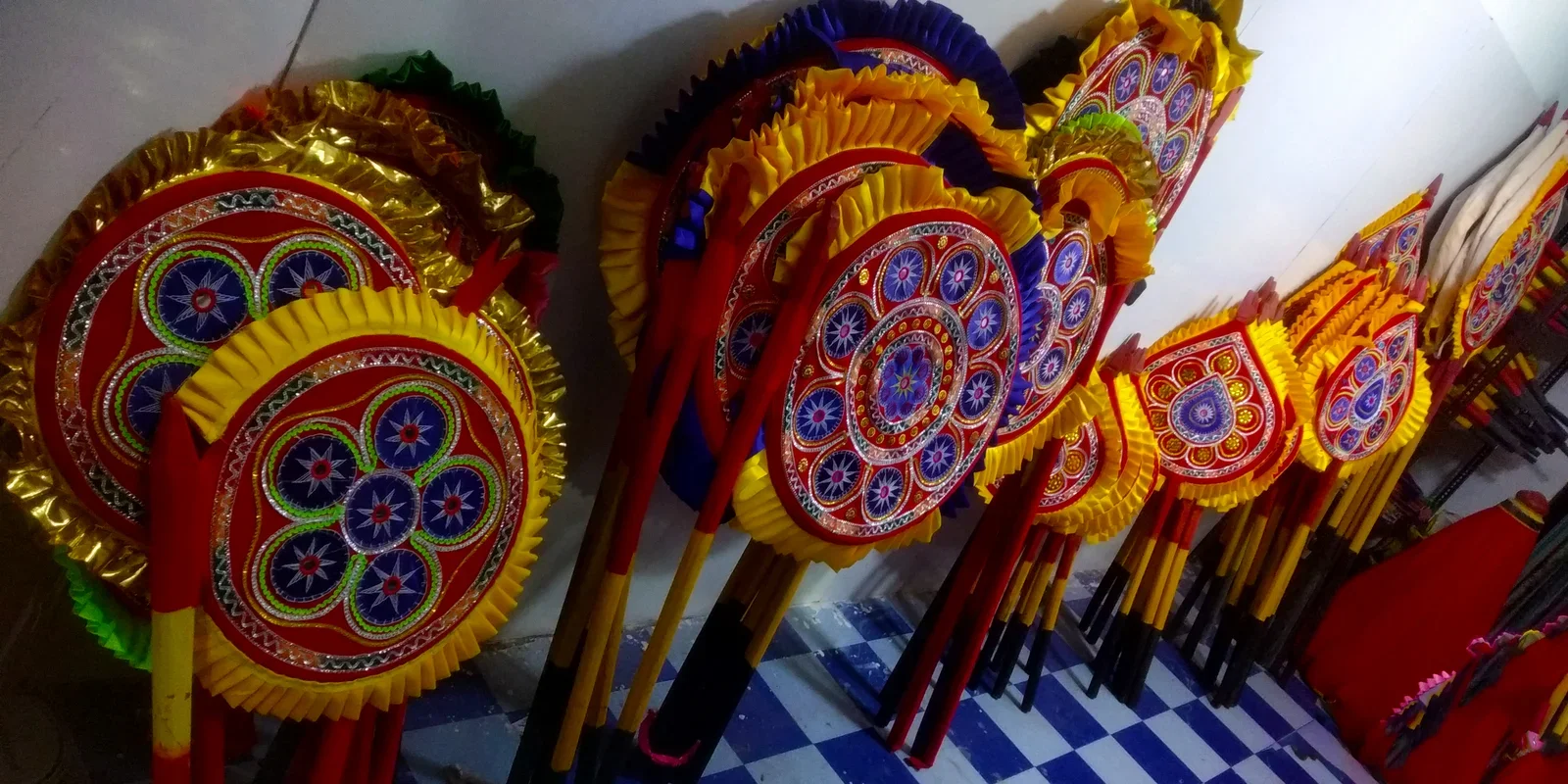
Pipili appliqué display, photographed in 2022. The individual makers are not named in the source.
Rahul Mukherjee. Source · CC BY-SA 4.0.
Footnotes & Sources
- Bibhudutta Baral and Hariharasudan T., Silver Filigree. NID / D’source, Cuttack. Process p. 8; products pp. 13–14; Ramesh Behera p. 16. ↩
- Bibhudutta Baral and Rashitha, Dhokra Metal Casting. NID / D’source, Dhenkanal. Clay core, wax pattern, mould, casting and finishing. ↩
- Dhokra Metal Casting, Contact Details. NID / D’source. Sansari Gadatia is identified as senior craftsman. ↩
- Impart, Kansari Brass and Bell Metal Ware. Collaborative hammering, turning and repeated heating in vessel production. ↩
- Bibhudutta Baral, Divyadarshan C. S. and Amulya S, Terracotta Jewelry and Toys. NID / D’source. The fish-toy process and its tools. ↩
- Terracotta Jewelry and Toys, Introduction. NID / D’source. Jayadev Rana’s locality is Barpali, Bargarh. ↩
- Bibhudutta Baral, Divyadarshan C. S. and Aakash Sharma, Stone Carving. NID / D’source, Bhubaneswar. Selection, rough shaping, detail and finishing. ↩
- Ministry of Tourism, Sudarshan Craft Museum. Sudarshan Sahoo’s establishment of the museum in 1977 and its collection. ↩
- Bibhudutta Baral, Divyadarshan C. S. and Manasa K H, Traditional Applique Work. NID / D’source, Pipili. Cutting, repeated shapes, stitching and lampshade supports. ↩
- Puri District Administration, Pipili. Ceremonial association and product range; no current sales or employment claims adopted. ↩
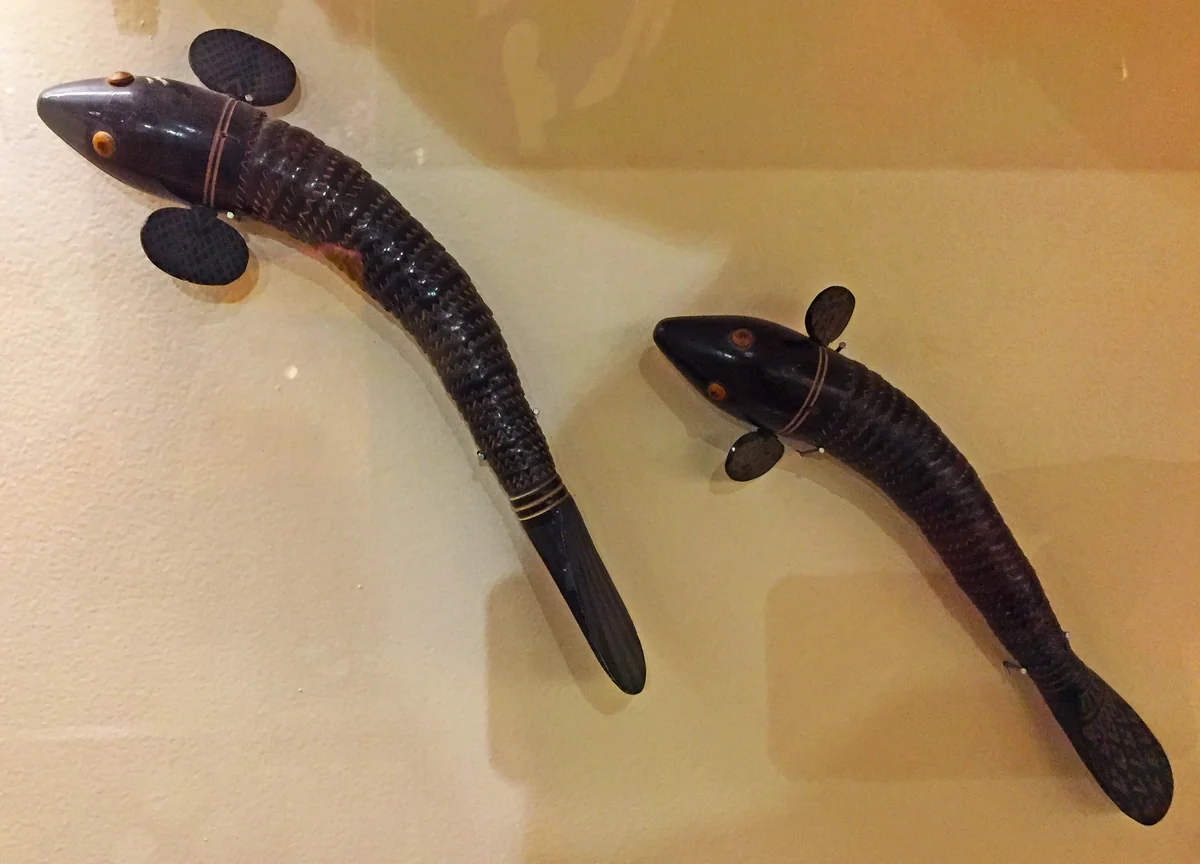
- Subhashish Panigrahi, horn fish at Odisha Crafts Museum, Bhubaneswar. 2018, Wikimedia Commons. Resized and compressed. CC BY-SA 4.0 ↩
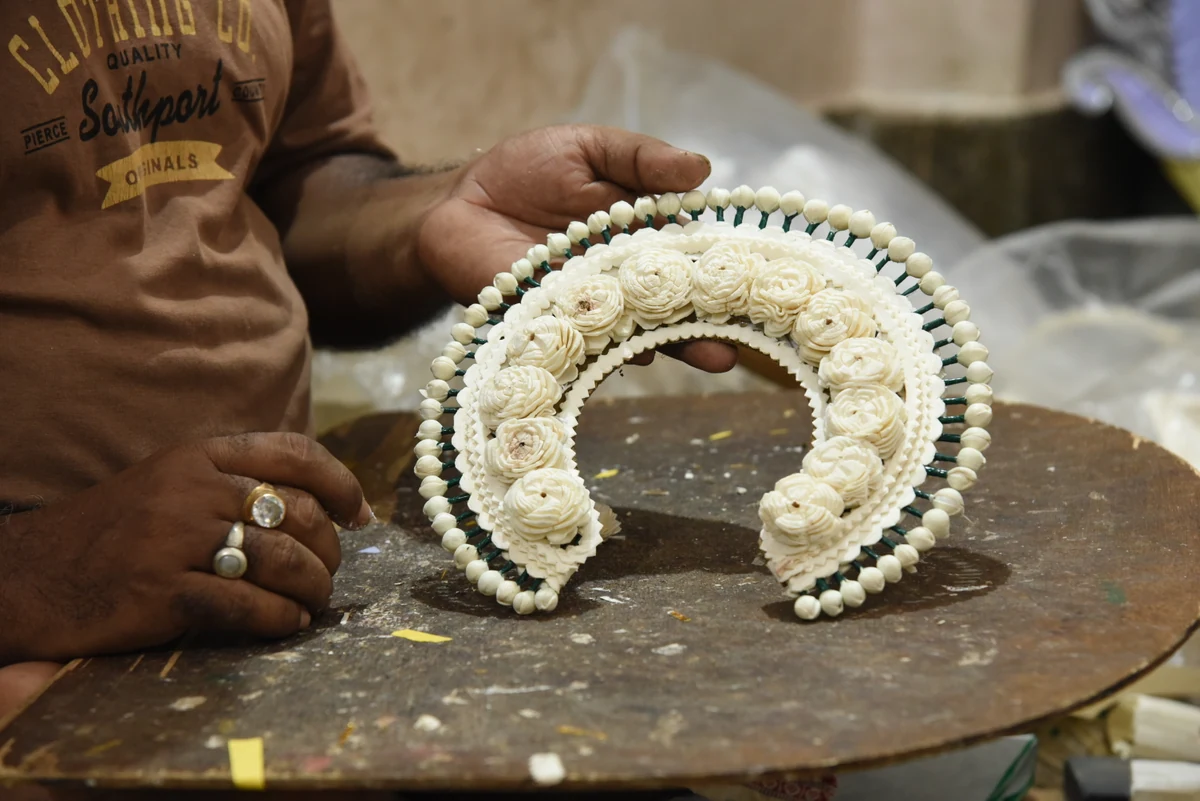
- Prakriti Panda, Wikimedia Commons. Resized and compressed. CC BY-SA 4.0 ↩
Photographs are reproduced full-frame, resized and converted for layout; composition and colours are unchanged. Captions link each source and licence. The stated licences continue to apply to the pictures. Sources checked 10 November 2026. Craft accounts describe documented workflows, not universal methods. This chapter draws on published documentation and does not claim new fieldwork.
Further reading
Read the companion article: Jau Kandhei and the Doll Makers of Balasore.
Read the companion article: Sagada: The Work of a Bullock Cart.
Read the companion article: Kagaja Mukha and the Paper Masks of Raghurajpur.
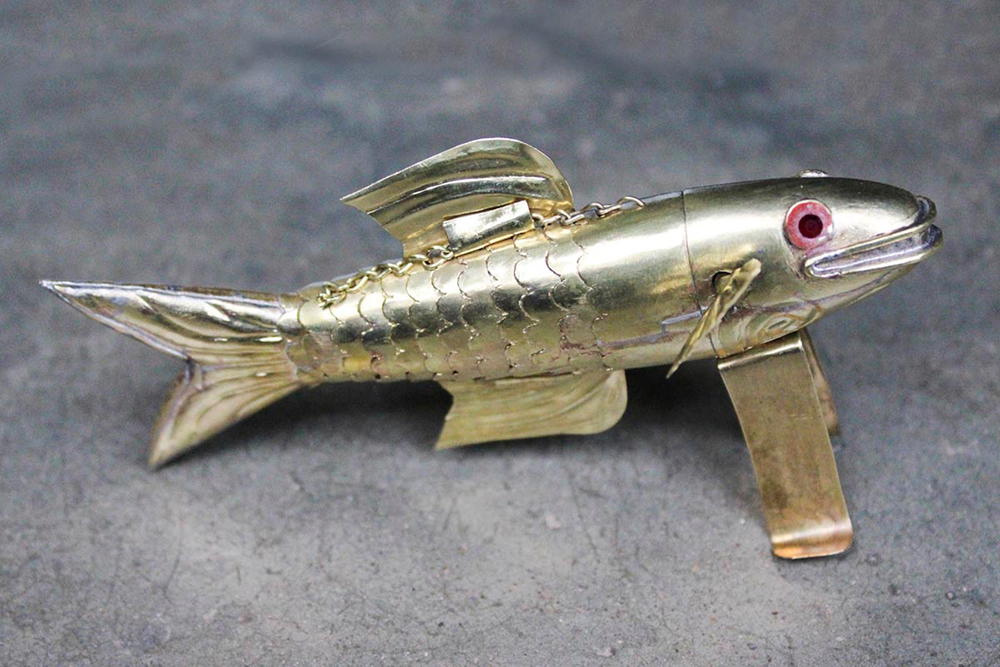
 Paralakhemundi’s Horn Craft: From Comb to Crane →
Museum example; manufacture place unidentified.11
Continue reading


Suggest an update
Share a correction or source for this chapter. GitHub submissions are public. Please omit private contact details and consent documents.