
Odia cinemaFilms and Filmmakers
ମାୟା ମିରିଗ (Maya Miriga): a family, a fragile film, a second life
In this article
Stay with family life, then follow the work that allows a film to survive.
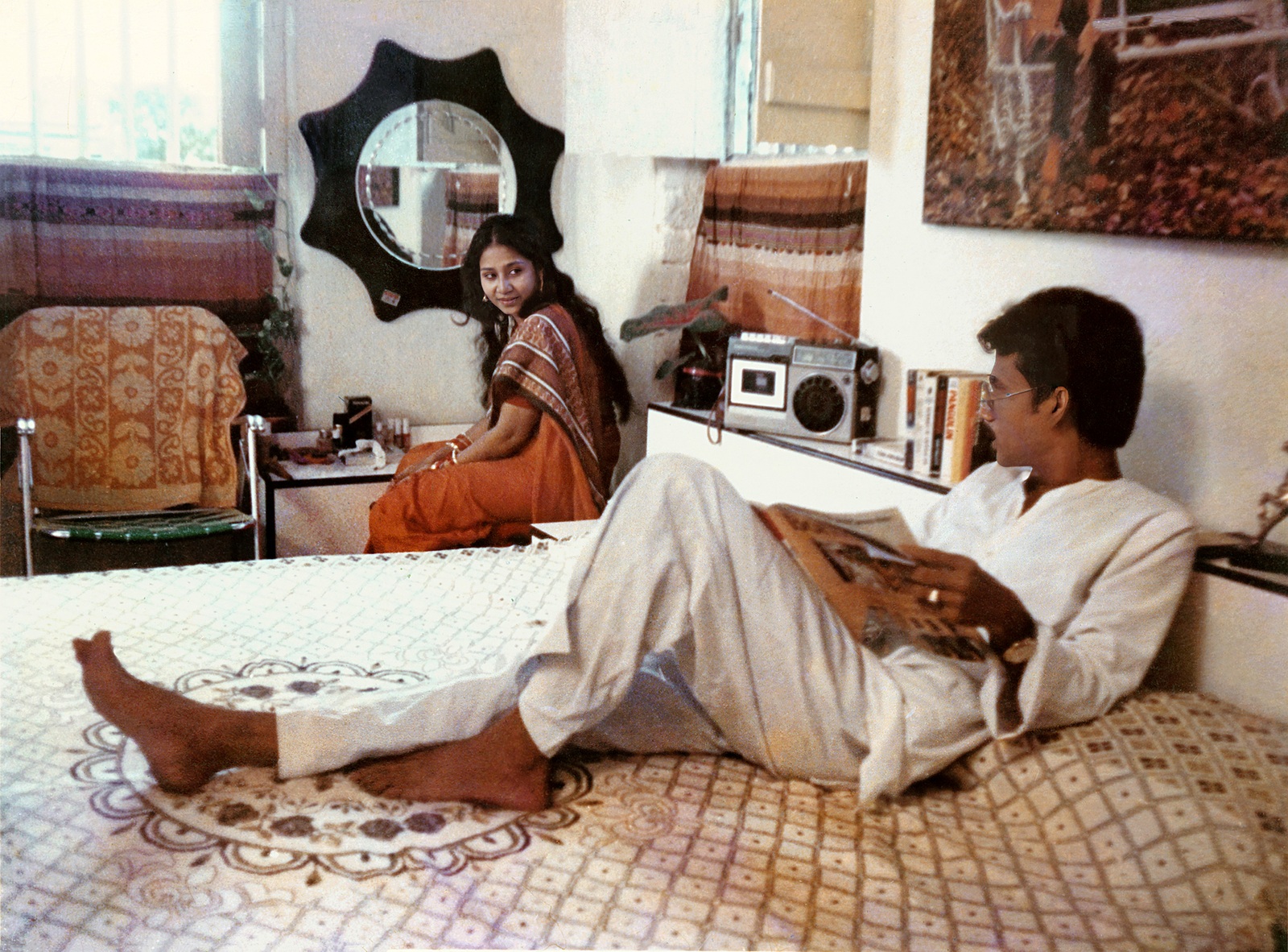
In January 2025, an Odia film made four decades earlier appeared on the programme of New York’s Museum of Modern Art. ମାୟା ମିରିଗ (Maya Miriga) was being shown in its restored form, as part of the museum’s film-preservation festival.1
There are two journeys here. One belongs to a film that found audiences far from the place where it was made. The other belongs to the physical material that had to survive for those audiences to keep finding it.
A household large enough to hold a world
Nirad Mohapatra’s 1984 film follows an extended middle-class family in a small Odisha town. MoMA’s account describes a household pulled between obligations and individual ambitions, brought to life by a nonprofessional cast and Bhaskar Chandavarkar’s music.1
Mohapatra’s own note, reproduced in the Bologna programme, describes married sons balancing competing responsibilities and daughters-in-law seeking freedom within the household. His interest held affection and frustration together: family could offer warmth while also constraining the people who lived within it.2
The household was shaped by several kinds of work. The Bologna programme credits Nirad Mohapatra and Bibhuti Patnaik with the story, Rajgopal Mishra with cinematography and Bibekananda Satpathy with editing.2
A house made ready for a family
Mohapatra recalled arriving in Puri months in advance with a small crew and nonprofessional performers. They prepared an abandoned house and its courtyard as the film’s only set. In his director’s note, he described improvising within a written story.3 The household on screen had required another kind of shared work before filming: making a place ready for it.
MAMI’s restored-film programme names Ramakanta Mohanty and Bijay K. Mahapatra as production designers.4
Different doors into the world
The film was selected for Cannes Critics’ Week in 1984. Mannheim’s 1984 archive records it in the Grand Prize of the Third World competition, shared with ଲେଇଲା ଏ ଲେ ଲୁ (Leila et les loups); that category was distinct from the festival’s overall Grand Prize.56
At home, it received the Second Best Feature Film recognition in the 31st National Film Awards, covering films of 1983 and presented in 1984.7
The work of bringing a film back
The negative had been found abandoned in a warehouse in poor condition, according to Film Heritage Foundation’s Shivendra Singh Dungarpur in the Bologna programme.2
The restored version was assembled from a 16mm original camera negative and a 35mm print. MoMA credits Film Heritage Foundation’s 4K restoration at L’Immagine Ritrovata in Bologna, using material preserved by the foundation and NFDC–National Film Archive of India.1
Bologna’s programme also credits the director’s family, Digital Film Restore for digital restoration, and Prasad Corporation for scanning.2
The family’s contribution included detailed work on the film itself. Sandeep Mohapatra told Scroll that he supplied his father’s shooting script and taught himself to work on the new subtitles in his spare time. He consulted his mother and siblings; an unnamed friend from the National Institute of Design helped recreate damaged credits.8
The restoration was screened at Il Cinema Ritrovato in Bologna on 27 June 2024.2
A new encounter with the family
Prabha, the eldest son Tuku’s wife, is played by Manaswini Mangaraj.2
Writing after that screening, film historian Antti Alanen placed her at the film’s emotional centre and traced the family’s tensions through gender and generation. He admired its atmosphere and music, while also finding moments when it lacked intensity.9
An older man sits towards the front of a long-backed chair, leaning forward, his hands near his chin. In this brief image from the restoration excerpt, dark openings punctuate a pale wall. The chair has room for him to recline; he does not use it. His posture draws our attention, but so does the space around him. How would the moment change if we saw only his face? The house would disappear.10
A household threshold, imagined.
Watch and explore
- Restoration clip and information: ମାୟା ମିରିଗ (Maya Miriga) at Film Heritage Foundation. Restoration story and before-and-after comparison clip; not the full film.
Footnotes & Sources
-
Museum of Modern Art, Māyā Miriga, To Save and Project, screenings on 10 and 15 January 2025. ↩ ↩2 ↩3
-
Il Cinema Ritrovato, Māyā Miriga, 2024 programme, 27 June screening. ↩ ↩2 ↩3 ↩4 ↩5 ↩6
-
Nirad Mohapatra, director’s note reproduced by Film Heritage Foundation, first paragraph. ↩
-
MAMI, Maya Miriga, 2024 restored-film programme, production-design credits. ↩
-
Cannes Critics’ Week, Maya Miriga, 1984. ↩
-
International Film Festival Mannheim–Heidelberg, 1984 archive. ↩
-
Directorate of Film Festivals, 31st National Film Awards catalogue, Second Best Feature Film. ↩
-
Nandini Ramnath, Scroll, 27 May 2024, Sandeep Mohapatra’s account. ↩
-
Antti Alanen, Māyā Miriga / The Mirage (2024 restoration), Film Diary, 27 June 2024. Reproduced official-film synopsis and Alanen’s separate “AA” review. ↩
-
Film Heritage Foundation, Māyā Miriga restoration comparison, embedded before-and-after clip, 01:05. ↩
Further reading
The writer behind the story
Suggest an update: share a source, film credit or precise correction. GitHub submissions are public; omit private contact details and consent documents.