
Odia cinemaFilms and Filmmakers
Odia cinema: the world in our own voice
In this article
Begin with the larger story: performance, literature, production and the work of finding audiences.
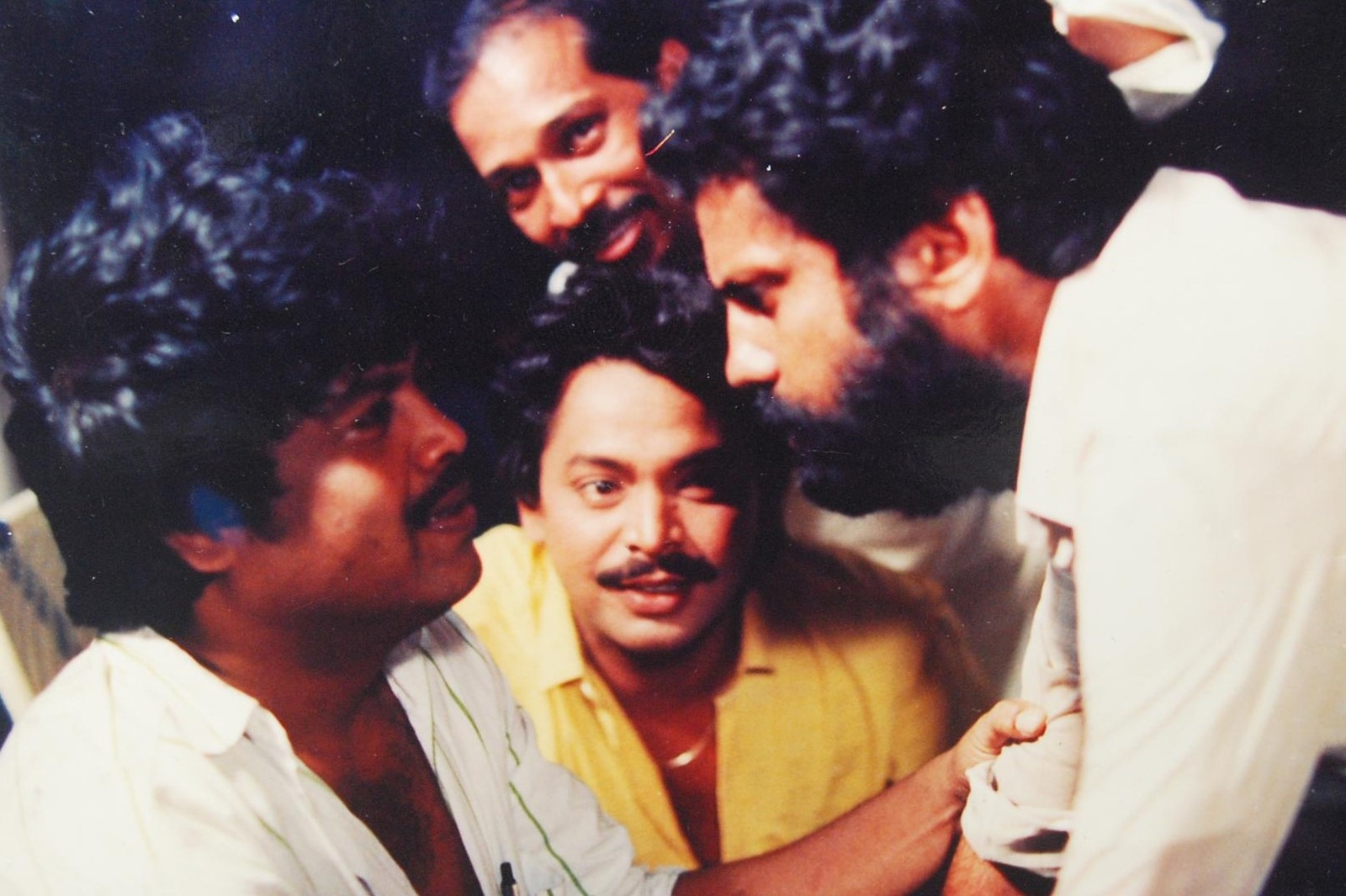
On 27 June 2024, ମାୟା ମିରିଗ (Maya Miriga) met an audience again in Bologna. Its restored images carried an Odia household story into another generation of viewing.1
Nirad Mohapatra’s film asks what family gives its members—and what it withholds. His programme note holds warmth alongside daughters-in-law’s desire for freedom.1 Bringing that story back to the screen required people to work with a badly damaged negative. The screening was an achievement in preservation as well as an encounter with a film.
A writer’s words find actors; a production finds its audience. Between them lie rehearsals, borrowed spaces, recording sessions and the work of keeping a finished film available. This collection follows those connections through particular films and careers.
Following the lives in this series? Continue with Gour Prasad Ghose , or stay for the wider survey below.
Before the camera: Natak, Rasa and Gitinatya
Sita Bibah had a life before the camera. A later report by Minati Singha identifies a play by Kamapal Mishra as the basis of Sita Bibah.2 Piyush Roy’s research describes Goswami’s touring rasalila group and his work training performers. In an interview recorded by Roy, film historian Surya Deo characterises the first film as primarily gitinatya, or musical drama.3
Goswami brought experience of performing, singing and organising a troupe to filmmaking. A familiar dramatic story could now be carried by recorded voices and moving images.
Gitinatya joins dramatic storytelling with music and verse. Theatre scholar Alok Baral places Kalicharan Pattanaik among its practitioners.4 Kalicharan also wrote lyrics for Lalita, according to Bhuyan’s retrospective.5 A Lalita credit card reproduced in Roy’s thesis also names Kalicharan for story, dialogue and direction.3
The prospectus of Orissa Theatres Limited proposed bringing Odia plays, novels and stories to the screen. It named Kalicharan Pattnaik as officer in charge of production and Kalindi Charan Panigrahi among its honorary literary advisers. The plans reached beyond making films: a studio, touring cinemas and training for artists and technicians were also proposed.6
The wider performance world deserves its own attention. Our guides to Prahallad Nataka, Pala and Daskathia explore different ways of singing, narrating and enacting a story. They introduce cinema’s neighbours, while Goswami’s own Rasa and theatre background supplies the documented connection to this first production.
The first Odia film: Sita Bibah, 1936
Odia cinema’s first feature was ସୀତା ବିବାହ (Sita Bibah), made by Mohan Sundar Deb Goswami. Film writer Kapilas Bhuyan’s IFFI retrospective records its formal opening in Puri on 28 April 1936, after a Calcutta screening the previous month. The next Odia feature, ଲଳିତା (Lalita), arrived in 1949.5
Thirteen years is a striking interval. A first film establishes possibility; it does not by itself establish a continuing industry. The familiar anniversary date deserves to be remembered alongside the difficulty of making the next film.
Music was present from the beginning. Bhuyan records fourteen songs in Sita Bibah, sung by its actors, and a move to background singing in Lalita. Later films drew on Odia literature, including ଅମଡ଼ା ବାଟ (Amada Bata), ମଲାଜହ୍ନ (Malajanha) and ମାଟିର ମଣିଷ (Matira Manisha).5
The screen offered another life to words and voices already circulating through the culture. Writers and composers helped shape that life alongside directors and performers.
Radio drama: another home for the storyteller
Radio enters this account later. AIR Cuttack began in 1948, twelve years after the first Odia feature. The Odia Bibhaba archive records Gopal Chhotray’s association with the station from its beginning.7 Its writers joined a film culture already underway.
Chhotray is a concrete link between the media. The Library of Congress documents his work in Gitinatya, his long association with AIR Cuttack, and his writing of plays, operas and screenplays.8 The Gour–Parbati archive credits him specifically with dialogue for ଶ୍ରୀଜଗନ୍ନାଥ (Sri Jagannath) (1950), while assigning direction and screenplay to C.R. Mitra.9
Chhotray worked between the stage, the microphone and film production. Dialogue was part of what he carried between them.
Continue this history: ଆକାଶବାଣୀ କଟକ — AIR Cuttack: where stories found another voice.
The people who built more than a screen career
Parbati Ghose belongs near the centre of this history. The Gour–Parbati filmography records her as a co-producer with Gour Prasad Ghose on ଲକ୍ଷ୍ମୀ (Laxmi), କା (Kaa) and ସ୍ତ୍ରୀ (Stree). It also credits her within the directing partnership used on Kaa and Stree. Her work crossed the boundaries between performing, organising a production and deciding what would reach the screen.10
The archive dates her ଛ’ ମାଣ ଆଠ ଗୁଣ୍ଠ (Chha Mana Atha Guntha) adaptation to 1986. Its credits name Nagen Barik for sound and Asim Basu and Sarat Sahoo for art, and acknowledge Olosingh’s villagers and host Kalyani Patnaik.11 The Parbati Ghose companion follows her producing, writing, directing and acting work.
The places and teams that sustain production
Institutions mattered too. The Odisha Film Development Corporation was incorporated on 22 April 1976. Its stated remit included support for film production, cinema houses, studio services and film culture. These are the less visible foundations: access to equipment, places to finish a film, and places where audiences can watch it.12
The Chha Mana Atha Guntha archive names Kalinga Studio and Prasad Film Laboratory among its credits, while stating that the shoot took place entirely in Olosingh. The credits do not specify which services those facilities supplied.11
Private facilities form another part of this infrastructure. India Cine Hub lists Mute Entertainment’s Mute Studio in Bhubaneswar under post-production companies, advertising editing, visual effects, chroma services, colour grading, and sound design and mixing.13
Technology also appears in performers’ memories. Uttam Mohanty contrasted reflector-lit shoots earlier in his career with later low-light work, in a 2018 interview.14
Public infrastructure has its own chain of responsibility. Naveen Patnaik laid the rebuilding foundation stone for Kalinga Studio on 25 March 2021; the Industries Department assigned implementation to IDCO and existing-building renovation to the R&B Department.15 Mohan Charan Majhi inaugurated the redeveloped studio and its cinema archive and museum on 5 October 2026. The recorded events concern redevelopment; they do not establish its commercial outcomes.16
A script also needs people who can turn it into images, edited sequences and sound. In Cuttack, Biju Pattanaik Film and Television Institute of Odisha (BPFTIO) offers a four-year degree in Cinematic Art and Technology (B.CAT), with streams in cinematography, film editing, and sound recording and sound design. Its admission page directs applicants to OJEE for entrance and counselling information.17
A film culture needs places to learn and people willing to organise a screening. Nirad Mohapatra’s memorial biography records his teaching at FTII and his work with Cinexstasy, a Bhubaneswar film society active from 1974 to 1983. Screenings and film-appreciation courses were another part of his contribution, beyond directing Maya Miriga.18
Maya Miriga and other films in circulation
Maya Miriga received Second Best Feature Film at the 31st National Film Awards, for films of 1983; festival records commonly date it to 1984.19 In 1984 it was selected for Cannes Critics’ Week and shared Mannheim’s Grand Prize in the Third World competition, distinct from that festival’s overall Grand Prize.2021 The Maya Miriga companion follows both its family story and its restoration.
Manmohan Mahapatra offers another essential route into this period. ଶୀତରାତି (Seeta Raati) received the Best Oriya Film honour at the 29th National Film Awards, for the 1981 award year. The festival catalogue for 1985 also records screenings in Paris and Montreal.22
In his account of Odisha’s New Wave, critic Ashok Palit describes the social worlds of Mahapatra’s films: a rural community facing upheaval in ନୀରବ ଝଡ଼ (Niraba Jhada), and a family negotiating social change in ନିଷିଦ୍ଧ ସ୍ଵପ୍ନ (Nisiddha Swapna). His survey places Mahapatra and Nirad Mohapatra among the filmmakers who developed a sustained interest in cinema as an art of close observation.23
These films brought close observation of households and communities into national and international circulation. Their companion essays return to the particular relationships and choices within those worlds.
Bhukha, and the importance of hearing western Odisha
Sabyasachi Mohapatra’s ଭୂଖା (Bhukha) (1989) makes the map of cinema in Odisha more expansive. It is a Sambalpuri-language film. Palit reads its conflict through the pressures between inherited ways of life and modernity.23
The story grew from a Sambalpuri play by Manglu Charan Biswal. It follows bajnia folk drummers whose livelihoods are threatened by changing musical practices. The stakes are both cultural and material: what happens to the people who carry a tradition when their work is no longer wanted?24
Naming the language matters. The cinema of a state can contain several cultural centres, accents and storytelling traditions. Sambalpuri cinema deserves to be heard in its own voice within this larger history.
The Bhukha chapter follows the film’s circulation as well as the livelihoods within its story.
Mohapatra’s later work offers further, separately documented milestones. ଶଳାବୁଢ଼ା (Sala Budha) was selected for Indian Panorama in 2013. ଆଦିମ ବିଚାର (Aadim Vichar) received the Best Odiya Film award at the 62nd National Film Awards, for 2014, announced in 2015.2526
Scholar Amrit Amlan Pattanaik approaches these Sambalpuri films through western Odisha’s cultural and literary worlds, asking how they widen the ways Odisha appears on screen. His study’s published abstract offers a valuable starting question for a deeper article: what becomes visible when we stop treating a region as if it has only one centre?27
Documentary and the memory of home
Documentary offers another way to stay with a place as it changes. The Sea and Seven Villages, directed by Himansu Sekhar Khatua and produced by Iti Samanta, follows displaced coastal communities from Satabhaya in Kendrapara.28
Khatua recalls meeting families resettled at Bagapatia, then visiting the coastal villages they had left. He describes filming waves damaging a temple; his later footage, he says, showed its ruins.29 His recollection brings the memory of home beside the physical changes to a place.
The Odia documentary received a Special Mention in the non-feature section of the 71st National Film Awards, for 2023, announced in 2025.30
In Mo Bou, Mo Gaan (My Mother, My Village), Subash Sahoo turns towards his mother, Seba Bou, whose teaching of young women included Kandana.31
Sahoo describes a project made over eighteen years, fitted around his professional sound work. A few days of filming could be followed by months away; the village changed between visits. The team took reference photographs to maintain visual consistency when shooting resumed. He also credits his wife, Suprava Sahoo, who produced the documentary and supported its long making.32 Suvir Nath worked as editor and co-producer; Sahoo has thanked him for helping bring the film to completion.33
The film shared Best Biographical / Historical Reconstruction / Compilation Film at the same National Film Awards.30
Lipika Singh Darai’s work with puppeteers opens another documentary journey through the series.
Children, imagination and the screen
Children belong in this history as viewers with imaginative lives of their own. Live-action films made for children, local animation and films offered in an Odia-language version open different routes to those viewers. The birthday-party question in the author’s introduction returns here: what Odia characters might children want to spend time with?
Sadhu Meher’s ବାବୁଲା (Babula) provides a concrete starting point for the first history. A Lok Sabha answer of 7 December 1987 lists it among the Children’s Film Society of India’s productions for 1985–86, identifying it as an Oriya feature. A contemporary 1986 catalogue from Berlin’s Arsenal describes Meher’s CFSI-supported film through a lonely boy’s dreams of outer space. This places institutional support and a child’s imagination within the same account.3435
A. K. Bir’s ଲାବଣ୍ୟ ପ୍ରୀତି (Lavanya Preeti) received Best Children’s Film for 1993. Its dedicated page follows young characters into the imaginative world of an inherited story.36
For କୁନି ଗଣେଶ (Kuni Ganesha), Shreyas Sahil, then a Class IV pupil, supplied the character’s voice. Jyotiranjan Swain wrote and directed the series, with music by Rajesh Shankar. It was prepared for a planned Doordarshan broadcast.37 A child was helping make the character speak. The television reading follows this animation work further.
Children can also encounter films through Odia-language versions. CBFC’s 2022 list records an Odia video version of ରିଟର୍ଣ୍ଣ ଅଫ୍ ହନୁମାନ (Return of Hanuman), certified on 11 February 2022 and naming Shemaroo Entertainment. Airtel Xstream lists the Anurag Kashyap film as a 2007 animation title available in Odia. This is a route to a dubbed film, distinct from an original Odia production; current access depends on the provider.3839
A character can invite another encounter: with a story, a book or the people who made it. We could give children room to follow those connections, while making clear credits and paid creative work part of the care behind their screens.
The people audiences returned to
The history of a film culture also lives in the performers people recognise across different stories. A leading role, a comic interruption, a supporting character or a song can give an audience someone to return to. These careers connect that affection to less visible work: rehearsal, teaching, choreography, producing and helping another performer find her place.
Bijay Mohanty: performance and teaching
Bijay Mohanty carried theatre training into films and into the classroom. A National School of Drama graduate, he worked in the drama department of Utkal Sangeet Mahavidyalaya and retired as a professor. His screen career includes ଚିଲିକା ତୀରେ (Chilika Tire), ନାଗଫାଶ (Nagaphasa) and ଚକା ଭଉଁରୀ (Chaka Bhaunri).40
The theatre connection remained part of how colleagues remembered him. Director Manoj Pattanaik recalled his play Amari Bhagaban, staged by Manan Natya Sangstha.41 The classroom and the theatre group were part of the work he passed on.
Uttam Mohanty: a remembered encounter
Uttam Mohanty's ଅଭିମାନ (Abhiman) debut connects his story to Sadhu Meher, its director. In a 2018 interview, he recalled a Bengali viewer in Cuttack praising his portrayal of Salabega. The memory gives one audience encounter a place beside the career record.14
Akashvani records his work in Bengali cinema and the Hindi film ନୟା ଜହର (Naya Zahar) alongside his Odia career.42 His recollection of reflector-lit shoots also brings an actor’s experience into the changing conditions of filmmaking.
Aparajita Mohanty: acting, producing and learning from another woman
Aparajita Mohanty's work offers several points of entry. ଉଦଣ୍ଡୀ ସୀତା (Udandi Sita) is among the films associated with her screen career.43 She produced Love Master.44
Her remembrance of Anita Das opens another relationship. Aparajita described the senior actor as an elder-sister figure who taught her about acting and the workings of the industry.45 Her later appearance in ବୋଉ ବୁଟୁ ଭୂତ (Bou Buttu Bhuta) brings that working life into the recent films discussed later in this survey.46
Performers and the company around a film
Leading roles are only one part of what audiences remember. The following selection brings other kinds of contribution into view; it is a set of routes for further watching and reading, not an order of importance.
| Performer | A contribution to follow |
|---|---|
| Mahasweta Ray and Prasanta Nanda | Nanda cast her as Manika in ଶେଷ ଶ୍ରାବଣ (Sesa Srabana); she recalled viewers calling her by that character’s name after a screening.47 |
| Sarat Pujari | He plays Mangaraj in Parbati Ghose’s ଛ’ ମାଣ ଆଠ ଗୁଣ୍ଠ (Chha Mana Atha Guntha), bringing Fakir Mohan’s landowner to the screen.11 |
| Siddhanta Mahapatra | His films include Suna Panjuri.48 |
| Mihir Das | His career moved among leading, supporting, villainous and comic parts: different kinds of presence within an ensemble.49 |
| Jayiram Samal (Jayee) | His account of the mischievous priest in ଯାଯାବର (Jajabara), and work across film, television and stage, places comedy within a sustained performing life.50 |
| Shyamalendu Bhattacharya and Nari | Shyamalendu recalled forming a melody group with Nari and moving between performance and choreography, including ଯାଯାବର (Jajabara). The partnership joins music, stage work and screen comedy.51 |
| Anita Das | Lead and later supporting roles belong together in her career; Aparajita's testimony also records her contribution as a mentor.45 |
The songs people carried home
A film's life need not end when the screen goes dark. A voice, a phrase or a melody can travel into another room and another generation. Following those songs brings composers, lyricists and playback singers into the centre of this story.
The credits of ଶ୍ରୀ ଜଗନ୍ନାଥ (Sri Jagannath, 1950) name Balakrushna Das and Ranjit Roy as music directors, with Kalyani Das, Chhabi Ray and Suryamoni Dei among the singers. Cinema was already a meeting place for many voices.52 Shantanu Mohapatra later composed Lata Mangeshkar's songs for ସୂର୍ଯ୍ୟମୁଖୀ (Suryamukhi) and ଅରୁନ୍ଧତୀ (Arundhati). His son Koushik remembers a young composer approaching her, and producer Dhiren Patnaik backing the later collaboration. Such journeys began with someone making a connection and someone else making room for it.53
Akshaya Mohanty belongs here as a composer, singer and producer. When ମଲାଜହ୍ନ (Malajanha) returned for a Film Journalists' Forum screening, actress Jharana Das, singer Pranab Patnaik, lyricist Binodini Debi and the filmmakers' families were part of the occasion. A literary adaptation had gathered actors, words and music; its return gathered people again.54
There is a smaller, telling story inside Prafulla Kar and Chitta Jena's collaboration. Film historian Surya Deo recalled that Jena wanted a solo and initially resisted another duet for ମମତା (Mamata). Actor Dhira Biswal persuaded him to sing it with P. Susheela. Kar later remembered Jena as a close friend whose voice gave him room to experiment. A song's making could depend on that mixture of ambition, persuasion and trust.55
Other voices deserve their own listening paths. Bhubaneswari Mishra's “Tiki Mora Naa Ti” in କୃଷ୍ଣ ସୁଦାମା (Krushna Sudama) is one such doorway.56 Pranab Patnaik's account of his long friendship and stage work with Prafulla Kar offers another.57 These are starting points for a wider account of the singers, lyricists, arrangers and instrumentalists behind the songs.
The question of writers' livelihoods returns here. A poem can become a lyric; a lyric needs a composer and a voice. Following that shared work also means asking how its authors are credited, paid and remembered. The Songs We Carry Home follows these connections through fifteen musicians, with dedicated stories of Akshaya Mohanty, Prafulla Kar, Pranab Patnaik and Tapu Mishra.
Actors whose journeys crossed languages
For performers, the path beyond Odisha sometimes ran through films made in other languages.
Sadhu Meher received the National Film Award for Best Actor for his performance in Shyam Benegal’s Hindi film ଅଙ୍କୁର (Ankur), honoured at the 22nd awards for 1974. The official catalogue records his upbringing in Odisha and his training at the Film and Television Institute in Pune. This is a major achievement by an actor from Odisha, within the history of Hindi cinema.58
Nandita Das carries a different connection. In her own essay about belonging, she recalls her father’s Baripada roots and her childhood visits. She was born in Bombay and grew up in Delhi. Her Odisha relationship is one of family and experience, rather than an Odisha birthplace.59
Her connection also includes acting in Odia: she appeared in Susant Misra’s ବିଶ୍ୱପ୍ରକାଶ (Biswaprakash / The Young Rebel, 1999), listed in her official filmography. The Nandita Das article explores that credit alongside her wider career.60
Cannes records her membership of its feature-film jury in 2005 and its Cinéfondation and short-film jury in 2013. Her film ମଣ୍ଟୋ (Manto) was selected for Un Certain Regard in 2018. These occasions mark both jury service and film selection across her career in acting and directing.61
A festival history and a history of popular affection answer different questions. We need both to understand what a film culture means to the people who sustain it.
National and international recognition
An award can bring a film to someone who has never heard its language. It can also lead that viewer back to the people who made it. The selected milestones below gather recognition discussed in this series; they are a reading guide, not a complete census of Odia film awards.
National Film Awards
Award years identify the films considered by that edition and can differ from theatrical release or announcement dates. The final column opens a route into the filmmakers’ work; it is not a full list of award recipients.
| Film | Recognition | Award year and edition | Filmmakers to explore |
|---|---|---|---|
| ଶୀତରାତି (Seeta Raati) | Best Oriya Film22 | 1981 · 29th awards | Manmohan Mahapatra |
| ମାୟା ମିରିଗ (Maya Miriga) | Second Best Feature Film19 | 1983 · 31st awards | Nirad Mohapatra |
| ତାରା (Tara) | Best Feature Film in Oriya62 | 1991 · 39th awards | Bijaya Jena, producer and director |
| ଲାବଣ୍ୟ ପ୍ରୀତି (Lavanya Preeti) | Best Children’s Film36 | 1993 · 41st awards | A. K. Bir |
| ଆଦିମ ବିଚାର (Aadim Vichar) | Best Odiya Film26 | 2014 · 62nd awards | Sabyasachi Mohapatra |
| ପ୍ରତୀକ୍ଷା (Pratikshya) | Best Odia Film63 | 2021 · 69th awards; announced 2023 | Anupam Patnaik |
| ଦମନ (DAMaN) | Best Odia Film64 | 2022 · 70th awards; announced 2024 | Vishal Mourya and Debi Prasad Lenka |
| ପୁଷ୍କରା (Pushkara) | Best Odia Film30 | 2023 · 71st awards; announced 2025 | Subhransu Das; producer Tarang Cine Productions |
| ଲହରୀ (Lahari) | Best Odia Film65 | 2024 · 72nd awards; announced 2026 | Amartya Bhattacharyya; producer Jhilik Motion Pictures |
Recognition also follows people across languages. Sadhu Meher received Best Actor for ଅଙ୍କୁର (Ankur) at the 22nd awards for 1974. His achievement belongs here as an actor from Odisha working in a Hindi film.58
International prizes and festival journeys
An international prize: Maya Miriga shared the Grand Prize of the Third World competition at Mannheim in 1984. The festival archive lists it alongside Leila et les loups. This was a distinct competition prize, not Mannheim’s overall Grand Prize.21
A Sambalpuri film abroad: the Bhukha reading follows the record of its international recognition.
A festival selection: Maya Miriga was also selected for Cannes Critics’ Week in 1984. Selection brought the film before another audience; it is not a Cannes prize.20
Jury service and wider careers: Cannes records Nandita Das as a jury member in 2005 and 2013, and Manto in Un Certain Regard in 2018. These are jury appointments and a selection across her wider career, rather than awards for Odia-language films.61
Surya Deo also served on the East regional panel of the feature-film jury for the 72nd National Film Awards, covering films of 2024 and announced in July 2026.66
The newer ମାଲିପୁଟ (Maliput Melodies) was screened in Indian Panorama at IFFI 2025. That documented festival appearance opens a contemporary thread below; it is kept distinct from the prize record.67
A new search for stories
A film can leave something behind after its run: a new collaborator, an audience willing to try another story, or the confidence to begin a difficult script. ଦମନ (DAMaN) and ପ୍ରତୀକ୍ଷା (Pratikshya) offer two recent starting points for that conversation. Their subjects are different—healthcare in a difficult landscape, and the pressures inside a household—but both give recognisably local lives room on the screen.
We place them together here as an invitation to follow the next chapter of Odia filmmaking. The foundations reach back through the earlier films in this series. What these recent works add is a fresh reason to ask which stories, collaborators and audiences might come together next.
The Pratikshya companion follows the collaboration behind the film, from Gourahari Das’s source story to Dipanwit Dashmohapatra’s first leading role.68
Babushaan Mohanty offers another route into the period through ଦମନ (DAMaN). Our companion article follows the film’s making, its fictional doctor and the wider healthcare work behind its subject. These films invite us to follow performers and collaborators as well as prizes: who receives a substantial role, whose writing reaches the screen, and which stories find a larger audience?
The range also includes କର୍ମ (Karma, 2024). Anupam Patnaik directed Anubhav Mohanty as investigator Amar Patnaik in a murder-case thriller. The filmmaker behind Pratikshya was working with a different star and dramatic form; contemporary Odia cinema cannot be reduced to a single kind of revival.69
Recent releases and the work of reaching audiences
A film culture also depends on tickets sold and the chance to finance the next production. In 2025, ବୋଉ ବୁଟୁ ଭୂତ (Bou Buttu Bhuta) supplied a conspicuous commercial story. Directed by Jagdish Mishra, the horror-comedy brought Aparajita Mohanty, Babushaan Mohanty and Archita Sahu together in leading roles. On 24 September 2025, The New Indian Express reported box-office revenue of nearly ₹21 crore, against a reported budget of ₹2–3 crore. These are reported figures, not audited accounts or a calculation of producer profit.46
The same report described Dharma Productions as being in the process of acquiring remake rights. That was a commercial development reported at the time, not evidence of a completed remake. It suggests another way an Odia story can travel: through interest in adapting it for other audiences.46
Commercial momentum has a setting as well as a number. During Raja in June 2025, The New Indian Express reported packed shows for Bou Buttu Bhuta and ଅନନ୍ତା (Ananta). The latter starred Sabyasachi Mishra and was directed by Sabyasachi Mohapatra, drawing on Fakir Mohan Senapati’s Randi Pua Ananta. Literature and popular exhibition were meeting again.70
Yet distributor Prashant B, quoted in that report, said a shortage of cinema halls left some areas unreached. The point matters: a successful run in available theatres does not mean everyone has access to the film. The commercial story includes the work of exhibitors and distributors, ticket affordability, and the distance between a willing viewer and a screen.70
These recent films extend several parts of the history at once: literary adaptation, substantial acting roles, genre entertainment and the search for a sustainable audience. A national award, a busy screening and a remake negotiation each tell us something different. Taken together, they give a fuller picture of the work still being made.
New stories to follow
Hope becomes more tangible when we can name a film, the people behind it and the possibility it opens. These examples invite further viewing and discussion across different kinds of storytelling.
ବର ବଧୂ (Bara Badhu): work, friendship and dignity
Bara Badhu brings the search for a livelihood into a story of relationships. CBFC’s synopsis describes unemployed Biju entering a marriage arrangement with Suman, with consequences for love and loyalty. The record credits Biswaranjan Pradhan with direction, story, screenplay and dialogue, and Chandra Mani / Useful Garbage Creations with production. BookMyShow lists its release on 13 February 2026.7172
The ensemble includes Sailendra Samantaray, Sivani Sangita, Suryamayee Mohapatra and Subasis Sharma. Bijitesh De’s cinematography and Deepika Kalara’s editing are also part of the work behind the relationships on screen.7271
The premise gives it a place beside Pratikshya: economic insecurity enters intimate life, and a decision about work becomes a decision about other people. That is a thematic connection, rather than an established adaptation or influence. Its official Amara Muzik Odia trailer offers an introduction for readers who want to explore it.73
ମାଲିପୁଟ (Maliput Melodies): making room for local voices
At IFFI in November 2025, director Vishal Patnaik and producer Kaushik Das presented an anthology rooted in rural Koraput. The official account describes a production lasting more than two and a half years, with local performers coached for their roles. The filmmakers spoke of local food, speech and everyday culture as part of what they wanted audiences to encounter.67
The festival credits give that collective work names: Sudhakar Patnaik wrote the screenplay, Tosh Nanda composed the music, and Vishal Patnaik and Santosh Kumar Nanda edited the film. Its ensemble includes Md. Shariff, Sona Khemundu, Usha Rani Dash, Dhana Harijan and Brundaban Hantal, among others.74
Here the possibility lies in who gets to participate and whose surroundings become a film’s world. Its Indian Panorama screening is a concrete point of recognition, while the AAO NXT trailer offers a way into the work.75
ମଧୁମାଳତୀ (Madhumallati): another age of love
Madhumallati places older lovers at the centre of a musical drama. Its release listing names Sanjay Mishra and Mahasweta Ray, director Mrutyunjaya Sahu and writer Priyabrata Panda, with a story of reunion after 35 years apart. BookMyShow dates the release to 16 October 2026.76
The subject broadens the range of lives and relationships a popular film can hold. Alongside the younger characters, rural worlds and genre experiments elsewhere in this chapter, it gives audiences another kind of story to seek out.
These films do not need to resemble one another to sustain the same language. The commercial-successes chapter follows evidence of audience spending; the economics chapter asks how that income can support further work. The opportunity is to turn the desire for a good story into sustained support for writers, performers, crews and the next production.
On the horizon
These October 2026 announcements introduce two projects to follow. Their finished work and its reception remain ahead.
ଦଶାହ (Dassaaha): returning to an audience
Anupam Patnaik announced Dassaaha at a special screening of Pratikshya. That setting brings a new project before people already gathered around an earlier story. Its announced interest in tradition, emotion and life and death offers a direction to explore; a detailed plot, cast and release date were not established in the material available.77
The title poster gives the work a more concrete shape. Barsha Patnaik and Sanghamitra Behera are its producers, with Bishnu Sahoo on cinematography, Rashmi Ranjan Dash on editing, and Ashish Pradhan and Anurag Patnaik on music. Anupam Patnaik is credited with story and screenplay. These are announced production credits, under Amiya Patnaik Productions in association with Shubham Cine Productions.78
The continuity worth following is the relationship between a filmmaking team and its audience: what will people who connected with one film be invited to consider in the next? That remains an open question. A shared occasion or promotional connection does not establish that the new film is a sequel.
ଦେବକନ୍ୟା (Debakanya): a performance tradition meets the screen
Rasesh Mohanty’s Debakanya, starring Subhasis Sharma, places a folk performer’s personal and social life within a story involving Puri’s Ghoda Nacha. The production announced a November 2026 theatrical release.79
The tradition opens a wider path into the series. Odisha Tourism describes Chaiti Ghoda as a performance associated with coastal fishing communities: a dancer appears mounted on a dummy horse, mythological episodes are enacted, and improvised dialogue is part of the performance.80 That combination of movement, speech and shared cultural memory takes us back to the storytelling forms discussed at the beginning of this chapter.
A film can bring a performance tradition before viewers who have never encountered it in person. It can also prompt us to seek out the performers themselves. When Debakanya becomes available, there will be room to ask how its fictional story engages with the skills, livelihoods and voices of the people who carry this tradition. The announcement alone cannot answer that question.
Release plans can change. These projects are invitations to follow the work, with space for audiences and practitioners to add their own responses when the films can be seen.
Audiences and income beyond Odisha
The New Indian Express reported that ଦମନ (DAMaN) opened in 51 theatres in Odisha and 15 across nine other cities in November 2022.81 The DAMaN reading follows that wider reach and the responses to the film.
Overseas announcements show another route to audiences. On 26 April 2023, OrissaPOST reported plans to screen ଫାଲ୍ଗୁନ ଚୈତ୍ର (Phalguna Chaitra) on 13 May at Hoyts Docklands in Melbourne, Hoyts Blacktown in Sydney and Event Cinemas in Brisbane. A July follow-up in OrissaPOST subsequently reported overseas screenings, including Australia. Neither report supplied receipts or a country-by-country earnings breakdown.8283
Streaming can reach viewers who have no nearby Odia screening. In Lata Jha’s April 2025 report for Mint, Kaushik Das, founder of Odia platform AAO NXT, described overseas viewers seeking stories that reconnect them with home.84
Paid screenings, streaming and rights agreements can provide income, but these sources do not establish the share of Odia cinema’s earnings from outside the state or overseas. The OTT companion follows the platform and audience questions further.
The story continues on television and online
Cinema is one part of a wider screen culture. Odia television created another rhythm of storytelling through recurring programmes and serials. Prasar Bharati dates the Odia satellite service to 1993 and its round-the-clock broadcasting to 2001.85
Streaming added further routes. Tarang Plus’s 2019 launch offering combined television channels, films, jatra and original web content. An inherited catalogue and a newly commissioned series could now reach viewers through the same service, although they remained different kinds of production.86
The Odia television history follows public broadcasting, private channels, performers and production workers. The Odia OTT journey examines original storytelling, platform economics and audiences beyond Odisha. Together with AIR Cuttack, these histories show how stories can move between forms without every new medium displacing its predecessors.
Keeping the next chapter within reach
The Bologna screening at the beginning of this story adds another question to this contemporary energy. What can another generation actually see?
Preservation depends on teams too. Shivendra Singh Dungarpur describes Film Heritage Foundation’s conservators repairing Maya Miriga. Its restoration credits also name L’Immagine Ritrovata, Digital Film Restore and Prasad Corporation, in association with the filmmaker’s family, and identify NFDC–NFAI’s surviving print. A restored image carries technical labour that a director’s name alone cannot acknowledge.87
The work behind those names deserves attention too.
The next chapter of Odia cinema history belongs partly to viewers: watching beyond the famous titles, learning the names behind the credits, asking for subtitled and restored editions, and making room for films whose worlds are unfamiliar even within Odisha.
For a viewing journey, one starting point is the household in Maya Miriga, followed by the livelihoods in Bhukha and today’s family dramas, thrillers and popular releases. The companion readings stay with their households, livelihoods and collaborators in greater detail. Which film would you want the next generation to be able to find?
Reported film counts: a dated reference
Film counts can suggest the scale of a working life, but the reports below count different things. Dates and scope travel with each estimate; the rows are not ranked, combined or treated as a current filmography census.
| Performer | Reported estimate | Date and scope |
|---|---|---|
| Bijay Mohanty | More than 180 films | 21 July 2020; Films; languages not separately enumerated.88 |
| Uttam Mohanty | More than 135 Odia; as many as 30 Bengali; Hindi film Naya Zahar named | 28 February 2025; Separate language estimates; other published totals differ.89 |
| Aparajita Mohanty | More than 100 films | 1 February 2021; Films; language scope unspecified.43 |
| Mihir Das | More than 150 films | 12 January 2022; Films in an account of his Odia career; no separate language breakdown.90 |
| Jayiram Samal | More than 300 films / comic roles | October 2012; Reporter describes Odia films; the interviewee describes comic roles. Those units are not independently reconciled.91 |
| Mahasweta Ray | Almost 40 lead-film credits | December 2010 article; updated May 2012; Lead-film credits including Bengali films, not all appearances.47 |
| Shyamalendu Bhattacharya | More than 50 Odia films | 15 October 2018; Odia films, in the reporter's introduction.51 |
| Anita Das | More than 100 films | 11 May 2018; Films; languages not explicitly enumerated.92 |
| Siddhanta Mahapatra | More than 150 films | January 2013; films, language breakdown unspecified.93 |
Watch and explore
Availability and subscription terms can change by location.
-
Official interview: Suvir Nath on Mo Bou, Mo Gaan. Sansad TV, 7 October 2025.
-
Full-film listing: ଦମନ (DAMaN) on Amara Muzik Odia’s YouTube channel. Amara Muzik Odia.
-
Official trailer: ପ୍ରତୀକ୍ଷା (Pratikshya). Amiya Patnaik Productions.
-
Official trailer: କର୍ମ (Karma). Amara Muzik Odia.
-
Official trailer: ବୋଉ ବୁଟୁ ଭୂତ (Bou Buttu Bhuta). Sidharth Music.
-
Official trailer: ଅନନ୍ତା (Ananta). Amara Muzik Odia.
-
Restoration clip and information: ମାୟା ମିରିଗ (Maya Miriga). Film Heritage Foundation’s restoration page and comparison clip, not the full film.
-
Provider catalogue, Odia version: ରିଟର୍ଣ୍ଣ ଅଫ୍ ହନୁମାନ (Return of Hanuman). Check current access and subscription terms; playback unverified.
Footnotes & Sources
-
Il Cinema Ritrovato, Māyā Miriga, 2024 programme, screening date, filmmaker’s note and restoration account. ↩ ↩2
-
Minati Singha, “Sita Bibaha prints lost”, The Times of India, 29 April 2011, Kamapal Mishra play attribution; original edition uninspected. Historical missing-print report. ↩
-
Piyush Roy, The Aesthetics of Emotional Acting, University of Edinburgh PhD thesis, title page 2016, repository release 2017, printed pp.137–139, 142 (Still 3), and 143–144. Includes Roy’s 2014 interview with Surya Deo. ↩ ↩2
-
Alok Baral, “Communication Through Folk Elements: A Study in Modern Odia Drama”, Global Media Journal–Indian Edition 4(2), December 2013, p.3, “Exploring the Geetinatya Style.” ↩
-
Kapilas Bhuyan, “75 Years of Odiya Film Making: A Flashback”, IFFI retrospective hosted by PIB, 22 November 2010. Historical retrospective; not a 1936 programme. ↩ ↩2 ↩3
-
Orissa Theatres Limited, Prospectus, undated, pp. 4–8; Odia Bibhaba/Srujanika scan. ↩
-
Odia Bibhaba, Gopal Chhotray collection, biography; AIR Cuttack’s 1948 opening. ↩
-
Library of Congress, Gopal Chhotray: South Asian Literary Recordings Project, author profile and recording catalogue. ↩
-
Gour–Parbati archive, Sri Jagannath (1950), film credits. ↩
-
Gour–Parbati filmography, compiled by Khirod Naik and Shekhar Barman. ↩
-
Gour–Parbati archive, Chha Mana Atha Guntha (1986), story, direction, screenplay and cast credits. ↩ ↩2 ↩3
-
Odisha Film Development Corporation, RTI Manual 1, incorporation date and objectives. ↩
-
Mute Entertainment Private Limited / Mute Studio, India Cine Hub. Indexed, crowd-sourced directory; advertised services, capacity unverified. ↩
-
Actor, Heartthrob, Superstar. Jyoti Prakash Sahoo, MyCityLinks, 15 July 2018; Uttam Mohanty’s recollections. ↩ ↩2
-
Odisha Industries Department, Activities Report 2021–22, final two pages; The New Indian Express, 26 March 2021, identifies the then chief minister. Projected spending and jobs, not outcomes. ↩
-
Chief Minister’s Office, Kalinga Studio inauguration, 5 October 2026. Inauguration announcement. ↩
-
BPFTIO, admissions; OJEE, 2026 revised counselling brochure, printed pp. 6 and 18, B.CAT admission and streams. ↩
-
Nirad Mohapatra’s memorial biography, retrospective biography. ↩
-
Directorate of Film Festivals, 31st National Film Awards catalogue, Second Best Feature Film citation: films of 1983, awards in 1984. Indexed catalogue text. ↩ ↩2
-
Semaine de la Critique, Maya Miriga, 1984, official selection record. ↩ ↩2
-
International Film Festival Mannheim–Heidelberg, 1984 archive, award list. Third World competition category. ↩ ↩2
-
29th National Film Awards catalogue, Best Oriya Film citation for 1981; and Indian Panorama 1985 catalogue, Manmohan Mahapatra biography naming Paris and Montreal screenings. Indexed catalogue text. ↩ ↩2
-
Ashok Palit, “The New Wave Cinema of Odisha”, E-CineIndia, October–December 2024, pp.3–4 and 6. Critical essay. ↩ ↩2
-
Riyan Ramanath V, “Film highlights struggle to survive in rural Odisha”, The Times of India, 28 November 2012, Play-source and folk-drummer passages; relative chronology inconsistent. ↩
-
Directorate of Film Festivals, Indian Panorama 2014 catalogue, printed p.031, producer biography recording Sala Budha’s 2013 Panorama selection. ↩
-
PIB, 62nd National Film Awards results, 24 March 2015, Best Odiya Film category for 2014. ↩ ↩2
-
Amrit Amlan Pattanaik, “Reading auteurship and subregional subjectivities in the Sambalpuri cinema of Sabyasachi Mohapatra”, Studies in South Asian Film & Media 17(2), pp.153–172. Issue dated December 2025; publisher lists online publication on 27 March 2026. Abstract and bibliography consulted; full article unavailable. ↩
-
Kadambini, The Sea and Seven Villages, film page. ↩
-
Priyanka Dasgupta, “SRFTI director’s documentary on climate refugees makes it to Indian Panorama,” The Times of India, 31 October 2023, Himansu Sekhar Khatua’s account. ↩
-
PIB, 71st National Film Awards for the year 2023 announced, 1 August 2025, feature-film result 33 and non-feature results 3 and 15. ↩ ↩2 ↩3
-
Arindam Ganguly, “Subash Sahoo: Sound is the soul of a cinema,” Sunday POST, 5–11 October 2025, p. 6. ↩
-
Arindam Ganguly, “Mo Bou Mo Gaon team celebrates Silver Lotus,” OrissaPOST, 27 September 2025, p. 5. ↩
-
Lok Sabha, 7 December 1987, printed pp. 99–100, CFSI production list for financial year 1985–86. Indexed record; financial year, not release date. Read source. ↩
-
Arsenal Berlin, Kino in Indien catalogue, 1986, Odia-cinema overview. Historical catalogue synopsis. Odia title spelling also appears in OdishaLIVE. Read source. ↩
-
41st National Film Awards catalogue, Best Children’s Film,1993. ↩ ↩2
-
“Ganesha comes alive through animation,” The New Indian Express; planned series and voice credits. ↩
-
Central Board of Film Certification, certificates issued 2022, p.127, Return of Hanuman, 11 February 2022, certificate VIL/1/10/2022-DEL. Video certification is not the original film’s release date. Read source. ↩
-
Airtel Xstream, Return of Hanuman catalogue listing, checked 26 October 2026. Lists 2007 and Odia animation; playback/audio untested. Odia title is an editorial transliteration, not a verified official spelling. Listing and certification runtimes differ; cuts unconfirmed. Read source. ↩
-
Bijay Mohanty dies at 70 — PTI, The Indian Express, 21 July 2020. National honour is for Chilika Tire, not an individual acting award. ↩
-
A tearful adieu to Bijay Mohanty — The New Indian Express, 22 July 2020. ↩
-
Akashvani, Uttam Mohanty obituary, 28 February 2025, cross-language film work. ↩
-
Babushaan wishes mother Aparajita Mohanty on her birthday — The Times of India, 1 February 2021. ↩ ↩2
-
Aparajita Mohanty interview, The Telegraph, 27 October 2012. ↩
-
Veteran actor Anita Das passes away — The New Indian Express, 12 May 2018. ↩ ↩2
-
Express News Service, “KJo’s Dharma Productions to remake ‘Bou Buttu Bhuta’”, 24 September 2025. Revenue basis (net/gross and territory) unspecified; acquisition reported in progress, not completed. ↩ ↩2 ↩3
-
Weaving a legacy of grace — The New Indian Express, 12 December 2010; displayed update 16 May 2012. ↩ ↩2
-
I don’t think I can ever call myself successful — MyCityLinks, 2018. ↩
-
Jayiram Samal: ace comedian and character actor — The New Indian Express, 31 August 2012. ↩
-
Comedy on screen, choreography behind — MyCityLinks, 15 October 2018. Partnership and choreography are Shyamalendu’s recollections. ↩ ↩2
-
Sri Jagannath — Gour–Parbati family archive. Retrospective credits; original titles uninspected. ↩
-
The Lata Mangeshkar magic Odia film industry can never forget — The New Indian Express, 2022-02-07. ↩
-
Malajanha comes alive again — The New Indian Express. Report URL dated 6 May 2011; displayed update 16 May 2012. The update is not a second screening date. ↩
-
Chitta Jena: the romantic singer — The New Indian Express, 2018-11-14. ↩
-
Noted Odia vocalist Mishra passes away — The New Indian Express, 2016-02-20. ↩
-
Pranab Patnaik’s remembrance, as told to Minati Singha — The Times of India, 2022-04-19. ↩
-
Directorate of Film Festivals, 22nd National Film Awards catalogue, Best Actor citation for Sadhu Meher in Ankur, films of 1974. Indexed catalogue text. ↩ ↩2
-
Nandita Das, “I am still searching for a place to call home”, Open, 2013. ↩
-
Nandita Das, Acting, “Biswaprakash – The Young Rebel”: 1999, director Susant Misra, language Oriya. ↩
-
Festival de Cannes, Nandita Das, official jury and film-selection history. ↩ ↩2
-
39th National Film Awards catalogue, Best Feature Film in Oriya for 1991; Tara credits, p. 149. ↩
-
PIB, 69th National Film Awards results, 24 August 2023, Best Odia Film for 2021. The CBFC 2021 certification list, row 53, dates certification to 29 December 2021; this is separate from theatrical release. ↩
-
PIB, 70th National Film Awards results, 16 August 2024, Best Odia Film for 2022. This is the Odia film Daman, not the unrelated Hindi film of 2001. ↩
-
Press Information Bureau, 72nd National Film Awards for 2024, 18 July 2026, Best Odia Film entry. ↩
-
Press Information Bureau, 72nd National Film Awards for 2024, 18 July 2026; East regional feature-film jury membership. ↩
-
Press Information Bureau, Maliput Melodies at the 56th IFFI, 22 November 2025. Indian Panorama and filmmaker testimony. ↩ ↩2
-
PIB, IFFI53 cast-and-crew account of Pratikshya, 23 November 2022. Festival testimony; not the award-year record. ↩
-
Arindam Ganguly, “Four Odia flicks to clash at box office”, OrissaPOST, 8 October 2024. Pre-release report. ↩
-
Express News Service, “Amid cinema hall crisis, ‘Raja’ releases run to packed houses”, 18 June 2025. Dated reporting and distributor testimony. ↩ ↩2
-
Central Board of Film Certification, Bara Badhu record, certificate dated 10 February 2026. Credits and fictional synopsis. ↩ ↩2
-
BookMyShow, Bara Badhu, release listing, accessed 27 October 2026. ↩ ↩2
-
Bara Badhu official trailer, Amara Muzik Odia. Indexed channel/title; playback untested. ↩
-
IFFI, Maliput Melodies film guide, Indian Panorama 2025, screenplay, music, editing and ensemble credits. ↩
-
Maliput Melodies official trailer, AAO NXT. Indexed channel/title; playback untested. ↩
-
BookMyShow, Madhumallati, release listing, synopsis and credits, accessed 27 October 2026. ↩
-
Odia Celebrity, Dassaaha announcement report, 25 October 2026. Announcement; release date and full cast unspecified. ↩
-
Amiya Patnaik Productions / Shubham Cine Productions, Dassaaha title-announcement poster supplied for this research; printed production credits inspected 27 October 2026. Announcement credits; final film credits uninspected. ↩
-
Odia Celebrity, first-look credits, 27 July 2025 (Rasesh Mohanty), and Debakanya and Ghoda Nacha, updated 5 October 2026. Reported premise and planned November release. ↩
-
Odisha Tourism, Folk Dance, Chaiti Ghoda entry. Cultural background. ↩
-
Two new films signal there’s hope for Odia movie industry. The New Indian Express, 13 November 2022. Release and attendance report; no market receipts. ↩
-
Phalgun Chaitra to be premiered in Australia. Post News Network, OrissaPOST, 26 April 2023. An announcement of planned screenings. ↩
-
“Phalguna Chaitra returns to theatres”, OrissaPOST, 14 July 2023. Indexed newspaper text; full PDF uninspected. Reported screenings, not audited release or revenue totals. ↩
-
Overseas markets emerge as big opportunity for local streaming platforms as diaspora seeks more regional content. Lata Jha, Mint, 1 April 2025. AAO NXT founder’s account; regional-OTT percentages are not Odia-specific. ↩
-
Prasar Bharati, DD Odia, official satellite-service history and programme catalogue. ↩
-
Basil Kannagi Arasu, Tarang Plus launch report, OnlyTech, 4 November 2019. Historical launch offering. ↩
-
Film Heritage Foundation, Maya Miriga restoration account and credits. ↩
-
The actor who conquered time, trends and hearts — The Samikhsya, 2020-07-21. ↩
-
Uttam Mohanty: a luminary of Odia cinema — OrissaPOST, 2025-02-28. The 2018 MyCityLinks introduction gives a different total and Bengali estimate; these reports are not reconciled or added together. ↩
-
End of an era: versatile actor Mihir Das no more — The New Indian Express, 2022-01-12. ↩
-
Ollywood’s funny business gets serious — The New Indian Express, 2012; page updated2012-10-05. ↩
-
Anita Das passes away — The Times of India, 2018-05-11. ↩
-
Diana Sahu, An ideal student, The New Indian Express, January 2013. URL dated 7 January; displayed update 5 January. Historical estimate. ↩
-
District, INOX SGBL Square Mall, 25 October 2026. Listing inspected 25 October 2026; seats unchecked. ↩
Credit: Director Pranab Das collection; uploaded by Sunny Roy, Wikimedia Commons. Source · CC BY-SA 4.0 ↩

Further reading
The screening listing cited here was checked on 25 October 2026; consult current cinema listings before booking.94
Suggest an update: share a film credit, archive record or precise correction. GitHub submissions are public; omit private contact details and consent documents.