
Odia cinemaFilms and Filmmakers
ଭୂଖା (Bhukha): when a tradition must also feed a family
In this article
Listen to a Sambalpuri screen story about folk performers, changing tastes and the work of sustaining a livelihood.
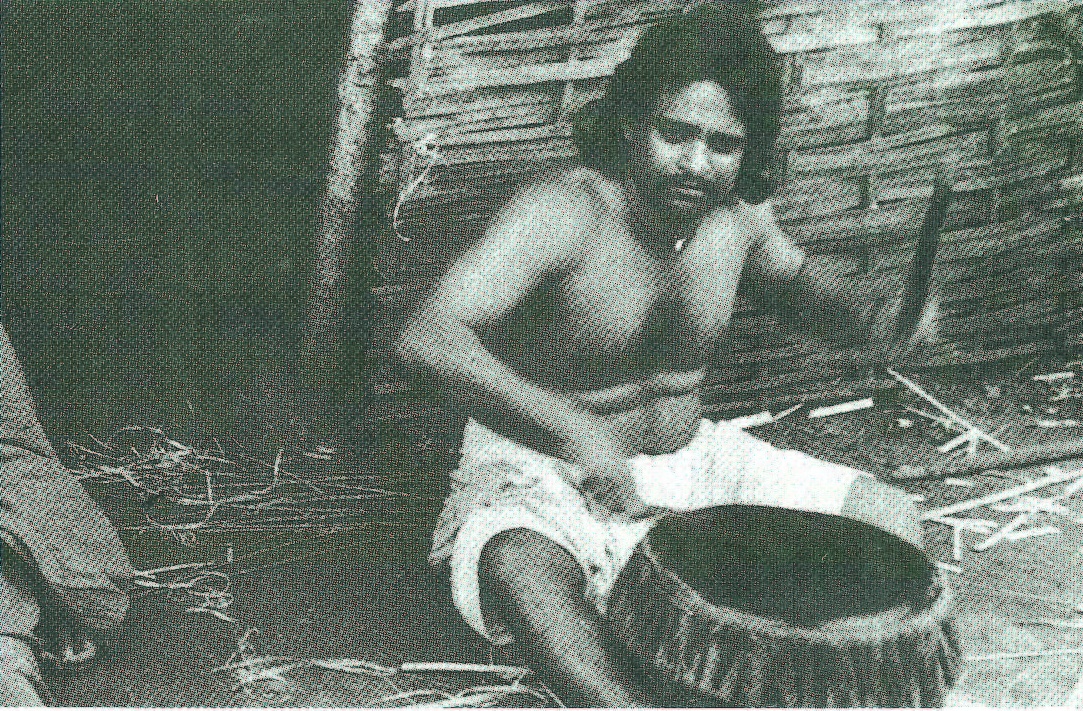
A tradition can be admired long after the people who practise it have begun to struggle. The drum remains a symbol; the drummer still needs to earn a living.
In ଭୂଖା (Bhukha), Sabyasachi Mohapatra’s 1989 Sambalpuri film, folk performers live within a changing society. Film critic Ashok Palit discusses it as an encounter between inherited ways of life and modernity.1
Behind the sound, a livelihood
The film grew from a play by Manglu Charan Biswal. A later report about Mohapatra’s work describes its concern with bajnia folk drummers whose livelihoods were threatened by changing musical tastes.2
In the opening scene of the play Bhukha, read in Nirjharini Tripathy’s English translation The Starved, Hadu suggests making music, but Paltu asks what the Nisan can do alone. They wonder why Maharagu is late and tease him. He arrives with his dhol and challenges their remarks; Hadu answers that they wanted him to hear. Before the livelihood question, this opening lets us meet the performers through their banter.3
For a working musician, cultural change can arrive as the loss of the next engagement. The film’s subject brings an economic question into the celebration of inherited art: what allows a performer to continue?
Himanshu Shekhar Guru’s 2015 account in OrissaPOST credits Ramesh Mahanand with the music and identifies a Nachnia song and a Sajani geet in its repertoire.4
Finding an audience at home
In a 2022 interview, Mohapatra recalled that Bhukha did well in western Odisha and also reached audiences in Bhubaneswar, Cuttack and Puri. Looking back on the broader difficulties of distributing his films, he described the separate expense of posters, banners and promotion. Completing a film was only one part of bringing it to viewers.5
In his recollection, the film travelled between western Odisha and the coastal cities. Its local audiences belong to its history alongside the festival record.
A regional voice reaching another audience
Gijón’s July 1990 programme lists Bhukha among its official feature films. Its credits name Sabyasachi Mohapatra as director and producer, B. Satish Kumar for cinematography, and a cast including Sadhu Meher, Sarat Pujhari, Chitta Pattnaik, Swati Ray and Usha Nayer.6
The 70th National Film Awards catalogue records an International Jury Award at Gijón for Bhukha, but gives no prize year.7
Amrit Amlan Pattanaik’s study places Mohapatra’s Sambalpuri films within western Odisha’s literary and cultural worlds.8
Following the filmmaker forward
Mohapatra’s later, National Film Award-winning ଆଦିମ ବିଚାର (Aadim Vichar) offers another encounter with community life and outside authority.9
The drum in this story belongs to someone’s working life. Listening to the music while following that livelihood keeps art and its practitioners together. Mohapatra’s account of reaching viewers adds the next step: a story about performers also needs people willing and able to see it.

Bringing a film to its audience.
Watch and explore
- Institutional reference: Sabyasachi Mohapatra and ଭୂଖା (Bhukha). National Film Awards catalogue, printed page 036. A director biography, not a player; an authorised full-film route was not established in this check.
Footnotes & Sources
-
Ashok Palit, “The New Wave Cinema of Odisha”, E-CineIndia, October–December 2024, discussion of Bhukha. ↩
-
Riyan Ramanath V, “Film highlights struggle to survive in rural Odisha”, The Times of India, 28 November 2012. Play-source and livelihood account; relative chronology unreliable. ↩
-
Mangalu Charan Biswal, The Starved, translated by Nirjharini Tripathy, 2023, Scene I, opening; Google Books preview PT36. ↩
-
Sambalpuri sonority. OrissaPOST, 2 August 2015; Music credits and forms. ↩
-
OdishaPlus, “Tete-e-tete with Sabyasachi Mohapatra”, July 2022. Director’s retrospective testimony; revenue unaudited. ↩
-
Gijón, 28th festival catalogue, 1990, p. 25, Bhukha programme entry and credits. ↩
-
70th National Film Awards catalogue, Sabyasachi Mohapatra biography, printed p. 036. Original festival award register remains to be checked. ↩
-
Amrit Amlan Pattanaik, “Reading auteurship and subregional subjectivities in the Sambalpuri cinema of Sabyasachi Mohapatra”, publisher abstract; issue dated December 2025, online publication March 2026. ↩
-
Press Information Bureau, 62nd National Film Awards results, 24 March 2015. ↩
Credit: Gijón International Film Festival, 1990 catalogue, p.25; photographer uncredited. Source ↩
Further reading
Suggest an update: share a source, film credit or precise correction. GitHub submissions are public; omit private contact details and consent documents.