
Odia cinemaChanging Screens
Odia television and the stories that came home
In this article
Widen the frame to recurring stories, production teams and the broadcast schedule.
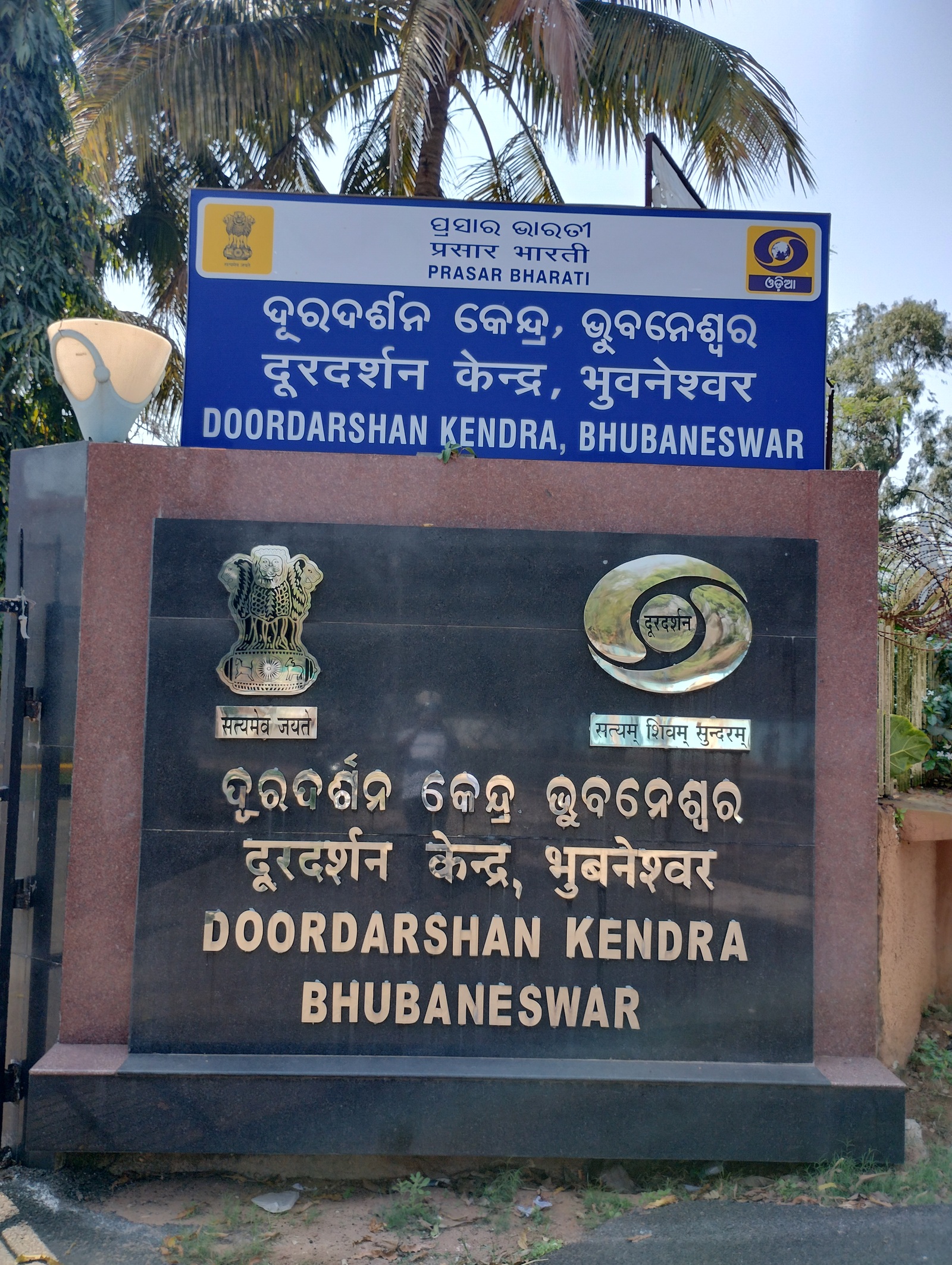
A cinema screening asks viewers to enter a theatre. A television serial asks them to return to a story. Its characters can become familiar through repetition: a conversation continues tomorrow, a conflict develops over weeks, and a household’s ordinary routines become the setting for drama.
For Odia storytelling, television added a different relationship between performers and audiences. It brought pictures into the domestic space already occupied by radio, and created a continuing demand for programmes. Its history belongs beside AIR Cuttack and Odia cinema, with room for their shared writers, performers, music and audiences.
A film actor on the small screen
କେମିତି କହିବି କହ (Kemiti Kahibi Kaha) offers a concrete connection between television and cinema’s performers. ZEE5’s programme page identifies Siddhant Mohapatra and Supriya Nayak in its cast and dates the Odia drama to 2021. Its central relationship brings a wealthy businessman and a younger woman into a story about love and an age difference.1
A serial gives that relationship time to develop across repeated episodes—and asks the production to keep it alive.
Before the satellite channel
Prasar Bharati’s 2010–11 annual report traces a production centre in Cuttack to September 1973 and an Upagraha Kendra to August 1974, preparing programmes for the Satellite Instructional Television Experiment. It records Sambalpur’s terrestrial service from 30 April 1978, local Odia programmes from Cuttack in November 1987, and the inauguration of the Bhubaneswar complex in November 1992. Production, transmission and a dedicated language channel were different stages of development.2
The experiment’s educational purpose matters. Television was being considered as a way to address dispersed communities, rather than only as a delivery system for entertainment. Mrinal Chatterjee’s historical account identifies Dhenkanal, Sambalpur and Phulbani among Odisha’s SITE districts in 1975–76.3
A public platform for stories
Prasar Bharati dates the Odia Regional Language Satellite Service to 2 October 1993, initially named DD-5. It records the change to DD-6 on 15 August 1994, followed by round-the-clock broadcasting on 1 April 2001. The satellite service built on the earlier production and transmission network.4
The broadcaster describes a programme mix spanning literature, folk music, dance, agriculture, news and festivals. Its public catalogue links କଥା ସରିତା (Katha Sarita) stories and ଗୋପାଳ ରହସ୍ୟ (Gopala Rahasya), alongside a programme identified with Godabarisha Mishra’s ପାଣୁ ମିଶ୍ର (Panu Mishra). The catalogue connects literary and oral storytelling with television.4
A retrospective of Manmohan Mahapatra’s work lists Rakta Tirtha Eram (1997) and Nua Sakala (2000) for DDK Bhubaneswar. The work list places a feature filmmaker within the broadcaster’s production history.5
Cable and private channels broaden the schedule
Odisha Television Network dates its beginnings to a cable service in Bhubaneswar and Cuttack in 1997, and its move to satellite broadcasting to 2006. That news-oriented history belongs alongside entertainment television, rather than standing in for it.6
Chatterjee’s account describes ETV’s arrival in the early 2000s and the expansion of Odia entertainment through Tarang in 2008. It also credits independent producer Biren Das with the 1995 news magazine Ajira Odisha: production initiatives mattered as well as channel ownership.3
A later corporate milestone was ZEE’s acquisition of Sarthak Entertainment. Its financial notes record the company becoming a wholly owned subsidiary on 4 December 2015, identifying Sarthak TV as an Odia general-entertainment channel. This was an acquisition, not the channel’s founding date.7
These developments created different places for a programme to be commissioned and encountered: public broadcasting, a local cable service and competing entertainment schedules.
Animation, and the language a child hears
An Odia voice can make an animated character familiar before a child can read its name. Behind that encounter are writers, voice performers, animators and the people finding a way to bring their work to a screen. Odisha’s animation ventures include shorts, television series and feature projects, each with its own production demands.
IDMT’s own catalogue records ଚତୁର କାଉ (Chatura Kau) as an Odia animated short released on 14 January 2008. It also describes ଧର୍ମପଦ (Dharmapada) as an animated feature project. The short and the proposed feature show different ambitions within local animation.8
କୁନି ଗଣେଶ (Kuni Ganesha) provides a television connection. Reporting on Media Pixels Productions described an eight-episode Odia 3D series prepared for Doordarshan, with Gouri Shankar Singh as producer and Jyotiranjan Swain as writer-director. The account also records the difficulty of bringing funding and technology together.9
A later example connects local production to national broadcasting. ELE Animations’ announcement for ଜୟ ଜଗନ୍ନାଥ (Jay Jagannath) describes its collaboration with Toonz and Warner Bros. Discovery and a Pogo premiere in May 2024. The six announced broadcast languages did not include Odia. The collaboration connects an Odisha studio to a wider children’s television audience, while leaving an Odia-language broadcast unconfirmed.10
The distinction continues into features. ELE’s ମହାପ୍ରଭୁ ଜଗନ୍ନାଥ (Mahaprabhu Jagannath), directed by Shripad Warkhedkar, received a trade review recording a Bombay theatrical release on 4 September 2026. Producer publicity named Odia among its planned languages. An advertised language does not establish that an Odia-language screening took place.1112
These productions also widen the economics story. ELE’s agreement announcement describes distribution, licensing and merchandising alongside the series itself. Such rights offer possible income beyond tickets; the announcement provides no audited return.13
A child may meet an original Odia story or hear a translated one in Odia. Both depend on people shaping words and voices for that audience.
The people keeping the pictures on air
The expanding schedules depended on different kinds of teamwork, from a live festival broadcast to a serial delivered on time.
Participant Fakira Mohan Nahak recalls ETV’s 12 July 2002 Rath Yatra coverage as a coordinated operation: Sanjay Pathak led the Puri field team, broadcast engineer Akshay Mohanty handled the technical system, Amitabh Bhattashali led the Hyderabad team and Vijay Krishna handled panel production. Nahak also describes arranging graphics for the transition to live pictures. Those named roles—and the wider crew—made the broadcast possible.14
The work behind the returning characters
Serials need actors, but also writers, camera crews, editors, sound workers, makeup artists and the people who keep a production running. The promise of regular episodes creates work and a demanding timetable.
In a January 2025 interview, director Mihir Swain, then working on Tarang’s Rajayoga, described how more broadcast days had led to longer shoots and less time to prepare episodes ahead. Producer Akshay Parija identified irregular delivery of outsourced stories as another obstacle. Actor Sarmili described the insecurity of promised roles being reassigned and the difficulty of depending on serial income. Their accounts bring the pressure of a continuing schedule into view.15
More episodes can create more work, while preparation time, pay and continuity of employment remain concerns in these interviews. The production schedule gives the channel history another scale: the time and resources available to make the next episode.
Television also travels through the internet
The same ZEE5 catalogue advertises episodes of Kemiti Kahibi Kaha before their television telecast for viewers in India. A television serial can therefore also be an on-demand offering. The serial’s life now extends beyond its broadcast hour.1
The Odia OTT journey follows this extension of the schedule into a catalogue, alongside acquired films and work commissioned for streaming.
Watch and explore
Availability may vary by region and account conditions.
-
Programme and episode catalogue: କେମିତି କହିବି କହ (Kemiti Kahibi Kaha) on ZEE5. Check individual episode access and current account terms.
-
Official programme information: DD Odia at Prasar Bharati. Channel history and linked catalogue; not a promise that every listed programme is available to watch.
-
Producer catalogue: IDMT’s Utkal Cartoon World. Production information, not a verified full-film player.
A story beyond its scheduled hour.
Footnotes & Sources
-
ZEE5, Kemiti Kahibi Kaha, programme synopsis, cast and episode catalogue, inspected 25 October 2026. ↩ ↩2
-
Prasar Bharati, Annual Report 2010–11, printed p.118, DD Bhubneshwar history. ↩
-
Mrinal Chatterjee, Television in Odisha, Odisha State Open University hosted historical resource, pp.1–4. ETV dates conflict between text/table; early-2000s period only. ↩ ↩2
-
Prasar Bharati, DD Odia, institutional history and linked programme catalogue, inspected 25 October 2026. 1993 service and 1994 name change; catalogue does not establish original broadcast dates. ↩ ↩2
-
Exit of a cinematic giant. Bijay Mandal, OrissaPOST, 28 January 2020; retrospective work list. Broadcast dates unverified. ↩
-
Odisha Television Network, institutional history, inspected 25 October 2026. Owner’s account of 1997 cable beginnings and 2006 satellite conversion. ↩
-
ZEE, 2015–16 annual report financial notes, note 35, printed p.130. Acquisition effective 4 December 2015. ↩
-
IDMT, Utkal Cartoon World catalogue. Producer catalogue; priority/release status unverified. Read source ↩
-
The New Indian Express, “Ganesha comes alive through animation.” URL dated 2010; displayed update 2012. Planned broadcast, transmission unverified. Read source ↩
-
ELE Animations, “Pogo’s new show Jay Jagannath celebrates friendship,” 8 May 2024. Announcement lists Hindi, Tamil, Telugu, Kannada, Marathi and Malayalam. Read source ↩
-
Film Information, Mahaprabhu Jagannath review, 4 September 2026. Release/credit review. Read source ↩
-
ELE Animations public company feed, indexed 26 October 2026. Company language announcement. Read source ↩
-
ELE Animations, Toonz partnership announcement, 18 February 2023. Rights announcement, not earnings. Read source ↩
-
Fakira Mohan Nahak, Live Broadcast, Rath Yatra and ETV, OdishaPlus, 24 February 2022. Participant recollection; engineer Akshay Mohanty is not identified as composer Akshaya Mohanty. ↩
-
Jyoti Prakash Sahoo, From Spotlight to Struggles, MyCityLinks, 8 January 2025. Interviews with television practitioners. ↩
Credit: Hellohappy, Wikimedia Commons. Source · CC BY-SA 4.0 ↩

Further reading
Suggest an update: share a programme credit, dated schedule or precise correction. GitHub submissions are public; omit private contact details and consent documents.