
Dhenkanal · Hills and highland escapes
Kapilash: A Hill Shrine and an Older Temple’s Trace
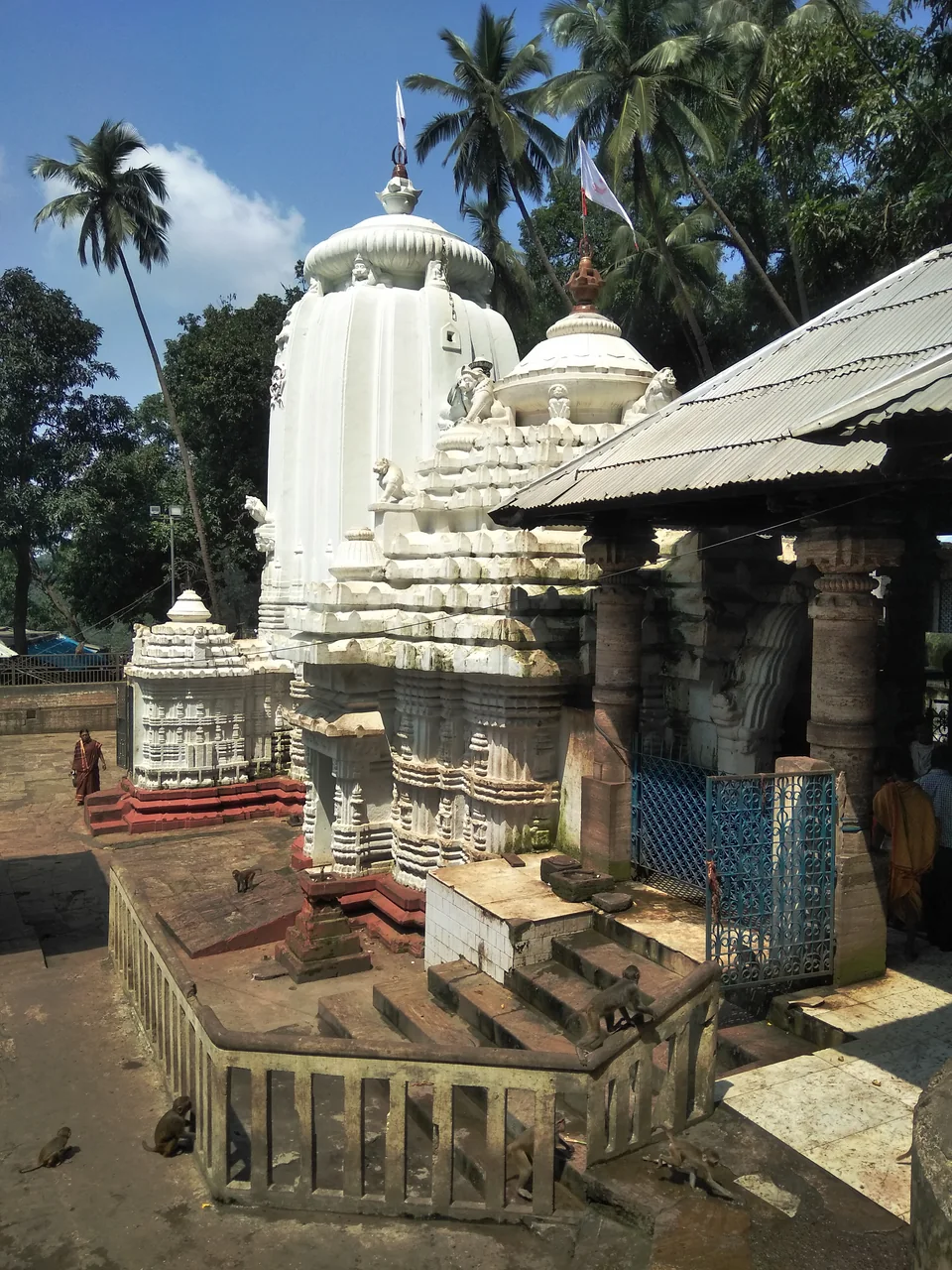
Kapilash, also written Kapilas, is a hill pilgrimage in Dhenkanal where Shiva is worshipped as Chandrasekhar.1 The wooded hills and the ascent give the shrine its setting.2
Pilgrimage on the hill
The district’s account connects Kapilash with Kailash through legend and identifies Mahashivaratri as a major pilgrimage occasion.1 For visitors, it is a place of worship as well as a setting for looking at temple architecture.
Anup525’s 2019 photograph shows white towers rising behind smaller shrines, with palms above the courtyard. Carved details cover the nearer structures; their red bases contrast with the pale stonework.
An older temple’s trace
In November 1957, D. C. Sircar examined three inscriptions on a detached stone kalasa, a vase-shaped architectural piece. He inferred that it had crowned an older temple later replaced on the same site. His reading of the first inscription’s calendar points to 1246, with Narasimhadeva I as a possible identification of the king; comparison with a second inscription strengthens that reading.3 This is evidence for an earlier building, not a secure date for the temple now standing.
The Archaeological Survey of India lists Chandrasekhar Temple, its group of monuments and ancient steps as centrally protected.4
Planning the ascent
Kapilash has both a stair approach and a winding hill road. Odisha Tourism recommends October to March and identifies Dhenkanal town and railway station as gateways.2
Before travelling, confirm road restrictions and the final walking approach, especially if anyone in your group needs assistance or a step-free route. Arrange the return journey, allow time for pauses and follow directions around worship spaces.
Footnotes & Sources
-
Dhenkanal district administration, Places of Interest, Kapilas section: dedication, legend and pilgrimage. Checked 23 November 2026. ↩ ↩2
-
Odisha Tourism, Kapilash Temple, setting, approaches, season and transport. Checked 23 November 2026. ↩ ↩2
-
D. C. Sircar, “Kapilas Inscriptions of Narasimhadeva”, Epigraphia Indica XXXIII, printed pp. 41–43. ↩
-
Archaeological Survey of India, protected monuments list, p. 78, Puri Circle, entry 15. ↩
Continue reading
Further reading
Suggest an update. GitHub submissions are public; omit private contact details and consent documents.