
Rise, Children of Utkal — ଉଠରେ ଉଠରେ ଉତ୍କଳ ସନ୍ତାନ
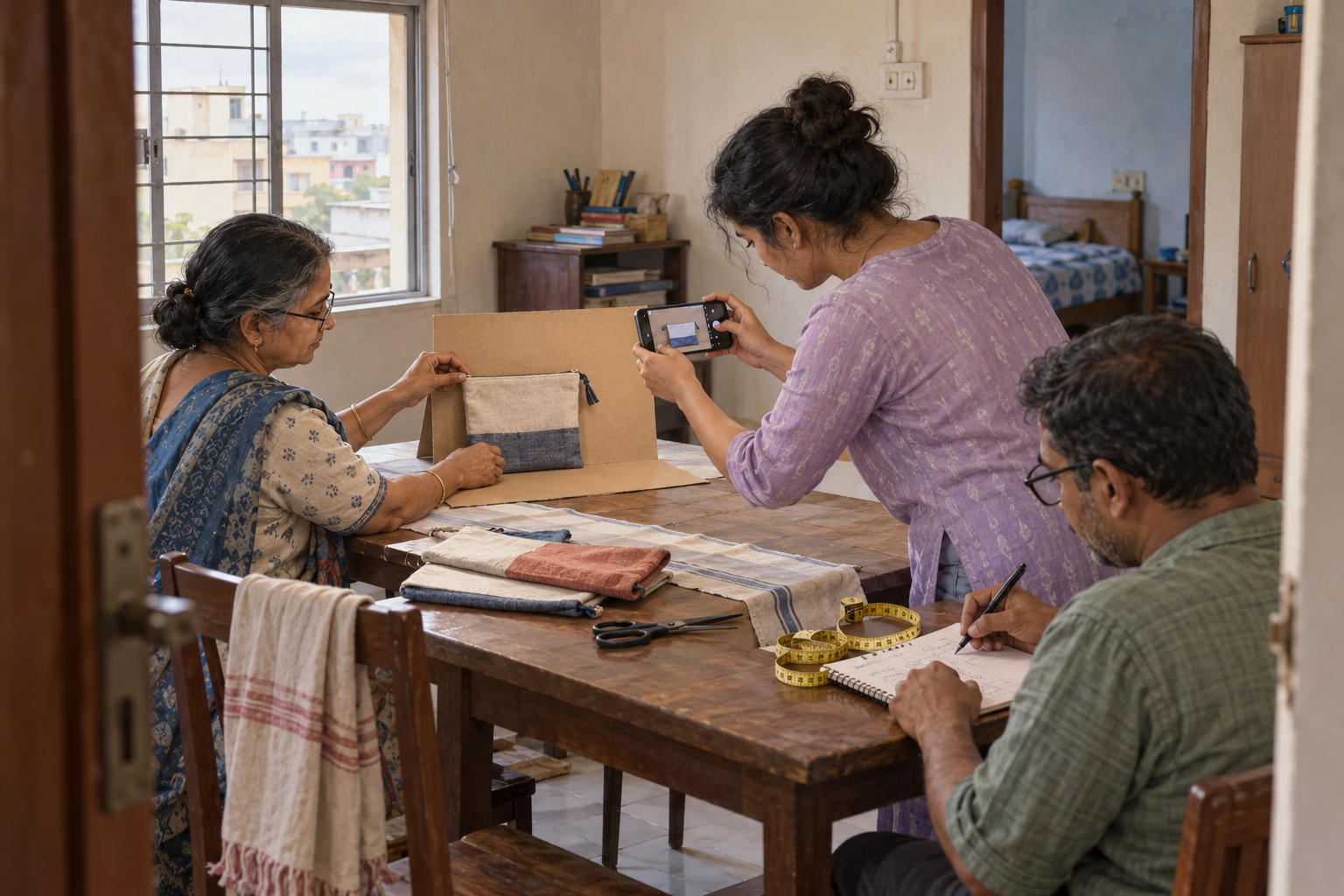
From “nothing will happen here” to what we can begin together.
“ଆମର ଏଠି କିଛି ହେବନି”—nothing will happen here.
I have heard that sentence in conversations about Odisha. Sometimes it comes from disappointment: a promise was broken, an effort went unrecognised, or someone could not find the support they needed. Sometimes it arrives before a new idea has even had a chance.
We can recognise the disappointment and still question the conclusion. When we say that nothing will happen, what happens to the person sitting beside us who was about to try?
I am describing a habit I have encountered, not a character trait of Odia people. There are real obstacles to building a livelihood or an institution. A study of 120 agripreneurs in Gajapati and Rayagada, for example, identified skills and financial constraints alongside social and psychological challenges. Its findings cannot stand for all Odisha, but they remind us that encouragement must be accompanied by practical support.1
Government has responsibilities that individual enthusiasm cannot replace. We should demand good public services, fair opportunities and accountable institutions. Alongside those demands, there is another question worth keeping alive: what can we do together now?
My interest comes from my own work as an entrepreneur and startup community builder. Through BootUpINDIA, working with iSPIRT to support bootstrapped companies, I was involved in bringing founders together around the challenge of building with limited resources. My 2014 introduction to the initiative spoke about solving real problems and creating value; contemporary reporting described its support for bootstrapped ventures.2
That is the experience from which I am speaking. Meeting Professor Saras Sarasvathy helped me give it a clearer language through effectuation: an approach to entrepreneurship that begins with available means and develops through action and committed relationships.3
Odisha is larger and more complex than any startup. Still, that way of thinking offers useful questions for our homes, workplaces and communities. Our own history gives those questions a familiar setting.
Atibadi Jagannath Das composed the Odia Bhagabata. Around its collective reading and recitation, communities developed and sustained the Bhagabata Tungi tradition. Historian Kailash Chandra Dash describes the Tungis as part of Odisha’s cultural space, developing after the composition of the work.4
The connection between a text and a regular gathering is powerful. People give a work a continuing life when they listen, explain, discuss and return. Through a modern lens, I see in this a parallel with social entrepreneurship: knowledge made accessible through a shared institution. That is my interpretation, not a claim that Jagannath Das personally founded every Tungi or practised a modern business theory.
Fakir Mohan Senapati offers another example. His literary and educational work helped strengthen Odia public expression, while his fiction examined ordinary lives and social failings. He contributed to the wider linguistic and cultural awakening associated with the movement to unite Odia-speaking regions. He died in 1918; the separate province followed on 1 April 1936, through a collective movement that continued beyond his lifetime.5
His example matters to this appeal because criticism has a constructive place. We need people who expose injustice and challenge complacency. We also need the patient work of writing, teaching, organising and making something that others can use. A contribution may bear fruit after its maker is gone.
Madhusudan Das’s call, “ଉଠରେ ଉଠରେ ଉତ୍କଳ ସନ୍ତାନ,” carries added weight when we look at what Madhu Babu himself tried to build.6
His work included Orissa Art Wares and Utkal Tannery in Cuttack. Historian Kailash Chandra Dash describes his efforts to support filigree artisans through training, exhibitions and recognition for their work. The tannery represented another attempt to connect production with Odisha’s economic aspirations.7
Here was a practical expression of cultural confidence. Admiring a craft could lead to organising training and helping people encounter the products. Pride could ask something of those with education, connections and resources: what would they do to help another person’s skill find an opportunity?
I see a useful parallel with Bird in Hand in that attention to existing ability. We need not call Madhu Babu an effectuation practitioner to learn from it. Nor should we turn his ventures into a promise that every determined effort succeeds. The lesson I take is that an appeal to rise becomes more credible when it is accompanied by the work of building.
For us, that work can begin at a manageable scale: helping a practitioner organise a workshop, paying for a useful product, or bringing a skilled person into a conversation from which they have been missing.
Consider a possible neighbourhood learning circle. This is an illustration of what we could organise, not a report of an existing project. A few people want children and adults to have a place to read Odia, exchange practical knowledge and help one another. Following that small idea lets us see all five effectuation principles at work.
Begin with what is already within reach.
Bird in Hand asks us to begin with who we are, what we know and whom we know. One neighbour enjoys reading aloud. Another can help with applications or basic computer skills. A retired teacher has time for a short session. Someone knows a suitable venue whose owner may be willing to help.
The first step could be a conversation among those people. What would they enjoy contributing? What do prospective participants actually want to learn? The answer may be different from the organiser’s original idea.
At home, the same question gives children a useful starting point: what can you make, explain or practise with what you already know? It gives elders a role too. Knowledge that has become invisible through familiarity can become someone else’s beginning.
Make the first commitment one we can sustain.
Affordable Loss asks what we are willing and able to commit if an experiment does not work out. Our learning circle could agree to four sessions, a modest spending limit and a review at the end. Nobody needs to promise a permanent institution before the first meeting.
The limit includes time and labour. One enthusiastic person should not quietly inherit every task. A family should not have to endanger essential expenses to demonstrate commitment.
At work, this could mean proposing a small, authorised trial to improve one recurring problem. Agree on the time, the resources and how to assess the result. If the trial disappoints, discuss what it revealed. An honest attempt should leave people able to learn and try again.
Turn encouragement into a shared commitment.
Crazy Quilt describes building with people who choose to contribute and help shape the direction. For the learning circle, a promise to lead two sessions or provide the venue on agreed dates matters more than a long list of well-wishers.
The familiar thought “ଏକତା ହିଁ ବଳ”—unity is strength—becomes concrete when everyone knows their part. Perhaps the teacher proposes reading support, while young participants ask for help presenting their work. The group can develop a programme neither side would have designed alone.
This is something friends can practise immediately. Introduce someone to a potential collaborator. Become a paying first customer when the offering meets your needs. Help with a specific task and keep the promise. Give people a fair hearing before announcing why their idea will fail.
Let a surprise teach us something.
Lemonade asks what useful possibility an unexpected development might reveal. Suppose the learning circle plans a reading session, but participants are especially interested in recording an elder’s account of local working life. With the teller’s consent, the group might develop a small oral-history project alongside its reading activities.
For me, this recalls an Annapurna image from household life: guests arrive unexpectedly, and people look at what is available, adjust the meal and make room at the table. I see a personal cultural parallel in that resourcefulness and hospitality.
The effectuation connection becomes stronger when the surprise also changes what we discover. A guest may bring a skill, a story or an offer to help. The gathering can create a relationship that was never on the original plan. We should also notice who does the cooking and organising, and share that labour fairly.
Not every setback contains an opportunity. Sometimes we need to stop, recover or seek help. Openness to surprises means paying attention to what has changed and deciding what is possible next.
Keep shaping the next step together.
Pilot in the Plane emphasises the influence we can exercise through our actions and partnerships. After four sessions, the learning circle can ask who returned, what participants found useful and what the organisers can sustain. It might continue, change direction or close with something useful learned.
Those decisions belong to the people doing the work together. They need not wait for certainty about everything around them.
The memory of the Sadhabas can offer a related invitation. Odisha’s maritime history opens questions about merchants, boatbuilders, navigators and the practical knowledge on which journeys depended. The evidence comes from different periods and kinds of sources; it does not establish that ancient traders used effectuation.8 What inspires me is the work behind the voyage: skills, preparation, cooperation and the willingness to venture beyond the familiar.
For us, the next journey may begin with a skill we can share, a relationship we can build or a useful problem we can help solve.
Our culture evolves partly through how we respond to other people’s efforts. At home, we can give curiosity room. Among friends, we can make one useful introduction and follow through. At the office, we can make it possible to raise a problem, test an improvement and report an unsuccessful result honestly. People with more resources can make participation easier for those with less.
The next time a conversation ends with “ଆମର ଏଠି କିଛି ହେବନି,” we can acknowledge the frustration and keep the conversation open: what is one thing within reach, and who will work on it with us?
This month, choose one useful activity and one person willing to work on it with you. Agree on the time, money and effort you can comfortably commit. Try it, then meet again to discuss what helped, what was difficult and whether to continue. Keep the first promise small enough to honour.
A first meeting. A lesson someone agrees to teach. A useful service tested with a customer. A promise kept long enough for another person to trust it.
“ଉଠରେ ଉଠରେ ଉତ୍କଳ ସନ୍ତାନ.” Let us answer with something we begin—and something we help another person begin.
Footnotes & Sources
-
Netrananda Das and colleagues, “Understanding and Overcoming Key Challenges of Agripreneurs in Southern Odisha: A Case Study”, Indian Journal of Extension Education 61(2), 2025, pp.118–122. Study of 120 agripreneurs in Gajapati and Rayagada during 2023–24; abstract and method summary inspected. It is not a statewide survey of pessimism or proof of causation. ↩
-
Ahimanikya Satapathy, “#BootUpINDIA — Giving Independence to Indian Startups!”, ProductNation, 15 August 2014; contemporary Economic Times coverage, 15 August 2014. These establish contemporaneous involvement and programme context, not an independently evaluated impact. Economic Times coverage is not evidence of a Times of India organisational partnership. ↩
-
Society for Effectual Action, “The Five Principles of Effectuation”; UVA Darden’s effectuation overview. The five principles are entrepreneurial concepts. The community, household and workplace applications in this essay are the author’s proposals, not tested interventions. The Sarasvathy meeting is the author’s personal account. ↩
-
Kailash Chandra Dash, “A Discourse on Odia Cultural Space”, 2020, discussion of Bhagabata Ghara/Tungi. This supports the historical relationship between the work and the community institution; it does not establish universal participation or a network personally founded by Jagannath Das. ↩
-
Government of Odisha, Fakir Mohan Senapati; Geetashree Priyambada, “Fakir Mohan Senapati: Renaissance in Odia Literature”, Odisha Review, April 2016, pp.39–41; Devi Prasanna Pattanayak, “The Official Language Jinx,” in The March to a Modern Odisha, 2013, printed p.49; Odisha Legislative Assembly historical introduction. The historical essay is reused within the project’s saved indexed-text inspection scope; its original page images have not been verified. Language advocacy, the unification movement and province formation are distinct contributions and stages. ↩
-
Madhusudan Das, “ଉତ୍କଳ ସନ୍ତାନ”, published transcription in Odia Sahitya, stanza 10. The quoted line is not the poem’s opening line in this transcription. No original printed edition has been collated. The English heading is an editorial rendering of the call. ↩
-
Kailash Chandra Dash, “Madhubabu as a visionary Industrialist & Economist”, 28 April 2020, passages on Orissa Art Wares, artisan training and Utkala Tannery. Historical interpretation citing Utkala Dipika; underlying newspaper issues not independently inspected. Exact founding dates, employment totals, commercial performance and export quantities are not adopted. Sources give differing start dates, which may concern different stages and remain unresolved. The effectuation parallel is the author’s interpretation. ↩
-
Sila Tripati and L. N. Raut, “Monsoon Wind and Maritime Trade: A Case Study of Historical Evidence from Orissa, India”, Current Science 90(6), 2006, pp.864–871, alongside the project’s saved Sadhaba voyages: boats, navigation and practical science study. Archaeology, historical interpretation and later boatbuilding accounts have different evidentiary scopes; they do not prove an uninterrupted entrepreneurial lineage. ↩
Continue reading
These three essays move from carrying culture into everyday life, to taking initiative, to creating a place where people can learn together.
Suggest an update. GitHub submissions are public; omit private contact details and consent documents.