
Part 1 · Land, History and Belonging
Chapter 5 of 48
Adivasi Worlds and Community Knowledge
Seeds cloth stories and the work of language
An account of Odisha’s culture changes when its starting point is a seed keeper, an embroiderer or someone making a language usable on a phone. Each brings a different understanding of what deserves to be remembered, and of the work remembrance requires. Knowledge has a place, a language and people who practise it. It also has a future that those people should be able to shape.
This chapter follows several named encounters recorded by researchers and reporters: Dongria Kondh seed keeping and embroidery, Ho language work online, Santali writing and a Saora artist’s storytelling. These are distinct histories, not interchangeable examples of a single Adivasi culture. The accounts offer points of entry into living worlds; they cannot stand in for every household or community.
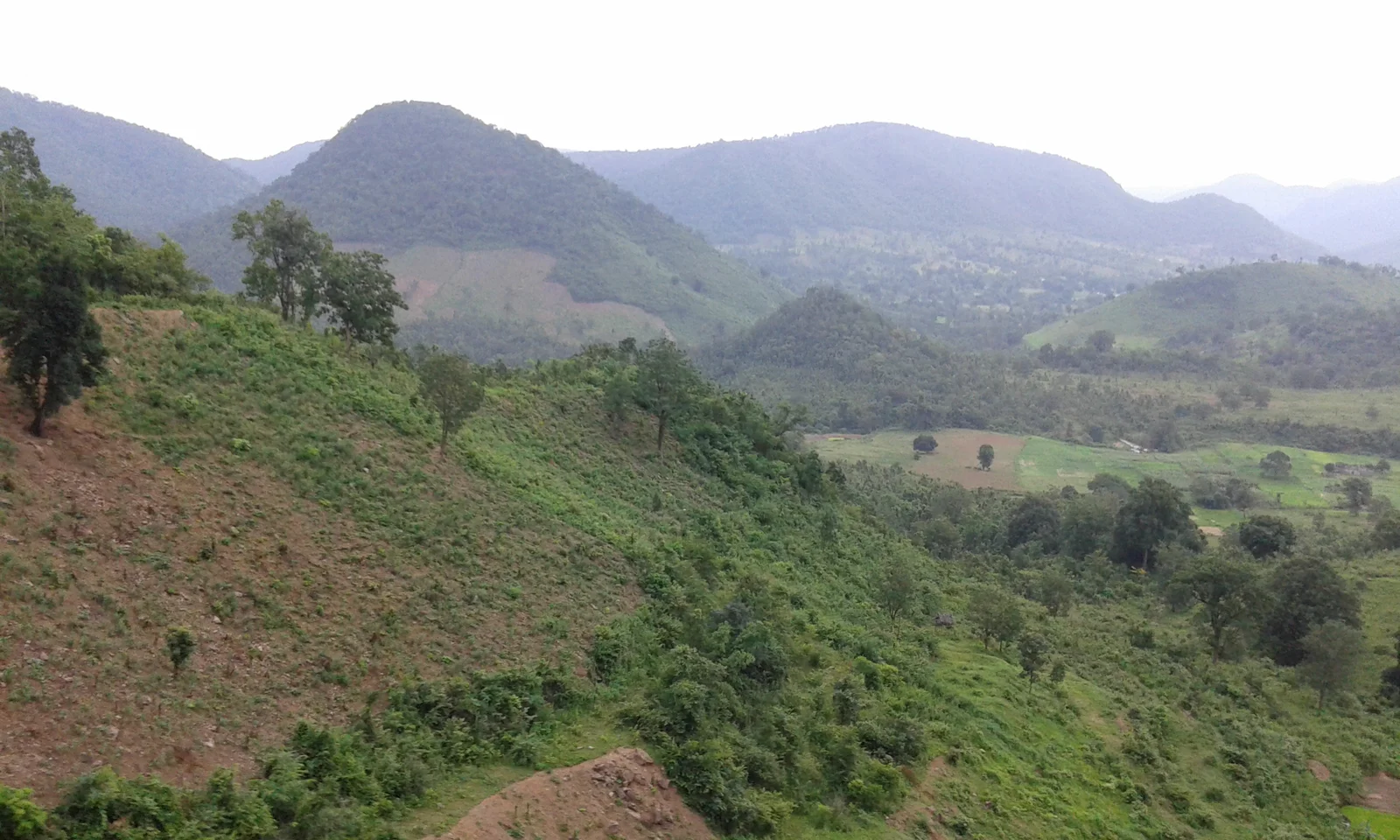
Hilly terrain in Koraput district, photographed on a journey towards Rayagada in August 2015. This regional setting is not identified as Niyamgiri.
Kkmishra1960. Source · CC BY-SA 4.0. Original photograph reproduced full frame, scaled for the page; no crop or recolouring.

Seeds that travel between households
In a 2015 report from the Niyamgiri hills, Manipadma Jena described priestesses who were also searching for seeds. Dasara Kadraka of Kadaraguma spoke about millet varieties that were becoming difficult to find. The bejuni priestesses’ work joined cultivation to journeys, conversations and obligations between neighbours.1
The report describes seeds shared among five families and priestesses returning twice the amount of grain they had received as seed. News of surviving varieties travelled through weekly markets and ritual gatherings. Dom neighbours helped carry that news. The network therefore crossed household and community boundaries: finding a seed depended on knowing whom to ask, and keeping it depended on growing and sharing it.1
This is an account from 2015, not an inventory of what survives today. Its value lies partly in the practical detail. A seed collection is sustained through relationships as well as storage. The work involves attention to other people’s fields, willingness to travel and the possibility that something lost in one place remains in another.
A later account complicates any picture of an unchanged farming world. In 2022, Deepanwita Gita Niyogi reported on Singari Jakesika of Gandili. Jakesika described her husband’s turn towards horticulture for greater income, less land under millet and a household diet that included more subsidised rice.2 The two accounts show different pressures and choices; they do not establish one uniform trajectory for all Dongria families.
For a cultural edition, the question is not simply which crop is traditional. It is who has the time, land and incentive to keep cultivating it. Remembering a seed keeper’s name brings those decisions into view. It also prevents an attractive phrase such as “community knowledge” from hiding the labour that makes knowledge available.
The time inside an embroidered cloth
In interviews conducted in November 2017, Kanak Rajadhyaksha recorded how Dongariya Kondh women learned and fitted embroidery into their lives. Kumri Sikoka recalled learning at about nine or ten from her paternal aunt. Learning was a relationship between people, carried through demonstration and practice.3
Binjo Jakesika and Sukri Kadraka described embroidery alongside fieldwork and housework. Their accounts included bodily strain associated with prolonged work during training. Site Jakesika spoke of earnings and independence, while also recognising the convenience of buying a gift rather than spending the time to embroider it.3
A finished cloth can conceal these negotiations. Looking closely should mean attending to the maker’s choices as well as the stitches. An inherited skill may be valued, tiring, economically useful and difficult to make time for—all within the same life.
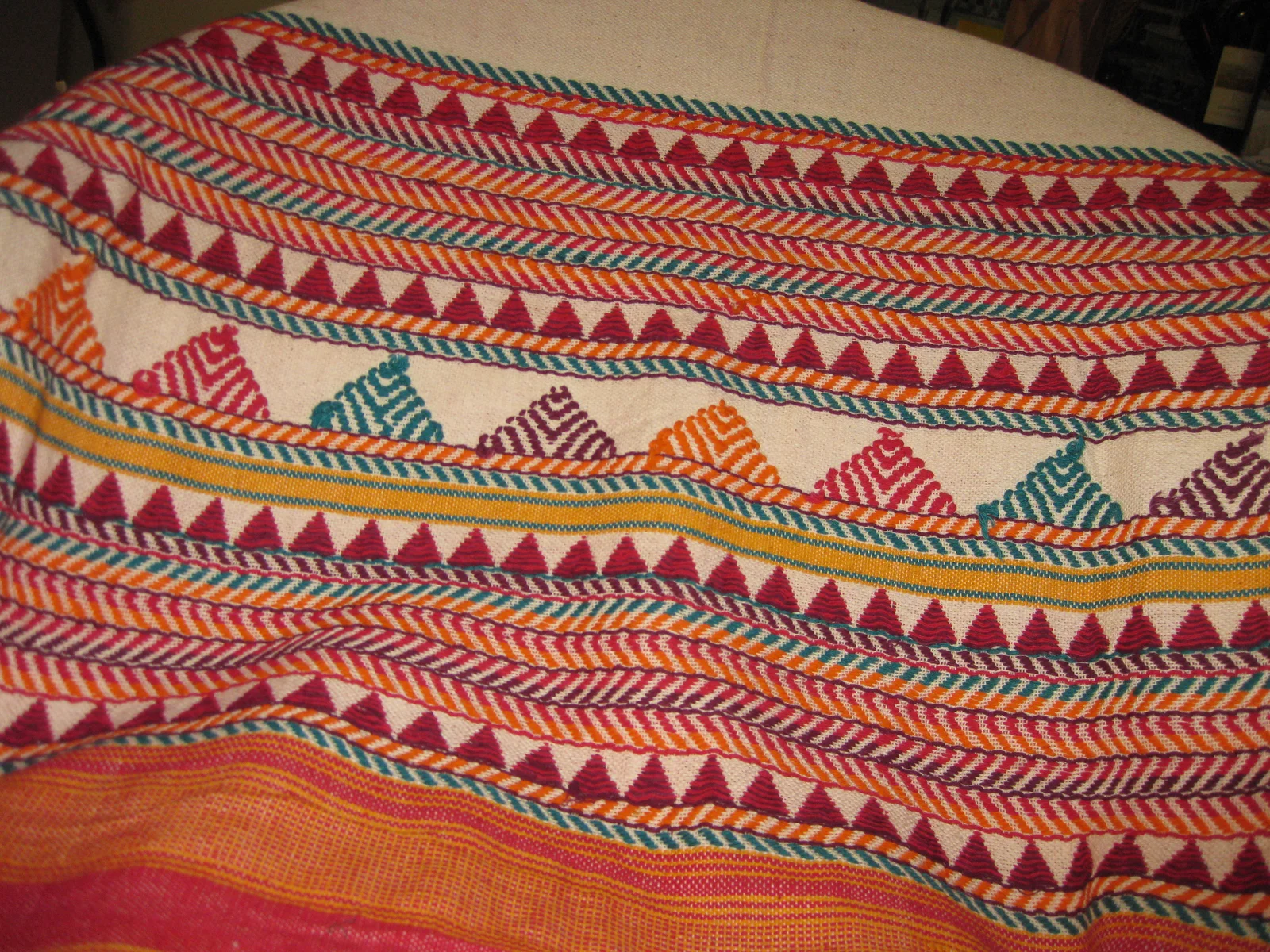
Embroidered cloth catalogued as “GUNDERI SHAWL”, photographed in 2010. The source records neither its maker nor its place of production.

A language on a phone
Ganesh Birua’s route into digital language work began with learning. In Karishma Mehrotra’s 2022 report, Birua, from Dighiabeda in Odisha, recalled encountering Warang Citi through the Ho Society India Facebook group while studying in Baripada in 2014. He began learning the script and sharing letters and words, using Odia and English equivalents to help readers.4
His work grew into a blog, “Elabu Etona Warang Citi”, and online videos and posts. The report’s interview scene is especially telling: Birua spoke from a tree where he could obtain a phone signal. Digital work was already taking place, but the means of reaching it were uneven. The same report described Subhashish Panigrahi’s interest in word lists and other foundational tools for languages online.4
A script needs more than an image of its alphabet to function on a screen. Unicode’s standard describes Warang Citi as a distinct script, with uppercase and lowercase letters.5 Encoding gives characters agreed identities that software can use. Teaching materials, readable fonts and people who want to write remain necessary parts of the larger task.
The significance of Birua’s work is not that a language becomes valuable when it reaches the internet. Its speakers already give it value. The change is in what they can do with it: explain a letter to someone far away, circulate a lesson, or leave material that another learner can return to.
This is community knowledge being deliberately extended. It is also individual initiative, with an identifiable author and a particular history of learning. A responsible archive should preserve that authorship alongside the material, so that a useful resource does not become an anonymous example of “tribal content”.
Writing and the right to be remembered
Raghunath Murmu’s creation of Ol Chiki in 1925 offers another history of language work. It concerns Santali, not Ho, and a different script. The date is recalled in the President of India’s account of the script’s centenary celebrations.6
Unicode records Ol Chiki as an alphabet with independent vowel letters, written from left to right. It also notes that Santali has been written in Devanagari, Bengali, Odia and Latin scripts.5 The history of a language is therefore larger than the history of any one writing system.
A commemorative bust makes Murmu visible as a named cultural worker. In this chapter it stands for that public remembrance, not for all Santali experience. Beside the story of a young Ho learner, it opens a longer view of people making tools through which others can learn and write.
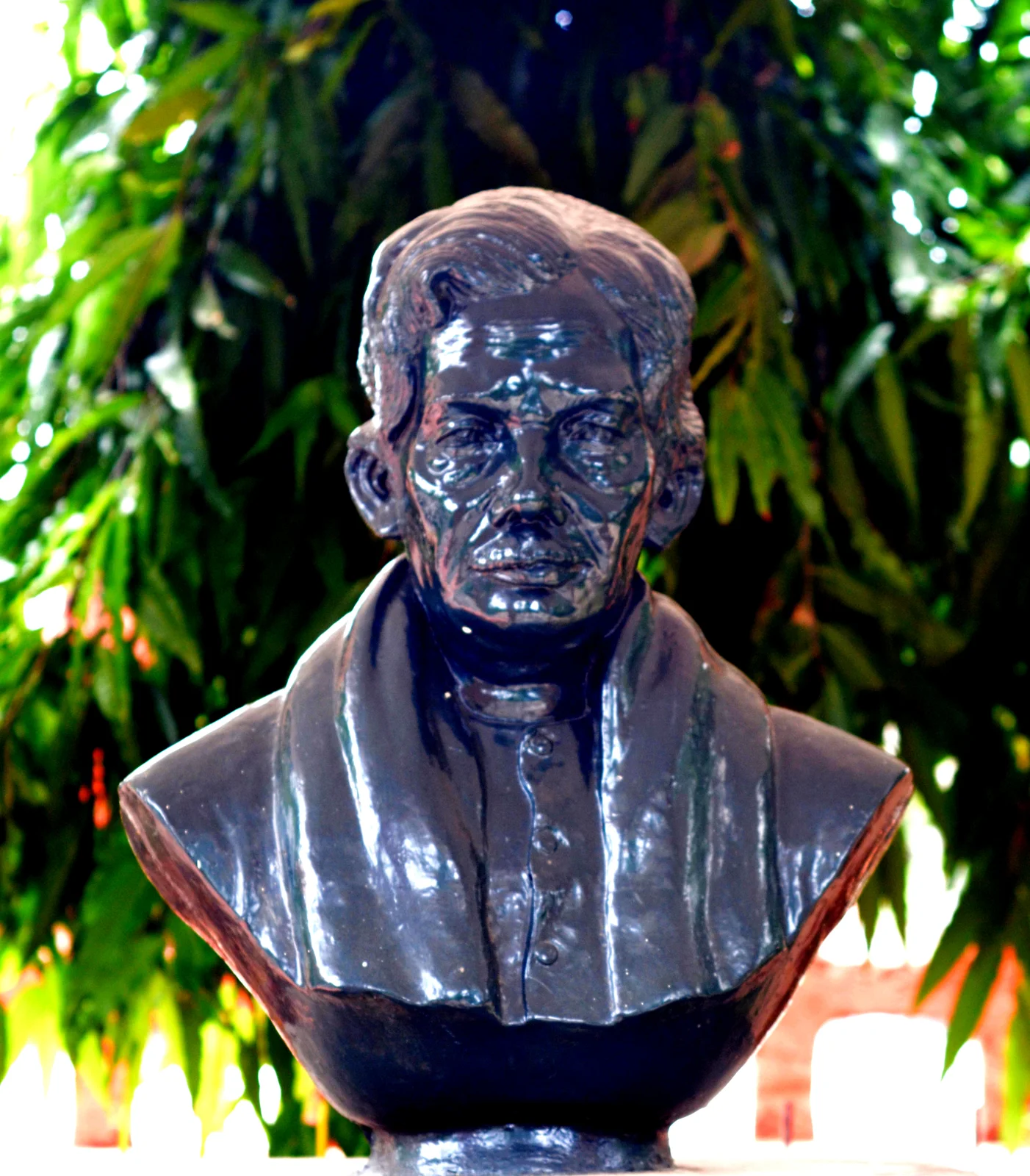
A commemorative bust of Raghunath Murmu at the Odisha Tribal Development Society office in Bhubaneswar, photographed in 2014.
Subhashish Panigrahi. Source · CC BY-SA 4.0.

A story with a painter attached
An illustrated Sahapedia account presents Enam Gomango, a Saora painter and teacher from Odisha, narrating a tale of a man and a snake through a sequence of paintings. M. D. Muthukumaraswamy draws attention to the main characters and actions that carry the story from image to image.7
The important editorial choice is to keep the painter’s name attached. A picture can be approached as an act of narration by a particular person, rather than detached from its story and treated only as a decorative pattern. That reading does not require us to assign a universal meaning to every motif or to make claims about practices the source does not document.
Keeping knowledge with its people
These encounters suggest a way of building an edition. Name the people who explain a practice. Record when their words were gathered. Keep languages and communities distinct. Let accounts of changing livelihoods sit beside accounts of continuity, without forcing either into a story of inevitable loss or effortless preservation.
The pictures need the same care. A landscape cannot identify its inhabitants by itself; an embroidered object without a maker’s name leaves an important gap. A commemorative sculpture is evidence of remembrance, not a photograph of the person in life. Captions should make these distinctions visible.
Knowledge is carried through the ordinary work of growing, teaching, stitching and telling. Its future depends partly on whether people can continue that work on terms they choose. An Odisha cultural edition can help readers notice it, trace its sources and seek out its makers. It should leave room for those makers to correct, extend and reshape the account.
Footnotes & Sources
- Tribal Priestesses Become Guardians of Seeds in Eastern India. Manipadma Jena, Inter Press Service, 22 July 2015. Reported testimony and seed-sharing practices; not a current botanical inventory. ↩
- Superfood Millets Need Revival at Home. Deepanwita Gita Niyogi, The Citizen, reproduced by IWMF, 19 November 2022. Singari Jakesika’s household account. ↩
- Kapdagondas: Embroidery and Work for Dongariya Kondh Women. Kanak Rajadhyaksha, Sahapedia. Interviews dated 8–14 November 2017. Spellings of personal names follow this source. ↩
- Meet the young Indians who are bringing an Adivasi language into the digital age. Karishma Mehrotra, Scroll, 15 February 2022. Birua’s learning, online work and interview setting are reported accounts. ↩
- The Unicode Standard 17.0 — Chapter 13. Unicode Consortium. Sections 13.9, Warang Citi, and 13.10, Ol Chiki. Used for script properties, not population estimates. ↩
- President of India inaugurates centenary celebrations of Ol Chiki script. President’s Secretariat, 16 February 2026. Official account identifying Murmu and the script’s creation in 1925. ↩
- Saora Art: Tale of the Man and the Snake. M. D. Muthukumaraswamy, Sahapedia. Illustrated account of Enam Gomango’s storytelling. No general claim about sacred motifs is inferred. ↩
The three photographs are reproduced full frame, scaled for the page, without cropping or recolouring. Each caption links to its source and licence. The Koraput landscape and Murmu bust retain CC BY-SA 4.0 terms; the shawl photograph is CC BY 2.0. No photograph is presented as evidence of a named interview encounter. This review chapter synthesises published accounts; it contains no new field interviews.
Suggest an update
Share a correction or source for this chapter. GitHub submissions are public. Please omit private contact details and consent documents.