
Part 1 · Land, History and Belonging
Chapter 4 of 48
Cities, Villages and Cultural Landscapes
Neighbourhoods work and shared spaces in Odisha
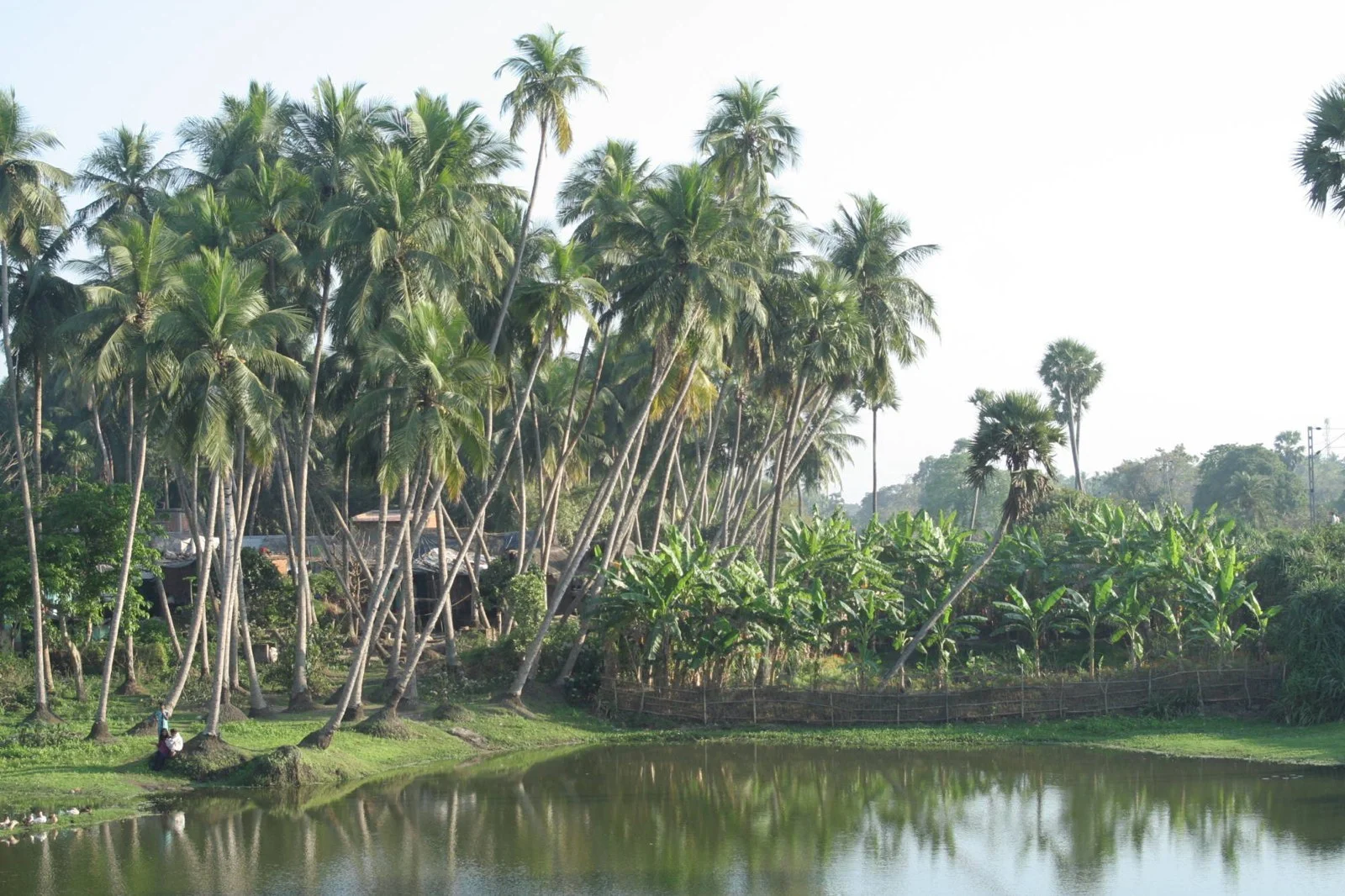
Water and palms at Raghurajpur, photographed in 2008. The village setting extends beyond its painted surfaces.
Carla Antonini. Source · CC BY-SA 3.0. Resized and JPEG-compressed for the website. Responsive display may crop the view. Adaptations retain the stated share-alike licence.

A city is remembered through routes as well as buildings: the way to a market, the turn towards a tank, a street that becomes a performance space. A village can hold a workplace within a home and carry its name into exhibitions far away. These relationships make a cultural landscape. They connect the visible setting with the people who use and change it.
This chapter looks at selected places rather than offering a tour of every district. Bhubaneswar, Cuttack, Puri and Raghurajpur show how worship, planning, work and performance give spaces their character. A final turn towards Koraput opens the view beyond the coastal cluster. The question throughout is how to read a place while leaving room for the lives that a photograph cannot show.
Bhubaneswar around the tank and the neighbourhood
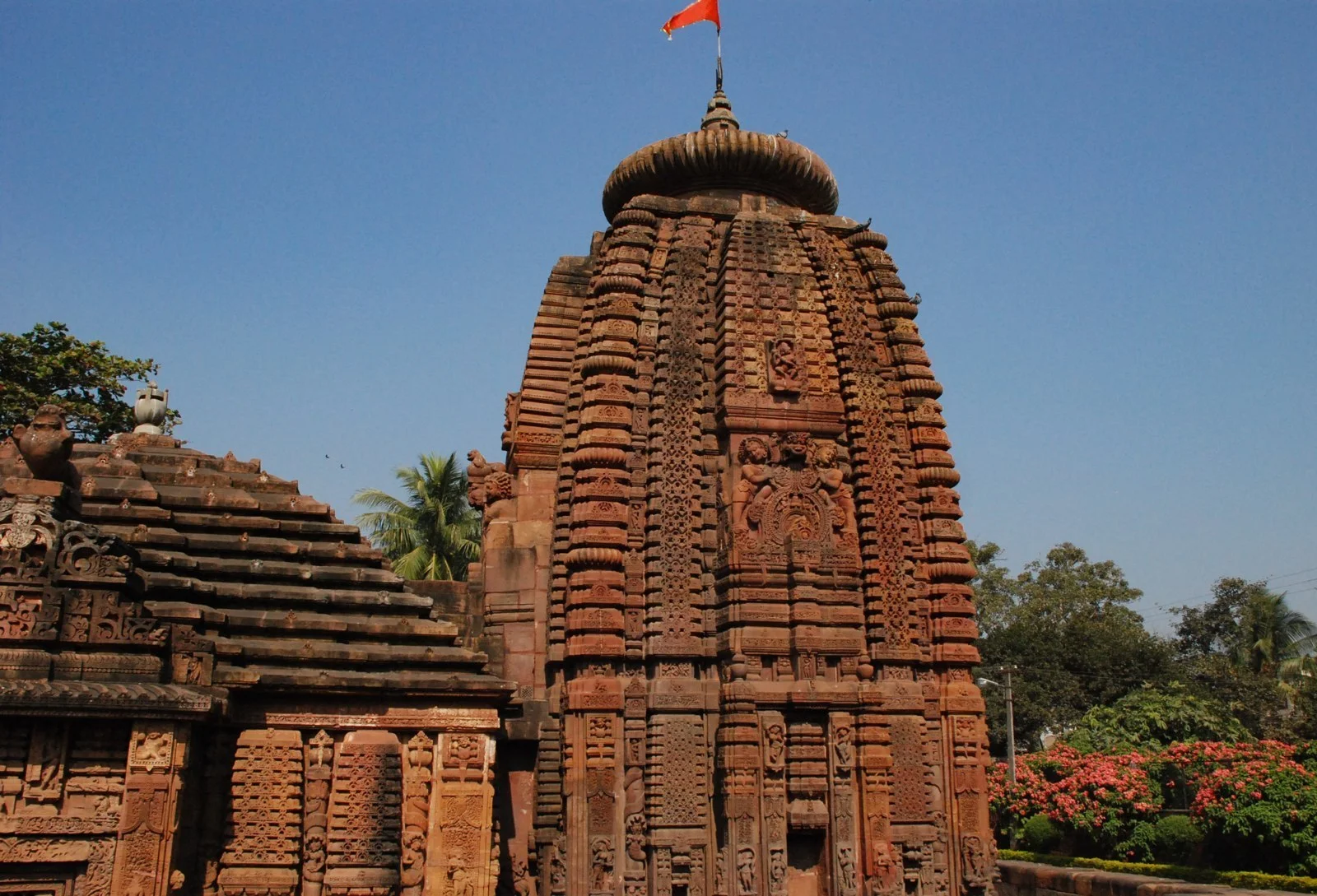
Mukteswar temple, Bhubaneswar, photographed in 2007. A monument within a larger inhabited landscape.
Bikashrd. Source · CC BY-SA 4.0. Resized and JPEG-compressed for the website. Responsive display may crop the view. Adaptations retain the stated share-alike licence.

India’s 2014 Tentative List submission for Ekamra Kshetra describes the old town through water bodies, temples, shrines and ritual routes. Lingaraj is a sacred centre, while Bindusagar is a focus of the settlement. This account invites us to see relationships between places: the route and the tank belong in the picture beside the temple tower. The submission is a proposal on UNESCO’s Tentative List, not a World Heritage inscription.1
The twentieth-century capital added another way of organising urban space. The Bhubaneswar City Development Plan records Otto Koenigsberger’s 1948 plan, designed around neighbourhood units for an initial population of 40,000. Administrative buildings, housing and a town centre containing markets and a bus station formed parts of its arrangement. Later residential units accommodated growth.2
The two accounts offer different starting points for looking at the same city. One follows ritual connections; the other follows an administrative and residential plan. Neither alone describes present-day Bhubaneswar. Reading them together helps us ask what a neighbourhood needs and how successive generations fit their lives into an inherited layout. A temple precinct and a planned unit both become meaningful through repeated use.
Cuttack through streets and work
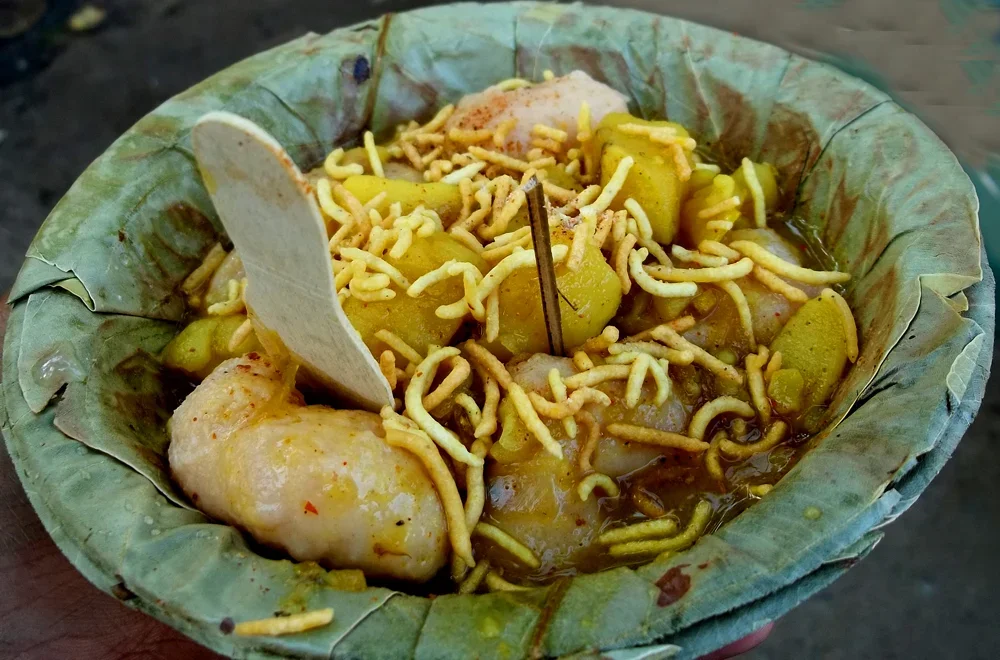
Dahibara-aludam in Cuttack, photographed in 2011. Food offers another scale at which to remember a city.
Subhashish Panigrahi. Source · CC BY-SA 3.0. Resized and WebP-compressed. Responsive display may crop the view. Adaptations retain the stated share-alike licence.

Cuttack’s municipal history locates the old city on the strip between the Mahanadi and Kathajodi. It describes a dense pattern of streets and lanes, remembered in the expression Baban Bazaar, Tepan Galee, or fifty-two markets and fifty-three lanes. The phrase gives the city an intimate scale: a place known through successive turns, destinations and encounters.3
The same account associates Cuttack with silver filigree and commercial activity. These are useful reminders that cultural identity is also made at work. A finished object may travel beyond the city, while its place-name continues to point back to a concentration of skill. To understand that connection fully would mean following the object into particular workshops and recording the people who make it.3
The photograph on this page takes a smaller approach. It records dahibara-aludam served in Cuttack in 2011, with a bowl of food occupying the frame. It cannot explain the whole food economy or establish who first made the dish. It can remind us that an urban memory may be held in a meal as readily as in a landmark. A history of streets needs room for both.
Puri when the street becomes a stage
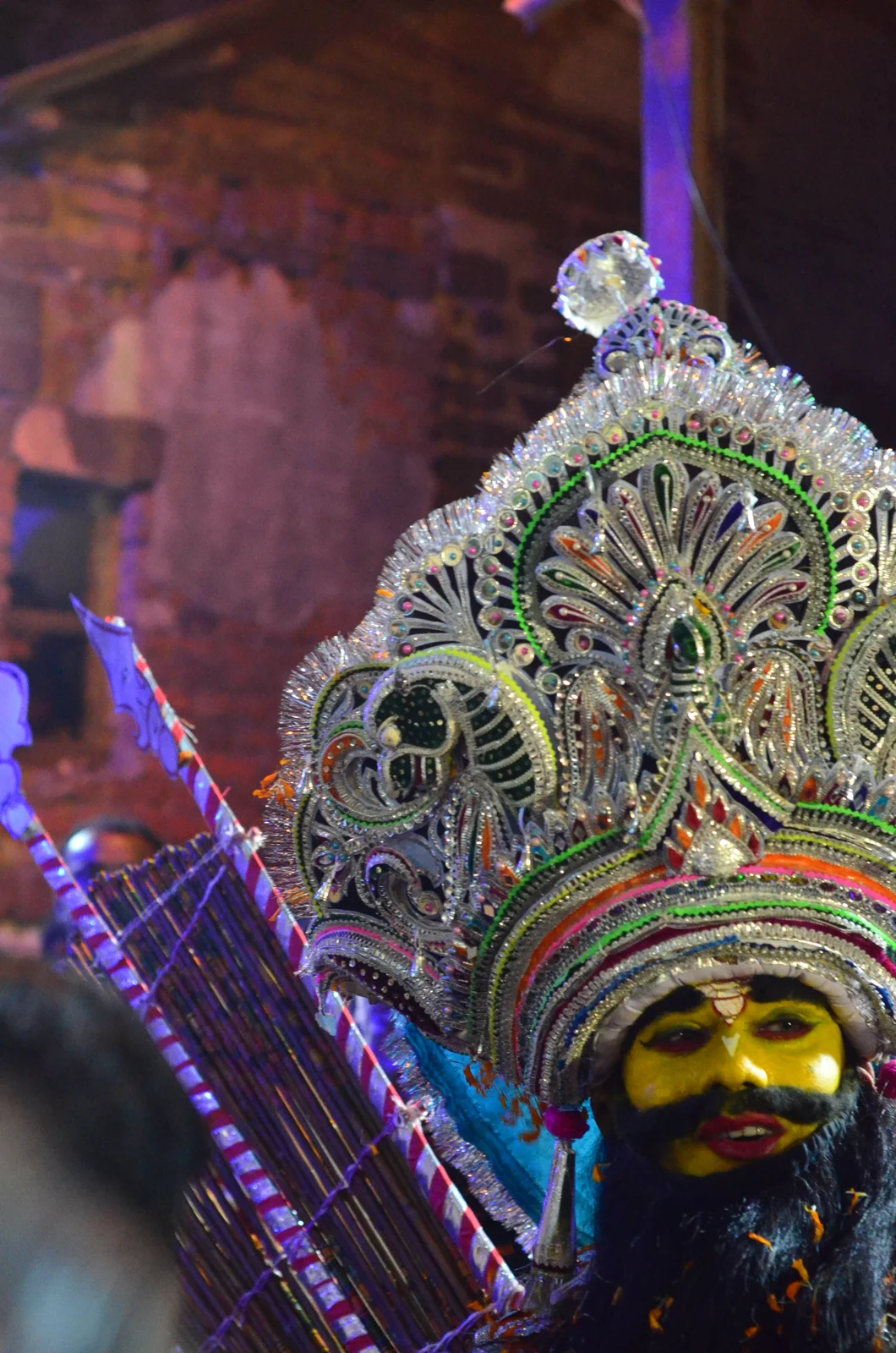
Parasurama in Sahi Jatra, identified by the source as Harachandi Sahi, Puri, 2018. The performer’s name is not recorded.
Prateek Pattanaik. Source · CC BY-SA 4.0. None; original JPEG preserved including orientation metadata.

In Sahi Jatra, the neighbourhood enters the performance. IGNCA and Sangeet Natak Akademi’s Akhyan account describes processions through Puri whose crossings become arenas for dancers, acrobats and costumed figures. Rama, Ravana, Parasurama and Hanuman are among the characters it names. The familiar story gains a local setting through the places in which it is performed.4
Preparation also has a geography. Bimal Prasad Mohanty’s 2015 account describes akhadas and their associated jagas as neighbourhood institutions, linking physical practice with social and cultural activity. Wrestling and stick practice appear alongside music and drama. His description makes visible some of the institutional life behind a public appearance.5
The portrait here records one costumed figure, identified in its source as Parasurama of Harachandi Sahi. Its close framing cannot show the procession or the audience. Placed beside the written accounts, it suggests two necessary scales of attention: the performer’s appearance and the neighbourhood that makes performance possible. Puri’s cultural landscape includes that preparation, as well as the moment when a crossing fills with spectators.
Raghurajpur between home and workshop
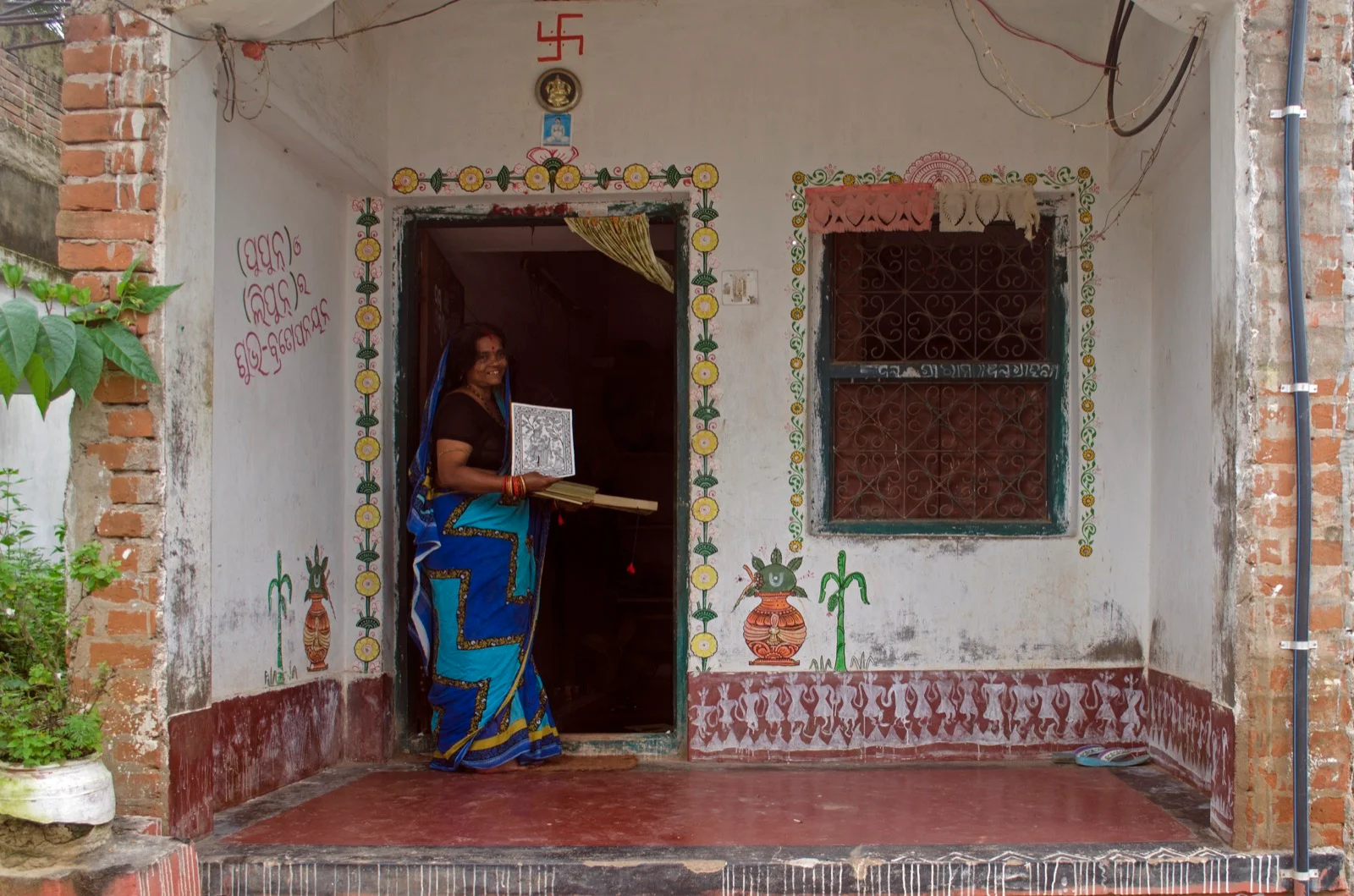
An artisan displays her work in Raghurajpur, 2018. The source does not record her name.
Rangan Datta Wiki. Source · CC BY-SA 4.0. Resized from the original photograph for local delivery; no generated elements. Full-frame display requested. Adaptations retain CC BY-SA 4.0.

In Sucharita Sahoo’s 2014 account of Raghurajpur, painted house walls stand alongside work on cloth and palm leaves. Pattachitra, other crafts and Gotipua performance form part of the village’s cultural life. The account also describes artists taking their work to fairs and exhibitions. The village is therefore both a setting for making and a point of departure into wider circuits of exchange.6
The doorway in the photograph helps bring those connections into view. A woman holds a work for the camera, with paintings around her. We can see the encounter between a maker and a visitor, although the source leaves her unnamed. That omission matters: a village’s collective reputation should not make individual practitioners disappear from its record.
Raghurajpur’s connections extend into the history of dance. Srjan’s chronology identifies Guru Kelucharan Mohapatra as the son of chitrakara painter Chintamani Mohapatra, records his early Gotipua training under Balabhadra Sahu, and follows his work in Puri and Cuttack theatre. One life joins village, town and city through learning and employment. These movements complicate any easy division between a rural tradition and an urban stage.7
A town can connect many landscapes
Koraput offers another starting point. The district’s account of the town places its Jagannath temple and adjoining tribal museum within the hill setting. Its art-and-culture overview also draws attention to weekly markets where people from different communities meet. These official descriptions are brief, but they point towards connections between a town and the surrounding region.89
A market is worth approaching as a place of exchange and work. What is being sold, who has made it and how it has arrived are more useful questions than treating the people present as part of a picturesque scene. The published overview does not answer those questions for individual traders. Doing so would require conversations, names and attention to the terms on which people wish to be represented.
A museum presents a related challenge. Its collections can introduce objects and practices, but a display cannot stand in for the continuing lives of all the communities it describes. The regional town is a place from which to begin learning, rather than a substitute for those communities’ own accounts. The next chapter takes up that need for named, particular perspectives.
Keeping places open to life
These examples suggest a practical way to read Odisha’s settlements. Look at a building, then follow what connects it to water, work or a route. Notice where a domestic doorway becomes a place to show a painting, or where an ordinary crossing becomes a stage. Ask whose activity gives the space its importance, and whether their names have entered the record.
Preserving such places raises questions beyond the survival of a facade. Can people continue to work there? Can a neighbourhood prepare and hold its performances? What happens to shared spaces as their uses change? This chapter does not settle those questions. It places them beside the photographs, so that beauty and historical interest remain connected to the people whose lives make a landscape cultural.
Footnotes & Sources
- Permanent Delegation of India to UNESCO, Ekamra Kshetra The Temple City, Bhubaneswar. Tentative List submission, 15 April 2014, description. Used for the relationship of temples, tanks and ritual routes. Submission status is distinguished from inscription. ↩
- Bhubaneswar City Development Plan. City Development Plan Report, printed p. 21, section 3.1.2, Past Planning Efforts. Official district-hosted planning document; historical plan details, not current population or land use. ↩
- Cuttack Municipal Corporation, History. Municipal overview. Used for the river setting, streets and markets expression, filigree and commerce. No current population figures or founding-date claims adopted. ↩
- IGNCA and Sangeet Natak Akademi, Akhyan. A Celebration of Masks, Puppets and Picture Showmen Traditions of India, 2010, Sahi Jatra section, pp. 82–83. Used for processional performance; not a current event programme. ↩
- Bimal Prasad Mohanty, Physical Culture in Jagannath Consciousness. Odisha Review, July 2015, pp. 146–148. Used for the described activities of akhadas and jagas; origin legends and universal participation claims are not adopted. ↩
- Sucharita Sahoo, The land of artisans Raghurajpur. Press Information Bureau feature, 11 April 2014. Dated description of crafts, houses, performance and exhibitions; no household totals or present-day earnings inferred. ↩
- Srjan, Milestones in Guru Kelucharan Mohapatra’s Life. Institutional chronology. Father’s craft, Gotipua teacher and work in Puri and Cuttack. The chronology notes competing birth years; no birth year is asserted here. ↩
- Koraput district, Sabar Sreekhetra. Official district description, indexed passage consulted for the hill-town setting and adjoining museum. No present access or admission claim. ↩
- Koraput district, Art and Culture. Official indexed overview consulted for weekly markets as places where communities meet. Direct page retrieval timed out; no detailed claim about a particular market or trader is made. ↩
All five photographs are credited and linked in their captions. Existing project images and their provenance records are reused. Pictures are displayed full frame, resized for the page, with orientation metadata honoured. CC BY-SA 3.0 applies to the opening Raghurajpur landscape and Cuttack food photograph; CC BY-SA 4.0 applies to the other photographs. These licences apply to the images, not automatically to the chapter text. No generated images or reconstructed historical scenes are included. Research checked 9 November 2026.
Suggest an update
Share a correction or source for this chapter. GitHub submissions are public. Please omit private contact details and consent documents.