ROOTED IN ODISHA. OPEN TO THE WORLD.ପ୍ରୋଜେକ୍ଟ ଓଡ଼ିଶା
Menu
A flexible visit plan · choose your own pace
Puri’s craft connections.
A seam leads to a painted line. Follow Pipili’s cloth and Raghurajpur’s painting, then leave room for a coastal meal and the stories that stay with you.
Decide which maker visit can actually be arranged before choosing the rest. Pipili and Raghurajpur are separate stops; confirm transfers and your starting point rather than treating this as a walk or a guaranteed day trip.
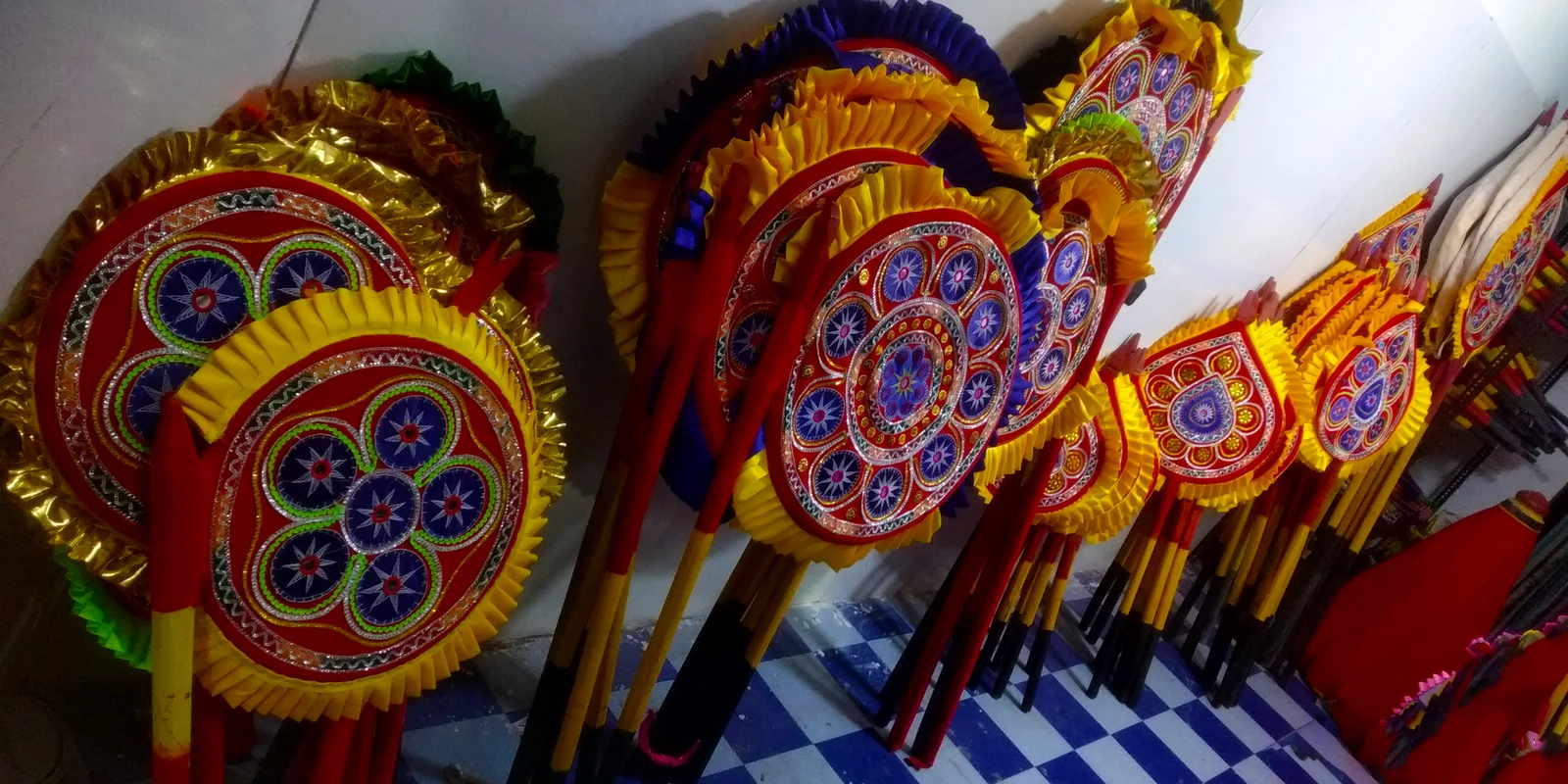
Pipili appliqué photographed in 2022. The image records a display, not current stock or a named maker’s catalogue.
01 · Pipili
Follow the colour to a stitched edge.
Begin with a shape that catches your eye, then look for how it was cut and joined. Ask what the object was made for. A shop display and a working studio can offer different kinds of visit, and neither promises a demonstration.
Before you go Confirm the exact shop or host, whether a conversation is possible and any fee. Ask separately before photographing a person, workspace or design.
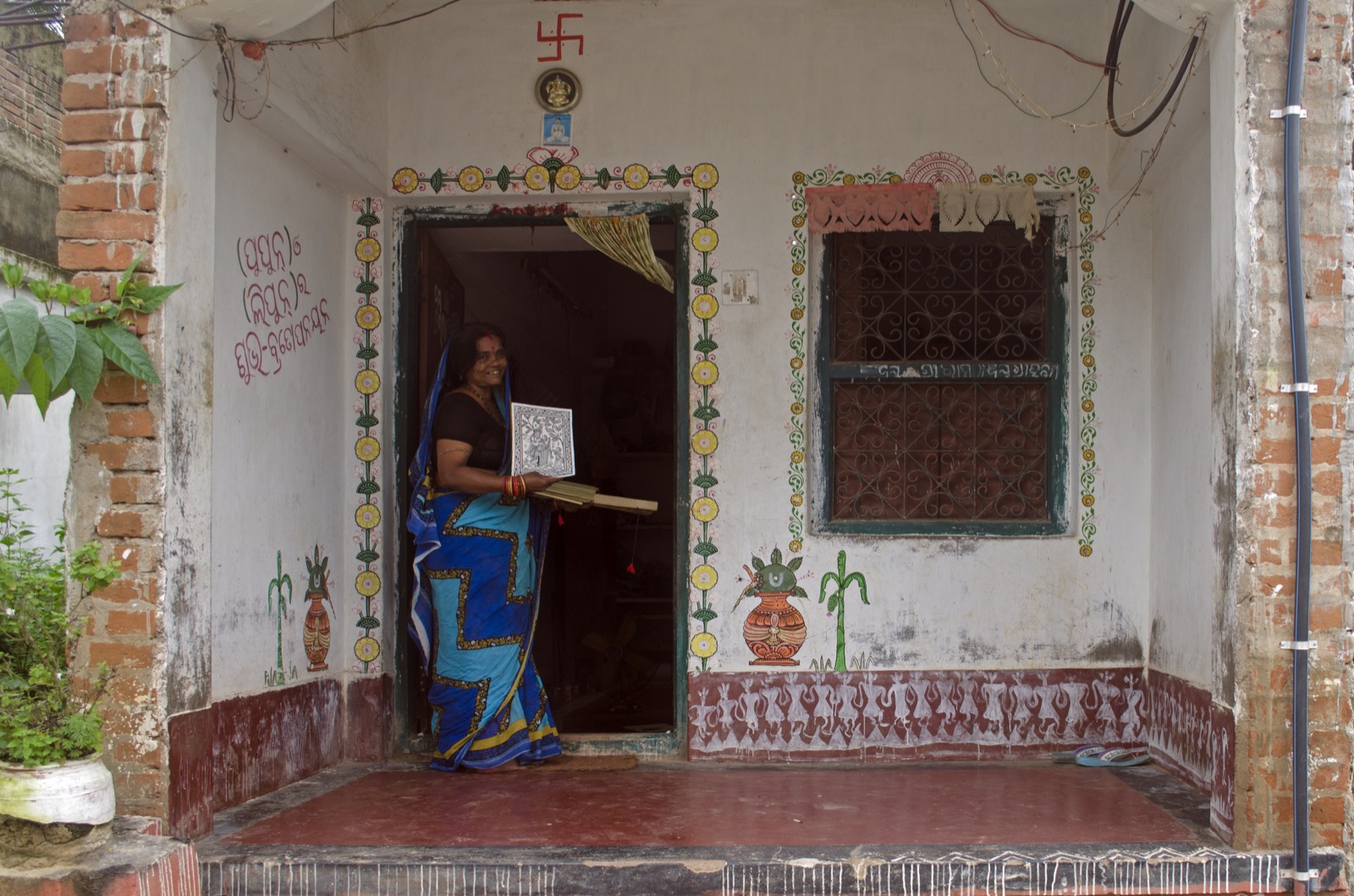
An artisan displays her work, Raghurajpur · Rangan Datta Wiki, 2018. Her name is not supplied in the source.
02 · Raghurajpur
Give a painted line time to unfold.
Let a willing painter choose a detail to explain. Preparation, borders and fine lines offer ways into the work without asking someone to perform an entire process. Carry one question from Pipili: what changes when the pattern is painted rather than stitched?
Before you go Agree the host, visitor numbers, time and compensation in advance. A village visit does not guarantee entry to every home or a Gotipua performance. Respect a refusal.
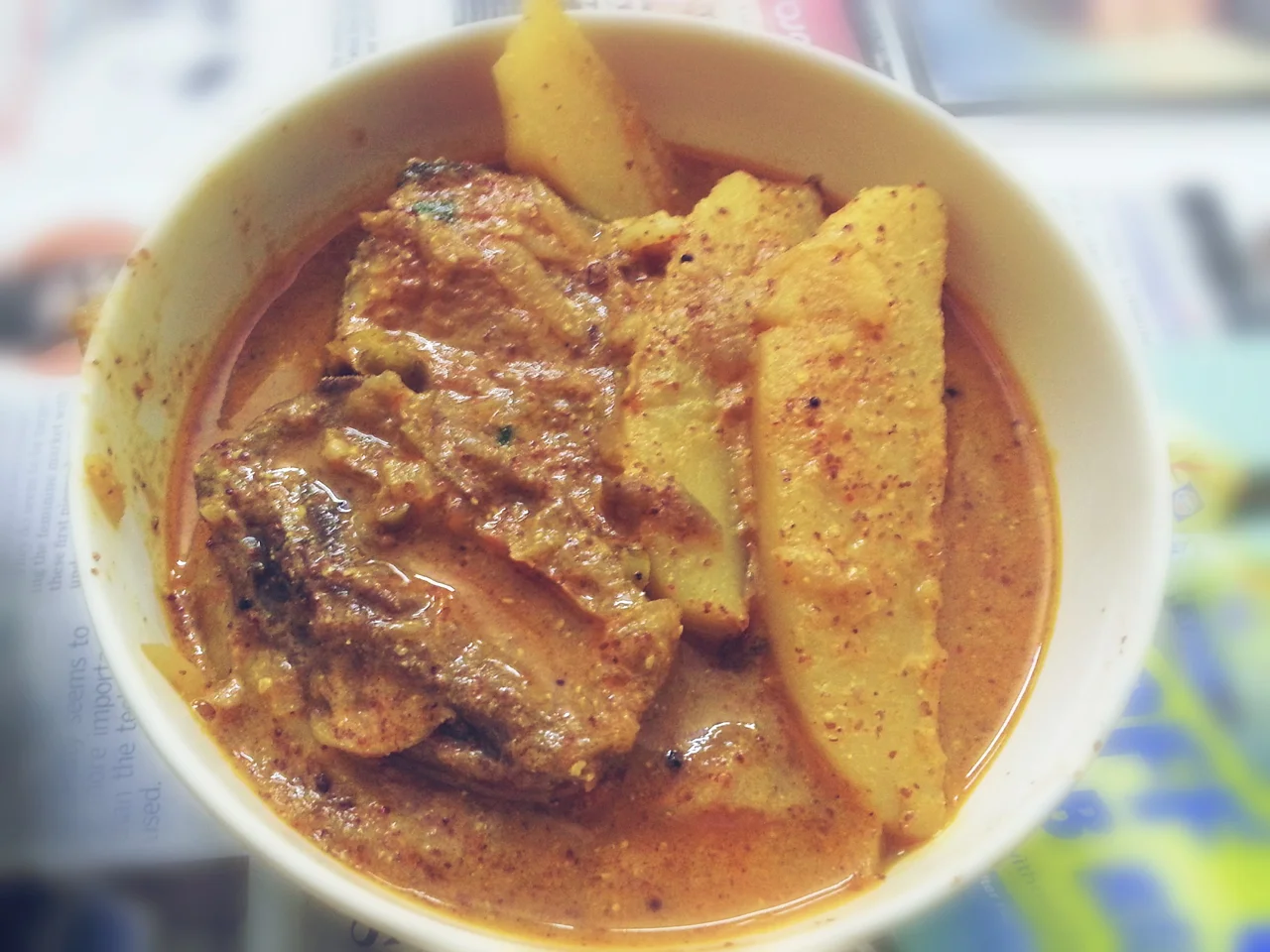
Machha Besara with potato · Kumarnihar, 2015. One documented preparation.
03 · A coastal food pause
Finish with a meal, not a rush.
Let mustard lead you into a conversation about the fish on your plate. Ask its local name and where it came from; a coastal meal may begin in freshwater. The food story introduces different preparations and questions to take to the kitchen.
Before you go Choose your eating place and confirm ingredients, mustard or fish allergies, service time and price. Plan water, seating and toilets, and leave enough time for the return journey.
Turn the thread into your journey.
Choose one craft if time is short
Keep the confirmed host and a meal. Remove the other craft stop rather than rushing a conversation. Buying an object and paying for a demonstration are separate arrangements.
Build around your start and finish
Tell your driver where you start, the exact host addresses and where you need to end. Ask for current travel estimates and a return buffer. Split the visits across days if that works better.
Carry the right questions
Ask who made a piece, how to care for it and how the maker would like to be credited. Confirm packing and any delivery terms. Discuss permission separately if you want to reproduce a design.
Save these 3 ideas together, then choose dates, add notes and remove anything that does not fit. Every idea begins unscheduled. New journeys carry the chapters connected to their selected ideas into the downloadable tour book; choose the illustrated book to include photographs. Your existing journeys stay as they are.
Know this place? Help make the guide better.
Share a dated observation or local knowledge. Prepare a draft here, then choose whether to post it publicly on GitHub.
Plan assembled 2026-10-07. Existing Project Odisha story evidence reused. This is a suggested sequence, not a confirmed route, booked experience or conference package. Hosts, access, opening arrangements, meals and transfers need confirmation for your date.
Odisha Tourism · Pipili. 1 October saved source scope reused; 6 October web request returned 404.
Odisha Tourism · Raghurajpur. Official craft and dance account inspected. No household counts, sales promises, daily opening hours or universal visitor access inferred. Checked 30 September 2026 UTC.
Government of Odisha · Patta Chitra. Traditional cloth preparation, borders, colour and fine outlines inspected. Describes a tradition, not the materials or sequence used by every present-day maker. No pigment recipe or care guarantee inferred.
Food and visitor guidance draws on the linked Project Odisha articles; each retains its sources and practical limits.



.jpg)