
01 · A living language
A page that asks you to look closer
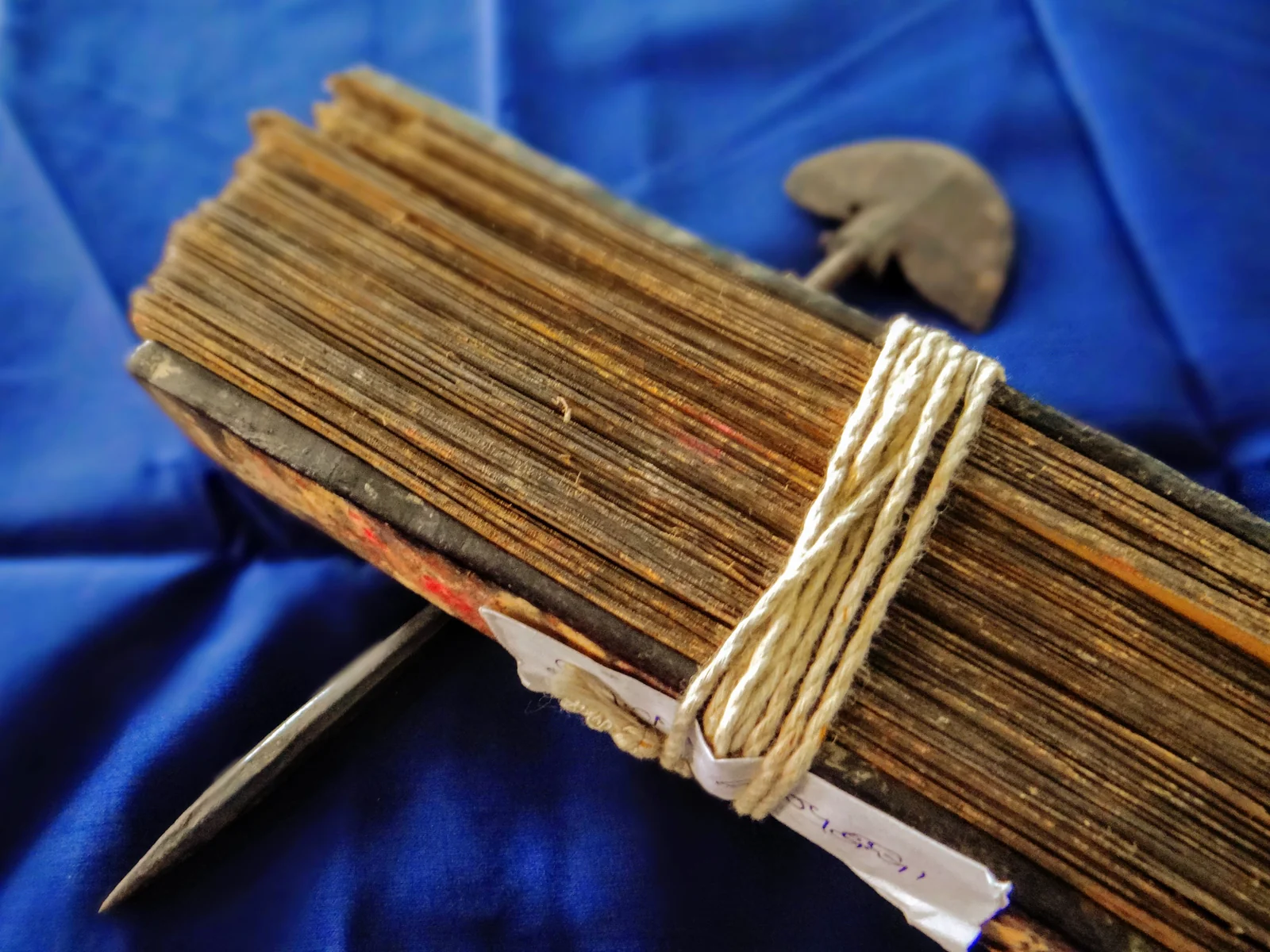
The photograph shows an Odia palm-leaf manuscript and a lekhani, or writing stylus, at Gyana Mandira library in Koraput. It is one surviving object to look at closely, not a date for the birth of the language.
02 · A living language
Many forms, many worlds
The government’s literary overview places Sarala Das’s Mahabharata in the fifteenth century and describes later traditions of narrative and devotional verse. Its modern survey includes Radhanath Ray, Gangadhar Meher and Fakir Mohan Senapati, followed by further poetic movements and voices.
Follow a writer into a work, then return to the language with something new to listen for. Our literature collection begins that journey.
03 · A living language
A starting point for learning
CIIL lists a 2019 introduction to Odia language, literature and culture, edited by Sanjaya Kumar Bag, intended for non-native learners. It is a useful bibliographic starting point; we have inspected its catalogue record, not the full book.
The next layer will add reviewed pronunciation, phrases and recordings by speakers. This first page makes no claim to be a complete history or a language course.
Where the voices were counted · Census 2011
Recorded as Odia
3,15,07,158people in Odisha
75.06%of Odisha’s 2011 population
This is the individual mother-tongue entry in the Census table. It counts reported mother tongues in 2011, not everyone who can speak the language today.
The individual Odia mother-tongue entry. The wider ODIA Census group also contains Sambalpuri, Desia and other entries; this grouping is a Census classification, not a judgment about community identity.
Largest recorded counts: Ganjam (32,21,641); Cuttack (23,97,597); Khordha (20,74,212).
Explore all 30 districts →Census C-16 · Sheet1, row 101. Original table
A place to begin
Follow the words
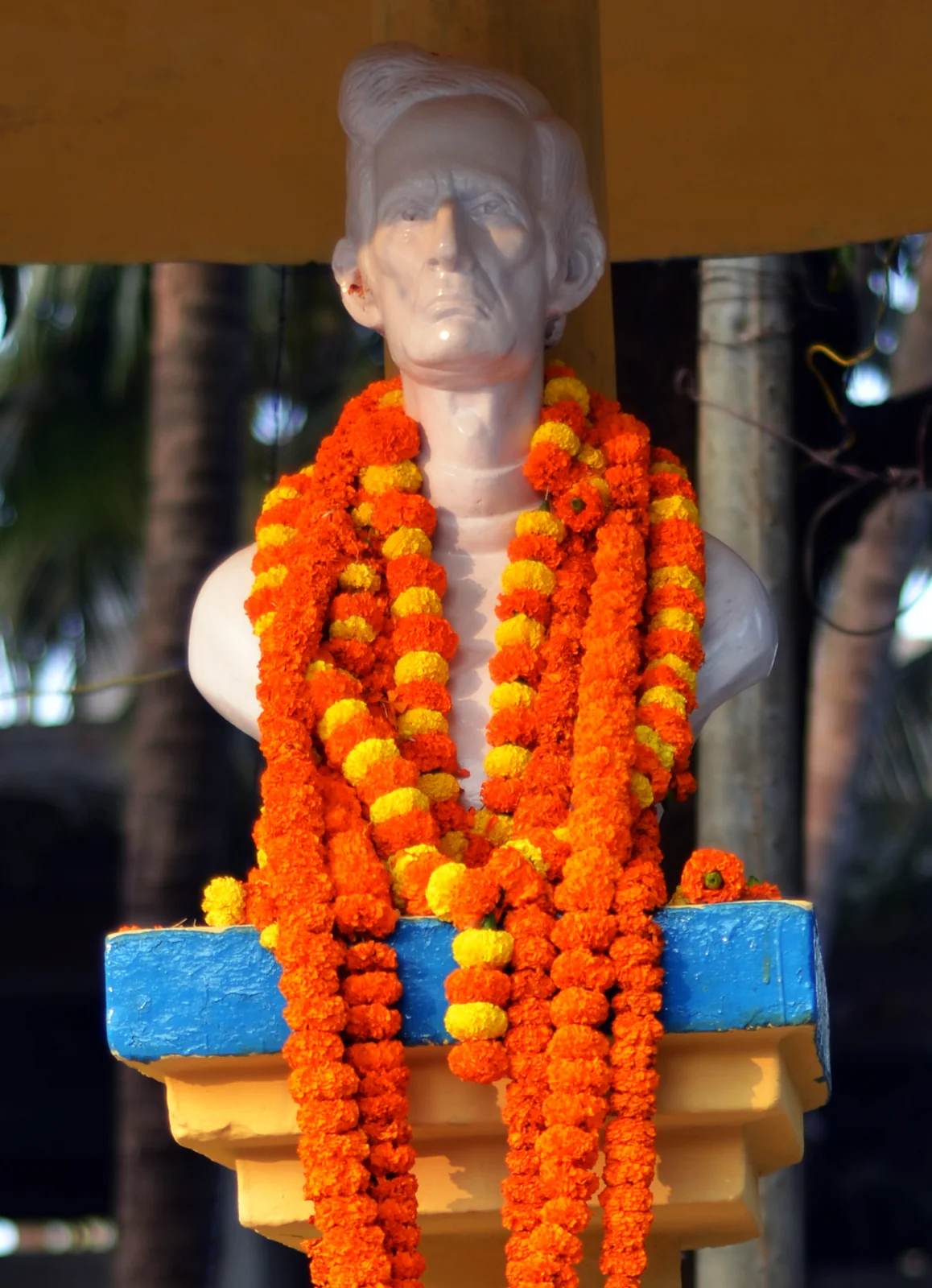
Odia Literature & Literary Lives ↗
Meet the people behind the words.
Places, languages and connected stories
Follow a cultural thread
A place has more than one story.
Follow these reading trails between landscapes, language and literature. Let them inspire your own visit.
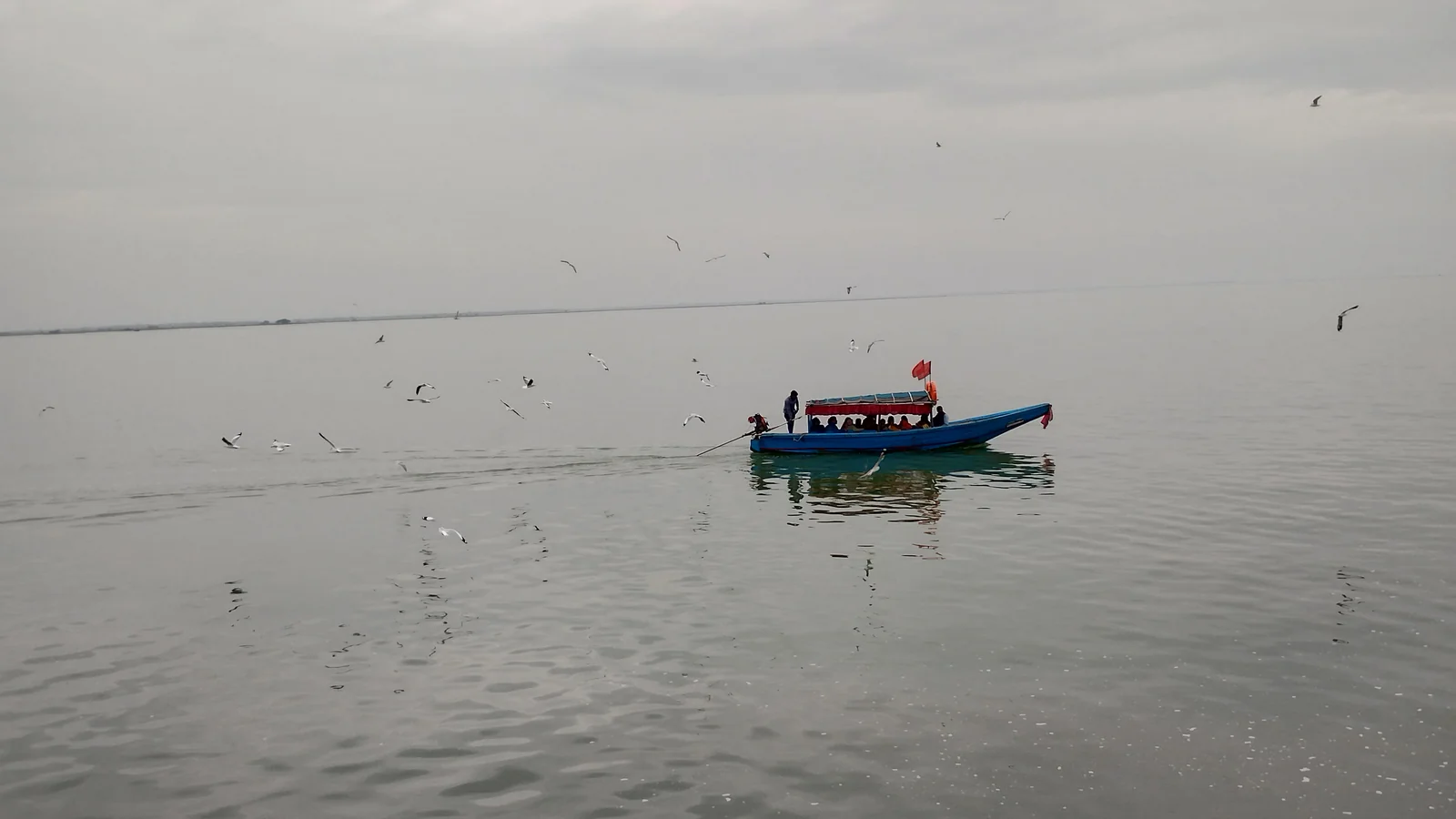
Chilika · Reading trail
Chilika, through a poet’s eyes
Read a place before you reach it. The Chilika story connects the lagoon with Gopabandhu Das’s poem about seeing it from a train, and points towards Radhanath Ray’s Chilika.
Give yourself a quiet moment to look. What would make you ask the journey to pause?
Use the linked visitor guides to begin planning. Reading trails connect ideas; walking routes, performances and visits with local hosts need separate confirmation.
Reading-trail sources & image credits
Chilika, through a poet’s eyes
- Gopabandhu Das, Abakasha Chinta: “ରେଳ ଉପରେ ଚିଲିକା-ଦର୍ଶନ”, printed p. 52
Opening two lines rechecked against the Wikisource transcription on 30 September 2026; they match the current site text. The page is marked unproofread. This pass does not establish the scanned edition or fluent Odia/translation approval; those remain open.
- Radhanath Ray, Chilika · Kabitabali, Odia Wikisource
Title, author attribution and opening lagoon imagery inspected in the online transcription on 1 October 2026. Used as a reading link, not a verified critical edition; no excerpt or translation reproduced. Replaces an Odisha Tourism link that now displays a 404 page and no longer supports the literary claim.
Image by Hellohappy · CC BY-SA 4.0. Full-frame resize and WebP compression; original retained. Displayed adaptations retain the source licence.
.jpg)
Follow your curiosity
One voice.
Another doorway.
Sources, image credits & editorial notes
Prepared for Project Odisha, founded and edited by Ahimanikya Satapathy. Research checked 2026-09-30. Founder and language-specialist review pending. Opening lines and reading prompts are original editorial invitations.
Reading and evidence
- Government of Odisha · Literature
Overview attributed to Dr Ganeswar Mishra, inspected in full. Some dates and older present-tense descriptions are inconsistent; these are not repeated here.
Used in: Many forms, many worlds. - CIIL · Odia Language, Literature and Culture: An Introduction
2019 catalogue record inspected; edited by Sanjaya Kumar Bag. Full book not inspected.
Used in: A starting point for learning.
Images and reuse
- An Odia manuscript and lekhani, photographed at Gyana Mandira library, Koraput.
Prateek Pattanaik · CC BY-SA 4.0. Full-frame resize and WebP compression for delivery; original retained. No generated or removed elements. Displayed adaptations retain the source licence.
- A commemorative bust of Fakir Mohan Senapati, photographed by Subhashish Panigrahi.
Subhashish Panigrahi · CC BY-SA 4.0. Full-frame resize and WebP compression for delivery; original retained. No generated or removed elements. Displayed adaptations retain the source licence.


Research and presentation prepared with AI assistance. No speaker recording or complete literary text is reproduced. Help improve the collection.
Editorial preview · awaiting Founder and language or literary review.