
01 · A literary life
A life rooted in Balasore
Fakir Mohan Senapati (1843–1918) belonged to a world of classrooms, presses, princely-state offices and village society. Born on 13 January 1843 at Malikashapur near Balasore, he lost his parents young and grew up under his grandmother’s care. His limited formal schooling did not end his education: teaching, reading and work became routes into a wider intellectual life. He later served as a dewan in several Odisha princely states. These roles matter because his fiction repeatedly enters the practical world of property, accounts, status and dependence.
02 · A literary life
Defending Odia in the classroom and the press
Odia’s place in education was being challenged during Senapati’s lifetime. Proposals to displace it in schooling made textbooks and public argument matters of collective identity. His response included writing Odia textbooks: children needed books through which their own language could remain a medium of learning.
He brought a printing press to Balasore in 1868 and published Sambada Bahika and Bodhadayini. His public-language work also included organising meetings and contributing articles to Utkal Dipika against the proposed removal of Odia. Classrooms, the press and public discussion were connected parts of his work.
03 · A literary life
Language and the making of Odisha
Odia-speaking regions were administered across Bengal, the Central Provinces and Madras. The movement known as Desha Mishran Andolan sought to bring these regions under one political administration. The struggle over language and the movement for territorial unification therefore belonged to the same historical setting, even though local disputes had different causes.
Senapati died in 1918. Odisha became a separate province on 1 April 1936, bringing together portions of the then Bihar and Odisha Province, Madras Presidency and the Central Provinces. His language work belongs to the movement’s earlier cultural and educational foundations; the province’s creation was a later collective achievement.
Read the public work alongside the fiction. Making Odia available in a classroom and giving its everyday speakers a place in literature help us understand the breadth of his contribution. His legacy asks a continuing question: where do we make room for our language to be learned, read and used?
04 · A literary life
Rebati: a child’s wish to learn
Rebati begins with a household, its small income, cows, garden and evening devotional reading. The girl is already a listener and singer before she becomes a pupil. Her father and the young teacher Basudev support her learning; her grandmother expects domestic skills instead. A pictured primer delights her. After epidemic deaths, the household also loses cattle and cultivation rights. The grandmother blames the girl’s education for the family’s calamities. This is a character’s explanation, not the story’s demonstrated cause. The narrative makes the wish to learn inseparable from affection, vulnerability and material loss.
05 · A literary life
Chha Mana Atha Guntha: reputation and power
The novel introduces Ramachandra Mangaraj as both landlord and moneylender, wrapped in a reputation for religious observance. The narrator appears to defend him, then supplies details that make the defence increasingly doubtful. This is how the satire works: readers must hear the gap between a respectable description and what the scene reveals. In the opening of the Bhagia-and-Saria chapter, the narrator mocks educated men who know foreign genealogies but neglect their own neighbours and institutions. Local knowledge becomes a challenge to fashionable claims of learning. These readings come from particular passages, not a completed reading of the entire novel.
06 · A literary life
Patent Medicine: the household behind the joke
Chandramani’s attempts to evade his wife Sulochana’s restrictions lead to a confrontation over his intoxication and conduct. The broom beating that gives the title its joke is followed by injury, her remorse and care, and a quieter household in which the couple read together. The story can be read for the tension between a wife’s authority, the expectation of wifely devotion and a husband’s irresponsibility. That reading keeps the discomfort alongside the comedy. It does not turn the fictional beating into a remedy or flatten Sulochana into a simple emblem of emancipation.
07 · A literary life
Listen to how the story is told
Senapati’s prose invites the reader into a conversation. A narrator explains, defends, digresses, asks a question and sometimes exposes the weakness of his own apparent argument. In the inspected novel passages, humour depends on this movement between assertion and detail. Rebati offers a different register: household description and dialogue gradually give way to grief and isolation. Read these side by side. The range matters more than a general label such as “social realism”: how does a sentence invite laughter, sympathy or distrust?
08 · A literary life
A wider body of writing
His writing also includes the novels Mamu, Lachhama and Prayaschitta, poetry and an autobiography, Atma Jibana Charita. Mamu opens another route into bureaucratic and urban society; Lachhama takes a historical setting involving Maratha incursions; Prayaschitta examines expiation and social authority. The autobiography places his remembered life beside Odisha’s social world. These are orientation notes from the saved historical essay, not completed readings.
09 · A literary life
A reading route
Begin with Rebati for the household and a child’s desire to learn. Follow with Patent Medicine for dialogue, comedy and unequal expectations within marriage. Then read the opening of Chha Mana Atha Guntha and its weaver-community passage: notice whom the narrator addresses and whose knowledge he challenges. Continue through the complete novel before treating these scenes as its whole argument. Read the autobiography alongside a chronology, allowing remembered experience and independently documented events to remain distinct.
10 · A literary life
Balasore: a place behind the pages
Malikashapur near Balasore is the starting point of Senapati’s life; Balasore also belongs to the account of his printing work. These are documented connections to a real place. The villages and households of his fiction need their own reading, rather than an assumed match to a visitor’s map.
A book can begin a literary visit. Ask a local bookseller which edition or story readers return to. Memorial access, museum hours and a walking route still need current local verification.
11 · A literary life
Choosing an edition
The English edition Six Acres and a Third offers another way into Chha Mana Atha Guntha. Its translators are Rabi Shankar Mishra, Satya P. Mohanty, Jatindra K. Nayak and Paul St-Pierre. Translation and publication details help identify a copy; they are not the basis of the literary account above.
The original novel’s publication year is held open here: saved accounts give 1902 and 1905, and original serial and book imprints have not yet been inspected. The readings above use selected Odia passages, not a complete critical edition.
A place to begin
From the writer to the work
Chha Mana Atha Guntha / Six Acres and a Third ↗
Continue to the novel and its English edition details.
Continue with the work
Read Rebati in Odia ↗Read Patent Medicine in Odia ↗Places, languages and connected stories
Follow a cultural thread
A place has more than one story.
Follow these reading trails between landscapes, language and literature. Let them inspire your own visit.
Balasore · Reading trail
Balasore, beyond the map
Fakir Mohan Senapati was born near Balasore. Begin with his life, then follow Six Acres and a Third into questions about land, power and everyday people.
Carry a question into the book. Whose story do you hear first—and who has yet to speak?
Use the linked visitor guides to begin planning. Reading trails connect ideas; walking routes, performances and visits with local hosts need separate confirmation.
Reading-trail sources & image credits
Balasore, beyond the map
- University of California Press · Six Acres and a Third
Publisher synopsis, author note, edition and translator credits inspected. Full novel not read for this preview; reading prompts are editorial suggestions. This edition lists rights excluding South Asia; local availability is not promised.
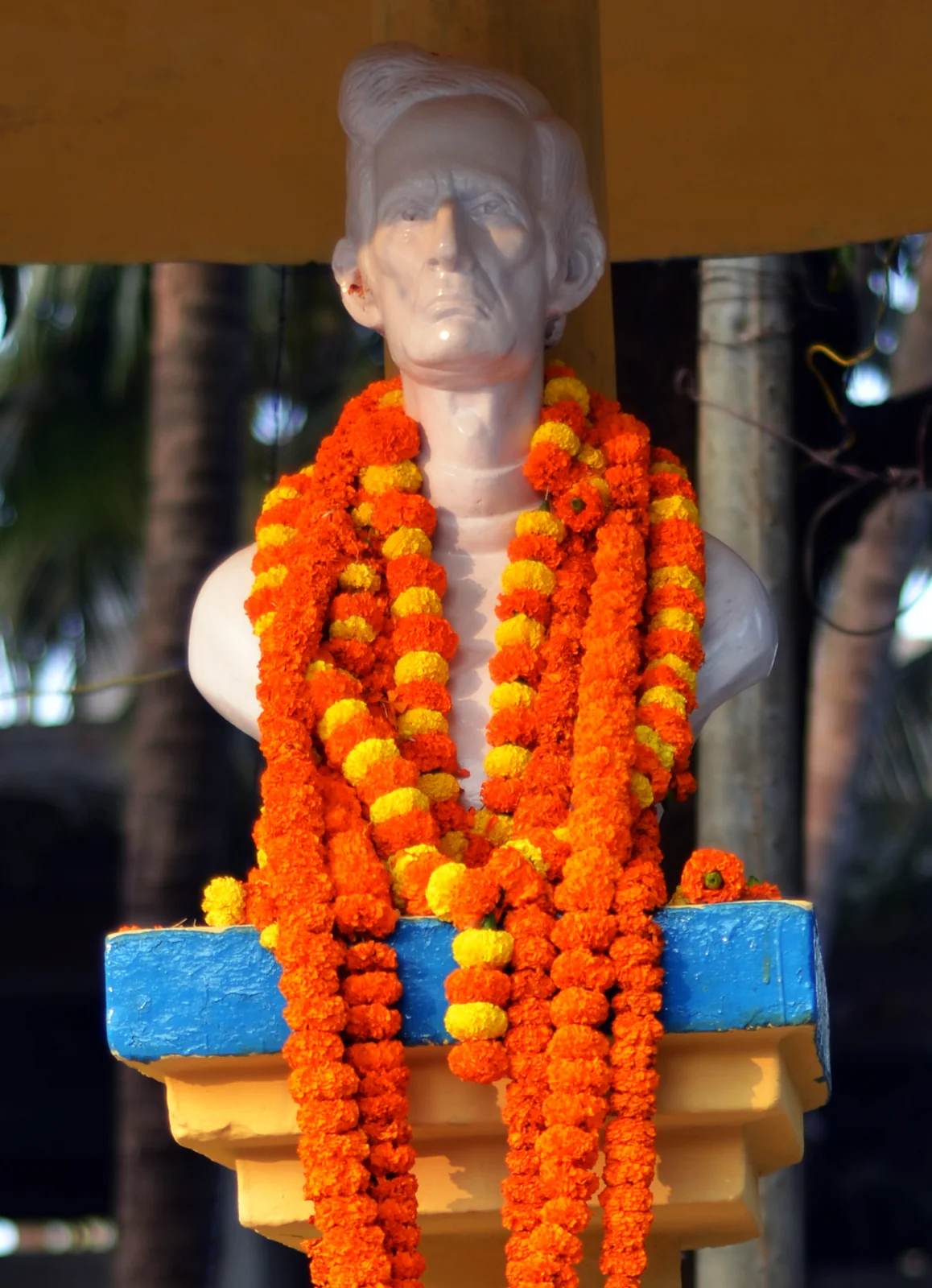
Image by Subhashish Panigrahi · CC BY-SA 4.0. Full-frame resize and WebP compression; original retained. Displayed adaptations retain the source licence. Commemorative bust, not a photograph of Senapati himself.

Follow your curiosity
One voice.
Another doorway.
Sources, image credits & editorial notes
Prepared for Project Odisha, founded and edited by Ahimanikya Satapathy. Research checked 2026-10-11. Expanded at the Founder’s request. Selected Odia passages inspected in community transcriptions; literary specialist review and facsimile collation remain pending.. Opening lines and reading prompts are original editorial invitations.
Reading and evidence
- Vyasakavi Fakirmohan Senapati: Leader of Odia Nationalist and Linguistic Movement
Contributor historical essay, not archival employment records. Scoped biography, printing and work overview; superlatives and communal conspiracy framing not adopted. Original novel date1905 differs from saved1902 and remains held. Checked 11 October 2026. Printed14–17/PDF1–4
Used in: A life rooted in Balasore; Defending Odia in the classroom and the press; Language and the making of Odisha; A wider body of writing; Balasore: a place behind the pages; Choosing an edition. - Fakir Mohan Foundation: biographical note and legacy
Institutional self-description and attributed biographical note.1843–1918 lifespan; no comparative precedence, measured influence or saved-language-from-extinction claim adopted. Checked 11 October 2026. BIO-NOTE heading and paragraphs; acknowledgement to Mayadhar Mansinha
Used in: A life rooted in Balasore. - Fakir Mohan Senapati: Renaissance in Odia Literature
Contributor historical essay. Scoped school-language pressure, textbook response and regional-unification context; not original petitions, departmental orders or a measure of individual causal influence. Sweeping exclusivity, communal rhetoric and comparative literary superlatives are not adopted. PDF text read; page-image retrieval failed. PDF1, printed38: schooling and Desha Mishran Andolan; extracted PDF3, printed40: autobiography overview Checked11October2026.
Used in: Defending Odia in the classroom and the press; Language and the making of Odisha. - Odisha Legislative Assembly: province formation
Institutional historical summary: separate province on 1 April 1936 and constituent administrative regions. The original Constitution of Orissa Order was not inspected; no attribution of this final event to Senapati alone. About Odisha Legislative Assembly paragraph Checked11October2026.
Used in: Language and the making of Odisha. - Rebati — Odia text in Galpa Swalpa
Primary literary text via community transcription; selected substantial passages read, no facsimile collation or full critical edition review. Interface numeric markers are not publication dates. Checked 11 October 2026. Opening household; Basudev and primer; epidemic and landlord seizure; grandmother blame
Used in: Rebati: a child’s wish to learn; Listen to how the story is told. - Chha Mana Atha Guntha: chapter1 Ramachandra Mangaraj
Primary literary text via community transcription, selected chapter; not full novel review or historical village evidence. Checked 11 October 2026. Chapter1, opening moneylender/piety description and narrator defence
Used in: Chha Mana Atha Guntha: reputation and power; Listen to how the story is told. - Chha Mana Atha Guntha: chapter10 Bhagia and Saria
Primary literary text via community transcription, opening passage inspected. Same novel family as chapter1; not independent corroboration or a verified institutional inventory. Checked 11 October 2026. Chapter10 opening: weaver community, educated babus and local institutions
Used in: Chha Mana Atha Guntha: reputation and power; Listen to how the story is told. - Patent Medicine — Odia text in Galpa Swalpa
Primary literary text via community transcription; opening and final sequence inspected. Fictional violence and reform are narrative events, not advice or medical effects. Edition not collated. Checked 11 October 2026. Opening Chandramani restriction; Sulochana confrontation; repentance and closing newspaper-reading scene
Used in: Patent Medicine: the household behind the joke. - University of California Press · Six Acres and a Third
Publisher synopsis, author note, edition and translator credits inspected. Full novel not read for this preview; reading prompts are editorial suggestions. This edition lists rights excluding South Asia; local availability is not promised.
Used in: Choosing an edition. - Teaching colonial India with Six Acres and a Third
Saved historical account; original publication-year conflict remains unresolved.
Used in: Choosing an edition.
Images and reuse
- A commemorative bust of Fakir Mohan Senapati, photographed by Subhashish Panigrahi.
Subhashish Panigrahi · CC BY-SA 4.0. Full-frame resize and WebP compression for delivery; original retained. No generated or removed elements. Displayed adaptations retain the source licence.
Research and presentation prepared with AI assistance. No speaker recording or complete literary text is reproduced. Help improve the collection.
Editorial preview · awaiting Founder and language or literary review.