
Odia cinemaFilms and Filmmakers
Solila Parida: Carrying a Story Across Oceans
In this article
A producer, a writer’s short story and the shared work of making a film between India and America.
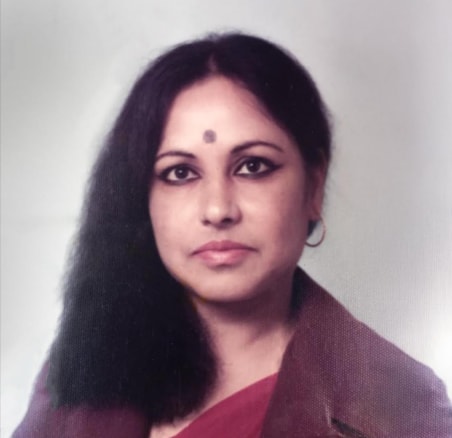
A story can travel long before a camera begins to turn. “The Woman from Georgia”, by physician and writer Prasanna K. Pati, travelled from a collection of stories to the film Desires of the Heart. In a contribution to the Odisha Society of the Americas’ 2015 souvenir, Pati named Solila Parida as the producer who had brought it to the screen.1
Her part in that journey gives us another way to look at cinema: through the person who helps a written work gather a team and become a film.
Parida’s connection to Odisha belongs beside her work across languages. Desires of the Heart is an English-language film with some Hindi dialogue. It belongs here as the work of an Odisha-born producer, within a wider conversation about stories and the people who carry them.23
The producer before this film
Parida produced Vishkanya (1991), directed by Jag Mundhra, with music by Bappi Lahiri. Its cast includes Pooja Bedi, Kunal Goswami and Kabir Bedi.4
By 2012, she was discussing a film made between Savannah in the United States and Bikaner in Rajasthan. Contemporary reporting described her as the founder of DOTH Entertainment and also recorded her earlier productions Koi Hai and Bandit Lovers.5 These were different projects and different working relationships, part of the experience she brought to a new adaptation.
A book, then a film
Pati’s collection, Adventures and Misadventures of Dr. Sonjee, was published by Snehalata Press in 2001. It received a review in JAMA in 2003.6 His later souvenir contribution identifies “The Woman from Georgia” as a story in that book and the source for Desires of the Heart. He also invited Odia producers to consider other stories he had written.1
That invitation gives the connection a human scale. A writer has more work to share; a filmmaker may find a possibility in it. For readers who come to a story through cinema, the book’s title and the writer’s name offer a way back to the page.
The film follows an Indian psychiatrist practising in Savannah, his relationship with a local artist and a summons home to a marriage arranged by his family.2 Its crossing between countries is part of the story as well as its production.
The work around an idea
In September 2012, Georgia Southern University reported that the film had finished its American photography in Savannah and was preparing to move to Rajasthan. It named Parida as producer and executive producer.7
Director James Kicklighter later recalled that Parida gave him the opportunity to direct. His account describes months of script revision, further work with lead actor Val Lauren and the help of Rajesh Rathi, co-director for the India portion, with logistics and cultural details.8
Parida shares the film’s writing credits with several collaborators. Its producing team also includes Juan Manotas, Jitendra Mishra and Terry Chase Chenowith.2 Following those names lets us see how many kinds of work surround the decision to make a film.
A film finds an audience
The LA Femme International Film Festival’s official 2013 results list Desires of the Heart and Solila Parida under Best Foreign Film.9 Its Indian release followed on 6 November 2015.2
Parida died in Bhubaneswar on 31 March 2025.3 Returning to her work brings us back to a living question for the series: how does a story find the people who can help it reach another audience?
Her career offers one particular connection to follow. Read the writer, notice the producer and stay with the collaborators in the credits. A film can take us outward into another world, then send us home to a book we had not known to open.
Footnotes & Sources
-
Prasanna K. Pati, contributor note in URMI, OSA souvenir 2015, p. 123. ↩ ↩2
-
James Kicklighter, Desires of the Heart, synopsis, language, credits and Indian release. ↩ ↩2 ↩3 ↩4
-
Solila Parida obituary, OdishaBytes, 3 April 2025. ↩ ↩2
-
BFI, Vishkanya (1991), credits. Tuli Research Centre, song-synopsis booklet 00163035, cover credits. ↩
-
Odia woman goes Hollywood way!, The New Indian Express, 27 November 2012. ↩
-
David W. Hodo, book review, JAMA 289(13), 2 April 2003, pp. 1705–1706; public bibliographic header. ↩
-
Georgia Southern University, news release, 3 September 2012, final production paragraph. ↩
-
James Kicklighter, Filming in Isolated Rajasthan, 15 May 2014. ↩
-
LA Femme, 2013 festival winners. ↩
Credit: Photograph via OdishaBytes; photographer uncredited. Source. Cropped. ↩
Further reading
Suggest an update: share a credited production record, publication detail or precise correction. GitHub submissions are public; omit private contact details and consent documents.