
Odia cinemaA Shared Storytelling World
The page behind the screen
In this article
The writers, screenwriters and lyricists behind Odia cinema, and the possibilities of bringing readers, filmmakers and publishers together.
Sometimes a story comes home as a song, long before anyone asks for the book.
Manas Ranjan Mahapatra remembers watching ଅମଡ଼ା ବାଟ (Amada Bata) with his mother. Years later, working with the National Book Trust, he sought permission to publish Basanta Kumari Pattanayak’s novel. In his account, Dr Narendra Prasad Das and his wife helped him reach the author; Pattanayak asked that the royalties go to the Krishnamurthy Foundation.1
The royalties in that recollection concern a later book edition. Even so, the journey from a childhood screening to a novelist’s door gives my question somewhere to begin. What might a film make possible for the writing behind it?
Writers who give a film its first world
A story need not wait for a screen to find listeners. Mayadhar Mansinha describes Pala and Daskathia performers carrying poetry through musical recitation, quotations in Odia and Sanskrit, and humour.2 Their work offers another way into literature: hearing a voice interpret it before seeking the page.
A page can hold a voice before a camera finds a face for it. Basanta Kumari Pattanayak’s Amada Bata became a 1964 film directed by Amar Ganguly, with Gopal Chhotray credited for the screenplay.3
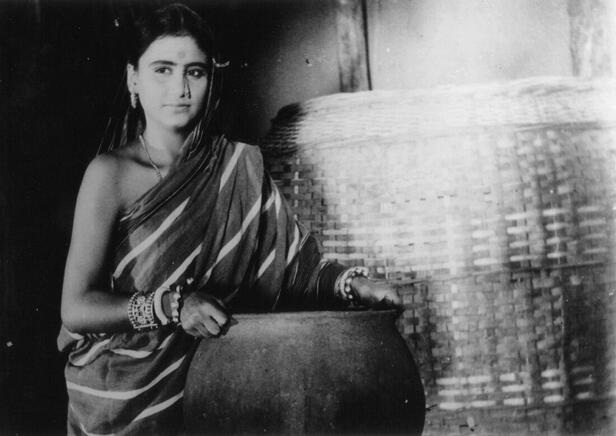
Kalindi Charan Panigrahi’s ମାଟିର ମଣିଷ (Matira Manisha) became Mrinal Sen’s 1966 Odia film. Sen’s filmography credits Panigrahi with the story and Sen with screenplay and direction.4 In କା (Kaa), Kanhucharan Mohanty’s novel meets the screenplay and dialogue of Sarada Naik; the Gour–Parbati archive names the directing collective Siddharth as Ram Chandra Thakur, Gour Ghose and Parbati Ghose.5
The literary sources crossed language borders too. Shyamhari Chakra identifies a novel by Bengali writer Ashapurna Devi as the basis of ସାଧନା (Sadhana, 1964).6 Its production story follows the people who helped it reach the screen.
A novelist may give us access to a character’s thoughts over many pages. A screenwriter must decide what can be seen and heard, what can be left to an actor, and where one scene should end. Dialogue has to live in a performer’s mouth. The source author remains present even when the film finds a different rhythm.
What a story asks us to notice
In the chapter “Bhagia and Saria” of ଛମାଣ ଆଠଗୁଣ୍ଠ (Chha Mana Atha Guntha), Fakir Mohan Senapati’s narrator turns towards educated readers who know distant societies better than their neighbours. The question is deliberately ironic:
“ଆପଣାର ବା ପ୍ରତିବାସୀ ଜାତି ଓ ସମାଜର କଥା ଜାଣିବାର ଦରକାର କ'ଣ ?”
“What need is there to know about our own community and society, or our neighbours’?”
The narrator’s apparent dismissal is a rebuke to that indifference.7
The question reaches beyond any one adaptation. What do we learn to notice when we look closely at a place? A history of cinema can follow famous careers and prizes while attending to the labour, speech and unequal relationships that stories make visible. A familiar neighbourhood may contain lives we have scarcely learned to see.
Parbati Ghose’s chapter follows the novel’s adaptation and its credited makers. What can an actor convey without the narrator’s explanation? Where might a pause, a gesture or a cut carry the work of a sentence?
In Upendra Kishore Das’s ମଲାଜହ୍ନ (Malajanha), Satyabhama is about to go out when her father calls her back. Later, she listens from the doorway as her parents discuss finding her a groom. The first-person telling lets us hear the girl whose future the adults are discussing. When she overhears her mother objecting to the proposed marriage to an old man, she recognises her mother’s distress as concern for her.8 Nitai Palit brought the novel to the screen in 1965; the opening credits retain Das’s name above the title.9
In the opening household passage of ରେବତୀ (Rebati), Fakir Mohan describes a child beside her father as he reads and sings:
“ରେବତୀ ପାଖରେ ବସି ଶୁଣୁଥାଏ।”
“Rebati would sit beside him and listen.”10
A few paragraphs later, Basudev gives Rebati a primer. Beside her father, she turns its pages, delighted by pictures of elephants, horses and cattle. She takes the book to show her mother and grandmother. The narrator measures that pleasure against grander possessions: kings have elephants and horses; others enjoy riding them; Rebi is happy with their pictures. Her grandmother responds impatiently. Before the alphabet lessons begin, the book has already set the child in motion, looking and showing. Reading this passage, we meet her pleasure before the work of learning to read.10
Writing between the stage, radio and cinema
Chhotray wrote across theatre, radio and cinema.11 In Chhotray’s stage adaptation of Amada Bata, Maya reads a novel; the directions call for instrumental music and its characters’ offstage voices.12
In ବୃନ୍ଦାବନର ଶେଷଧୂପ (Brundabanara Sheshadhupa), Bijay Kumar Satapathy’s dramatization of a story by Mahapatra Nilamani Sahu, a crow calls outside Raghu’s home while Subhadra brings his medicine. Later, devotional singing comes from another room; a radio bulletin enters near the close.13 The printed play asks us to imagine listeners as well as speakers: a household connected to a world beyond its walls.
The family archive for ମା (Maa) credits Chhotray and Biswajit Das jointly for dialogue, while Nitai Palit supplied screenplay and direction.14 The AIR Cuttack chapter follows his work for listeners at home.
A writer’s movement into cinema can also involve learning a new craft. In a 2019 interview, Bijay Mishra recalled learning screenplay writing from Shyamal Mukherjee while working on ଯାଯାବର (Jajabara).15
Theatre also carried writing into other languages. At the 2015 Kalinga Natya Mahotsav, Pranabandhu Kar’s Ashanta was staged in Bengali and Snayu Sanhara in Hindi, according to his son Gitimoy’s account. Utsav Theatre Group performed the latter, directed by Sukumar Tudu.16
Songs open another path. In Yogini, Haraprasad Das’s concept, lyrics and narration, Omprakash Mohanty’s music and Susmita Das’s singing meet Biyot Projna Tripathy’s screenplay and direction.17 The Akshaya Mohanty chapter follows other exchanges between singers and lyricists. A remembered voice can lead us back to the person who found the words.
The connection continues
Pratibha Ray’s official bibliography identifies her novel ଅପରିଚିତା (Aparichita) as adapted into a film and the title story of ମୋକ୍ଷ (Moksha) as adapted into a feature.18 Moksha was directed by Gouri Shankar Das and Malaya Kumar Roy, with Das writing the screenplay. It received the National Film Award for Best Feature Film in Odia for 1995.19 A novel’s sustained companionship and a short story’s concentrated moment offer different possibilities to the screen.
The stage remains part of this film history. ଭୂଖା (Bhukha) grew from Manglu Charan Biswal’s play, bringing folk performers’ livelihoods into a Sambalpuri screen story.20 ପ୍ରତୀକ୍ଷା (Pratikshya) draws on a short story by Gourahari Das.21
Director Subhransu Das recalls the Tarang Productions team bringing him the idea for ପୁଷ୍କରା (Pushkara) and handing him Sankar Tripathy’s novel Nadabindu. After he read it, they decided to proceed with the film.22 The official trailer’s description credits Tripathy with story and dialogue, while the screenplay is credited to Debidutta Mohanty, Chitra Pattanaik and Janmejay Singh.23
In Fakir Mohan Senapati’s ରାଣ୍ଡୀପୁଅ ଅନନ୍ତା (Randi Pua Ananta), villagers are troubled by Ananta taking fruit from their gardens. Yet they turn to him when a garden needs digging or a roof needs thatching.24
For the 2025 film ଅନନ୍ତା (Ananta), actor Sabyasachi Mishra described what he wanted audiences to feel: “People should feel they are watching Ananta and not Sabyasachi.”25
A story can also travel through the care of a family. Umakanta Mahapatra’s “Joseph”, included in the Odia collection Jiban Bahurupi (ଜୀବନ ବହୁରୂପୀ), became Susant Misra’s Hindi film Josef – Born in Grace.26 Producer Ashok Mahapatra recalls having his father’s story translated into English and approaching directors and writers with his son Ishan.27 Translation was part of bringing potential collaborators to the story.
A literary route also runs through producer Solila Parida. Prasanna K. Pati identified his story “The Woman from Georgia” as the source of Desires of the Heart. The film is in English with some Hindi dialogue; its place here follows the people carrying a story across countries, rather than an Odia-language adaptation.28
For Biyott Projna Tripathy, literature is an important source of stories for cinema.29 She identifies her own story “ବିଦେହ (Bideha)” as the film’s source, recalling that she wrote it in 2005 or 2006 and that it appears in Kadapana o Cleopatra. The collection’s first edition is catalogued as published by Pakshighara Prakashanee in 2010.30 Her outlook invites readers and filmmakers to return to the page together: to notice a character, a voice or a question they would like to carry further.
What returned to the writer?
The stage record gives one glimpse of writing as paid work. Kalindi Charan Panigrahi describes opera writers receiving payment per play from performing troupes.31 That historical arrangement cannot tell us what a novelist received when a film used a book.
Kalindi also remembered advocating payment as an editor. At Bhanja Pradip, he proposed paying Odia writers and artists, as English contributors were paid. He recalls the proposal being accepted and receiving grateful letters.32 These were periodical contributions; his film-adaptation terms remain unverified.
The credits above name literary contributions. Following those names into the agreements behind the films is harder. The public sources examined for these adaptations do not establish what the original authors received for screen use. A credit and a payment answer different questions.
That uncertainty troubles me. If adaptation is one way to sustain literature, we need to hear how its writers experienced the exchange: whether they felt recognised, what was agreed and what they received. Why is that part of the story harder to recover? The sources do not explain. Missing information cannot tell us that a writer went unpaid or was treated unfairly. It does leave a question about fair recognition and compensation that I do not want this book to pass over.
A better account could begin with writers and producers willing to describe their experience, while keeping private terms confidential where they wish. For new work, naming the author and source clearly, agreeing payment and later uses, and keeping a record of what was received would give the next conversation something firmer to build on.
Writers need not approach these conversations alone. The Screenwriters Association offers its members guidance on contracts and copyright.33 The Screenwriters Rights Association of India accepts applications from eligible writers with story, screenplay or dialogue credits in any language; its terms make clear that joining does not mean immediate royalty payments.34 These are practical places to explore while writers and producers work out how a particular story will travel.
When a film brings a book into view
Mahapatra’s remembered visit to Amada Bata eventually led to a new edition. His account cannot tell us how often that happens. It does give us a particular journey to follow.
A character may send us looking for a novel. A line may make us curious about the language in which it was first written. The book need not become an obligation after the pleasure of the film. It can be another pleasure waiting nearby.
Translation can keep the author close to this work of carrying a book towards new readers. In a 2026 interview, Ray recalled corresponding frequently with Kanak Hota during the English translation of Uttarmarga, helping clarify the novel’s inner meaning.35 Their exchange gives that collaboration a particular shape.
Spark of Light gathers Odia women’s stories in English. Its co-editors, Valerie Henitiuk and Supriya Kar, recall that a Charles Wallace India Trust fellowship brought them together in England. Jatindra K. Nayak permitted a new edition of their earlier anthology; Asis Nanda helped obtain copyright permissions, while Kailash Chandra Dash found archival dates and biographical details. An encounter with a story can begin in this less visible work.36
Beside a film, there could be an obtainable edition, its author’s name and a translation that welcomes another reader. The closing essay returns to the work that might make that possible. In Rebati, a child sits beside her father and listens. The words have already found someone.
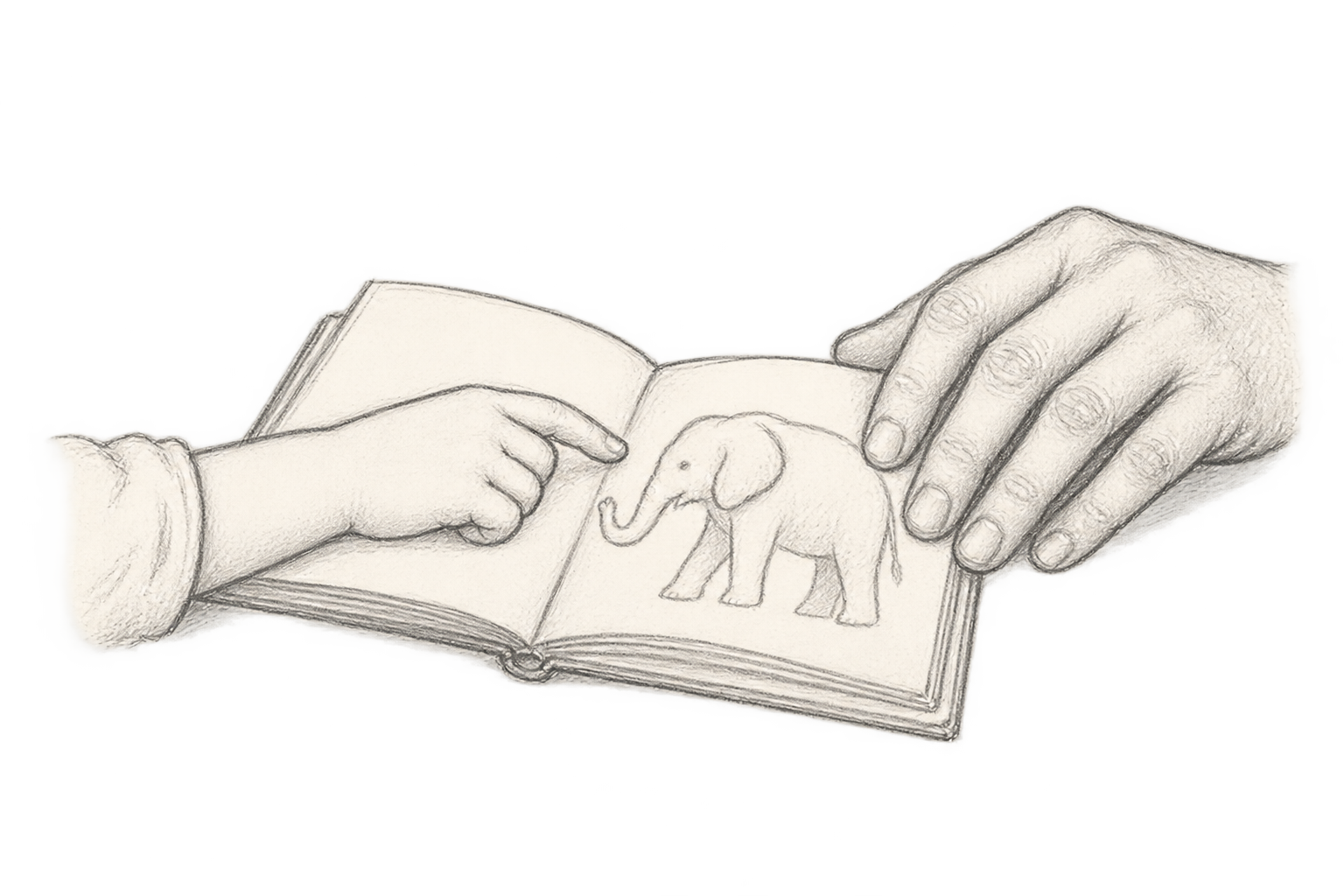
The words have found someone.
Footnotes & Sources
-
Manas Ranjan Mahapatra, “Remembering Amada Bata,” OdishaPlus, 20 July 2022. ↩
-
Mayadhar Mansinha, “Drama and Theatre in Orissa,” Sangeet Natak XXXVIII, no. 2 (2004), pp. 111–112. ↩
-
Matira Manisha, Mrinal Sen filmography, 1966 film credits. ↩
-
Shyamhari Chakra, “Odia cinema at seventy-five,” Routledge Handbook of Indian Cinemas (2013), p. 66. ↩
-
Fakir Mohan Senapati, Chha Mana Atha Guntha, “Bhagia and Saria”, opening paragraph; Odia Wikisource transcription. English rendering for this edition; “community” retains the social/caste context. ↩
-
Upendra Kishore Das, Malajanha (Kalinga Grantha Mandir, new printing 1977), pp. 2–4, 13–15; Srujanika/Odia Bibhaba scan. ↩
-
Malajanha, original opening credits, 00:18 and 02:41; catalogue year. ↩
-
Fakir Mohan Senapati, Rebati, opening household passage and primer episode beginning “ତହିଁ ଆରଦିନ ଉପରଓଳି”; Odia Wikisource transcription. English rendering and paraphrase for this edition. ↩ ↩2
-
Bijay Kumar Satapathy, dramatization of Mahapatra Nilamani Sahu’s story, in Bauribandhu Kar (ed.), Sahityasadhak Mohapatra Nilamani Sahu (2004), pp. 197–198, 204, 211. ↩
-
Maa, Gour–Parbati archive, dialogue and screenplay credits. ↩
-
“I celebrate failures too,” interview with Bijay Mishra, OrissaPOST, 24 December 2019. ↩
-
Gitimoy Kar, “Pranabandhu Kar Birth Centenary,” URMI, 2015, p. 148; The New Indian Express, 14 February 2015. ↩
-
Pratibha Ray, official bibliography: novels and short stories. Short-story collections. ↩
-
Directorate of Film Festivals, 43rd National Film Festival catalogue (1996), pp. 76, 152. ↩
-
Riyan Ramanath V, “Film highlights struggle to survive in rural Odisha,” Times of India, 28 November 2012: Source. ↩
-
PIB, IFFI 53 cast-and-crew account, 23 November 2022: Source. ↩
-
Arindam Ganguly, “Literature offers a solid base for cinematic storytelling,” Sunday Post, 10–16 August 2025, p. 6, Subhransu Das interview. ↩
-
TarangPlus, Pushkara, official trailer, 1 September 2023; description’s writing credits. ↩
-
Fakir Mohan Senapati, Randi Pua Ananta, Galpa Swalpa, village-work passage; Odia Wikisource transcription. ↩
-
MCL bureau, “Babushaan, Sabyasachi & Sailendra Gear Up to Rule Raja 2025,” MyCityLinks, 10 June 2025, Sabyasachi Mishra’s account. ↩
-
UA Kathachitra, Jiban Bahurupi; NFDC, Film Bazaar Industry Screenings (2019), p. 25. ↩
-
Ashok Mahapatra, “Keeping the Faith,” 10 June 2021. ↩
-
Prasanna K. Pati, URMI (OSA, 2015), p. 123; James Kicklighter, Desires of the Heart, language and credits. ↩
-
Mobile News24x7, conversation about Bideha, 15 May 2026, 1:21–1:48. ↩
-
Surya Kanta Jena, “ସାହିତ୍ୟ ଓ ସିନେମାର ଯୁଗଳବନ୍ଦୀ”, Sambad, 19 January 2026, interview; Odisha Culture Department, selected books, 2010–11, p. 11, entry 262. ↩
-
Kalindi Charan Panigrahi, “The Growth of Oriya Drama and Theatre,” Sangeet Natak XXXVIII, no. 2 (2004), p. 93. ↩
-
Panigrahi, Ange Jaha Nivaichhi, second edition (2006), p. 300; Odia Bibhaba/Srujanika scan. ↩
-
Screenwriters Association, member guidance on contracts and copyright; member legal-counsel service. ↩
-
Screenwriters Rights Association of India, membership eligibility and terms. ↩
-
Pratibha Ray in conversation with Saurabh Sharma, Scroll, 8 February 2026. ↩
-
Valerie Henitiuk and Supriya Kar, Spark of Light (AU Press, 2016), pp. vii, xxi. ↩
Credit: Matira Manisha still, Mrinal Sen website; photographer uncredited. Source ↩
Further reading
The producer behind the film
Suggest an update: share a credit, publication record or precise correction. GitHub submissions are public; omit private contact details and consent documents.