
01 · A closer look
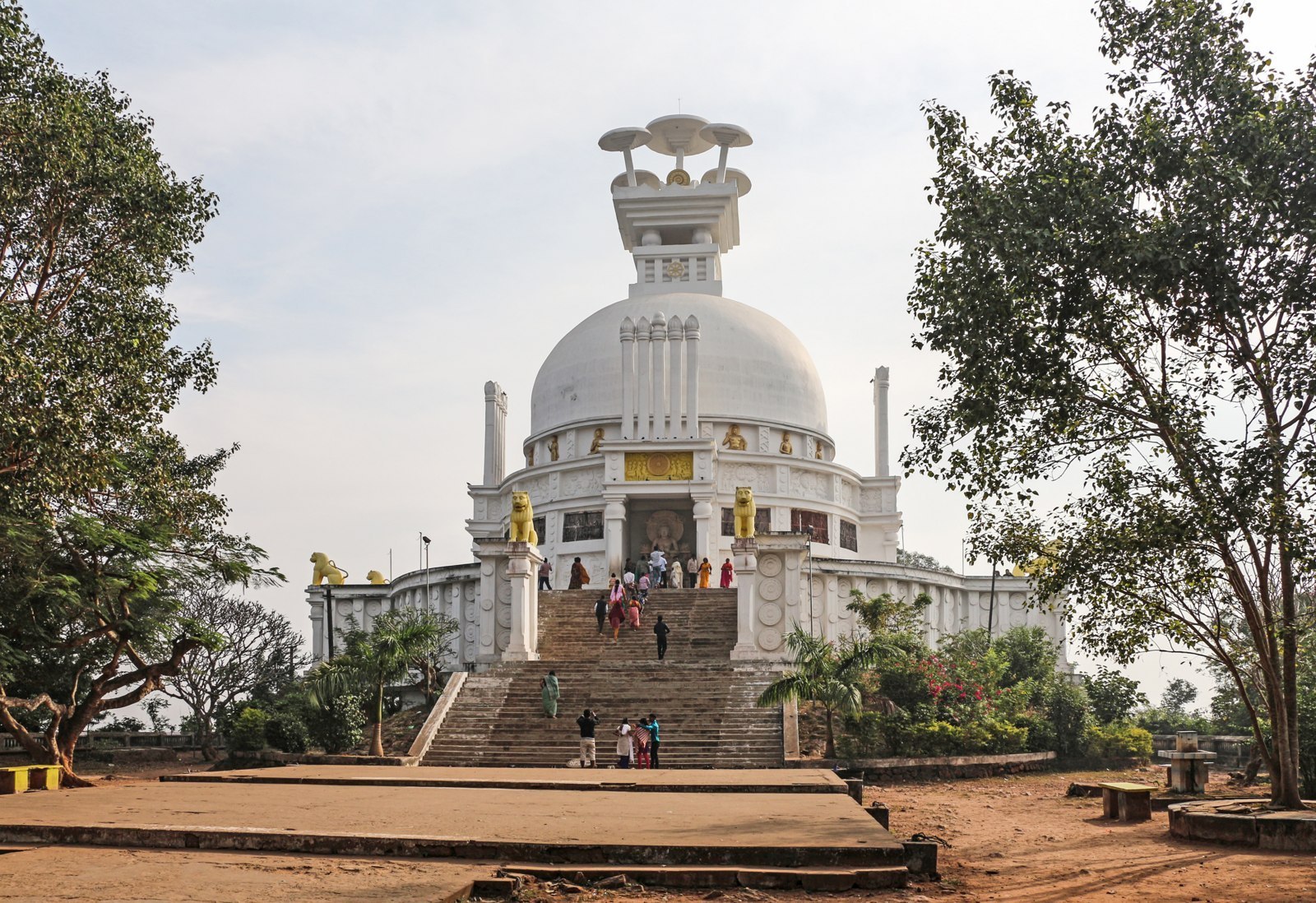
A modern monument in an older landscape
The white dome catches the eye first. Odisha Tourism dates the Shanti Stupa to 1972 and credits the Japan Buddha Sangha and Kalinga Nippon Buddha Sangha with its construction. Give this modern peace monument its own moment, then look for the older messages in the landscape. Seeing both changes the visit: the memorial and the evidence have different stories to tell.
02 · A closer look
Before the dome, there were words
The National Monuments Authority dates the inscription site to the third century BCE and identifies its language as Prakrit, written in Brahmi script. Dhauli has Major Rock Edicts I–X and XIV, alongside two Separate Rock Edicts; it does not contain the complete set of fourteen. Ask a guide which inscription a translation belongs to. Even without reading the letters, you can notice the extraordinary choice to address people through stone.
Major Rock Edict XIII, often quoted for its account of the Kalinga War, is absent at Dhauli. The version in Ven. S. Dhammika’s collection uses the Kalsi text. A familiar quotation about this landscape is not necessarily a quotation carved on this rock.
03 · A closer look
The people behind the proclamation
“All men are my children.” In Ven. S. Dhammika’s English rendering of Kalinga Rock Edict 1, the address turns towards the judicial officers at Tosali.
The edict warns against unjust imprisonment and harsh treatment. Read it as a ruler’s statement of how officials should act, rather than proof that everyone was treated that way. The distance between a promise and its practice is part of what makes these words worth discussing.
Pause with one question: if you were listening to this proclamation, what would you want the officials to do differently tomorrow?
04 · A closer look
An elephant emerging from stone
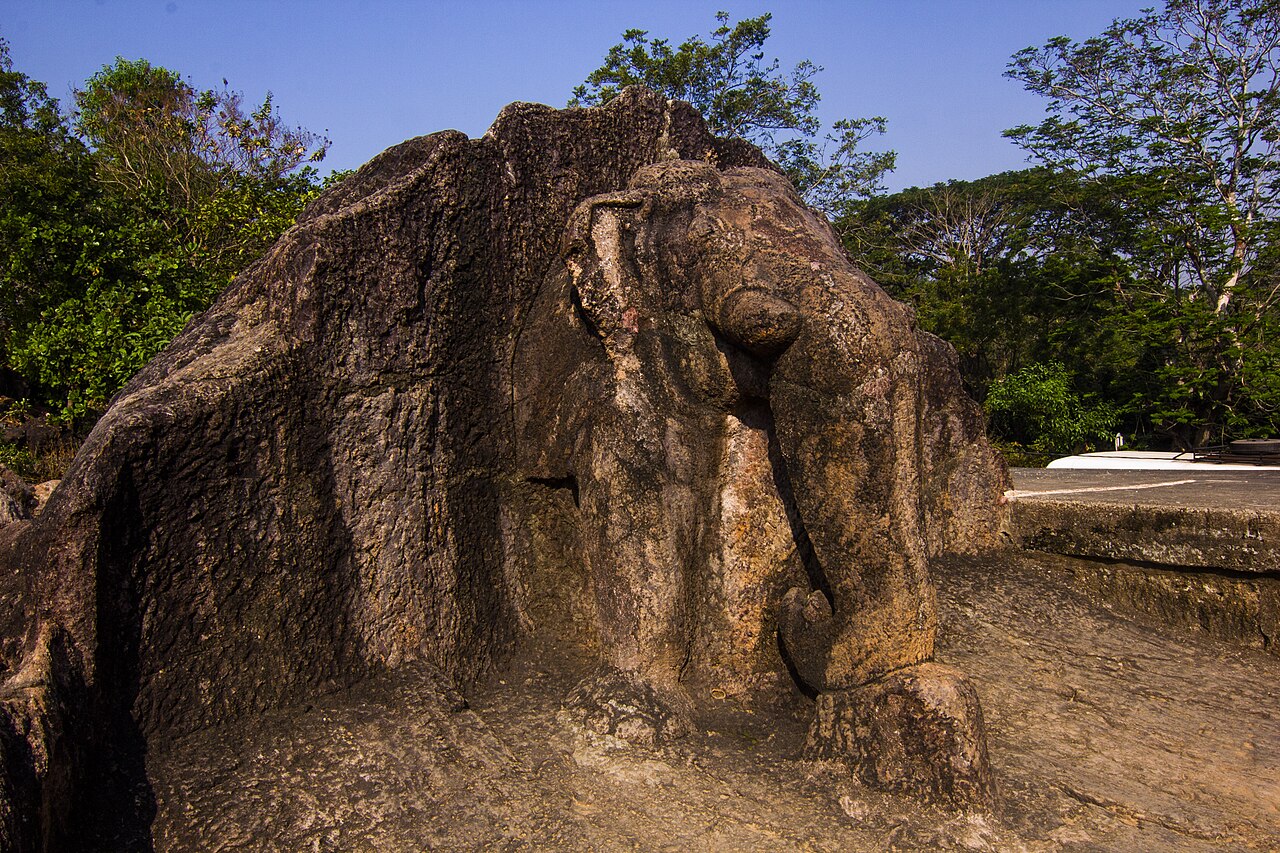
The elephant’s front half rises out of the rock above the inscriptions, as the National Monuments Authority’s description records. Follow the meeting of carved form and uncarved stone in this photograph. On a visit, look from the permitted viewing area; a good photograph does not need a hand on the carving. Let the older sculpture and the white dome remain two distinct images in your memory.
05 · A closer look
A story carried by the Daya
Odisha Tourism retells the popular legend of the Daya turning red during the Kalinga War. It is a powerful remembered image of loss, not a measured fact about the river. You can listen to the story and still ask what the inscriptions actually say. The question in this landscape is large enough to take home: how should power care for the people it governs?
06 · A closer look
An evening is a separate plan
The tourism department describes a light-and-sound show and the Dhauli-Kalinga festival of music and dance. An overview is not a programme for your travel date. Confirm whether an event is running, its language, start and finish, tickets and cancellation arrangements before planning around it. A daylight visit can stand on its own: leave time to look and ask, rather than making the whole stop depend on a show.
07 · A closer look
Leave room for the way back
Agree which places you want to see with your driver or guide: the inscription site and the Peace Pagoda need their own approach checks. Ask about drop-off points, walking surfaces, steps, seating, shade and toilets. Arrange a return pickup, especially for an evening visit, and leave a meal break in your day. Keep worship spaces quiet and follow current photography and footwear guidance. Specific access routes, facilities and services have not been verified by Utkal.
08 · A closer look
Carry the question back to the city
Give the hill and the inscriptions their own time, then plan a food pause in Bhubaneswar. Our city guide introduces Dalma and other starting points for a conversation over a meal.
Kala Bhoomi offers another way to read an object closely. Or save Pipili for a separate craft visit, with a host and transport arranged. Choose what fits your day; there is no need to collect every stop.
Make it your visit
Make room for a quieter question
Look for the difference between a monument you can see and an older story you have come to understand. Resist fitting every layer into one photograph.
Before you go
Give the rock inscriptions and the 1972 Peace Pagoda separate attention. Agree both stops and their approaches with your driver or guide. Confirm return transport and any show for your actual date; a general tourism listing is not a booking.
Arrival, access, food & a place to stay
Planning leads, not bookings or inspected recommendations. Confirm arrangements for your dates.
- Agree two stops with your driver
Treat the rock-edict site and the Peace Pagoda as distinct stops. Ask the driver to include both, with waiting time and the return pickup agreed before you leave Bhubaneswar.
- Check the approach to each site
Ask about the final walk, steps, shade and seating at both stops. If a show is part of the plan, confirm that it runs on your date and arrange the return journey around its actual finish.
- Keep a meal in the city plan
Our suggestion: have your main meal in Bhubaneswar before or after Dhauli, leaving the visit itself unhurried. We have not verified a meal provider at the monument.
- Return to a Bhubaneswar base
For a city-based visit, compare staying in Bhubaneswar with continuing onward after Dhauli. Decide where your luggage and return transport will be; this is a planning choice, not a packaged tour.
Details for this visit
Read the older layer
Dhauli’s inscription site dates to the third century BCE; the text is Prakrit in Brahmi script. Ask for a clearly identified translation and notice the elephant carved above the inscriptions. Stay in permitted viewing areas and leave the stone untouched.
Give the Peace Pagoda its own moment
The white Shanti Stupa was built in 1972. Treat it as a modern peace monument, distinct from the Ashokan inscriptions. Ask your guide to distinguish historical evidence, later remembrance and the local Daya river legend.
Confirm the evening before keeping it free
Odisha Tourism mentions a light-and-sound show and a music-and-dance festival. Check a dated programme, language, ticket arrangements, finish time and cancellations with the organiser. No performance, price or current schedule is confirmed here.
Plan both approaches and your return
Ask separately about the inscription site and pagoda: exact drop-off, walking surfaces, steps, seating, shade and toilets. Agree driver waiting and return pickup before travelling, including after an evening event. Build in water and a meal break; current facilities and accessible routes remain unverified.
Where to ask
Look for the Bhubaneswar office in Odisha Tourism’s tourist-office directory. Ask where to confirm Dhauli’s current show programme and visitor access. Odisha Tourism · tourist offices →
Check current arrangements
Plan the monument and inscriptions separately
The white Peace Pagoda is a modern monument; the older inscriptions are a separate part of the visit.
- Confirm the approach, walking surfaces and drop-off for both stops.
- Check an evening show’s current programme and return pickup before making it the centre of your day.
Official references checked 2026-10-01. These are planning leads; individual arrangements have not been confirmed locally.
People, connections & a memory to keep
Connect with care
Ask how a local guide distinguishes the older evidence from the modern memorial. Listen without presenting a remembered story as established fact.
Leave room for
Continue reading about Konark if stone and interpretation interest you. Check distance and transport separately before combining the visits.
Read Konark →Bring home a memory
Keep one question that changed while you were here, rather than trying to remember every date.
Six questions to take with you
Ask the people arranging your visit. These prompts help you prepare; they do not confirm local arrangements.
- Access
- Which part of Dhauli do I want to understand first, and where can I confirm access to that part?
- Getting there and back
- How will I arrange a return pickup, and where will we agree to meet?
- Comfort and pace
- What walking, slopes or steps will my intended visit involve, and is there a suitable place to pause?
- Food and water
- Where will I arrange drinking water and a meal around the visit, without assuming they are available at the stop?
- People and pictures
- How can I ask a guide to separate what the inscriptions say from later interpretation and local telling?
- A change of plan
- If I cannot reach every viewpoint, what part of the story can I still spend unhurried time with?
Save this idea, then add any useful question to your private reminders in My journey.
Add your own day notes in My journey.
City, craft and coast · Chapter 2 of 5
Follow the story.
Next, Konark.
Keep looking at what stone can say. At Konark, a wheel is a beginning, not the whole story.
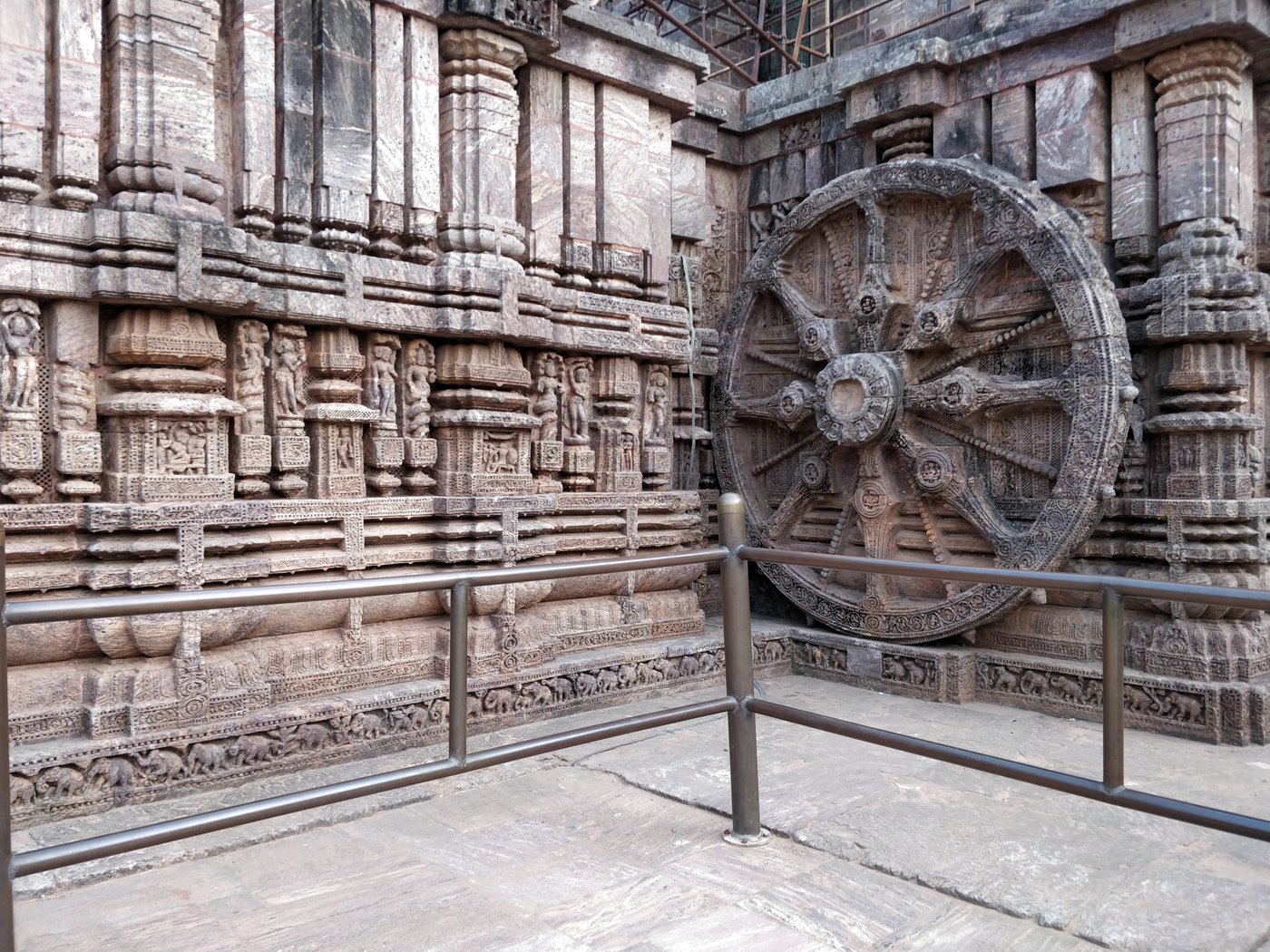
Five connected stories. Read in this order or begin wherever your curiosity takes you. Arrange travel and timings separately.
Photograph credit
Konark photograph · Darshanavenugopal · CC BY-SA 4.0. Resized to 1400 × 1050 and JPEG-compressed for offline books; composition unchanged.

Editorial draft · Practical details need local confirmation.
Sources, photograph & research notes
Research checked 2026-10-06. Sections include original editorial planning advice. No prices, availability, verified travel times or booking service are provided.
- Odisha Tourism · Dhauligiri
Official account inspected. Stupa date and attributed Daya legend used. Heroic superlatives, disputed war details and live show schedules omitted. Checked 30 September 2026 UTC. Rechecked 30 September 2026 for this visitor candidate; no field inspection, live timetable, fare or current opening confirmation. Rechecked 1 October 2026: 1972 construction, attributed river legend and general show/festival references; advertised times and fees not treated as date-specific confirmation.
- National Monuments Authority · Dhauli site history and description (draft heritage document, pp. 8–9)
Historical description inspected in the retrieved 34-page PDF, pages 8–9 (sections 3.2–3.3). Used for date, language/script, edict grouping and elephant placement. Draft document is not treated as current visitor policy, access evidence or a legal-status determination.
- Wikimedia Commons · Dhauli Elephant Statue, photographer description
Photographer’s identification and visual record inspected, 30 September 2026. Used to identify the pictured sculpture only, not as independent historical dating or visitor-access evidence.
- The Edicts of King Asoka

The Shanti Stupa at Dhauli · Bernard Gagnon, 2013. by Bernard Gagnon · CC BY-SA 3.0. Resized and JPEG-compressed for the website. Responsive display may crop the view. Adaptations retain the stated share-alike licence. The Shanti Stupa at Dhauli · Bernard Gagnon, 2013. A modern peace monument, not an Ashokan structure.

The elephant carved from rock at Dhauli · AmlanTheTramp, January 2017. by AmlanTheTramp · CC BY-SA 4.0. Wikimedia thumbnail retained unmodified; displayed without cropping. The source photograph may include the photographer’s own processing.
Project Odisha knowledge base. Founder & Editor-in-Chief: Ahimanikya Satapathy. Drafted with AI assistance; human editorial review pending.