
Part 7 · Everyday Lives and Social Change
Chapter 37 of 48
Growing Up in Odisha
Play language reading and belonging
A toy, a story and the language of a classroom each offer a way into childhood. They also raise questions about opportunity: who has space to play, books to choose from and a teacher who understands them? Growing up in Odisha cannot be described through a single remembered childhood.
This chapter follows play, reading and learning across a few documented settings. It brings children’s magazines and community libraries alongside home languages, oral storytelling and disability access. The common thread is participation. Children encounter cultural knowledge through other people, but they also question it, retell it and make things of their own. Their place in Odisha’s cultural life begins in the present, rather than waiting for adulthood.
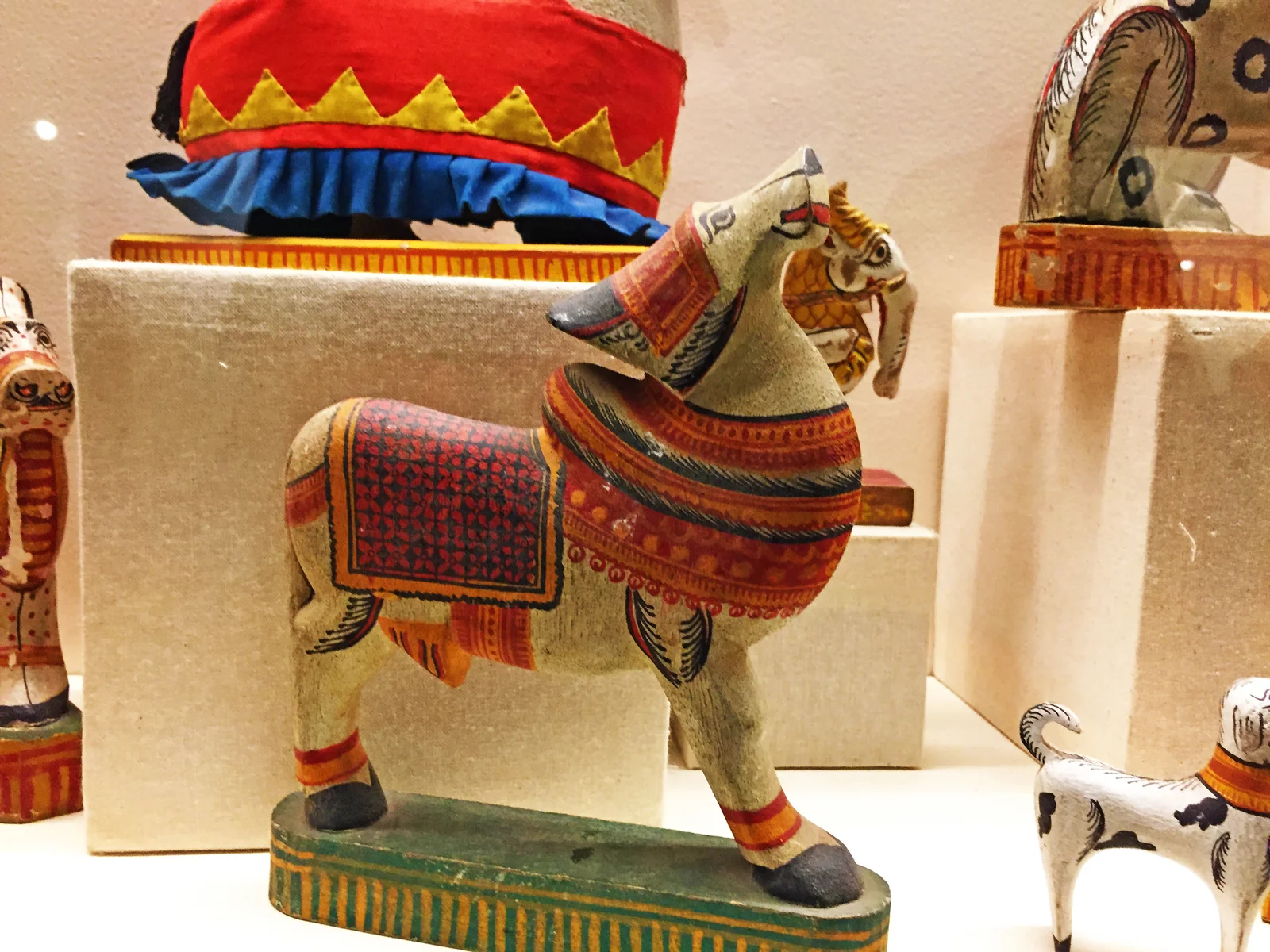
Painted wooden animal toy at Kala Bhoomi, Bhubaneswar, 10 June 2018. The image record does not identify its maker.
Subhashish Panigrahi. Source · CC BY-SA 4.0.

Play and the language of learning
Odisha’s 2025 school curriculum framework names games including Puchi, Luchakali, Bagha Chheli and Pili Kathi among resources for foundational learning. It also proposes using clay dolls, palm-leaf toys and wooden figures in classroom activities.1 This is a statement of educational intent, not a survey showing that every child plays the same games.
The names matter because they give local play a place in formal learning. A game learned from another child can enter a classroom; an everyday object can become something to investigate. The framework’s examples invite teachers to begin with familiar materials and experiences, while leaving room for differences between localities.
Familiarity also depends on language. In a February 2026 UNICEF account, Gowri Sundararajan describes Savitri Pingwa’s experience at Kumbhitangari in Keonjhar. Ho was the language of her home, while classroom Odia was difficult to understand. The report describes her growing participation when learning materials and teaching incorporated her home language.2
The same account describes bilingual materials, teacher training and contributions from community members. Savitri’s mother, Aarti, reports that her daughter shares what she has learned at home.2 Learning moves between generations in both directions: the child receives knowledge and brings new knowledge back.
This is one reported experience, rather than a measure of every multilingual classroom. Its cultural significance is nevertheless clear. A child’s existing words and experiences can become resources for learning. Growing confident in a classroom need not require treating the language of home as something to leave behind.
Pages to read and stories to make
The history of children’s reading includes magazines as well as schoolbooks. Odia Bibhaba’s account dates the first Odia Jahnamamu to January 1956. It describes stories, mythological narratives, information and illustrations as part of the magazine’s appeal, and records a return to publication in July 1972 after an interruption.3
The archive also acknowledges gaps and inconsistencies in its collection. A surviving issue can show what a publisher offered children, but cannot tell us how widely it was available or how every reader responded. The publication belongs to a history of childhood without becoming a memory shared by all families.
Bakul Foundation offers a different route into reading. Its own account describes the children’s library at Satyanagar in Bhubaneswar growing from donated books and individual contributions. It presents reading alongside storytelling, workshops and meetings with writers.4 A library can give a child the chance to choose a book beyond the one assigned for a lesson.
Bakul also reports developing Odia picture books through workshops with children and writers. It records three published manuscripts developed in Ganjam villages, with authorship credited to children.4 That detail changes the child’s role: the reader can also become a maker whose name belongs on a book.
Access to reading therefore includes both the presence of books and the freedom to use them. An inviting picture, a familiar language and time to browse can make different kinds of entry possible. Reading aloud, looking together and composing a story are related activities, with room for children whose interests and ways of communicating differ.
A voice carried between generations
A story can be encountered before a child can read it independently. Voice, expression and timing help a telling hold its listener’s attention. The person telling it matters alongside the words: a recorded performance preserves something that a plot summary leaves out.
The image below comes from Subhashish Panigrahi’s 2014 recording of Musamoni Panigrahi telling a story in Baleswari Odia.5 It documents an identified teller and speech variety. It does not show a classroom or a gathering of children, and should not be made to stand for every family’s storytelling practice.
Such recordings offer a way to listen across generations. A younger listener may return to a phrase, ask about an unfamiliar word or compare another version. Cultural learning can include that active response. Preserving a voice and allowing new listeners to engage with it are complementary parts of keeping a story in circulation.
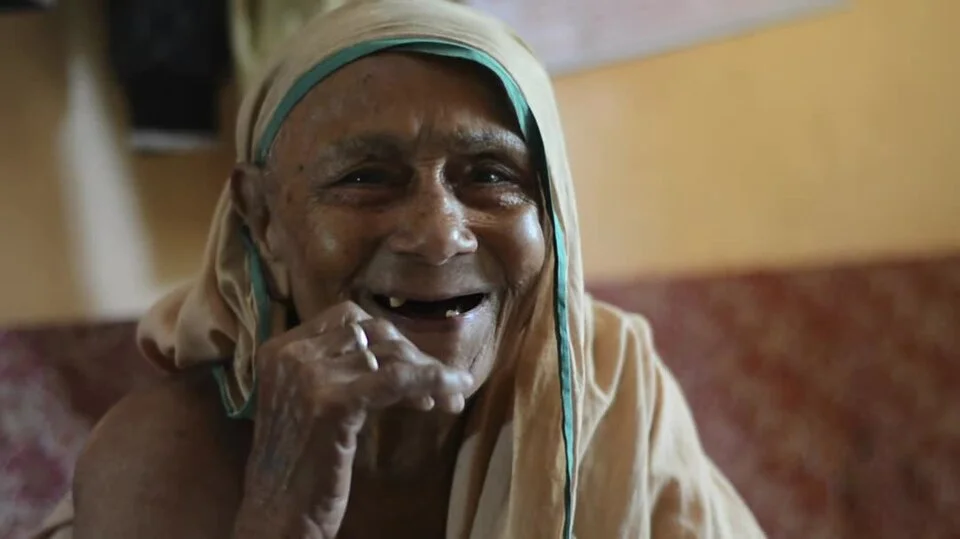
Musamoni Panigrahi telling a story in Baleswari Odia. Preview still from the recording dated 20 January 2014.
Subhashish Panigrahi. Source · CC BY-SA 3.0.
Making room for different childhoods
Disability belongs within this account of play and learning. UNICEF’s guide to accessible schools focuses on removing barriers so that children with disabilities can learn alongside their peers.6 Access involves the spaces and materials through which a child participates, rather than simply being present on an enrolment list.
A December 2025 parliamentary answer on Odisha describes support under Samagra Shiksha’s inclusive-education component, including assistive devices, transport and escort allowances, Braille and large-print materials, teacher preparation and accessible infrastructure.7 These are provisions and approved outlays; the answer should not be read as evidence that every child has received every form of support.
For a cultural activity, the practical questions are immediate. Can a child enter the room, use the materials and communicate a choice? Can a game be adapted so that participation is meaningful? Does a storytelling session offer ways to follow it beyond spoken words alone? These questions help turn an invitation into something a child can actually use.
Location, household resources, language and disability can shape childhood in different combinations. A recollection of carefree play may be precious, but it cannot describe every child’s time or responsibilities. A chapter about growing up needs space for these differences, and for children’s own accounts of what matters to them.
The examples here suggest several openings: local games recognised in a curriculum, home languages welcomed into lessons, a library that supports young authors, and stories kept available to new listeners. Their promise rests on children being able to take part. Cultural continuity becomes richer when children can contribute in their own ways, as readers, players, questioners and storytellers.
Footnotes & Sources
- SCERT Odisha · Odisha Curriculum Framework for School Education 2025. Foundational-stage pedagogy, printed p. 83: local games and toys. Recommendations, not a participation survey. ↩
- Gowri Sundararajan · What Happens When Classrooms Speak Your Language. UNICEF India, 27 February 2026. Reported experiences of Savitri and Aarti Pingwa at Kumbhitangari; no new interview. ↩
- Odia Bibhaba · Jahnamamu. Archive introduction: first Odia issue, return in 1972, contents and acknowledged collection gaps. ↩
- Bakul Foundation · Education. Library Movement and Bakul Books sections. Organisation’s account of donated books, activities and children’s authorship; no current reach totals inferred. ↩
- Musamoni Panigrahi · Storytelling in Baleswari Odia. Recording by Subhashish Panigrahi, 20 January 2014. Identified performance and image provenance. ↩
- UNICEF · Making Schools Accessible to Children with Disabilities. June 2016. General guide to inclusive, barrier-free learning environments. ↩
- Rajya Sabha · Special education programme in Odisha. Starred question 181, answer dated 17 December 2025. Inclusive-education provisions and approved outlays; delivery is not inferred. ↩
The museum photograph is used under CC BY-SA 4.0; the storytelling preview still under CC BY-SA 3.0. Both are reproduced full-frame and resized without content alteration. Source and licence links appear in the captions. The still is reused from this edition’s research collection. Sources checked 14 November 2026.
Further reading
Read the companion article: Bagha Chheli and the Rules of Play.
Suggest an update
Share a correction or source for this chapter. GitHub submissions are public. Please omit private contact details and consent documents.