
Odia cinemaA New Search for Stories
ଦମନ (DAMaN): the road from Malkangiri to national recognition
In this article
Follow a film into questions about representation, public health and the people around its central character.
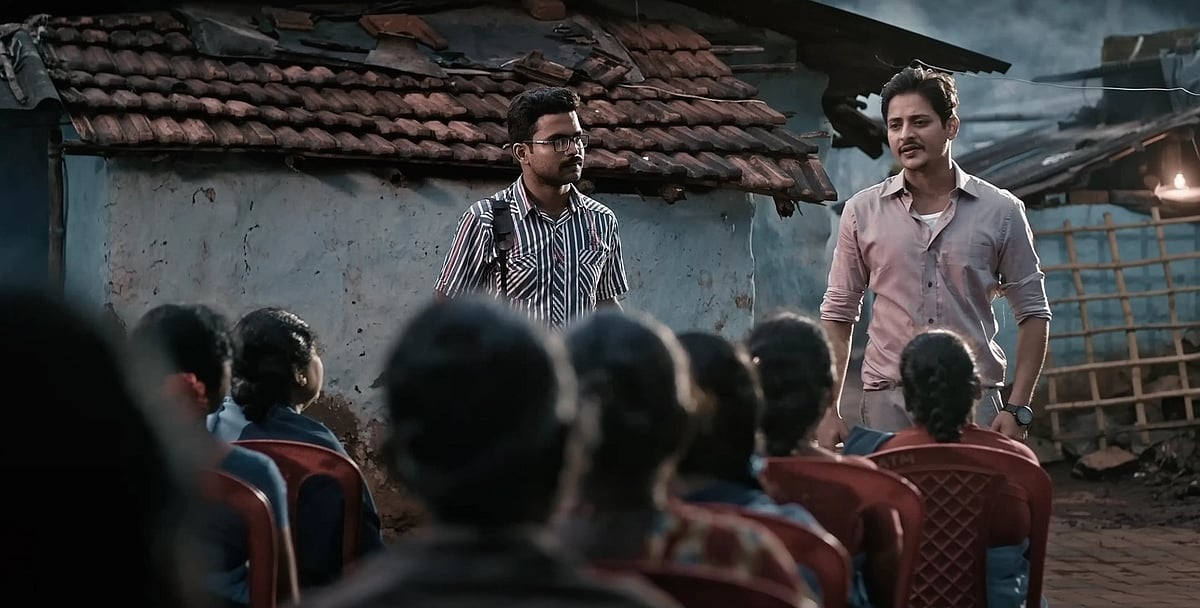
The story began with another film that needed making. In 2020, Vishal Mourya and Debi Prasad Lenka travelled to Malkangiri for a documentary assignment about malaria prevention. What stayed with them was the work: doctors, ASHA and anganwadi workers, and staff from other departments reaching distant villages. Mourya later recalled that encounter as the inspiration for ଦମନ (DAMaN).1
On 16 August 2024, DAMaN was announced as Best Odia Film at the 70th National Film Awards, which honoured films of 2022. The official record names producer JP Motion Pictures and directors Vishal Mourya and Debi Prasad Lenka.2
The award followed a story rooted in the difficult business of getting care to people.
The people who brought it together
Producer Deependra Samal, co-director Vishal Mourya and co-director and editor Debi Prasad Lenka brought different responsibilities to the film.34
Their shared story follows the backing, writing and editing of the film. Its story also involves local performers, technicians and the healthcare workers who inspired it.
A doctor who has to decide whether to stay
The catalogue sets the story in 2015: a young doctor takes up a posting in Malkangiri and commits himself to tackling malaria.4 Babushaan Mohanty plays the doctor; Dipanwit Dashmohapatra plays the pharmacist.5
The premise raises a question: what happens when an assignment becomes a responsibility a person can no longer walk away from? The film gives that question a particular location and profession.
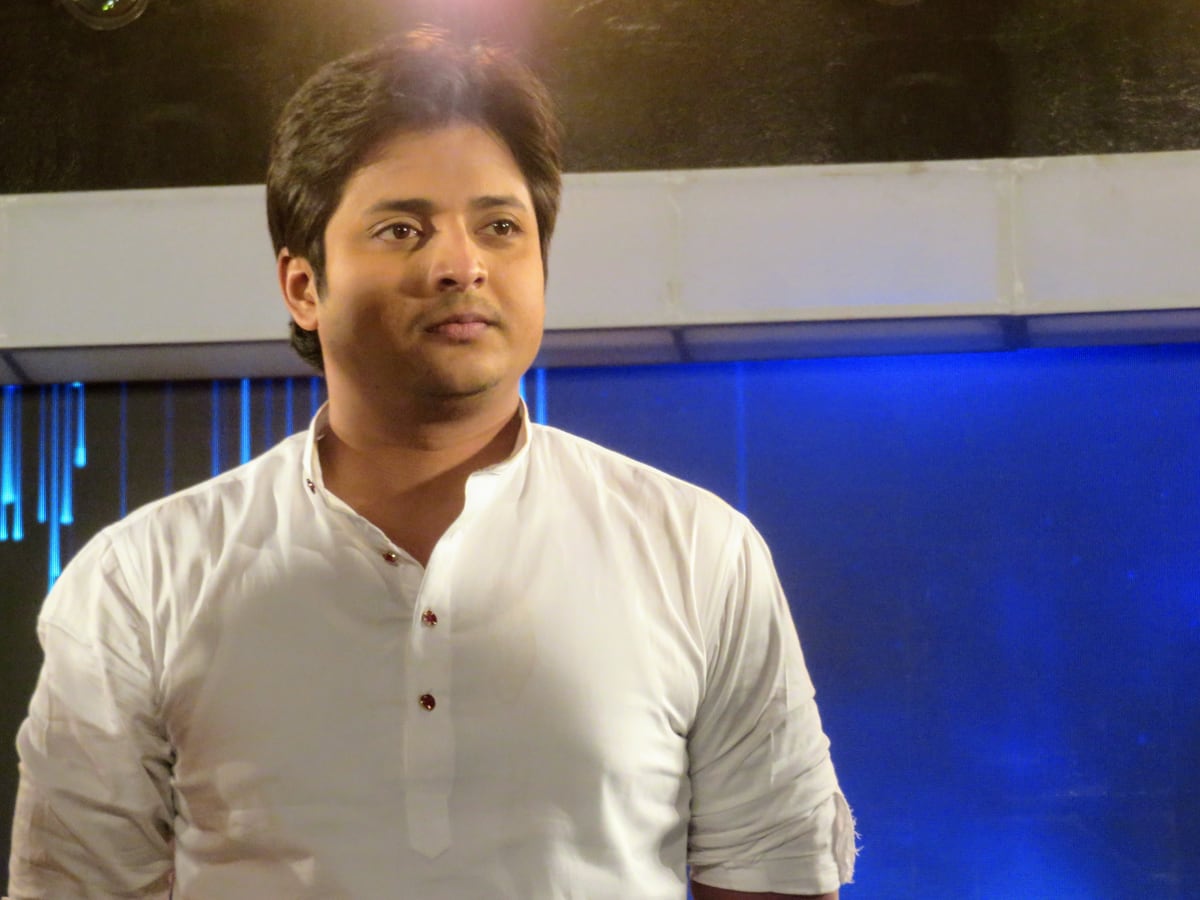
Babushaan told Indulge that he spoke with doctors while preparing for the role. He also described the Hindi release as fulfilling his wish to take his industry to a national audience. The ambition he expressed was to carry work from Odisha further while continuing to belong to its film industry.6
Making the story travel
Mourya said the production drew performers from the Koraput and Jeypore film societies, alongside the lead actors and other local talent. Pratap Rout handled cinematography.14
The soundtrack brought another set of collaborators into that journey. Mourya credits Gaurav Anand with the music and Tushar Jena with the score, recalling roughly six months spent developing the music.1
DAMaN opened in Odia on 4 November 2022. Its Hindi version reached cinemas on 3 February 2023. The second release brought the Odia production to viewers in another language.65
Contemporary reporting described packed shows during the first week. The New Indian Express recorded an opening in 51 theatres in Odisha and 15 across nine other cities, including Bengaluru, Mumbai and Delhi.7 The release gave the team’s ambition to reach audiences beyond the state a concrete form.
The reception was not uniform. Film Information, reviewing the Hindi version, praised the lead performances but found the screenplay slow and its dramatic appeal limited. That contemporary dissent belongs beside the later national honour. The film was finding attention and different responses at the same time.5
The people beyond the central character
A feature film can organise a complex effort around one protagonist. The history behind it needs a wider frame.
That choice also drew criticism. Atri Prasad Rout, writing in OrissaPOST, admired the filmmaking but warned that building the story around a single doctor risked making an outsider into a saviour.8 In Countercurrents, Pradyumna Behera argued that the film gave too little space to Adivasi agency and the history behind unequal access to healthcare.9 These readings ask whose experience a story brings forward when it follows the person arriving to help.
The real programme, Durgama Anchalare Malaria Nirakarana, began implementation in 2017, after the film’s 2015 setting. Its work in remote and high-burden villages depends on repeated camps and screening.1011 A published camp evaluation found reduced infection odds in its early-camp group, but its non-randomised design could not establish causation; it measured the programme, not the film.11
Health workers interviewed in a 2025 study described infrastructure, staffing and resource constraints, and proposed flexible camp schedules and more support for volunteers. Their accounts, from districts outside Malkangiri, show the organisation of care around the central encounter between a patient and a clinician.12
A resident’s account brings those access barriers closer. In a 2023 Down To Earth report, a Bonda resident of Sanuguda in Malkangiri, identified under the changed name Raja Kirsani, described a walk of more than three hours to reach care because ambulances could not reach his village. His testimony concerns healthcare access, not a response to DAMaN.13
A cinema story and a programme history can illuminate each other while answering different questions. The fictional doctor gives the film a central journey; the wider record makes room for the repeated work of teams and volunteers.
Returning to the film
The production brought performers and film-society networks together; its release found audiences within and beyond Odisha. Watching it also leaves room to ask how the doctor’s journey makes the people around him visible. Recognition and thoughtful disagreement can both keep a film in conversation. The accounts of workers and residents help that conversation attend to lives beyond the screen.
Watch and explore
- Full-film listing: ଦମନ (DAMaN) on Amara Muzik Odia’s YouTube channel. Verified official-channel page displayed a 1:58:31 player. Playback was not started; access elsewhere is not guaranteed.
- Official trailer: ଦମନ (DAMaN). Amara Muzik Odia; a trailer, not the full film.
Care continues beyond one journey.
Footnotes & Sources
-
Cinema Express, interview with Vishal Mourya, 7 December 2022. Director’s account. ↩ ↩2 ↩3
-
Press Information Bureau, 70th National Film Awards results, 16 August 2024, Best Odia Film. Film-category award, not Best Actor. ↩
-
Central Board of Film Certification, feature films certified in 2022, Odia table, DAMAN row 78, Deependra Samal and M/S. J P Motion Pictures. Certification recorded 21 October 2022. ↩
-
70th National Film Awards catalogue, p. 082, synopsis and credits. ↩ ↩2 ↩3
-
Film Information, review of the Hindi-dubbed DAMaN, 3 February 2023. Hindi-release review. ↩ ↩2 ↩3
-
Indulge, interview with Babushaan Mohanty, 14 February 2023. Interview; original opening dated 4 November 2022. ↩ ↩2
-
The New Indian Express, Two new films signal there’s hope for Odia movie industry, 13 November 2022. ↩
-
Atri Prasad Rout, “DAMaN, a spark in the dark”, OrissaPOST, updated 13 December 2022. Film review. ↩
-
Pradyumna Behera, “Doctorhood, Mosquitos and the Adivasis”, Countercurrents, 23 December 2022. Critical essay on representation, not resident testimony. ↩
-
Odisha Health and Family Welfare Department, Annual Activity Report 2022–23, printed p. 41 (PDF p. 49). 2022 programme service data, not the film’s health impact. ↩
-
Danielle C. Ompad et al., “The effectiveness of malaria camps as part of the malaria control program in Odisha, India”, Scientific Reports 13, 22998 (2023), Results and Discussion. Non-randomised early/delayed-camp comparison: 15 villages, Keonjhar and Jharsuguda, 2019–20; pandemic disruption; programme personnel among authors. Introduction dates implementation to 2017, distinct from the film’s 2015 setting. ↩ ↩2
-
Madan Mohan Pradhan et al., “Community Healthcare Providers’ Perspective on Malaria Control in Difficult Terrains (DAMaN) in Odisha, India”, Journal of Communicable Diseases 57(1), 55–64 (2025), Methods and Themes 2–3. 53 worker interviews across five districts; programme staff among researchers. Not an outcome or film-reception study. ↩
-
Aishwarya Mohanty, “Miles to go: In these tribal regions of Odisha, the nearest health clinic is jungles & rivers away”, Down To Earth, 14 April 2023, opening Sanuguda account. Resident’s name changed by source; HSTP Health Journalism Fellowship 2022. Historical health-access account, not film reception. ↩
Babushaan Mohanty, photographed in 2018, before DAMaN. Photo: Jnanaranjan Sahu, Wikimedia Commons, CC BY-SA 4.0. ↩

Further reading
Meet the filmmakers
Continue through Odia cinema
Suggest an update: share a source, film credit or precise correction. GitHub submissions are public; omit private contact details and consent documents.