
Odia cinemaMaking the Next Film Possible
What Makes the Next Film Possible
In this article
Follow the money behind the screen: film finance, reported box-office success and the conditions for making another film.
Speaking at the Odisha Literary Festival in 2024, Sabita Mohanty recalled funding as an obstacle and said Nirad Mohapatra sought a Rs 4 lakh loan from the National Film Development Corporation, repaying it gradually. Her recollection concerns the financing of the 1984 ମାୟା ମିରିଗ (Maya Miriga). It does not establish its complete budget. The distinction matters: borrowed money can make production possible while also creating an obligation that survives the shoot.1
That obligation gives us a way to look at money across a film’s life: first as the means to begin work, later as income to be shared and commitments still to be met. Comparing the loan with present-day spending would require a full expenditure record and an account of changing prices.
From a ticket to the next production
For a recent commercial example, consider ବୋଉ ବୁଟୁ ଭୂତ (Bou Buttu Bhuta). On 30 June 2025, The Federal reported a production budget of Rs 2–3 crore and almost Rs 12 crore at the box office after 17 days. The Rs 12 crore figure is a receipt estimate, not a production budget.2 The commercial-successes reading follows the differently dated reports of this and other films.
It helps to follow money through the work. Finance makes preparation and production possible: writing, casting, paid working days, equipment, editing and sound. Release costs support delivery and the effort to reach viewers. Box-office receipts record ticket business. The amount that reaches a producer then depends on the exhibition and distribution agreements, deductions and payment terms.
A film may also earn through separately agreed television, streaming or other rights. Those payments can arrive on different schedules. To understand what can support another production, the producer needs to bring the actual receipts together and set them against the full costs and obligations. The published Bou Buttu Bhuta reports do not supply that settlement, so they establish a reported hit rather than an audited profit.
A successful release can make a new project worth discussing. For the next team, the question becomes concrete: when will the money arrive, and what work can it pay for?
The audience needs a screen
For Lokanath Das, bringing a film to viewers could mean a boat journey. In a 2020 recollection, the retired Dhenkanal information and public relations employee described putting on village screenings between 1978 and 1995. The government mobile-cinema programme combined films with information documentaries. Among the films he remembered were ଅମଡ଼ା ବାଟ (Amada Bata) and ମାଟିର ମଣିଷ (Matira Manisha).3
A different route into organising appears in Abhishek Parija’s account of the Film Society of Bhubaneswar. He joined its core team after submitting his own film to its festival. At Ravenshaw, he helped a junior and friends establish a film society. A July 2018 report records their screening of Spike Lee’s Do the Right Thing on 18 July. Parija described screenings followed by conversation, with attention to a film’s wider context.4
The Waterfall was made by Lipika Singh Darai for LXL Ideas’ School Cinema. Shot around Khandadhar and the nearby forests of Sundergarh, it has English and Hindi versions.5
Abhyasa’s account of its November 2017 school festival lists The Waterfall among the films shown. The festival’s own trailer identifies Lipika Singh Darai as the director.6
In a 2017 account, producer Syed Sultan Ahmed described choosing themes and selecting stories offered by independent filmmakers and scriptwriters. School Cinema describes screenings followed by discussion and workbook or digital activities, delivered by teachers with LXL training and support.7 For an Odia counterpart, makers and education partners could agree on a story, its language, payment and screening terms before production begins.
Das’s journeys, Parija’s organising and the school programme bring me back to the question raised in my conversation with the DAMaN team: how does a good film reach people? Here are three specific routes. Transport, a venue, permission and working equipment still need to be arranged; so does the time of the people putting on the show. A public information programme, a film society, a school programme and a commercial theatre must each find a way to meet those costs.
Support is more than a building
OFDC’s stated objectives connect several parts of this chain: finance for films, assistance for rural and semi-urban cinemas, studio and processing facilities, and support for film societies. Its 1976 incorporation belongs to a longer history of public involvement than any single redevelopment. These stated purposes connect the making of films with the places and communities that can encounter them; individual assistance still needs to be established from disbursement records.8
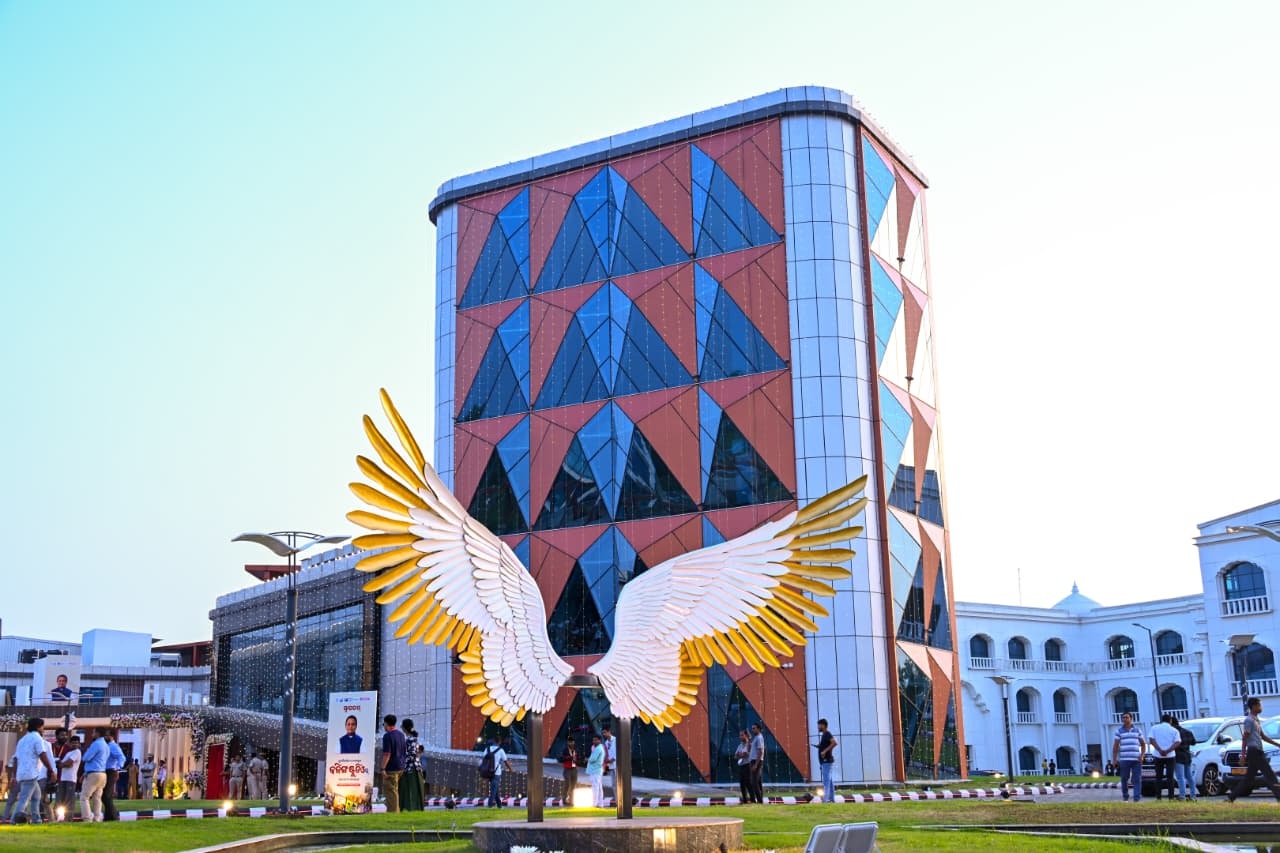
The redevelopment of Kalinga Studio, inaugurated in October 2026, can be judged over time through access to facilities, actual bookings and the productions those facilities help complete. Alongside public provision, the India Cine Hub directory lists Bhubaneswar’s Mute Studio as advertising post-production services. A production considering those advertised services would need to confirm rates, capacity and suitability for its work.910
A digital release has costs too
Streaming changes the route to a viewer, but does not abolish the cost of reaching one. The OTT chapter follows the work of building platforms and catalogues. The economic question is what continuing arrangements these outlets can sustain with creators, as well as how many titles they carry.
The literature reading leaves the original author’s compensation unresolved in the accounts examined there. That question belongs beside the producer’s receipts and the crew’s wages. For someone deciding whether they can commit to another work, a dependable payment matters more than a headline collection.
The final reading begins from these unfinished questions: what can writers, filmmakers and audiences make possible together, and what would let them continue?

The journey before the screening.
Footnotes & Sources
-
The New Indian Express, “Maya Miriga is Nirad’s gift to Odia cinema,” 22 September 2024. Sabita Mohanty’s Rs 4 lakh loan recollection; total budget unspecified. Read source. ↩
-
The Federal, report on Bou Buttu Bhuta, 30 June 2025 (updated 1 July). Reported budget/17-day receipts; no audited settlement or producer share. Read source. ↩
-
“Mobile cinema still has its utility, audience,” OrissaPOST, 31 July 2020, p. 5; Lokanath Das’s recollections. ↩
-
Seema Rajpal, Film Society of Bhubaneswar and its young organisers, EdexLive, 20 July 2018; Abhishek Parija’s account. ↩
-
Lipika Singh Darai, The Waterfall, official filmography. ↩
-
Abhyasa, school festival report, 14–19 November 2017; SCIFF, The Waterfall | IKFF India 2017, 29 December 2017. ↩
-
Akhila Damodaran, “City’s movie lessons win national honour,” The New Indian Express, 4 May 2017; School Cinema, programme description. ↩
-
Odisha Film Development Corporation, RTI Manual 1, institutional objectives. Read source. ↩
-
Chief Minister of Odisha, Kalinga Studio and cinema archive/museum inauguration announcement, 5 October 2026. Read source. ↩
-
India Cine Hub, Mute Entertainment Private Limited / Mute Studio, Bhubaneswar, directory listing. Advertised services; capacity unverified. Read source. ↩
Further reading
Follow the films and their audiences
Suggest an update: share a production account, distribution record or precise correction. GitHub submissions are public; omit private contact details and consent documents.