
Sounds of Odisha · Pala
Poetry with
people around it.
A poem can live on a page. What happens when a performer brings it into a gathering of listeners?
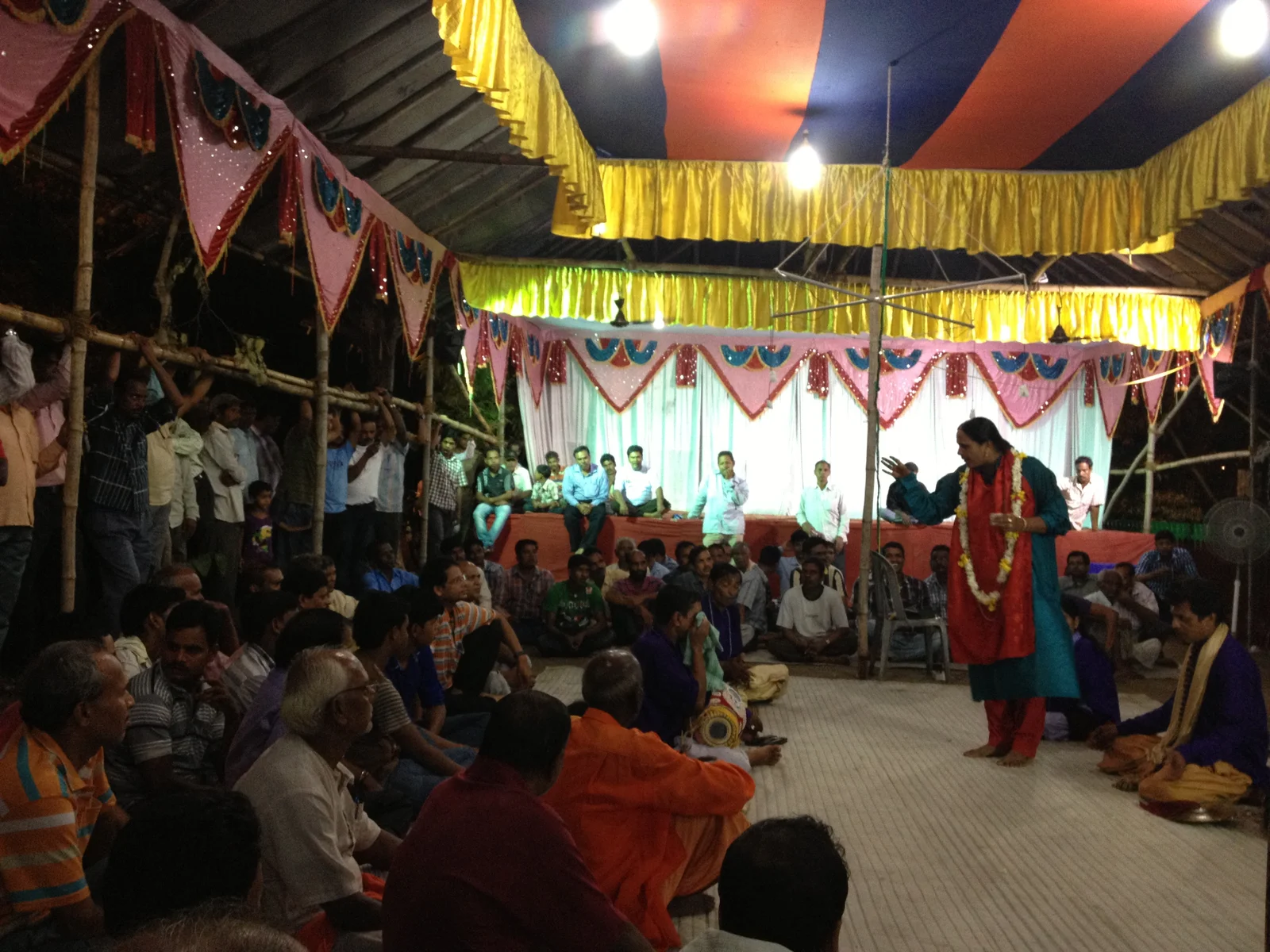
Look at the photograph: the gathering sits close to the performer. A hand is raised, a microphone waits, and faces turn towards the same point. The image cannot tell us which verse was being performed or what anyone was thinking. But it can suggest a question worth taking into an evening of Pala: what happens to a poem when it has people around it?
The reader behind the voice
Jagannath Behera's 2009 Sangeet Natak Akademi citation describes reading across Odia, Bengali, Hindi, Sanskrit and English and bringing literary quotations into performance. That is one artist's documented practice at the time of an award—not a requirement for every performer.
It gives the listener something to follow. Behind a voice may be years of reading, remembering and finding a way to carry a passage to an audience. Ask which work is being presented and why the performer chose it. A title can become your next book; a performance can become your way into literature.
An evening has more than one part
The Kalahandi district table describes Palla around Bhawanipatna, Dharamgarh and M. Rampur, naming Gayak, Bayak and Palias with Mrudanga, Gini and Chamar. It lists six participants and lyrical narration of Puranic and historical events. This is a local description, not a universal cast list.
Try following someone other than the lead performer for a moment. When do they join in? What changes in the rhythm or the exchange? Ask how their contribution fits the story. The person at the microphone is not the whole performance.
Pala and Daskathia share routes into telling aloud; their names and forms deserve to remain distinct.
Literature in public life
A Chief Minister's office report dated 28 December 2025 credits Pala singers and Bayaks with bringing Odia poetry to the public at the 48th state-level Pala Sammilan in Kendujhar. This records a dated gathering and its stated cultural purpose. It does not tell us attendance, earnings or today's event schedule.
For Utkal's reader, the invitation is smaller and more personal: find one work you would like to hear explained. Ask a host whether the story and language will be accessible to you. If you need an introduction, request it beforehand; nobody owes a visitor an explanation in the middle of a performance.
Three things to carry into a listening evening
- A question: which poem, episode or text will we hear?
- An introduction: who performs each part, and how would they like to be credited?
- A little patience: let a phrase unfold before reaching for a translation or your phone.
Confirm the actual occasion, duration and access with the host. Ask before recording, and respect a refusal. No current booking or performance invitation has been verified for this article.
A rewarding evening might leave you with one unfamiliar title and one artist's name. That is enough to start another journey.
A sourced reader story. Practitioner/Odia review remains open; no audio recording or current performance booking is provided.
Explore Odia literature → · Meet Daskathia →
Sources, photograph & reading notes
Source-based reader story prepared with AI assistance; practitioner and Odia review remain open. Award evidence is dated; no current booking or audio acquired. Desk review: 2026-10-12.
- Jagannath Behera — Akademi Award: Pala (Orissa)
- 48th annual state-level Pala Sammilan at Parklane, Kendujhar
- Kalahandi district · Culture and Heritage
The Behera citation uses saved full-text evidence from 1 October; the recent re-fetch timed out. Kalahandi’s troupe description is local. The Sammilan report is dated 28 December 2025. Origin research is still unresolved.
Photograph
Subhashish Panigrahi · Nalconagar, 2013 · CC BY-SA 3.0. Resized and converted to WebP; derivative remains CC BY-SA 3.0. The performer is not identified here.

Suggest a correction or a public source. GitHub submissions are public; omit private contact details and consent documents.