
From Niyamgiri harvests to market
By Ahimanikya Satapathy
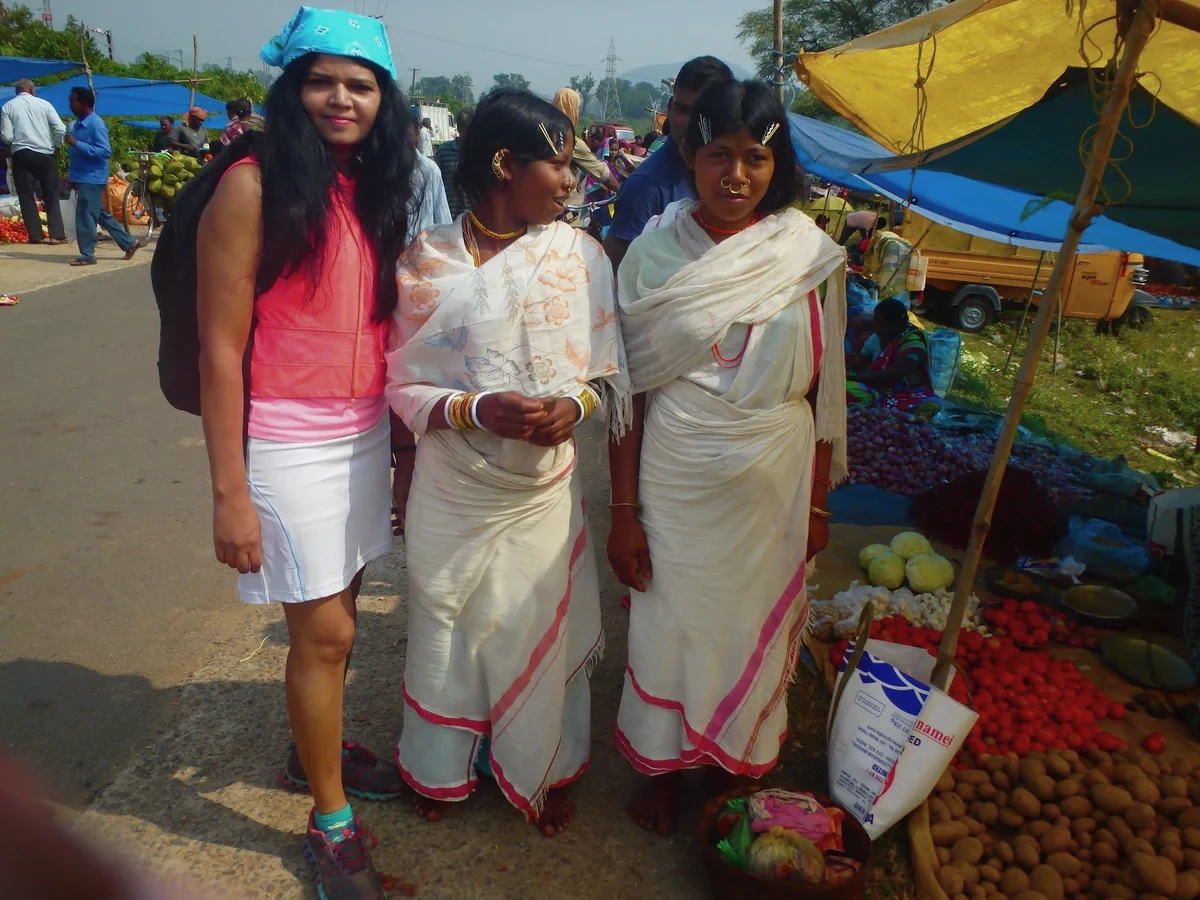
A posed photograph during a market visit, catalogued as “Dangaria women 02” in 2018. It does not document a particular sale or identify the people discussed in this article.
Telo Wadaka of Khajuri sold bananas, yams and pineapples at the weekly market in Chatikona, according to Deepanwita Gita Niyogi’s November 2022 reporting. Her journey from farm to market connects two parts of earning a living: growing produce and finding someone to buy it.1
Growers also describe the time spent selling, the effects of losing a buyer and the changes they wanted closer to home.
A long selling day
In July 2017, Bikash Khemka reported growers’ frustration despite a plentiful pineapple harvest. Pula Majhi described leaving home early and returning in the evening after selling her fruit. Nabaghana Badaka of Khambesi pointed to the lack of cold storage and wanted a nearby juice factory. The report traced truckloads from a yard near Chatikona railway station to Raipur.2
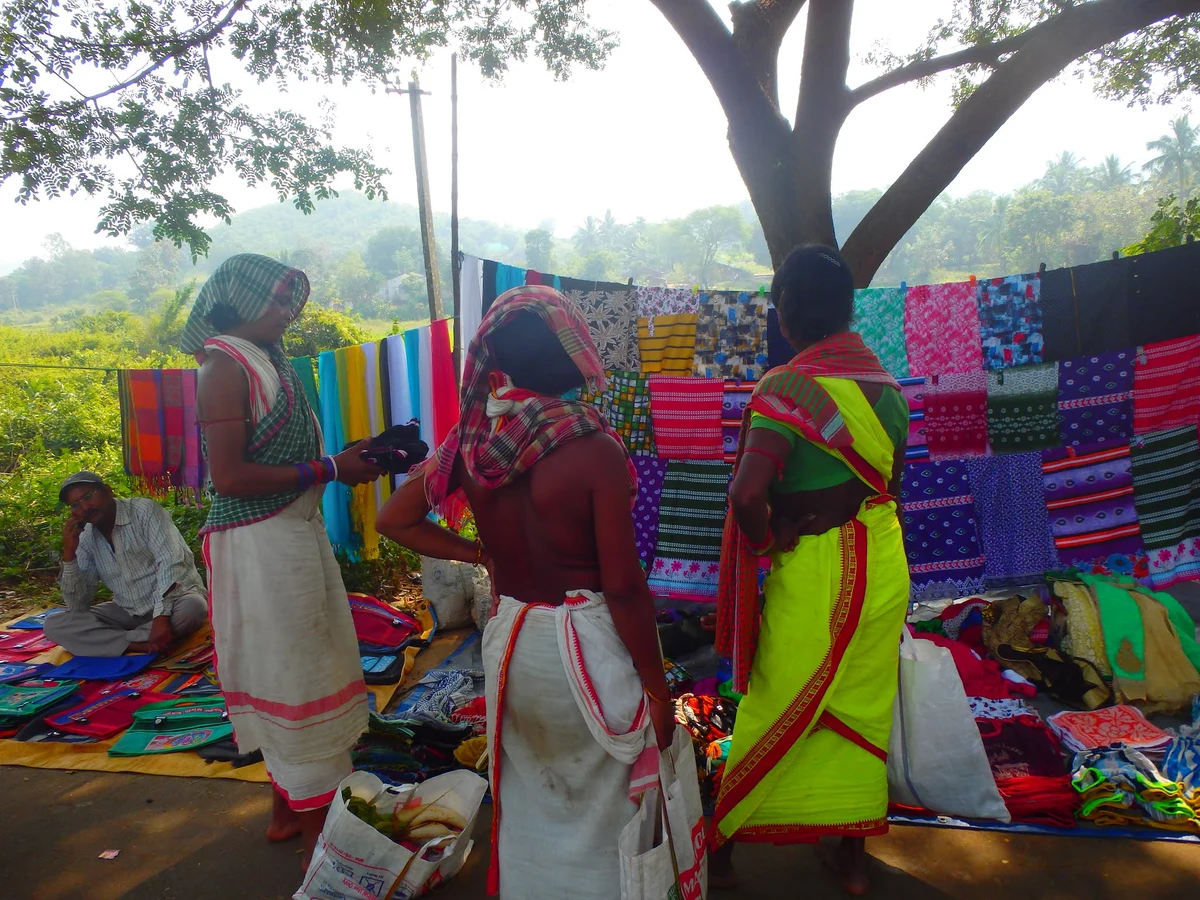
Women photographed during Pillai Sree Vidya’s visit to the Dongria region.
Selling during the pandemic
In Abhijit Mohanty’s June 2020 reporting, Sindhe Wadaka of Khajuri said her household had collected harada and bahada but found no buyers. She described both routes closing: traders no longer came to her village, and she could not take produce to the foothills to sell it. Shyam Wadaka described stocks of siyali leaves and seeds, harada, bahada and amla that he could not sell; he said access to Chatikana market was also blocked.3
Satyanarayan Patnaik’s August 2021 report described a different arrangement during pandemic restrictions on train movements. Traders were travelling to growers rather than relying on farmers bringing fruit down to Chatikona. Programme manager Sudarshan Padhi said this saved growers transport costs.4
These contrasting experiences concern different crops and households. Buyers coming to a farm could shorten the selling journey. These reports do not establish a wider recovery in growers’ earnings.
What growers wanted from processing
Processing also appeared in later official plans. In July 2021, The New Indian Express reported an expected opening for a unit at Chatikana. DKDA manager Sudarshan Padhy described direct purchasing from growers and Dongria self-help groups making and packaging products through ORMAS. These were plans, not records of completed sales or jobs.5
A September 2026 Pioneer feature returned to the question of processing. Sindhe Wadaka and Pulmi Wadaka said unreliable machinery and insufficient capacity at the Chatikona unit left them dependent on outside traders. Shasil of Khambasi explained his choice to sell to traders rather than let available fruit go to waste; Uma Sankar wanted cold storage for excess fruit.6
The women’s complaints return attention to whether the machinery served their needs. The reports do not establish the unit’s commissioning date, throughput or repair history.
What the seller takes home
Pula Majhi’s long selling day, the unsold forest produce and the later complaints about machinery show how much happens between harvest and payment. A sale price alone leaves out travel costs, time and produce that finds no buyer. For a grower, access to a market means both reaching a customer and bringing home a return worth the journey.
Markets also appear in the accounts of Kapadaganda makers, who describe buying cloth and thread. Following those materials brings another kind of work into view.
Further reading
Dongria life in Niyamgiri · Keeping seeds in circulation · Kapadaganda and its makers · Forest foods and home gardens
Footnotes & Sources
Additional photograph: Pillai Sree Vidya. CC BY-SA 4.0; source. Resized; composition unchanged.

Image: Pillai Sree Vidya. CC BY-SA 4.0; source. Colour and tone adjusted for print; composition unchanged.

-
Deepanwita Gita Niyogi, Superfood Millets Need Revival at Home, The Citizen, reproduced by IWMF, 19 November 2022. Khajuri account. The body spells the name Telo; its photograph caption uses Tela. ↩
-
Bikash Khemka, Problem of plenty hits Dongrias, The Times of India, 16 July 2017. Named farmer accounts and transport description; historical conditions. ↩
-
Abhijit Mohanty, Dongria Kondhs struggle to sell forest produce during lockdown, Village Square, 15 June 2020, “Livelihood loss.” Named household accounts; no general income estimate adopted. This report is also used in the homes article for seasonal repair context and is one shared source, not independent corroboration across articles. ↩
-
Satyanarayan Patnaik, Pineapples grown by tribals find favour with traders, The Times of India, 21 August 2021. Pandemic-period reporting and attributed programme assessment, not audited household accounts. ↩
-
For Dongria Kondhs, pineapple has a juicier prospect, The New Indian Express, updated 7 July 2021. Full report inspected. Opening timeline, procurement and employment are attributed plans; projected earnings and beneficiary totals are not treated as outcomes. ↩
-
In pineapple country, the price is the hard part, The Pioneer, 25 September 2026; contributor note names Indrani Chakraborty and Soumya Mukherji. “The Scale of Production,” named accounts. Publication date is known; field-visit date is unspecified. Village and personal-name spellings follow each source. ↩