
← All books · Dongria Kondh chapters
The book · Read online
Dongria Kondh:
Life in Niyamgiri
By Ahimanikya Satapathy
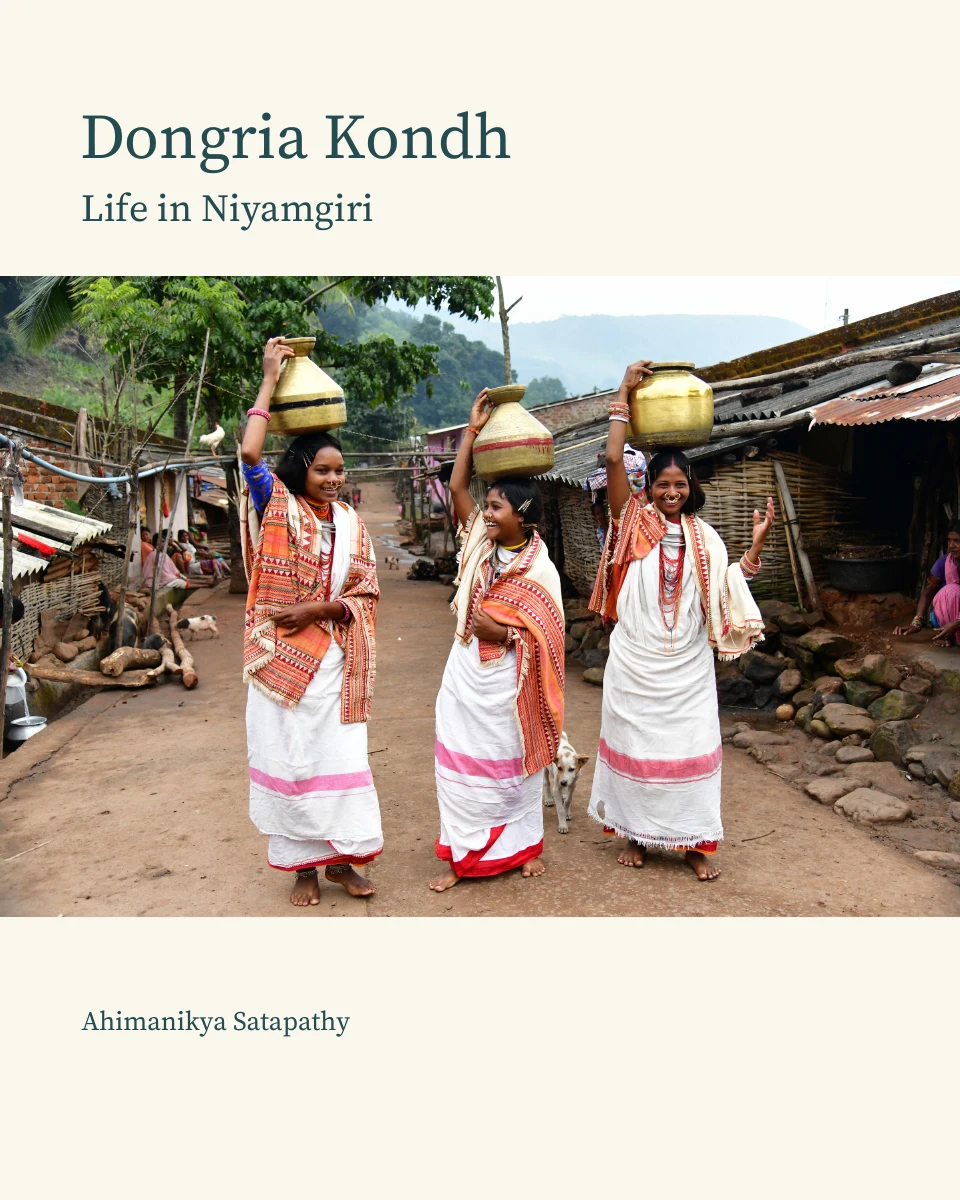
A shawl bought at a dinner party with friends opened questions about the people behind the cloth. The reading led to Site Jakesika’s embroidery, Mukteswar Wadaka’s teaching, seeds kept in circulation and songs remembered across generations.
Begin with the author’s note →
84 pages in the illustrated reading edition.
Author’s note
A shawl, and the questions it opened
This book began at a dinner table.
At a dinner party with friends, I noticed the cloth used for the table mats and hand towels. My host also had shawls for sale, and I bought one. I fell in love with it. Perhaps I had seen something like it before, but I had never paused to understand where it came from or whose work I was looking at.
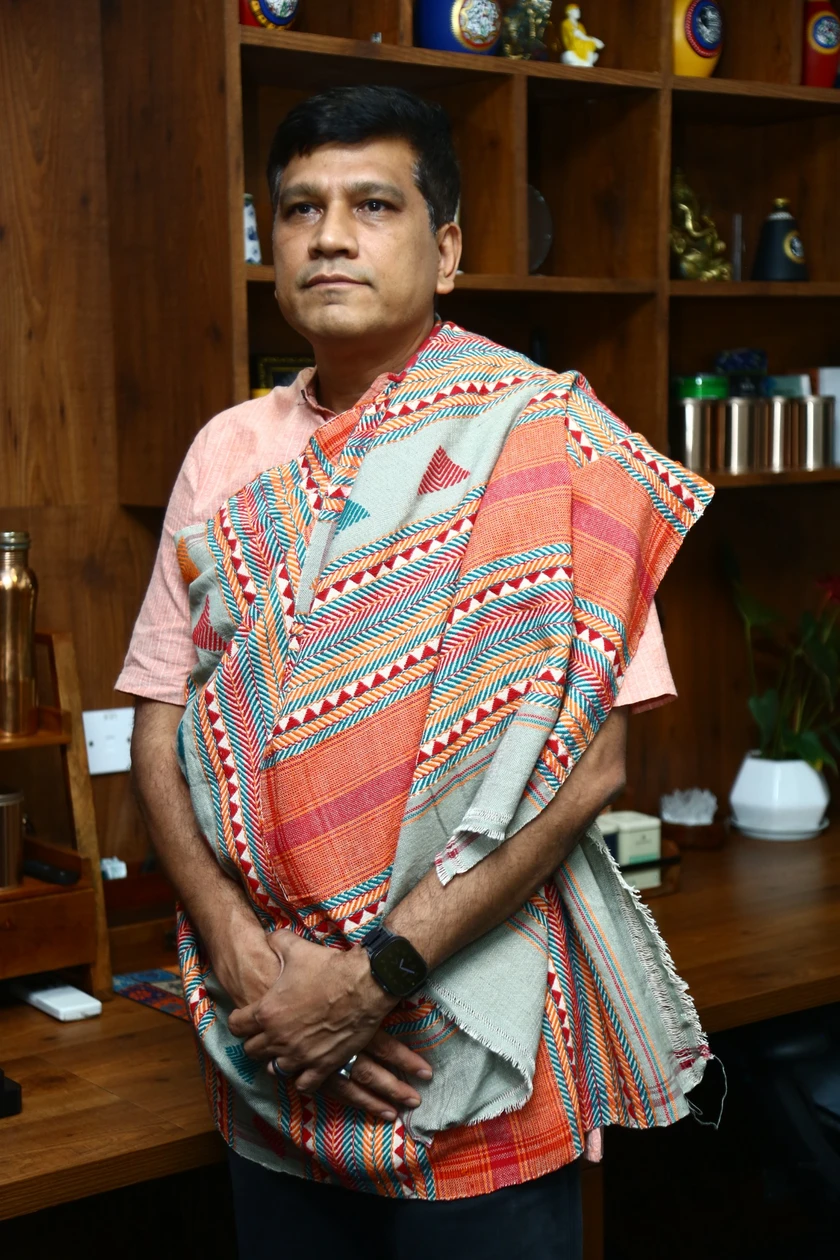
I was already working on Project Odisha, exploring the places, culture and literature of Odisha. This encounter gave that work a personal direction. I wanted to learn about the people behind the cloth, the place they called home and the lives around its making.
The reading took me far beyond the shawl. Information was scattered across reports, studies and individual accounts. Over the following weeks, I read and brought these stories together, trying to keep people at the centre: those who grow food, keep seeds, embroider, teach, learn and sing.
My delight in the designs found other forms, too. I made a bag inspired by them and had ten T-shirts printed. Those were my own adaptations. As my curiosity grew, I wanted to understand more of the lives and work from which that inspiration came.
I felt embarrassed by how little I had known about this part of Odisha. That feeling soon became a reason to keep learning. What had first caught my eye as a beautiful garment had opened questions about skill, livelihood, land, memory and belonging.
I have not yet visited Niyamgiri. This first book grows from weeks of reading and research; the visit, and the listening I hope to do there, still lie ahead. There is much I do not yet know.
I hope these pages bring you insight and some of the joy this discovery has brought me. I hope, too, that when you look at a cloth, you pause a little longer with the people whose work gives it life.
For me, this is a beginning.
Ahimanikya Satapathy
Before we begin
“He created fruit in the hills, grains in the plains,”
In his song of Niyam Raja, Praska names the food that sustains life. We begin with the hills and the people who make their homes there, then follow the work of growing food and taking a harvest to market. Cloth and ornaments bring makers and wearers into the story. Students, teachers and singers carry us towards questions of language, memory and what one generation shares with another. Each account belongs to particular people, places and years.
This book brings together published research and attributed reporting. It cannot supply every voice or resolve every uncertainty. The notes keep those limits visible. Photographs and imagined illustrations offer different kinds of pause; the picture notes at the back identify each one.
Read slowly enough to notice who is speaking, who is doing the work and who is making the decision. Let the names stay with the cloth, the crop and the song.
Locating Niyamgiri
Within Odisha
The outlined area locates the regional view.
Locating Niyamgiri
Niyamgiri is shown as an approximate regional position north of Rayagada town. The locator does not mark a summit, a village or a route.
Twelve connected chapters
A shawl began the inquiry. These twelve readings follow it into the lives around Niyamgiri: households and fields, makers and markets, classrooms and songs. Read them in sequence, or begin with a person or question that draws you in.
Place and people
Begin with the decisions that shape a household: what to plant, how to speak for land and what makes a home dependable.
Growing and sharing
Follow the work that keeps food moving between fields, forests, households and markets, and the people who decide what to keep, share or sell.
Cloth and its makers
Move from the finished wrap to the people who teach embroidery, weave its ground, make ornaments and explain what their work means.
Learning, language and song
End with people helping others understand a lesson, work with familiar words and remember a singer’s voice.
Looking again
I began with a shawl. The reading brought me to people whose names I now want to remember.
Site Jakesika’s embroidery, Mukteswar Wadaka’s teaching and the work of keeping seeds in circulation belong to different lives. Bringing them into one book does not make those lives the same. Each asks for its own attention.
The cloth that first delighted me still does. But I look at it differently now. Alongside colour and pattern, I think about time: the hours spent making, the work fitted around other work, and the knowledge passed between people. Beauty has become a reason to pay closer attention.
There is much more to learn. I hope to keep asking, listening and revising what I think I know.
If this book leaves you curious, I hope you follow that curiosity towards the people and their work. Remember a name. Look again at a familiar object. Ask where it came from and how it was made.
I bought a shawl that evening. I am still learning how much there is to see in it.
Words in this book
These short definitions explain how the terms are used in this book. Personal and place-name spellings follow the cited accounts and may vary.
- Aal
- The roots used as a dye material in NIFT’s account of Kotpad yarn colouring. Read the chapter.
- Bejuni
- A priestess; the seed accounts describe particular bejuni helping recover varieties and conducting rituals before sowing. Read the chapter.
- Bijun Parab
- A seed festival described in the 2018 reporting, with seeds prepared and brought to a priestess before planting. Read the chapter.
- DKDA
- Dongria Kondh Development Agency; the development agency referred to in the training and livelihood accounts. Read the chapter.
- GI
- Geographical indication: an indication linking goods to a place whose origin gives them a particular quality, reputation or other characteristic. Read the chapter.
- Gram Sabha
- A village assembly. In the Niyamgiri case, the assemblies examined community, cultural and religious claims connected with the proposed mining. Read the chapter.
- Jatapu
- Used here in the title Jatapu (Kuvi) Primer and for Prasanna Sree’s devised script. The primer uses Telugu-based writing, not that devised script. Read the chapter.
- Kapadaganda
- Cloth embroidered by Dongria makers, worn and given as well as made for sale; sources also spell it Kapdagonda or Kapdaganda. Read the chapter.
- Katri
- A blade-shaped hair ornament also used to cut thread and trim loose ends in the embroidery account. Read the chapter.
- Kotpad
- A town in Koraput district and the name associated here with its cotton dyeing and handloom-weaving tradition, distinct from Kapadaganda embroidery. Read the chapter.
- Kui
- A Dravidian language closely related to Kuvi, with a separate entry in the Central Institute of Indian Languages collections. Read the chapter.
- Kuvi
- A Dravidian language spoken in Odisha and Andhra Pradesh. Its name is not interchangeable with Kui; Kuwi is a spelling used in one primer’s title. Read the chapter.
- NIFT
- National Institute of Fashion Technology, publisher of the Kapilo Mahanta craft profile used in the Kotpad chapter. Read the chapter.
- Niyam Raja
- The deity associated with the Niyamgiri hills in the worship, seed and song accounts. Read the chapter.
- ORMAS
- Odisha Rural Development and Marketing Society, the state organisation referred to in the account of product marketing plans. Read the chapter.
- Pucca
- A building whose walls and roof use durable materials, such as burnt brick, stone, cement or concrete. Read the chapter.
About the author
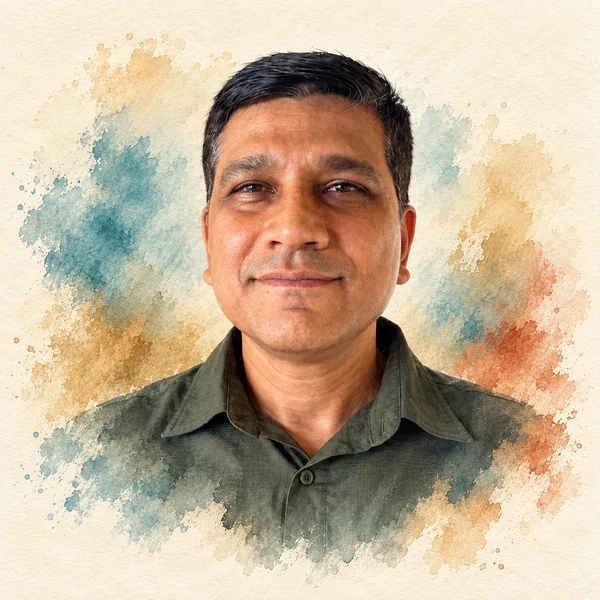
Ahimanikya Satapathy is the founder of Project Odisha, exploring Odisha’s places, culture and literature through research and storytelling.
Footnotes & Sources
The chapters
The twelve chapters retain their fuller online source notes.
- Dongria life in Niyamgiri: source notes
- Niyamgiri: cultivation and village decisions: source notes
- Homes and the work of repair in Niyamgiri: source notes
- Keeping seeds in circulation in Niyamgiri: source notes
- Forest foods and home gardens in Rayagada: source notes
- From Niyamgiri harvests to market: source notes
- Kapadaganda — the embroidered cloth of Niyamgiri: source notes
- Dongria ornaments in use: source notes
- Kotpad and Kapadaganda through their makers: source notes
- Learning and belonging in Niyamgiri: source notes
- Kuvi and the Jatapu script: source notes
- Songs and singers in Dongria life: source notes
Author’s note photograph
Photograph supplied by Ahimanikya Satapathy.
Before we begin
Living Farms, GRAIN, 26 July 2009; translator unnamed.
Locator
- Rayagada Forest Division working plan, §1.2.2.
- Niyamgiri field study, surveyed sites.
- Rayagada Municipality, location.
- Rayagada District Profile, §2.1.
Odisha outline: Natural Earth 1:10m states and provinces, Public domain.
Glossary
- Aal: source.
- Bejuni: source.
- Bijun Parab: source.
- DKDA: source.
- GI: source.
- Gram Sabha: source.
- Jatapu: source.
- Kapadaganda: source.
- Katri: source.
- Kotpad: source.
- Kui: source.
- Kuvi: source.
- NIFT: source.
- Niyam Raja: source.
- ORMAS: source.
- Pucca: source.
Pictures in the book
Front cover photograph: Amitt M Patell. Source. CC BY-SA 4.0. The preview reproduces the published cover.

Dongria life in Niyamgiri. Image: Pillai Sree Vidya. CC BY-SA 4.0; source. Colour and tone adjusted for print; composition unchanged.

Niyamgiri: cultivation and village decisions. Image: Pillai Sree Vidya. CC BY-SA 4.0; source. Colour and tone adjusted for print; composition unchanged.

Homes and the work of repair in Niyamgiri. Illustration: Project Odisha. Housing reference: Meenal Tatpati, Ashish Kothari and Rashi Mishra, The Niyamgiri Story, Kalpavriksh, July 2016, p. 6. Imagined composition; portrait adaptation for this edition.
Keeping seeds in circulation in Niyamgiri. Adapted illustration: Project Odisha. CC BY-SA 4.0. Clothing reference: photograph by Pillai Sree Vidya, CC BY-SA 4.0. Imagined composition; portrait adaptation for this edition.

Forest foods and home gardens in Rayagada. Adapted illustration: Project Odisha. CC BY-SA 4.0. Clothing reference: photograph by Pillai Sree Vidya, CC BY-SA 4.0. Imagined composition; portrait adaptation for this edition.
From Niyamgiri harvests to market. Image: Pillai Sree Vidya. CC BY-SA 4.0; source. Colour and tone adjusted for print; composition unchanged.
Kapadaganda — the embroidered cloth of Niyamgiri. Adapted illustration: Project Odisha. CC BY-SA 4.0. Clothing reference: photograph by Debanutosh, CC BY-SA 4.0. Imagined composition; portrait adaptation for this edition.

Dongria ornaments in use. Image: Shubhamkindia. CC BY-SA 4.0; source. Resized; composition unchanged.

Kotpad and Kapadaganda through their makers. Image: Seven5carrom (Commons contributor). CC BY-SA 4.0; source. Resized; composition unchanged.

Learning and belonging in Niyamgiri. Adapted illustration: Project Odisha. CC BY-SA 4.0. Clothing reference: photograph by Pillai Sree Vidya, CC BY-SA 4.0. Imagined composition; portrait adaptation for this edition.
Kuvi and the Jatapu script. Adapted illustration: Project Odisha. CC BY-SA 4.0. Clothing reference: photograph by Pillai Sree Vidya, CC BY-SA 4.0. Imagined composition; portrait adaptation for this edition.
Songs and singers in Dongria life. Image: Debanutosh. CC BY-SA 4.0; source. Resized; composition unchanged.
Women photographed during Pillai Sree Vidya’s visit to the Dongria region. Photograph: Pillai Sree Vidya. Source. CC BY-SA 4.0. Resized; composition unchanged.

Interpretive stitch-band drawing: Project Odisha. Technique reference: Kanak Rajadhyaksha, Kapdagondas: Motifs and Technique, Sahapedia. Hairpin drawing: interpretive adaptation by Project Odisha from a photograph by Pillai Sree Vidya, CC BY-SA 4.0; adaptation under the same licence. Drawings simplify details. Author portrait: supplied by Ahimanikya Satapathy.

A companion book
Mirgan Households and Kotpad Textiles → Follow the people, colour and livelihood relationships behind Kotpad cloth in a separate nine-chapter book by Ahimanikya Satapathy.