
Odia cinemaFilms and Filmmakers
Parbati Ghose: the woman behind the credits
In this article
Enter the film chapters through the overlapping work of producing, writing and performing.
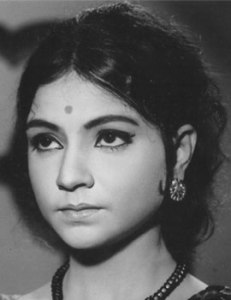
One name in the credits invites a second look: Shrabani.
In the published credits for ଛ’ ମାଣ ଆଠ ଗୁଣ୍ଠ (Chha Mana Atha Guntha), Parbati Ghose appears as producer, director and performer. The screenplay and dialogue are credited to Shrabani, identified there as Parbati Ghose. The archive dates this adaptation of Fakir Mohan Senapati’s novel to 1986.1
Parbati was both shaping the adaptation and performing within it. Writing, producing and acting met in the same working life.
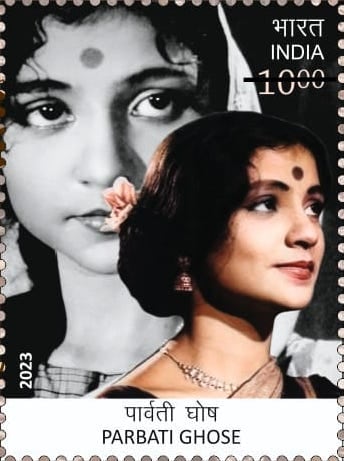
Chapala before Parbati
Born in Cuttack in 1942, Parbati was also known as Chapala and Chandana. Her archive biography describes a childhood connected to books and performance: her father Basudev Naik worked at ManMohan Press, and her mother Sebati encouraged the children’s education and cultural interests. It records dance training and childhood participation in All India Radio.2
Publishing, listening and performance were part of the world in which Chapala grew up. Her later career would bring those arts together through the responsibilities of making a film.
A career built through collaboration
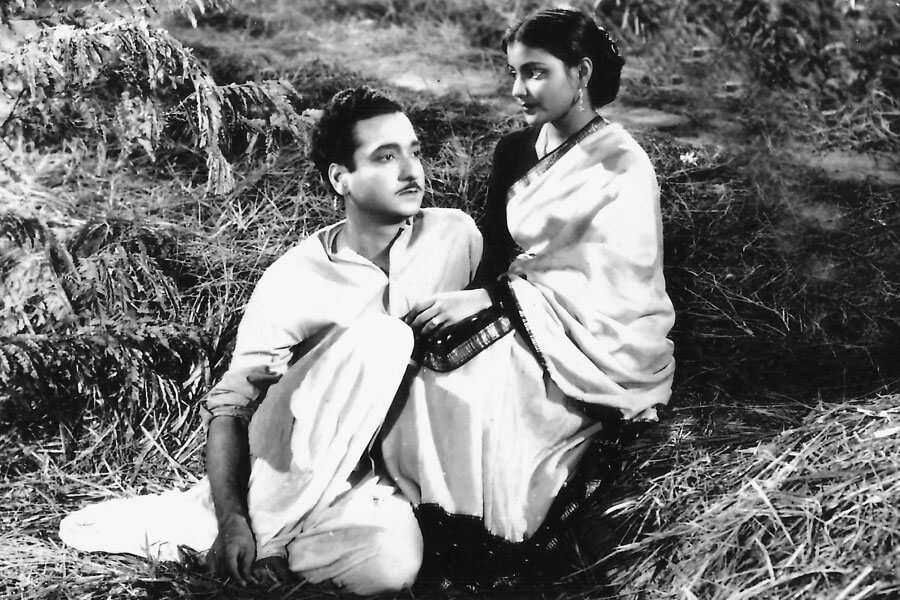
The Gour–Parbati archive records her as co-producer with Gour Prasad Ghose on ଲକ୍ଷ୍ମୀ (Laxmi), କା (Kaa) and ସ୍ତ୍ରୀ (Stree). It also identifies “Siddharth,” the directing credit associated with Kaa and Stree, as a collaboration involving Ram Chandra Thakur, Gour and Parbati.3
Her producing, directing and writing credits sit alongside the work of these collaborators. Gour Prasad Ghose’s profile follows his theatre and production career, while the shared archive lets readers explore both lives.
Land, power and a literary inheritance
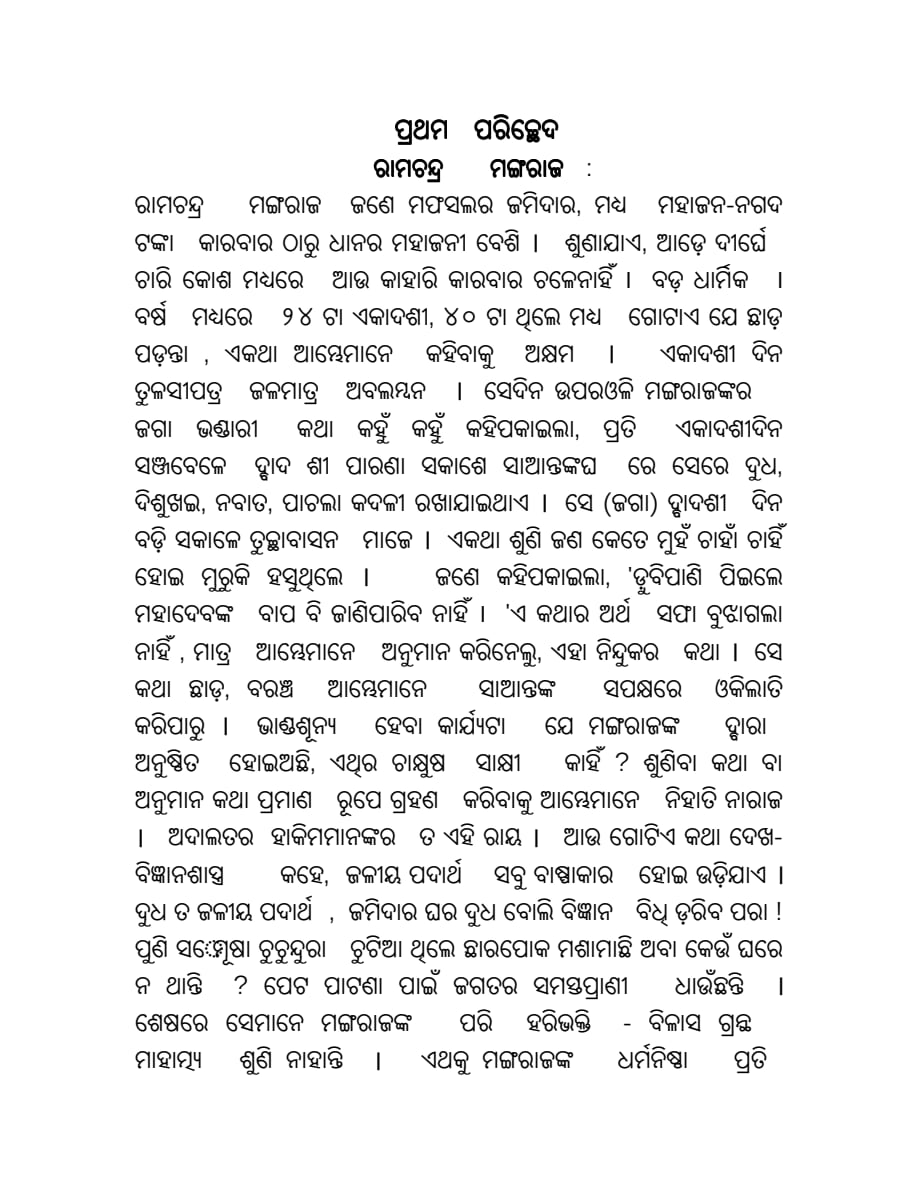
The novel at the centre of Parbati’s adaptation concerns Mangaraj, a moneylender who exploits the colonial legal order to acquire other people’s property. Among those he ruins are the weaver couple Bhagia and Saria. Peter Samuels explains how the story turns the workings of law and rural power into satire.4
The weavers’ place in this literary world gives a reader a starting point for the adaptation: whose speech, livelihood and loss must find a form on screen?
When a novel becomes a film
In the adaptation, Parbati played Saria, Bijay Mohanty played Bhagia and Sarat Pujari played Mangaraj. The archive names Ashok Swain for camera, Tapas Mukherjee for editing and Prafulla Kar for music.1
Parbati’s Saria belongs to that ensemble: a weaver from the novel given a voice and presence alongside Bhagia and Mangaraj.
Beyond the feature film
The archive also follows Parbati through television, radio drama, literacy work and films for public institutions. Its biography credits her with Salabeg for Films Division. It also identifies Pratibha as a television adaptation of Harekrushna Mahtab’s novel. These extend the literary connection beyond her better-known Fakir Mohan adaptation.2
Television and public programmes were also part of her working life. The archive records her death on 12 February 2018.2
The work within the recognition
The archive records national recognition for Laxmi, Kaa and Stree as film honours.5
Shrabani’s screenplay and Parbati’s Saria bring us back to the same woman: writing the adaptation and taking her place among its performers.
Watch and explore
- Film information: ଛ’ ମାଣ ଆଠ ଗୁଣ୍ଠ (Chha Mana Atha Guntha). Gour–Parbati archive: credits and production context, not a player.
- Film information: ଲକ୍ଷ୍ମୀ (Laxmi). Gour–Parbati archive.
- Film information: କା (Kaa). Gour–Parbati archive.
- Film information: ସ୍ତ୍ରୀ (Stree). Gour–Parbati archive.
- Song clip: ସ୍ତ୍ରୀ (Stree) - Kali Juga. GPG Productions, the channel linked by the Gour–Parbati archive; a song excerpt, not the full film.
Footnotes & Sources
-
Gour–Parbati archive, Chha Mana Atha Guntha (1986), production, screenplay, cast and technical credits. ↩ ↩2 ↩3
-
Gour–Parbati archive, Parbati Ghose, retrospective biography. ↩ ↩2 ↩3
-
Gour–Parbati archive, Filmography, entries for Laxmi, Kaa and Stree. ↩
-
Peter Samuels, “Teaching about the Colonial India State and Society with Six Acres and a Third”, Education About Asia, 10 June 2020. Novel commentary. ↩
Credit: Photographer unrecorded / OdishaPlus. Source. Online preview cropped. ↩
Parbati Ghose on India Post’s 2023 commemorative stamp. India Post, Government of India, via Wikimedia Commons, Government Open Data License–India. ↩
Gour and Parbati Ghose, from the archive’s Maa gallery. Photo: via Gour–Parbati archive, Maa gallery. ↩
Opening chapter of Fakir Mohan Senapati’s Chha Mana Atha Guntha, from the digitised text. Digitisation: Srujanika and NIT Rourkela; Wikimedia Commons, CC0. Full page rendered from PDF page 4. ↩

Further reading
Suggest an update: share a source, film credit or precise correction. GitHub submissions are public; omit private contact details and consent documents.