
Odia cinemaFilms and Filmmakers
Gour Prasad Ghose: from the stage to making films
In this article
Meet an actor who became a producer, connecting theatre, literary voices and the practical work of making films.
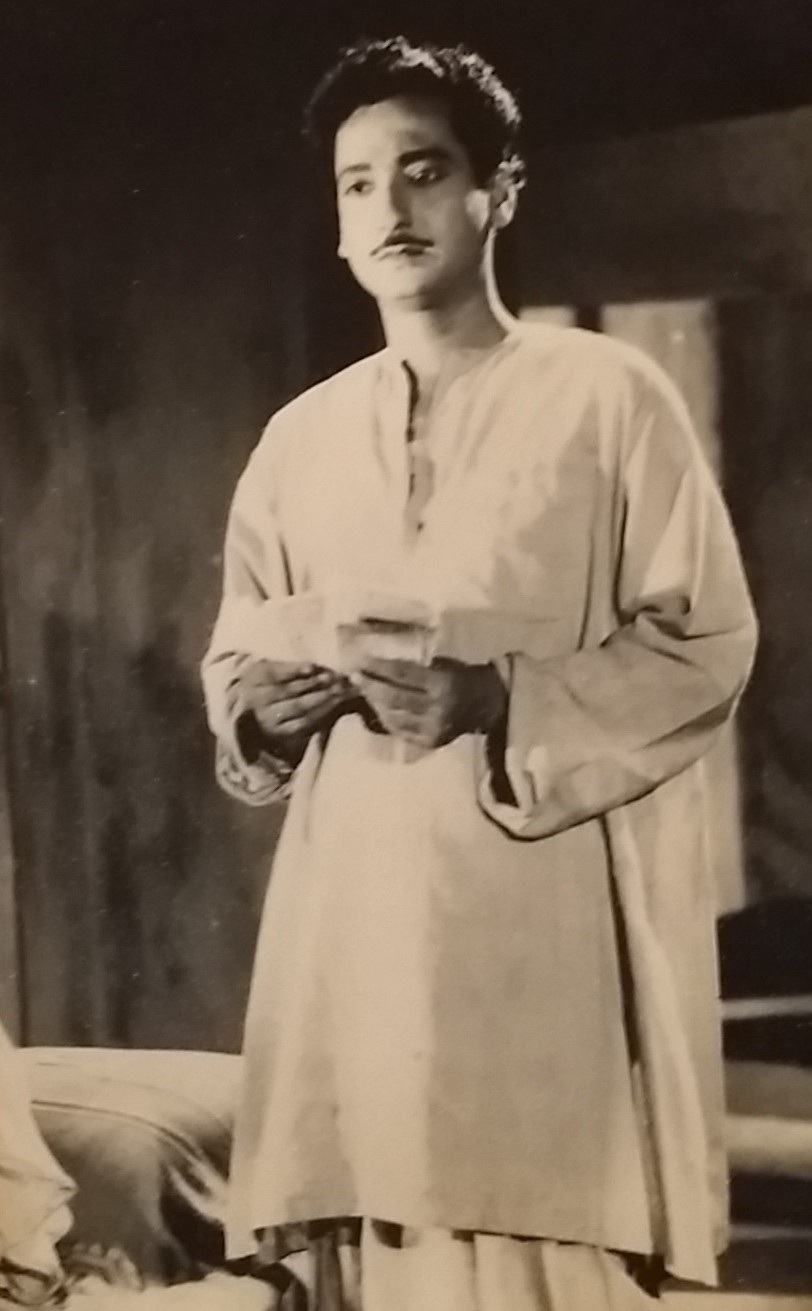
A film version of Bhata was planned, but never made. Among the people involved were Gour Prasad Ghose, Nitai Palit and Gobinda Tej; they went on to form the United Artists theatre group.1 An unfinished film had brought future collaborators together.
Gour Prasad Ghose (1929–1994) would work as actor, producer and director, later extending his work into television.1
The stage before the screen
The Gour–Parbati archive traces his early acting to Ravenshaw College in Cuttack and to theatre under the name Rai Gour. It recalls his participation in Manoranjan Das’s August Na and Kalicharan Patnaik’s Bhata.1
The film remained unmade; the theatre group continued the association. In Gour’s early career, the people gathered around a story could matter beyond the fate of that one production.
Bhai Bhai and the work of a producer
The archive identifies ଭାଇ ଭାଇ (Bhai Bhai, 1956) as Gour’s first production, under Chitram. Its subject concerned caste and untouchability. The credits name Santanu Kumar Das for the story, Nitai Palit for screenplay and direction, and Manoj Das for dialogue. Bhubaneswar Mishra and Balakrushna Das, credited as Bhuban-Kissen, provided the music.2
Gour and Chapala, later known as Parbati Ghose, appeared in the cast alongside performers drawn from the stage and radio. The archive also remembers assistance from Odisha’s Information and Public Relations Department and the government of Nabakrushna Choudhury.2
Maa and a wider creative circle
For ମାଆ (Maa, 1959), the credits again name Gour as producer and Nitai Palit for screenplay and direction. Gopal Chhotray and Biswajit Das supplied dialogue; Bhubaneswar Misra composed the music. Playback credits include Akshay Mohanty, Pranab Patnaik and Ila Chakraborty, while Kelucharan Mahapatra is credited for dance.3
Drama, radio, music and dance met in this production. The AIR Cuttack article follows the writers and performers who also worked around the microphone.
Gour and Parbati as collaborators
The archive’s filmography records Gour and Parbati across productions including ଲକ୍ଷ୍ମୀ (Laxmi), କା (Kaa) and ସ୍ତ୍ରୀ (Stree). For the latter two, it identifies the directing name Siddharth with Ram Chandra Thakur, Gour and Parbati.4
Parbati’s own profile follows her producing, writing, directing and performance work, including ଛ’ ମାଣ ଆଠ ଗୁଣ୍ଠ (Chha Mana Atha Guntha). Their partnership continued across these changing responsibilities.
Another audience through television
The memorial biography records Odia telefilms Samadhan and Hawker and later Hindi television work: Prashna, Sopan and Yashodhara. It associates these with dowry, labour exploitation and drug abuse respectively.1 The subjects gave his later television work a continuing interest in social relationships.
The archive records Gour’s death on 9 December 1994.1 His work remains connected to a practical question for cinema’s future: how can a production make room for other people’s abilities, and leave behind more than a single release?
Explore the archive
The Gour–Parbati archive offers individual biographies, film credits and photographs. Its Bhai Bhai page reports that the film could not be located when that account was written. That is an archival search status, not proof that no print survives anywhere. Photographs and their credits offer another way to explore the careers recorded there.
A trace still worth following.
Footnotes & Sources
-
Gour–Parbati archive, Gour Prasad Ghose, retrospective biography. ↩ ↩2 ↩3 ↩4 ↩5
-
Gour–Parbati archive, Bhai Bhai, credits and production recollections. Government assistance described retrospectively; amount unspecified. ↩ ↩2
-
Gour–Parbati archive, Maa, production, dialogue, music, playback and dance credits. ↩
-
Gour–Parbati archive, Filmography. ↩
Further reading
Suggest an update: share a credit, publication record or precise correction. GitHub submissions are public; omit private contact details and consent documents.