
Odia cinemaA Shared Storytelling World
Kalindi Charan Panigrahi: A Writer Among People
In this article
A literary circle, a varied writing life and the journeys of Matira Manisha through translation and cinema.
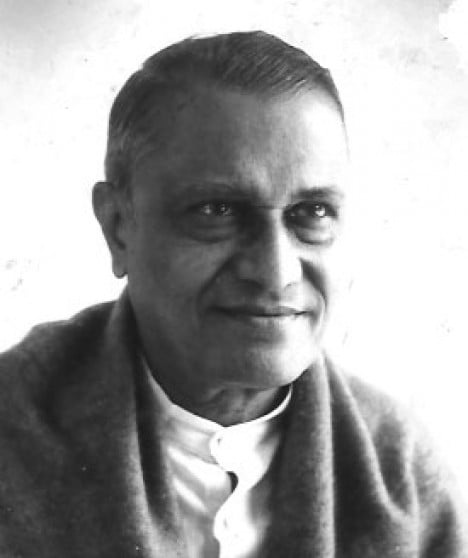
Two brothers inherit land, but they do not see their inheritance in the same way. Their family lies at the centre of Kalindi Charan Panigrahi’s ମାଟିର ମଣିଷ (Matira Manisha).1 Land can be measured and divided. What people owe one another is harder to settle.
For someone arriving through Odia cinema, the title may first suggest Mrinal Sen’s film. It also belongs to a much larger writing life. Panigrahi wrote poetry, stories, novels, drama, essays and accounts of lives. Following him back from the screen brings us to books and to the company of other writers.
A magazine made among friends
In his retrospective account of Panigrahi, Subash Nayak traces a circle of Ravenshaw students associated with the Nonsense Club and the Sabuja writers. A handwritten magazine, Abakash, later became Shakti Sadhana. Among the writers he names are Panigrahi, Annada Shankar Ray, Baikunthanath Pattnaik, Sarat Chandra Mukherjee and Harihar Mohapatra.2
A handwritten magazine makes this literary circle feel close: friends gathering work and putting it before one another. The shared page preceded the place these names would occupy in literary history.
Penguin describes the Sabuja movement through its Romanticism and inspiration from Tagore.1 That description offers a starting point for exploring the circle. The individual poems and stories still invite their own encounters: a reader can follow a writer’s name from the movement into a particular work, and discover what holds their attention there.
More than one kind of book
Alongside Matira Manisha, Panigrahi wrote the novels Luhara Manisha, Ajira Manisha, Amarachita and Muktagadara Kshudha. His work also includes the play Padmini, the essays Sahitya Samachara and Sahityika, biographies of Madhusudan Rao and Gauri Shankar.3
In his autobiography ଅଙ୍ଗେ ଯାହା ନିଭାଇଛି (Ange Jaha Nivaichhi), Kalindi recalls Balakrushna Kar inviting him to write a novel for Saraswat Press within two months. He wrote Matira Manisha in that period, drawing on village life. Elsewhere, he recognises his mother in its principal elderly woman.
His writing life also included earning through textbooks, publicity and insurance work. Radio later offered something he valued as an author: contact with a wider range of listeners.4
Panigrahi lived from 1901 to 1991. The Sahitya Akademi elected him a Fellow in 1971.5 The distinction belongs to the literary career as a whole, beyond the film through which some viewers may know him.
A novel reaches the stage and another language
Before the film, the brothers had already reached the stage. Panigrahi recalled several stage versions of Matira Manisha, including Pranabandhu Kar’s version, performed by the National Music Association in Cuttack in early 1955.6 The novelist’s account gives the adapting writer and the performing group their place in the story’s journey.
The Sahitya Akademi’s Assamese catalogue records Matir Manuh, translated by Satyendranath Sarma from Matira Manisha. It dates the first Assamese edition to 1962 and lists a 2015 reprint.7 Here is another route through the work, with a translator’s name attached to the passage between languages.
The dates make a useful pause in a cinema-centred journey: this Assamese edition preceded Sen’s 1966 film. The novel was already entering another language. Translation and adaptation offer different encounters with a story, each shaped by the people making the new work.
The story and the screenplay
Sen’s filmography identifies ମାଟିର ମଣିଷ (Matira Manisha) as his 1966 Odia film. It credits Panigrahi with the story, Sen with screenplay and direction, and Chayabani as producer. Its synopsis describes the brothers’ different attitudes towards inherited land and the pressures of the agrarian economy.8
In a 1967 interview, Sen explained that he wrote the script and dialogue in Bengali; a translator rendered them into Odia. During shooting, actors and local villagers working as extras made changes.9 The passage from page to screen continued among the people speaking its words.
For a reader who can reach both book and film, the family offers a manageable point of comparison. Follow one disagreement: what does the prose let you know, and what does the screen ask you to notice? The question leaves room for each work to make its own impression.
Begin with a book
An Odia reader can look for Black Eagle Books’ 2022 edition of Matira Manisha.3 In English, Penguin’s Salt of the Earth appeared in May 2022, translated by K. K. Mohapatra, Leelawati Mohapatra and Paul St-Pierre.1 Niyogi Books offers Born of the Soil, translated by Bikram Das.10 For a wider introduction to the writer, the Sahitya Akademi lists Madhusudan Pati’s monograph Kalindi Charan Panigrahi, first published in 2001.11
The brothers remain a place to begin. Land can pass from one generation to another; so can a story about what it means to share it. Through Odia, Assamese, English and cinema, different readers and viewers can enter that unsettled household.
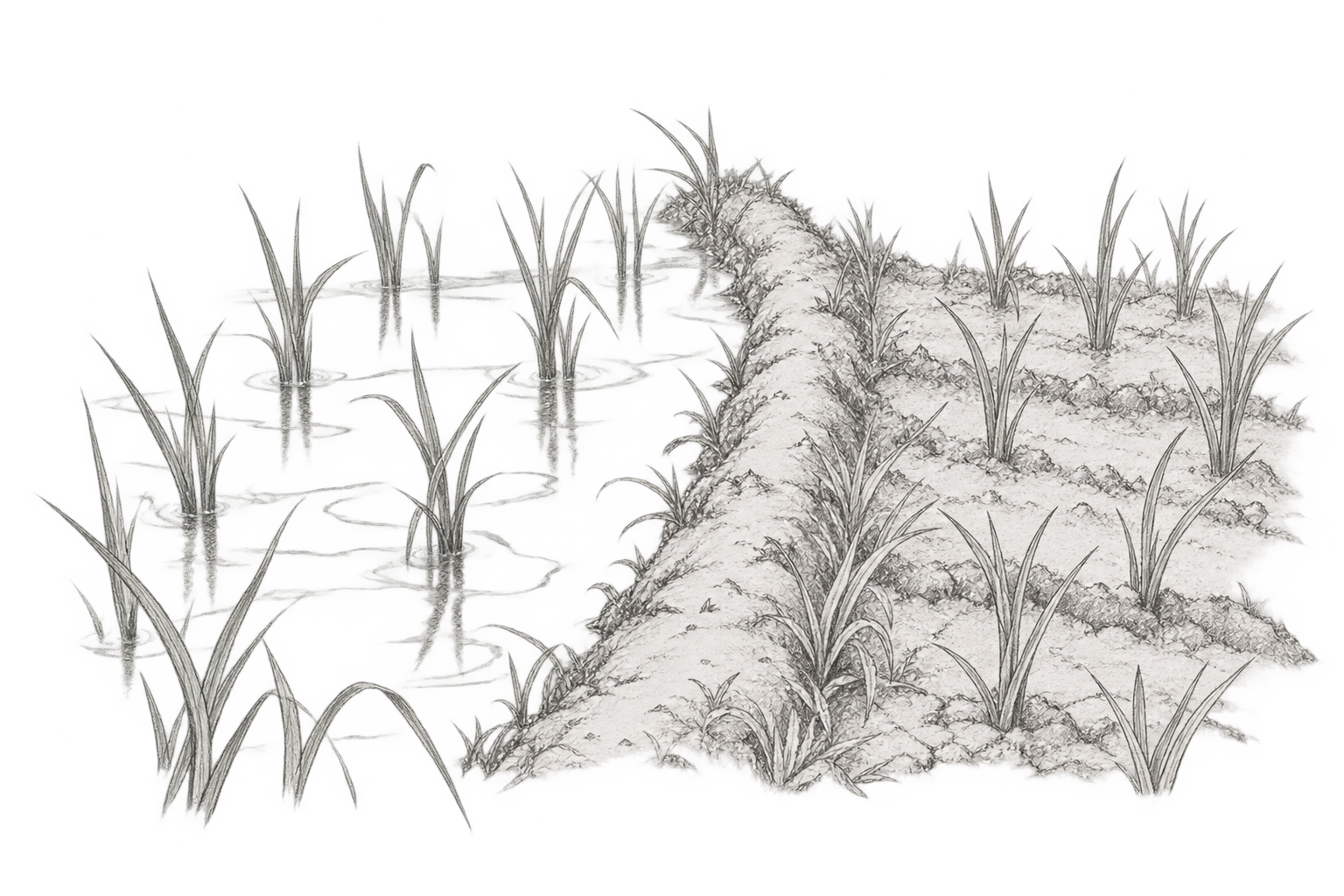
A boundary within shared land.
Footnotes & Sources
-
Salt of the Earth, Penguin India, May 2022 edition; Penguin Press April–June 2022 catalogue, p. 14, credits the translators. ↩ ↩2 ↩3
-
Subash Nayak, “Kalandi Charan Panigrahi: A Story Teller of Eminence,” Odisha Review, August–September 2013. ↩
-
Matira Manisha, Black Eagle Books, 2022 edition and author bibliography. ↩ ↩2
-
Kalindi Charan Panigrahi, Ange Jaha Nivaichhi, second edition (Cuttack Students Store, 2006), pp. 276–277, 337–338, 364, 367–368; Odia Bibhaba/Srujanika scan. ↩
-
Sahitya Akademi Fellows, 1971 list. ↩
-
Kalindi Charan Panigrahi, “The Growth of Oriya Drama and Theatre,” Sangeet Natak XXXVIII, no. 2 (2004), pp. 96–97. ↩
-
Sahitya Akademi Assamese catalogue, PDF p. 5; Matir Manuh, translated by Satyendranath Sarma. ↩
-
Matira Manisha, Mrinal Sen filmography, 1966 credits and synopsis. ↩
-
Mrinal Sen, “Xth Muse” interview (1967), reprinted in Views on Cinema (Ishan, 1977), p. 82. ↩
-
Born of the Soil, Niyogi Books, translated by Bikram Das, ISBN 9789385285585. ↩
-
Sahitya Akademi English catalogue, Madhusudan Pati, Kalindi Charan Panigrahi, 2001, ISBN 8126013281. ↩
Further reading
Suggest an update: share an edition, a recorded literary connection or a precise correction. GitHub submissions are public; omit private contact details and consent documents.