
Odia cinemaFilms and Filmmakers
Learning Cinema Together
In this article
Follow the working relationships through which people find a place in cinema, practise a craft and help someone else begin.
Sisir Mishra remembered three bicycles. In a 2018 interview, he recalled screenplay and dialogue discussions at his home in Jhanjiri Mangala. Two assistants, Srikant Choudhury and Jyoti Nayak, introduced a theatre actor, Hara Patnaik. He remembered the three arriving by bicycle.1
It is a small detail to carry through a filmmaking life. An introduction, a place to meet and some work to discuss give this memory its shape. Before we reach a finished film, there are people finding their way into a conversation.
An introduction that travels
Himanshu “Chandi” Parija remembered another introduction. His account begins with Annapurna Theatre’s Group B and Samuel Sahu, with whom he worked between 1979 and 1985. He said Hara Patnaik introduced him to Sisir Mishra for assistant work on ଏଇ ଆମ ସଂସାର (Ae Ama Sansara) in 1985.2
Read beside Sisir’s memory, Chandi’s recollection makes Hara a connecting person: first introduced, later introducing someone else. Theatre experience entered film production through these personal introductions.
Letters could keep a connection alive across a change of work. In his memoir, Sarat Chandra Pujari recalls Dhira Biswal keeping him in touch with cinema by letter after he moved into teaching. Pujari promised to help, provided his job did not suffer. For ସାଧନା (Sadhana), he credits Biswal with bringing performers from Cuttack and later handling distribution in coastal Odisha.3
Working through a story
Sisir also recalled receiving payment for story discussions without receiving screen credit.1 His memory separates two things that can easily become blurred when we look only at a film’s titles: being paid for a contribution and being publicly named for it.
Chandi’s account includes help closer to home. He recalled Sadhana Parija, his wife, helping him develop the story of ସୁନା ହରିଣୀ (Suna Harini).2 He remembered her help with the story; this was an acknowledgement in his interview, not a formal screenplay credit.
The writer’s craft has its own learning history. Bijay Mishra recalled being taught screenplay writing by Shyamal Mukherjee during ଯାଯାବର (Jajabara).4 The literature and cinema reading follows that passage between forms more closely. Writing for cinema was something an experienced writer could still learn.
Someone willing to look again
In recollections of Manmohan Mahapatra, actor Jayaswami described developing through his guidance and his attention to keeping performers within their characters. Susant Mani remembered him examining learners’ rushes and offering guidance.5
Mahapatra’s profile gathers other collaborators’ memories. Nirad Mohapatra’s profile opens a related path through teaching and watching films together. Read alongside the assistant introductions, these lives widen the settings in which learning can happen.
Learning with the ear
Lipika Singh Darai’s biography traces her interest in Audiography at FTII to her earlier music training. She specialised in sound recording and design. She also volunteers with Film Society Bhubaneswar and is a mentor for Docustan India, according to her biography.6
Working on Gaarud, Darai recalled capturing the changing sounds and atmosphere of a hotel room near a railway station. The soundtrack, she said, was mixed manually on 35 mm magnetic track.7 The search for Sita Bibaha follows another part of her work, where recordings and remembered voices help approach a film that cannot simply be watched today.
Working with light
Cinematographer Rudrakanta Singh recalled shooting a short film in Koraput with a Canon 600D, a single lens and bounce boards to redirect light.8 In a 2024 profile, he said he was reading Kalpana Kumari Devi’s Achinha Basabhumi.9
Make room for the next conversation
A conversation about a scene or a rough edit can help a maker continue. There should be room to respond, disagree and try again. Where that work becomes part of a production, responsibilities, payment and credit deserve their own clear agreement.
The road ahead considers paid development and mentoring more fully. The bicycles in Sisir’s recollection leave us with a simpler beginning: people arriving, an introduction made, work waiting to be discussed.
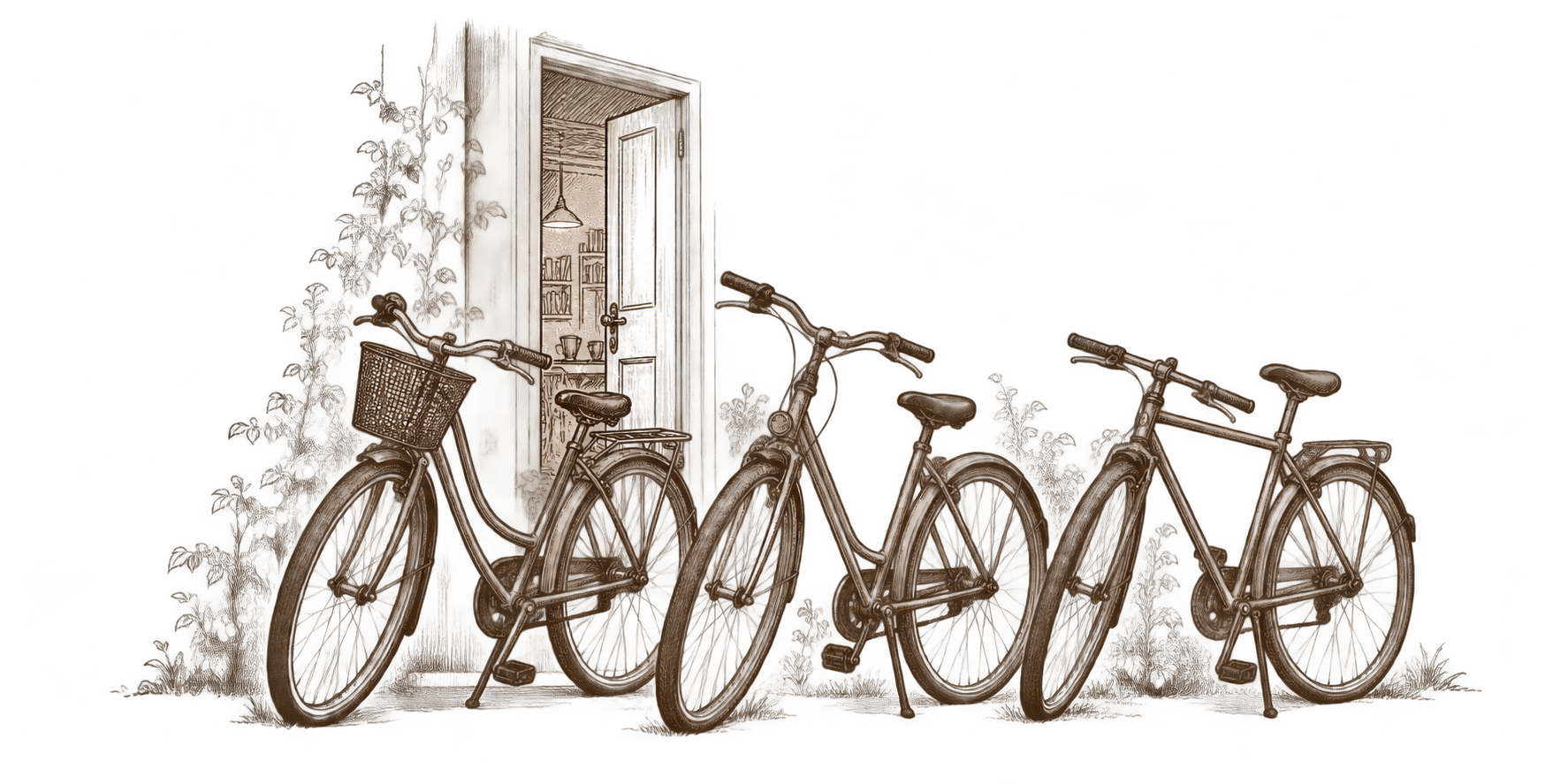
Arriving for a conversation.
Footnotes & Sources
-
Jyoti Prakash Sahoo, interview with Sisir Mishra, My City Links, 9 September 2018. ↩ ↩2
-
Jyoti Prakash Sahoo, interview with Chandi Parija, My City Links, 9 December 2018. ↩ ↩2
-
Sarat Chandra Pujari, Nijaswa Chitranatya: Smrutipatha, pp. 211–212. ↩
-
“I celebrate failures too,” interview with Bijay Mishra, OrissaPOST, 24 December 2019. ↩
-
Bijay Mandal, “Exit of a cinematic giant”, OrissaPOST, 28 January 2020; Jayaswami’s and Susant Mani’s recollections. ↩
-
Lipika Singh Darai’s biography, filmmaker’s biography. ↩
-
“Living a dream, frame by frame,” The New Indian Express, 2 June 2013. ↩
-
Ankur Rath, “The Silent Revolution Behind the Scenes,” My City Links, 26 August 2025. ↩
-
Madhusmita Sahu, profile of Rudrakanta Singh, SundayPOST, 28 April–4 May 2024, p. 2. ↩
Further reading
Suggest an update: share a recorded working experience, a credit or a precise correction. GitHub submissions are public; omit private contact details and consent documents.