
Odia cinemaA Shared Storytelling World
Basanta Kumari Patnaik: Writing, Publishing and the Screen
In this article
A novelist’s stories and publishing partnership connect the work of writing with the search for readers.
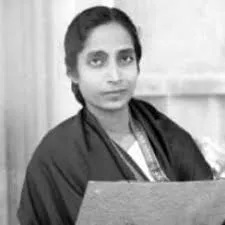
In Basanta Kumari Patnaik’s story Velvet Mites, Nanda has sold her house to pay for two years of study abroad. Around her, the prospect of leaving takes a tender, ordinary form: Dheera’s mother worries about her meals and presses more food on her. Rohan Kar’s English translation lets ambition and affection share the scene.1
A wish to leave can sit beside the comfort of being cared for. That closeness is a way into Basanta’s fiction: a large decision taking shape among small gestures. Her work belongs in a cinema reading journey through ଅମଡ଼ା ବାଟ (Amada Bata), but the screen offers only one entrance. There are other stories, other characters and the practical work she undertook to bring books into circulation.
The life within ordinary words
Jatindra K. Nayak, who translated In Bondage, draws attention to Basanta’s irony, understatement and domestic settings. He describes the difficulty of carrying her idiomatic Odia into English.2 His account invites a reader to notice how much can depend on the shape of an expression.
In the passage from In Bondage reproduced with Nayak’s commentary, the narrator describes household work filling day and night. Even free time becomes knitting, leaving a pile of pullovers she wonders what to do with.2 Here, domestic life closes around a woman’s time.
His translation appears in Spark of Light (2016), edited by Valerie Henitiuk and Supriya Kar.3 The anthology offers a route into her short fiction in English.
Making books as well as writing them
Basanta earned an MA in economics at Ravenshaw College, Cuttack. With her brother she established Shanti Nibas Bani Mandira, a publishing firm that operated from 1959 to 1962. Her novels include Amada Bata, Chorabali and Alibha Chita.3
She knew the work on both sides of a manuscript: writing it and helping it reach a reader. That publishing partnership belongs beside the novels when we remember her contribution.
A novel meets the stage and screen
The printed play names Basanta’s novel on its title page, and Gopal Chhotray dedicates the adaptation to her. In his preface, Chhotray recalls a half-hour version broadcast by Cuttack radio in May 1954; encouragement led him to develop the stage play. He thanks its director, Samuel Sahu, and the actors. Basanta’s response appears a few pages later. Having watched Annapurna’s B group perform her story, she expresses her pleasure and praises both the dramatist and the performers. The novelist enters this record as a member of the audience, seeing her written world take shape in other people’s voices.4
Black Eagle Books identifies Amada Bata with the 1964 film starring Jharana Das.5 The film database credits Basanta’s story, Gopal Chhotray’s screenplay, Amar Ganguly’s direction and Babulal Doshi’s production.6
The literature-and-cinema chapter follows a later publishing connection through Manas Ranjan Mahapatra’s recollection. Here, that path leads back to the woman who wrote the novel and had herself worked in publishing. Her place in the story extends beyond the moment an adaptation reached the screen.
Finding the writer again
Odisha’s official award table records Basanta Kumari Patnaik’s Atibadi Jagannath Das award for 2001.7 The recognition sits beside something readers can still do: seek out a work and spend time with its language.
The film may bring us to her name. Her fiction asks us to stay: with Nanda preparing to leave, or with a woman whose apparently free hours fill with knitting. The lives on these pages have more to tell us than any single adaptation could hold.
Read her work
- In Bondage in the publisher’s Spark of Light PDF — translated by Jatindra K. Nayak; printed p. 23.
- Velvet Mites in Usawa — translated by Rohan Kar.

A life within the stitches.
Footnotes & Sources
-
“Velvet Mites,” translated by Rohan Kar, Usawa, 15 June 2024. ↩
-
Jatindra K. Nayak’s translator commentary, AU Press, 10 January 2017. ↩ ↩2
-
Spark of Light, AU Press, 2016: translation credit, printed p. 23; author note, printed p. 235. ↩ ↩2
-
Gopal Chhotray, Amadabata: title, dedication, preface and Basanta’s appreciation; Bibhaba/Srujanika scan, PDF pp. 2, 4, 6, 8. ↩
-
Atibadi Jagannath Das Awards, Odisha Annual Reference, 2009, p. 102. ↩
Further reading
The translator beside the story
Suggest an update: share an edition, publication record or precise correction. GitHub submissions are public; omit private contact details and consent documents.