
Odia cinemaSongs and Voices
Akshaya Mohanty: Khoka Bhai and the art of singing to people
In this article
Songs, words and shared voices connect Akshaya Mohanty’s cinema work with the affectionate familiarity of Khoka Bhai.
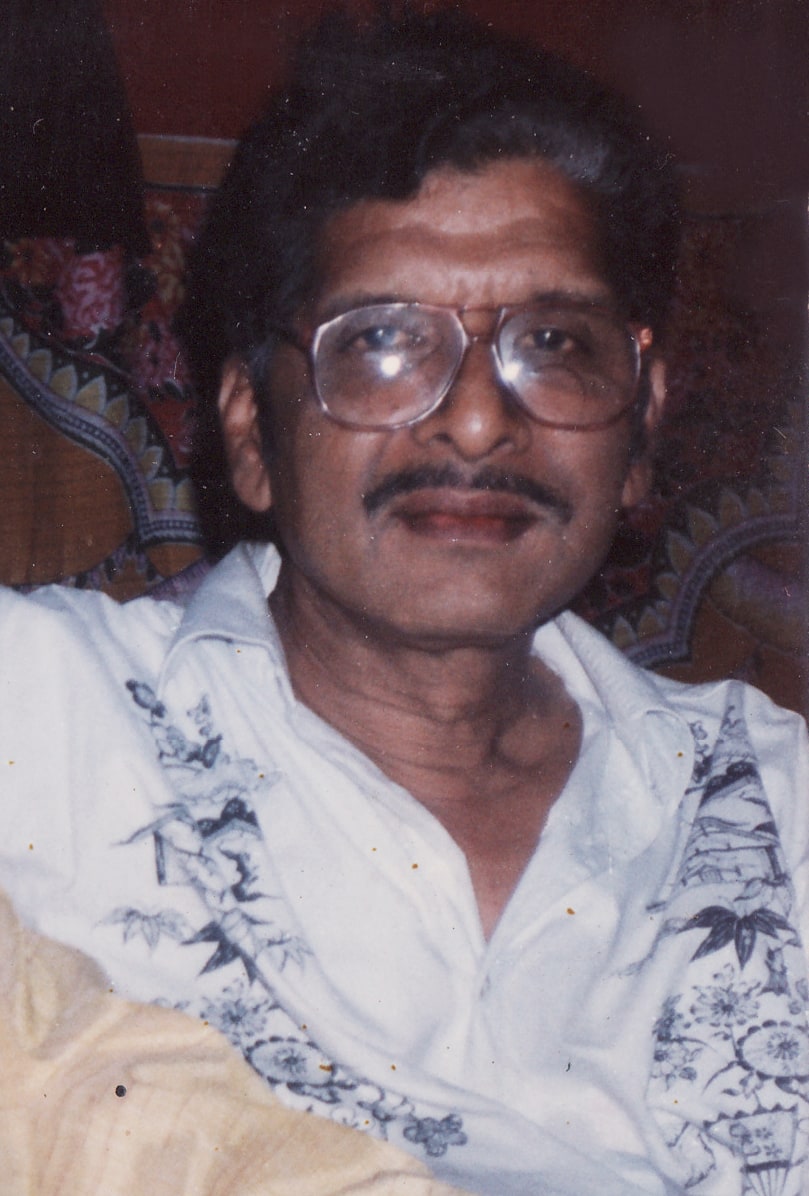
“Khoka Bhai” is a name with room for affection: Akshaya Mohanty remembered with the familiarity of a brother.1 It offers a way into his work, through the kinds of company a song can invite—a teasing answer, a shared refrain, words that leave space for another voice.
His songs also lead to writers, fellow singers and a historian he encouraged to search old newspapers. Their recollections bring the musician into company.
The pleasure of an answer
One useful way to approach his rasika pana is through the pleasure of exchange: affection, teasing, a question and a quick reply. Flirtation can be part of that world without explaining all of it. Humour also depends on timing and on allowing the other person an answer.
In a public caption headed “ଲୋକସ୍ୱର ଛାଞ୍ଚ”, film historian Surya Deo discusses a duet by Akshaya Mohanty and Trupti Das, with lyrics by Sirshananda Das Kanungo. Deo draws attention to a folk-shaped pattern of question, answer and retort, and to a simple, expressive delivery.2 His account directs attention to something shared: the lyric creates an exchange, and two singers carry it.
From a voice in a film to making its music
Mohanty entered cinema as a playback singer in ମାଆ (Maa) in the late 1950s, under composer Bhubaneswar Mishra, alongside fellow playback singers Pranab Patnaik and Ila Chakraborty.3 By ମଲାଜହ୍ନ (Malajanha, 1965), he was its music director.4 A voice heard within a film was now helping shape its musical world.
A later return screening of Malajanha brought some of that company together again. A 2011 report identifies Mohanty as producer, music director and singer. Pranab Patnaik recalled hearing songs he had sung; actress Jharana Das attended, and Binodini Debi was honoured as a lyricist.4 Her words belong in the account beside the voices. A film’s music is made through such contributions, even when one name becomes its most familiar point of entry.
More than one voice in Jajabara
The song catalogue for ଯାଯାବର (Jajabara, 1975) gives another small map of collaboration. Saregama credits Mohanty as composer and lists Pranab Kishore Patnaik singing Hai Se Harini Akhi, Geeta Patnaik with Mohanty in Danei Das Kahere Bhai, and Trupti Das with him in Gadi Chale Pachhei.5
Words worth keeping beside the music
Lyricist Devdas Chhotray remembers Mohanty’s pleasure in words, wit and repartee. He also recalls a book of Ghalib beside Mohanty’s bed—and buying his own copy at Cuttack railway station.6 That small journey from one reader’s bedside to another reader’s hands belongs beside the story of their songs.
Mohanty also wrote beyond the immediate demands of a film. Shyamanuja Das’s study discusses collections including Ei Katha Rahila (1962), Geeti (1968) and Madhushala (2001), the last edited by Renubala Mishra. Das describes the four pieces on the 1984 album Kalankita Nayaka as written, composed and sung by Mohanty.7 The singing and the writing were both part of his work.
A musician who sent a historian to the newspapers
Surya Deo recalls Mohanty encouraging him to search old newspapers for information about Odia films.8 The suggestion gave his curiosity somewhere concrete to go.
The advice has a practical generosity. A newspaper may preserve something that memory alone cannot settle: a credit, an announcement, a response from the time. The Surya Deo profile follows that wider work of collecting and sharing. Remembering a musician can include following the paths he encouraged others to explore.
Let the next listener find the song
A 2016 Prasar Bharati archive announcement described Punyara Nadi Tire: thirty-five Akashvani Cuttack recordings of Mohanty spanning four decades.9 His preserved work therefore reaches beyond film soundtracks into broadcasting, another setting in which a voice could meet its listeners.
A recording kept within reach can still bring people together: a listener returning to a familiar voice, or a musician discovering words to carry into a new performance. Trupti, Geeta, Pranab and Binodini belong beside Mohanty in that continuing company.
Essential Khoka Bhai listening
Spend some time with Khoka Bhai’s songs in this official Saregama collection.
Open the collection on YouTube.
A song kept within reach.
Footnotes & Sources
-
Akshaya Samman for Pt. Chaurasia, The New Indian Express, 13 October 2009. ↩
-
Surya Deo, “ଲୋକସ୍ୱର ଛାଞ୍ଚ”, public Facebook caption. ↩
-
Maa film credits, Gour–Parbati archive. ↩
-
Malajanha comes alive again, The New Indian Express, 6 May 2011. ↩ ↩2
-
Saregama’s Odia song catalogue, Jajabara song credits. ↩
-
Shyamanuja Das, In Conversation with Odia Lyricist Devdas Chhotray, September 2018. Participant recollections. ↩
-
Shyamanuja Das, Akshaya Mohanty: The Odia Ghazal Writer. ↩
-
Bijay Mandal, interview with Surya Deo, OrissaPOST, 28 July 2022, p.2. ↩
-
Prasar Bharati archive announcement, Akashvani Samvaad, 27 December 2016. ↩
Credit: Krupasindhu Muduli. Source · CC BY-SA 3.0. Resized for display. Display crop. ↩

Further reading
Suggest an update: share a recording credit, publication record or precise correction. GitHub submissions are public; omit private contact details and consent documents.