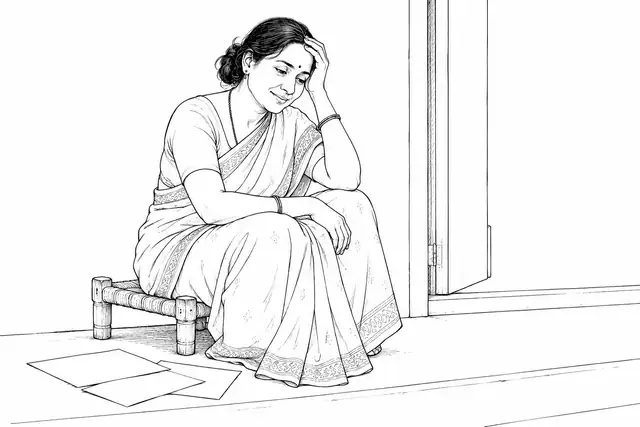
DHAGA 30 · idiomatic saying
Who is there to tell?
କାହାକୁ କହିବା, କପାଳରେ ସିନା କର ମାରିବା
କଥା ଶୁଣିବାକୁ କେହି ନାହାନ୍ତି ବୋଲି ବକ୍ତାଙ୍କୁ ଲାଗୁଛି; ବିରକ୍ତିରେ ନିଜ ମୁଣ୍ଡକୁ ହାତ ଯାଉଛି। ଅଭିଯୋଗ କରିବାର ଠିକଣା ନମିଳିବାର ଅସହାୟତାକୁ ଏହି ଅତିଶୟୋକ୍ତି ଧରେ। ଏହା ମୁହୂର୍ତ୍ତର କ୍ଷୋଭ, ସତରେ ସାହାଯ୍ୟର ସବୁ ବାଟ ବନ୍ଦ ବୋଲି ନିଷ୍କର୍ଷ ନୁହେଁ।
Literal meaning
Whom can one tell? One can only strike a hand against one’s forehead.
What it means
This is a gesture of exasperation put into words. The speaker feels that complaining will find no useful listener, so frustration turns into a weary reaction. It may be rueful or comic; it expresses a feeling of helplessness without proving that help is unavailable.
When you might use it
After correcting the same simple mistake several times, a person says this with a tired laugh. (New editorial example, not a collected quotation.)
Cultural context
କର means hand here. The literal gesture helps convey the expression; no physical action is prescribed by the explanation.