DHAGA 207 · analogy
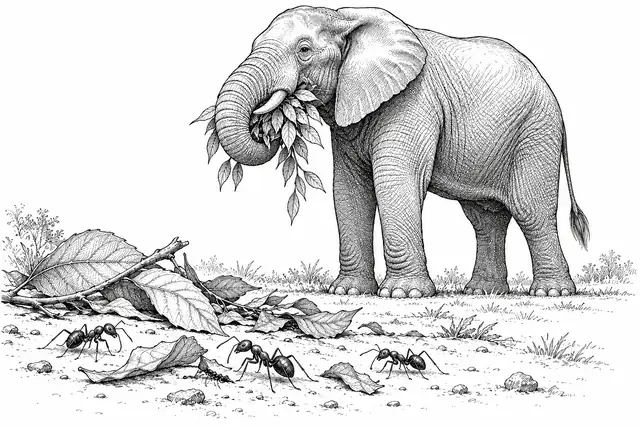
An elephant’s mouthful, an ant’s hundred years
ହାତୀ ମୁହଁରୁ କଳେ ଖସି ପଡ଼ିଲେ ପିମ୍ପୂଡ଼ିକୁ ଖାଇବାକୁ ଶହେ ବରଷ ନ୍ୟାୟ
ହାତୀ ପାଇଁ କଳେ ମାତ୍ର ଖାଦ୍ୟ, ପିମ୍ପୂଡ଼ି ପାଇଁ ଶହେ ବରଷର ଖୋରାକ—ଏହି ମାପର ତଫାତରେ କଥାଟିର ମଜା। ଅଭିଧାନର ବ୍ୟାଖ୍ୟାରେ ହାତୀ ପରି ବ୍ୟକ୍ତି ଅଳ୍ପ କିଛି ଛାଡ଼ିଗଲେ ସେଥିରେ ପିମ୍ପୂଡ଼ି ପରି ଅନେକ ଜୀବ ପୋଷିହେବାର କଥା ଅଛି। ଶହେ ବରଷ ଏଠାରେ ଅତିଶୟୋକ୍ତି। ଜଣକ ପାଇଁ ତୁଚ୍ଛ ଅବଶିଷ୍ଟ ଅନ୍ୟ ଜଣକ ପାଇଁ କେତେ ବଡ଼ ହୋଇପାରେ, ଚିତ୍ରଟି ସେହି ତଫାତ ଦେଖାଏ।
Literal meaning
If a mouthful falls from an elephant’s mouth, an ant has food for a hundred years.
What it means
The joke makes the same scrap almost nothing to one creature and an enormous provision to another. The dictionary extends the contrast to an elephant-like person leaving a small amount that can sustain many ant-like lives. The hundred years is the saying’s extravagant measure of scale, not a feeding calculation. The comparison can make an overlooked remainder suddenly look substantial.
When you might use it
A large printing shop offers its unused paper offcuts to a small drawing club. Seeing how many sketchbooks they can make, a member quotes the elephant-and-ant analogy. (Original imagined use.)
Cultural context
The dictionary explicitly interprets unequal scale through elephant-like and ant-like figures. This records a comparison, not a claim that people have unequal worth or a historical account of patronage.