
DHAGA 199 · proverbial saying
Enough at home, still eager for a bite
ଖାଇଲାଘରର ପୁଅ ରଙ୍କ!
ଘରେ ଖାଇବାର ଅଭାବ ନାହିଁ, ତଥାପି ଖାଦ୍ୟ ଦେଖି ପିଲାର ଆଗ୍ରହ ବଢ଼ିଯାଉଛି—ଏହି ଫରକରେ କଥାଟିର ଥଟ୍ଟା। ଏଠି ରଙ୍କ କହିଲେ କଞ୍ଜୁସ ନୁହେଁ, ଖାଇବା ପାଇଁ ଲାଳାୟିତ ହେବାକୁ ବୁଝାଏ। ଖାଇସାରିଥିଲେ ବି ନୂଆ ଜଳଖିଆ ଦେଖି ମନ ବଳିବା ବେଳେ ଆଦରରେ ଏହି କଥା କୁହାଯାଇପାରେ; କଟୁ ସ୍ୱରରେ କହିଲେ ସେଇ କଥା ପିଲାକୁ ଲଜ୍ଜିତ କରିପାରେ। ଏକ ମୁହୂର୍ତ୍ତର ଆଗ୍ରହ ଦେଖି ପିଲାର ସ୍ୱଭାବ କିମ୍ବା ତାକୁ ଭୋକ ଲାଗିଛି କି ନାହିଁ, ତାହାର ରାୟ ଦେବା ଏହି ଥଟ୍ଟାର କାମ ନୁହେଁ।
Literal meaning
A son from a well-fed household, yet eager for food!
What it means
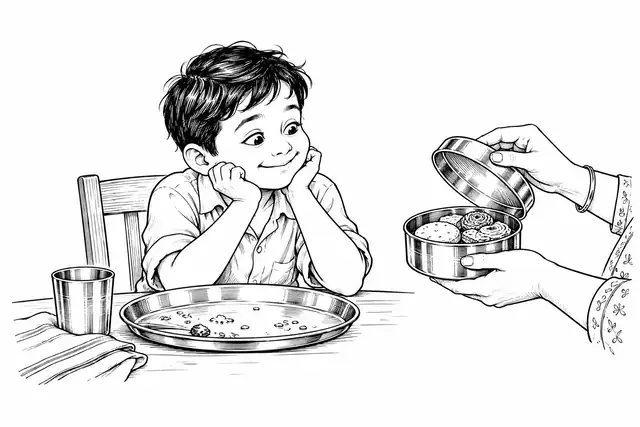
The teasing surprise lies in the mismatch: food is plentiful at home, yet the child lights up at the sight of something to eat. Here ରଙ୍କ carries eagerness for food, rather than the stinginess it carries in another saying on the same dictionary page. Spoken warmly, the line can notice the temptation of a fresh treat even after a meal; spoken sharply, it can embarrass the child. The joke is about that moment, not proof of a child’s character or whether they are hungry.
When you might use it
After lunch, a child eagerly asks what is in a newly opened snack box. An aunt smiles and says, “ଖାଇଲାଘରର ପୁଅ ରଙ୍କ!” She then asks whether the child would like a little now or later. (Original imagined example, not collected testimony.)
Cultural context
The source explicitly describes children in households where food is not lacking. The affectionate scene and discussion of tone are editorial, not observed testimony. Preserve the source’s son wording without making hunger or eagerness a gendered or innate trait. Distinct from 190’s stinginess and 191’s restricted choice.
Recorded variants
ଖାଇଲା ପିଇଲା ପୁଅ ରଙ୍କ!