DHAGA 452 · proverbial saying
The wound goes, the mark remains
ଘା ଯାଏ, ଦାଗ ଥାଏ
ଲୋକ ଯାଏ, କଥା ଥାଏ।
ଲୋକ ଯାଏ, କଥା ଥାଏ।
ଘା ଭଲ ହୋଇଗଲେ ମଧ୍ୟ ତାହାର ଦାଗ ରହେ। ସେହିପରି ଲୋକ ଚାଲିଗଲେ ମଧ୍ୟ କଥା ରହିଯାଏ। ଆମ ପଢ଼ାରେ, ଏହା ମଣିଷର ଉପସ୍ଥିତି ଶେଷ ହେଲା ପରେ ମଧ୍ୟ ତାଙ୍କ କଥା ବା ତାଙ୍କୁ ନେଇ କଥା ମନରେ ଓ ଆଲୋଚନାରେ ରହିବାର ଚିତ୍ର।
Literal meaning
The wound goes, the scar remains; people go, words remain.
What it means
Each line separates something passing from something that lasts. A scar remains after a wound has gone; words or talk remain after a person has left. The editorial reading extends the bodily image to the persistence of speech and remembrance.
When you might use it
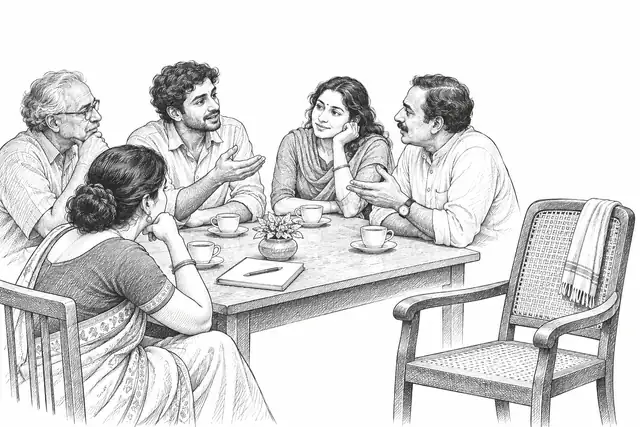
Original imagined example: Long after a visitor leaves, the people who met them keep returning to a memorable remark. Someone recalls the second line to describe how the conversation has outlasted the visit.
Cultural context
The repeated ଯାଏ and ଥାଏ give the couplet its parallel structure: departure set against persistence. ଦାଗ makes the first remainder visible; କଥା gives the second a life in memory and conversation.