DHAGA 460 · proverbial saying
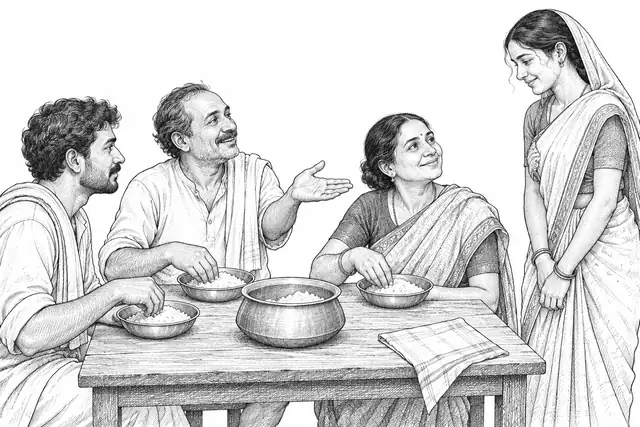
Three sharing the rice, and another to bring home
ଚାଉଳ ସେରକୁ ତିନି ପରାଣୀ
ଆହୁରି ଯାଉଚି ବୋହୁକୁ ଆଣି।
ଆହୁରି ଯାଉଚି ବୋହୁକୁ ଆଣି।
ସେରେ ଚାଉଳ ପାଇଁ ଆଗରୁ ତିନି ପରାଣୀ ଅଛନ୍ତି, ତଥାପି ବୋହୁ ଆଣିବାକୁ ଯାଉଛନ୍ତି। ଆମ ପଢ଼ାରେ, ଉପଲବ୍ଧ ସମ୍ବଳରେ ଆଉ ଜଣଙ୍କ ଦାୟିତ୍ୱ ନେବାର ପ୍ରସ୍ତୁତି ଅଛି କି ନାହିଁ, ସେହି ପ୍ରଶ୍ନ ଉଠୁଛି।
Literal meaning
Three people for a ser of rice, and still going to bring home a daughter-in-law.
What it means
The verse first counts the people sharing a given amount of rice, then adds the prospect of another household member. Read editorially, it questions taking on an added responsibility without considering the means to support it. The concern is provision and planning, not the worth of the person arriving.
When you might use it
Original imagined example: A small group already stretches its shared supplies but invites another participant without arranging more. A reader recalls the saying’s contrast between present provision and a new commitment.
Cultural context
The count of three gives the first line a concrete scale. Bringing a daughter-in-law home supplies the next change in that count. The verse leaves the identities of the three and the period covered by the rice unstated.