DHAGA 324 · dictionary-labelled saying; source-informed editorial reading
Calling the neighbors
ଗାଆଁ ମୁଣ୍ଡେ କଲି ଘର, ଧାଇଁ ପଡ଼ହୋ ସାଇ ପଡ଼ିଶା ମୋ ଘରେ ପଶିଛି ଚୋର
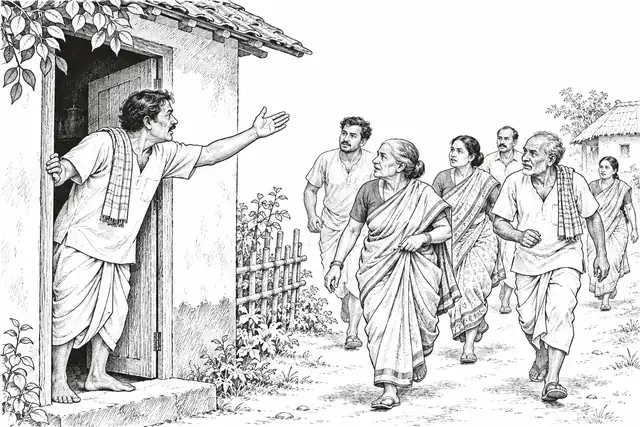
ବକ୍ତା ଗାଁ ମୁଣ୍ଡରେ ନିଜ ଘର କଥା କହି ଚୋର ପଶିଥିବା ଜଣାଇ ସାଇପଡ଼ିଶାଙ୍କୁ ଦଉଡ଼ି ଆସିବାକୁ ଡାକୁଛନ୍ତି। ନିଜ ଘରର ସଙ୍କଟରେ ପଡ଼ୋଶୀଙ୍କ ସାହାଯ୍ୟ ଲୋଡ଼ିବାର ସ୍ୱର ଏଥିରେ ଅଛି। କେହି ଆସିଲେ କି ନାହିଁ, ଧାଡ଼ିଟି କହେନାହିଁ।
Literal meaning
I built a house at the village’s edge; come running, neighbors—a thief has entered my house.
What it means
The speaker places the house at the village’s edge and calls others toward a reported intrusion. The headword explains people running to assemble. Our reading notices the turn from a house described as mine to a call addressed outward. The quotation does not say that anyone came or establish that the reported theft occurred.
When you might use it
Original imagined example: ପାଠକମାନେ ଆହ୍ୱାନର ସ୍ୱରରେ ଧାଡ଼ିଟି ପଢ଼ିଲେ। କଥାଟି କେବଳ ଡାକରେ ଶେଷ ହେଉଛି ବୋଲି ସେମାନେ ଲକ୍ଷ କଲେ। / Readers voice the alarm and notice its unresolved ending. This reading scene is invented.
Cultural context
The call reaches outward from one household to its neighbors. The verse leaves their response unstated.