DHAGA 534 · proverbial saying
Why save, whichever son he becomes?
ପୁଅ ଯଦି ଯୋଗ୍ୟ ହୁଏ
ଧନ କାହିଁ ପାଇଁ ସଞ୍ଚୁ।
ପୁଅ ଯଦି ଅଯୋଗ୍ୟ ହୁଏ
ଧନ କାହିଁ ପାଇଁ ସଞ୍ଚୁ?
ଧନ କାହିଁ ପାଇଁ ସଞ୍ଚୁ।
ପୁଅ ଯଦି ଅଯୋଗ୍ୟ ହୁଏ
ଧନ କାହିଁ ପାଇଁ ସଞ୍ଚୁ?
ପୁଅ ଯୋଗ୍ୟ ହେଲେ ବି ଧନ କାହିଁକି ସଞ୍ଚୁଛ, ଅଯୋଗ୍ୟ ହେଲେ ବି କାହିଁକି ସଞ୍ଚୁଛ—ଦୁଇ ବିପରୀତ ଅବସ୍ଥାରେ ଏକା ପ୍ରଶ୍ନ ଉଠିଛି। ଆମ ସମ୍ପାଦକୀୟ ପାଠରେ ଯୋଗ୍ୟ ପୁଅ ନିଜେ ଚଳିପାରେ, ଅଯୋଗ୍ୟ ପୁଅ ସଞ୍ଚିତ ଧନ ସମ୍ଭାଳି ନପାରେ—ଏହି ଯୁକ୍ତିରେ କେବଳ ପୁଅ ପାଇଁ ଧନ ଜମା କରିଚାଲିବାକୁ ପ୍ରଶ୍ନ କରାଯାଉଛି। ଏହି କାରଣ ଦୁଇଟି ମୂଳ ପଙ୍କ୍ତିରେ କୁହାଯାଇନାହିଁ।
Literal meaning
If the son is capable, why do you accumulate wealth? If the son is incapable, why do you accumulate wealth?
What it means
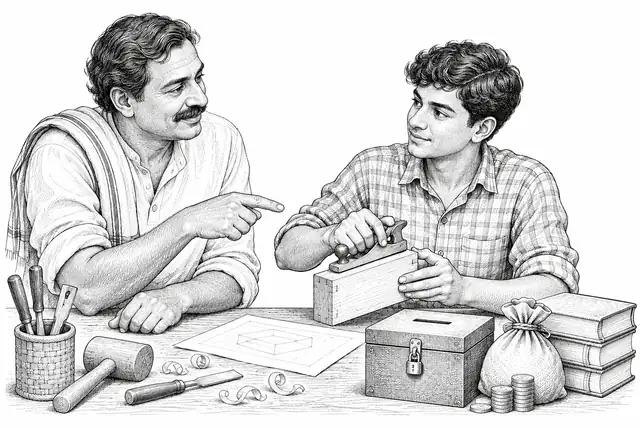
The same question follows opposite conditions: a capable son and an incapable son. Our editorial reading supplies the implied challenge: one may be able to provide for himself, while the other may fail to preserve what is left to him. The verse thus questions making accumulation for a son an unquestioned purpose; its sharp paradox does not supply a practical rule about how much a family should save.
When you might use it
Original imagined example: Someone says every decision must increase the wealth left to a son. A friend quotes the paired questions to open a conversation about helping him develop capability as well as leaving possessions.
Cultural context
Repetition is the device: only ଯୋଗ୍ୟ changes to ଅଯୋଗ୍ୟ, while the question about wealth returns unchanged. The source names a son; no wider rule about children’s abilities is established by that wording.