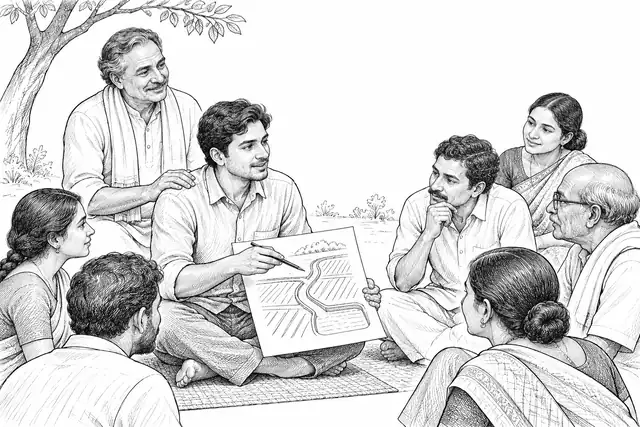
DHAGA 543 · proverbial saying
A father’s backing and a son’s intelligence
ବାପ ଥିଲା ପୁଅ ସଭାରେ ଜିଣେ
ବୁଦ୍ଧିଥିଲା ପୁଅ ପୋଷଇ ପଣେ।
ବୁଦ୍ଧିଥିଲା ପୁଅ ପୋଷଇ ପଣେ।
ବାପ ଥିବା ପୁଅ ସଭାରେ ଜିଣେ, ବୁଦ୍ଧି ଥିବା ପୁଅ ପଣେ ବା ଅଶୀ ଜଣଙ୍କୁ ପୋଷେ—ପଙ୍କ୍ତିଟି ଦୁଇ ପ୍ରକାର ସାମର୍ଥ୍ୟକୁ ପାଖାପାଖି ରଖିଛି। ଆମ ପାଠରେ ପ୍ରଥମଟି ବାପଙ୍କ ଭରସା ବା ସହାୟତା, ଦ୍ୱିତୀୟଟି ନିଜ ବୁଦ୍ଧିରେ ଅନ୍ୟଙ୍କୁ ଚଳାଇବାର କ୍ଷମତା। ବାପ ନଥିଲେ କେହି ସଫଳ ହୋଇପାରିବେ ନାହିଁ ବୋଲି ପଙ୍କ୍ତି କହୁନାହିଁ।
Literal meaning
A son who has a father prevails in the assembly; a son who has intelligence supports eighty.
What it means
The parallel puts support received beside support provided. Our editorial reading hears the father’s presence as backing in public affairs, while the son’s own intelligence enables him to sustain many others. The large number gives the second claim emphasis; neither line is a guarantee of success or a rule about who can succeed.
When you might use it
Original imagined example: A discussion distinguishes the help someone receives from family from the ability they develop to help others. A participant recalls the assembly and the eighty people supported in this couplet.
Cultural context
The repeated ଥିଲା ପୁଅ balances having a father with having intelligence. ପଣେ preserves an old counting expression for eighty, giving provision for others a deliberately large scale.