DHAGA 328 · dictionary-labelled saying; source-informed editorial reading
Praise that turns to revulsion
ଅପୂର୍ବ କାନ୍ତି, ତତେ ଦେଖି କରି ମାଡ଼ୁଛି ବାନ୍ତି
ପ୍ରଶଂସା ପରି ଶୁଣାଯାଉଥିବା କଥା ହଠାତ୍ ଘୃଣାରେ ବଦଳିଯାଏ। ଅଭିଧାନରେ ଧାଡ଼ିଟି ଶାରୀରିକ ବାନ୍ତି ନୁହେଁ, ଲକ୍ଷଣାର୍ଥରେ ଘୃଣାବୋଧ ତଳେ ଅଛି। ଆମ ପାଠ ଏଠି ଅପମାନର ସ୍ୱର ଶୁଣେ, କାହାର ରୂପର ନିର୍ଭରଯୋଗ୍ୟ ବର୍ଣ୍ଣନା ନୁହେଁ। ବକ୍ତାଙ୍କ ଘୃଣା କାହାର ମୂଲ୍ୟ ନିର୍ଣ୍ଣୟ କରେନାହିଁ। ସମ୍ପର୍କ ବା ଅବସର ଅକୁହା।
Literal meaning
Extraordinary beauty; seeing you makes me feel like vomiting.
What it means
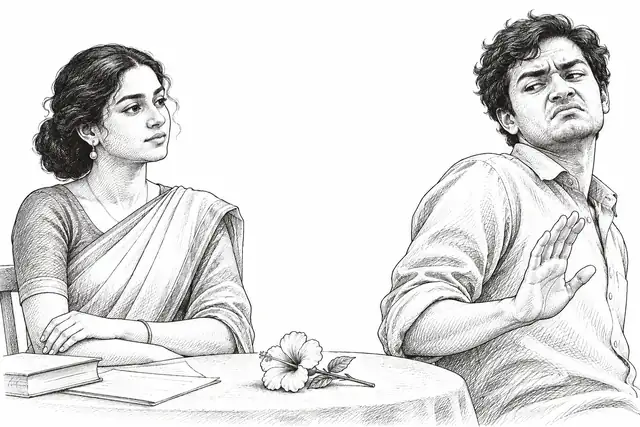
The apparent praise turns sharply into rejection. The dictionary places the saying under figurative revulsion, separate from its physical sense. Our reading hears an insulting reversal, not a reliable description of someone’s appearance. A speaker’s disgust does not establish another person’s worth, and the line supplies no relationship or occasion.
When you might use it
Original imagined example: ପାଠଚକ୍ରରେ ଜଣେ କହିଲେ, କଥାର ଆରମ୍ଭ ଭଲ ଶୁଣାଗଲେ ମଧ୍ୟ ଶେଷଟି କାହାକୁ କଷ୍ଟ ଦେଇପାରେ। / A reading group discusses how a flattering opening can become hurtful. This discussion is invented.
Cultural context
The earlier Krishna Singh Mahabharata example illustrates the physical sense; it does not supply this saying’s author. Irony is our reading of the contrast, not a medical or beauty judgment.