
DHAGA 205 · traditional analogy
An elephant passes, an ant is stopped
ହାତୀ ଗଳି ଯାଉଛି ପିମ୍ପୂଡ଼ି ଗଳିବାକୁ ବାଟ ନାହିଁ
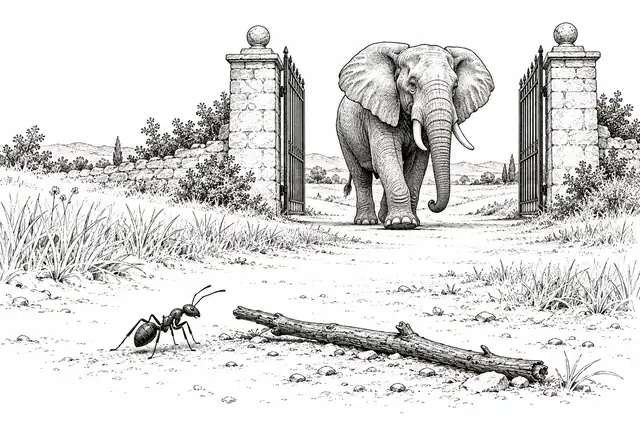
ହାତୀ ଗଳିଯାଉଛି, ଅଥଚ ପିମ୍ପୁଡ଼ି ପାଇଁ ବାଟ ନାହିଁ—ଆକାରର ଏହି ଅସମ୍ଭବ ଫରକରେ ବ୍ୟଙ୍ଗ। ଅଭିଧାନ ବଡ଼ ବଡ଼ କଥାରେ ଦୃଷ୍ଟି ନରଖି ଛୋଟ ଛୋଟ ବିଷୟକୁ ଜଗିବା କଥା କହିଛି। ଖୁଟିନାଟି ଦେଖିବା ନିଜେ ଭୁଲ ନୁହେଁ; ବଡ଼ ତ୍ରୁଟି ଛାଡ଼ି କେବଳ ଛୋଟ କଥାରେ ଅଟକିବାକୁ ଏହା ପ୍ରଶ୍ନ କରେ। କେହି ସାମାନ୍ୟ ନିୟମ ଧରି ବସିଲେ, ଏହି ଚିତ୍ର ତାଙ୍କୁ ବଡ଼ ଅବହେଳାଟି ଦେଖାଇପାରେ।
Literal meaning
An elephant passes through, but there is no way for an ant.
What it means
The impossible difference in scale makes the complaint funny: a passage admits an elephant but somehow cannot admit an ant. The dictionary explains this as overlooking large matters while keeping watch over small ones. The target is misplaced scrutiny, not careful attention itself. In an argument, the image can turn the question back on the person enforcing a tiny rule: what larger thing have they allowed to pass?
When you might use it
A committee approves a large unexplained expense, then spends half an hour disputing a tiny stationery claim. A member says, “ହାତୀ ଗଳି ଯାଉଛି ପିମ୍ପୂଡ଼ି ଗଳିବାକୁ ବାଟ ନାହିଁ,” and asks to examine the larger bill first. (Original imagined example, not collected testimony.)
Cultural context
Printed4856 note3 resolves digital ବାୟ as ବାଟ. The source explains unequal attention to large/small matters, not a particular legal system or caste. Both alternative forms belong to one analogy.
Recorded variants
ହାତୀ ଗଳି ଯାଉଛି ପିମ୍ପୂଡ଼ିକୁ ବାଟ ବନ୍ଦ ହେଉଛି