
DHAGA 403 · proverbial saying
Ears without gold, gold without ears
କାନ ଥିଲେ ସୁନା ନାଇଁ
ସୁନା ଥିଲେ କାନ ନାଇଁ।
ସୁନା ଥିଲେ କାନ ନାଇଁ।
ଇଚ୍ଛା ଥିବାବେଳେ ସମ୍ବଳ ନାହିଁ, ଆଉ ସମ୍ବଳ ଥିବାବେଳେ ଇଚ୍ଛା ନାହିଁ—ଦୁଇଟି ଏକାଠି ନମିଳିବାର କଥା। କାନ ଓ ସୁନାର ଏହି ଓଲଟା ଯୋଡ଼ାରେ ଦରକାରୀ ଦୁଇ ପଟରୁ ଗୋଟିଏ ସବୁବେଳେ ଅଭାବ ରହୁଛି।
Literal meaning
When there are ears, there is no gold; when there is gold, there are no ears.
What it means
Two things that would serve each other fail to arrive together. The inspected source explains the contrast as having the desire without the money, then the money without the desire. The repeated reversal gives that mismatch a rueful, memorable form.
When you might use it
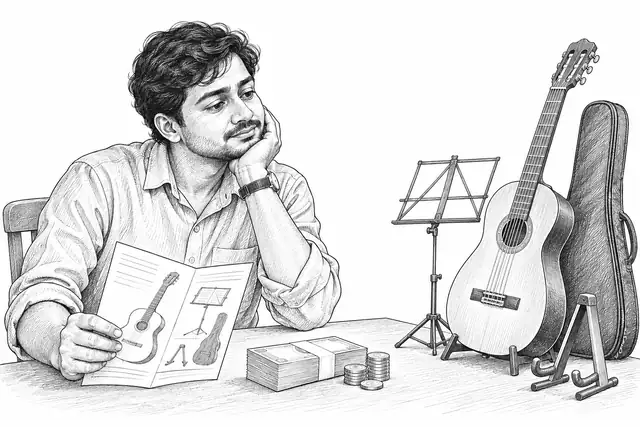
Someone long wanted to learn an expensive hobby but could not afford it; years later, the money is available and the interest has faded. They recall this saying. This illustration is newly composed.
Cultural context
The pairing evokes gold worn at the ear. Each line supplies one half and withdraws the other, so the value of having either is frustrated by the absence of its counterpart.
Recorded variants
ଦାନ୍ତ ବେଳକୁ ଚଣା ନାଇଁ
ଚଣା ବେଳକୁ ଦାନ୍ତ ନାଇଁ।Literal: When there are teeth, there are no chickpeas; when there are chickpeas, there are no teeth. ଅର୍ଥ: ଦାନ୍ତ ଥିବାବେଳେ ଚଣା ମିଳୁନାହିଁ, ଆଉ ଚଣା ମିଳିବାବେଳେ ଦାନ୍ତ ନାହିଁ। ଯାହାକୁ ବ୍ୟବହାର କରିବାକୁ ଚାହୁଁଛୁ ଓ ତାହା କରିବାର ସାମର୍ଥ୍ୟ ଏକ ସମୟରେ ନମିଳିବାର ଆକ୍ଷେପ ଏଥିରେ ପଢ଼ାଯାଇଛି। Explanation: The two lines exchange what is present and absent. Food and the means of chewing it fail to coincide. This is a concrete counterpart to the ears/gold reversal: it changes adornment and desire to eating and physical capacity. No particular person’s ageing or financial history is stated.