DHAGA 310 · dictionary-labelled saying; source-informed editorial reading
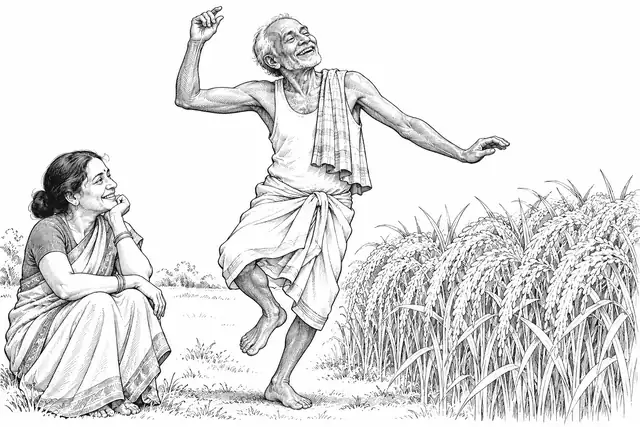
Grain ripens, an elder dances
ଗୁଳ୍ଜି ସୁଆଁ ପାଚିଲା, ଖାଡ଼ିଆ ବୁଡ଼ା ନାଚଲା
ଧାଡ଼ିଟି ଶସ୍ୟ ପାଚିବା ସହ ଜଣେ ବୃଦ୍ଧଙ୍କ ନାଚକୁ ଯୋଡ଼େ। ଅଭିଧାନର ଟୀକାରେ ଏହି ଶସ୍ୟ ସଂଗ୍ରହ କରି ରାନ୍ଧିବା କଥା ଅଛି। ଆମ ପାଠ ଖାଦ୍ୟ ମିଳିବା ଓ ଆନନ୍ଦର ସମ୍ପର୍କକୁ ଦେଖେ; ଜଣେ ପାତ୍ରକୁ ପୂରା ସମୁଦାୟର ସ୍ୱଭାବ ବା ନାଚକୁ ପ୍ରମାଣିତ ପର୍ବ ବୋଲି ଧରେନାହିଁ।
Literal meaning
Gulji suan ripened; the Kharia elder danced.
What it means
The line joins ripening grain to one elder’s dance. The dictionary’s note describes gathering and cooking this grain. Our reading attends to the connection between available food and delight, without making the named figure stand for everyone in a community or turning the dance into a documented ritual.
When you might use it
Original imagined example: ପାଠଚକ୍ରରେ ଜଣେ କହିଲେ, “ଏହି ଲୋକଟିର ଆନନ୍ଦକୁ ଦେଖିବା, ସମସ୍ତଙ୍କ ସ୍ୱଭାବ ବୋଲି କହିବା ନାହିଁ।” / A reader asks the group to attend to the individual’s delight rather than make a community stereotype. This discussion is invented.
Cultural context
Sambalpur labels the headword, not a proven saying origin. The historical note’s community and poverty classifications remain attributed source language, not present-day ethnography or botanical identification.