DHAGA 340 · dictionary-labelled saying; source-informed editorial reading
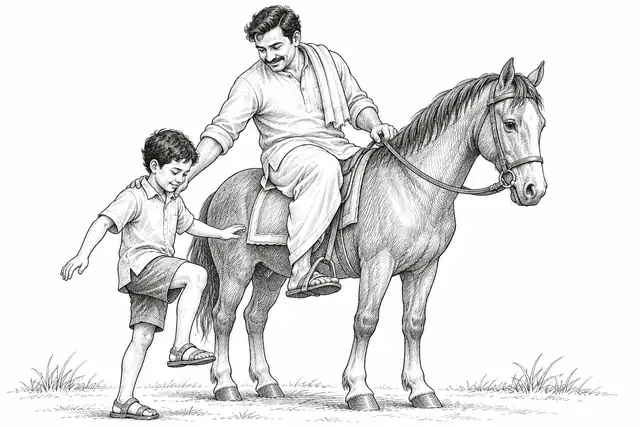
The father rides; the son, a little
ଯାହା ବାପ ଚଢ଼େ ଘୋଡ଼ା, ତା ପୁଅ ଚଢ଼େ ଥୋଡ଼ା
ବାପଙ୍କ ଘୋଡ଼ା ଚଢ଼ିବାରୁ ପୁଅଙ୍କ ଖଣ୍ଡରେ ଅଳ୍ପ ପରିମାଣକୁ ଛନ୍ଦ ଯାଏ। ଅଭିଧାନରେ ଏହା ସାମାନ୍ୟରେ ବା ଈଷତ ଅର୍ଥ ତଳେ ଅଛି। ଆମ ପାଠ ପିଢ଼ି ମଧ୍ୟରେ ଆଂଶିକ ପ୍ରତିଧ୍ୱନି ଦେଖେ, ବଂଶଗତ ନିୟମ ନୁହେଁ। କିଏ କିପରି ଶିଖିଲେ, କାହାର ଦକ୍ଷତା କେତେ, ବା ସବୁ ପିଲା ବାପମାଆଙ୍କ ପେଶା ନିଅନ୍ତି କି ନାହିଁ—ଧାଡ଼ିଟି ତାହା ପ୍ରମାଣ କରେନାହିଁ।
Literal meaning
Whose father rides a horse, that son rides a little.
What it means
The rhyme moves from a father’s riding to a smaller amount in the son’s clause. The dictionary quotes it under “slightly; a little.” Our reading notices the partial echo between generations, without turning it into a law of inheritance. The line does not explain how either person learned, measure their skill, or establish that every child repeats a parent’s occupation.
When you might use it
Original imagined example: ବାପଙ୍କ ସହ କାମ ଦେଖିଥିବା ପୁଅଟି ନିଜେ ଗୋଟିଏ ଛୋଟ କାମ ଶିଖିଲା। ତାଙ୍କ ଅନ୍ୟ ପସନ୍ଦକୁ ମଧ୍ୟ ପରିବାର ସ୍ଥାନ ଦେଲା। / A child learns one small task while retaining other interests. This scene is invented.
Cultural context
The quotation’s father and son remain intact, without an added biological or caste claim. The earlier Radhanath Darbar verse illustrates a different sense and is not this saying’s authorship.