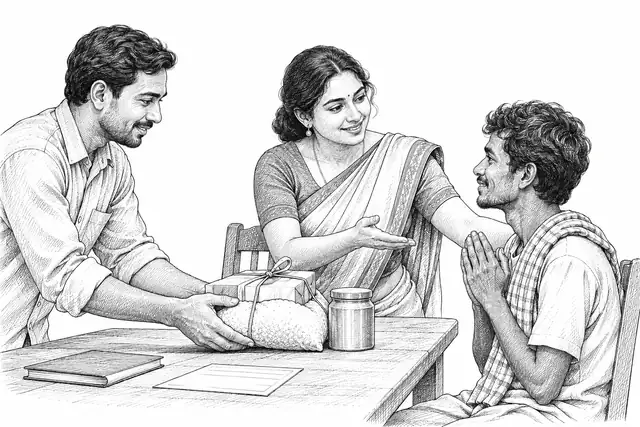
DHAGA 515 · proverbial saying
Giving praised, asking disparaged
ଦେବା ଠାରୁ ପୁଣ୍ୟ ନାହିଁ
ମାଗିବା ଠାରୁ ହୀନ ନାହିଁ।
ମାଗିବା ଠାରୁ ହୀନ ନାହିଁ।
ଦେବାକୁ ସବୁଠୁ ପୁଣ୍ୟର କାମ ଓ ମାଗିବାକୁ ସବୁଠୁ ହୀନ କାମ ବୋଲି ଏହି ଢଗ କହେ। ଏହା ଦାନକୁ ପ୍ରଶଂସା କରିବା ସହ ସହାୟତା ମାଗିବାକୁ ଛୋଟ କରୁଥିବା ଏକ ମୂଲ୍ୟବୋଧକୁ ଦେଖାଏ। ଏହି ମୂଲ୍ୟବିଚାର ମୂଳ କଥାର; ସହାୟତା ଦରକାର ହେବାରୁ କାହାର ମର୍ଯ୍ୟାଦା କମେ ନାହିଁ।
Literal meaning
Nothing is more meritorious than giving; nothing is lower than asking.
What it means
The parallel lines put giving at the top of a moral scale and asking at the bottom. The praise of generosity therefore comes with a harsh judgement of dependence. Read critically, the saying reveals that hierarchy; it does not establish why anyone asks for help or diminish their dignity.
When you might use it
Original imagined example: In a discussion about charity, someone quotes the saying to praise giving. Another participant points out that generosity can be valued without shaming the person who needs it.
Cultural context
The word ପୁଣ୍ୟ gives the first line a moral and religious register, while ହୀନ supplies the opposing judgement in the second. Repeating ଠାରୁ and ନାହିଁ makes both claims absolute.