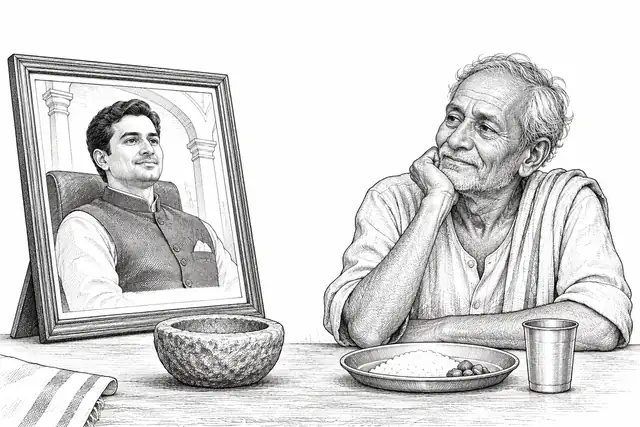
DHAGA 533 · proverbial saying
The son at court, the father’s bowl
ପୁଅ ବସିଚି କଚେରୀରେ
ବାପ ଖାଉଚି ପଥୁରିରେ।
ବାପ ଖାଉଚି ପଥୁରିରେ।
ପୁଅ କଚେରୀରେ ବସିଛି, ବାପ ପଥୁରି ବା ପଥରର ଛୋଟ ପାତ୍ରରେ ଖାଉଛି—ଏହି ଦୁଇ ଚିତ୍ର ପାଖାପାଖି ରହିଛି। ଆମ ସମ୍ପାଦକୀୟ ପାଠରେ ପୁଅର ବାହାର ଅବସ୍ଥାନ ଓ ବାପର ଘରୋଇ ଜୀବନ ମଧ୍ୟରେ ଅମେଳର ଇଙ୍ଗିତ ଅଛି। ପୁଅ କେଉଁ ପଦରେ ଅଛି ତାହା କୁହାଯାଇନାହିଁ; ପଥୁରିରେ ଖାଇବା ମାତ୍ରକୁ ଅବହେଳା ବା ଦାରିଦ୍ର୍ୟର ପ୍ରମାଣ ଧରାଯାଇନାହିଁ।
Literal meaning
The son is seated at court; the father eats from a stone bowl.
What it means
The couplet places a public setting beside an intimate household detail. Our editorial reading hears a contrast between the son’s apparent standing and the father’s modest circumstances. It can question whether outward advancement reaches those at home, while leaving the son’s role and the cause of the contrast unstated.
When you might use it
Original imagined example: A discussion celebrates someone’s public success but overlooks how an elderly relative is living. Another participant recalls the son at court and the father’s bowl to bring the household circumstances into view.
Cultural context
The rhyme joins କଚେରୀ, a court or administrative office, with ପଥୁରି, a small stone bowl. These concrete places and objects make the comparison; no particular occupation or household custom is needed to translate it.