DHAGA 401 · proverbial saying
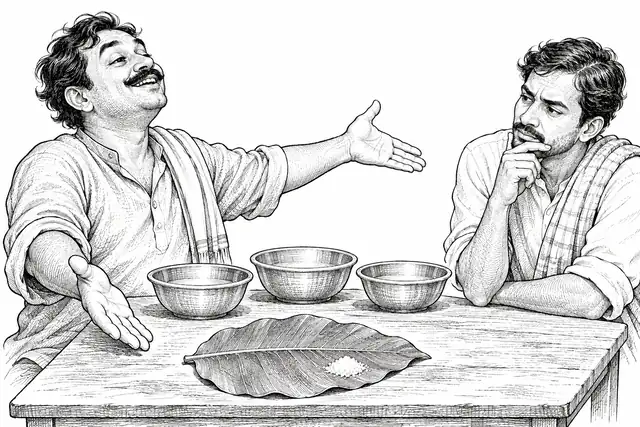
A leaf and salt, but claims of three dishes
କାଖରେ ପତର, ହାତରେ ଲୁଣ
ମିଛରେ ବୋଲଇ ତିନି ତିଅଣ।
ମିଛରେ ବୋଲଇ ତିନି ତିଅଣ।
ହାତରେ ଯାହା ଅଛି ତାହା ସାମାନ୍ୟ, କିନ୍ତୁ କହିବା ବେଳେ ବହୁତ କିଛି ଅଛି ବୋଲି ମିଛ ଦାବି କରିବା। ପତର ଓ ଲୁଣ ସହ ତିନି ତିଅଣର କଥାକୁ ମିଳାଇ ବାସ୍ତବ ସମ୍ବଳ ଓ ବଡ଼ କଥାର ଫରକ ଦେଖାଯାଇଛି।
Literal meaning
A leaf under the arm, salt in the hand—yet falsely claiming three dishes.
What it means
The first line lists what can actually be seen: a leaf and salt. The second announces a much richer meal and explicitly calls that announcement false. The editorial reading is of someone overstating what they have or can offer.
When you might use it
Someone advertises a fully equipped workshop, though only a few basic tools are available. A visitor recalls the saying to contrast the claim with the actual provision. This illustration is newly composed.
Cultural context
The leaf and salt make a sparse food image; three cooked dishes suggest something more substantial. The word ମିଛରେ makes the criticism explicit, so the contrast turns on false boasting rather than on having little.