
DHAGA 176 · proverbial saying
Respect that lasts only while help is needed
କାମ ପଡ଼ିଲେ କାଜି, କାମ ଛାଡ଼ିଲେ ପାଜି
କାମ ପଡ଼ିଥିବା ବେଳେ ଯାହାକୁ କାଜି କହି ଗୁରୁତ୍ୱ ଦିଆଯାଉଥିଲା, କାମ ସରିଲେ ତାଙ୍କୁ ପାଜି କୁହାଯାଉଛି। ଦୁଇଟି ମିଳୁଥିବା ଶବ୍ଦରେ ଆଦରରୁ ଅପମାନକୁ ହଠାତ୍ ବଦଳିଯିବା ଧରାପଡ଼େ। ଦରକାର ବେଳେ ଆଦର କରି, ଦରକାର ସରିଲେ ମଣିଷଟିକୁ ଭୁଲିଯିବାର ସ୍ୱାର୍ଥପରତାକୁ ଏହି ପାଠରେ ଦେଖିହୁଏ। ଏହା କୌଣସି ଧର୍ମର ଲୋକଙ୍କ ଚରିତ୍ର ବିଷୟରେ ନିଷ୍କର୍ଷ ନୁହେଁ।
Literal meaning
When there is work to be done, a qazi; when the need is over, a scoundrel.
What it means
The paired words move abruptly from a title of authority to an insult. Read together, they expose respect that depends entirely on another person’s usefulness: someone is important while needed and dismissed afterward. The target of this reading is the speaker’s opportunism, not the integrity of qazis or any religious community.
When you might use it
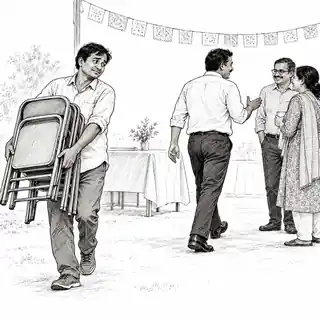
An organiser repeatedly praises a volunteer while asking for help, then refuses even to acknowledge that help once the event ends. (Original imagined example, not collected testimony.)
Cultural context
The source defines qazi as a Muslim judge and explicitly labels the paired line ଢଗ; a separate lexical entry confirms ପାଜି is an insult. Institutional history in the old dictionary is not adopted as present-day law or status.
Recorded variants
କାମ ପଡ଼ିଲେ ଅପାକୁ ଡକାରା
Editorial comparison only; no assertion that all sibling relationships are instrumental.
ବାହା ସରିଲେ ବେଦୀ ମୁହଁ ପୋଡା।
Literal reading: Once the wedding is over, the altar’s face is burnt. Odia meaning: ବାହାଘର ସରିଗଲେ ବେଦୀର ମୁହଁ ପୋଡ଼ା—ପଙ୍କ୍ତିର ଏହି ଚିତ୍ରକୁ ଆମେ କାମ ସରିବା ପରେ ଦରକାରୀ ଲୋକ ବା ବସ୍ତୁ ପ୍ରତି ଆଦର ହରାଇବାର ଉପମା ଭାବେ ପଢ଼ୁଛୁ। ଏହା ବାହାଘର ପରେ ବେଦୀ ପୋଡ଼ିବାର କୌଣସି ରୀତିର ବିବରଣୀ ବୋଲି ପ୍ରମାଣିତ ନୁହେଁ। Interpretive reading: The wedding is finished and the altar is left with a burnt face. Read editorially, the image turns the end of usefulness into a loss of regard: what mattered during the occasion is treated dismissively afterward. It does not establish an actual wedding custom or identify who burns anything.